

Key Points and Summary – Adm. Daryl Caudle is pressing hard for a fast decision on the Navy’s F/A-XX next-gen fighter as Congress moves to restore full funding the Pentagon wanted to pause.
-He argues the jet is essential to penetrate future Chinese A2/AD bubbles with long-range weapons and close kill chains from the carrier air wing.

Boeing NGAD F/A-XX Fighter Rendering. Image Credit: Boeing.

F/A-XX Handout Photo from Northrop Grumman.
-Defense Secretary Pete Hegseth, however, remains opposed, warning the U.S. industrial base cannot support two sixth-generation fighters alongside the Air Force’s NGAD program.
-With lawmakers adding roughly $8 billion above the Trump administration’s request, momentum is shifting toward green-lighting F/A-XX despite the department’s doubts and persistent schedule fears.
Navy Leader Pushes for F/A-XX Decision
Adm. Daryl Caudle, the Chief of Naval Operations for the U.S. Navy, said on Saturday, December 6, that he hopes to see a decision about the Navy’s next-generation fighter made “quickly.”
The comment comes as the House Armed Services Committee advances a new draft of the annual defense policy bill that promises full funding for the Navy’s F/A-XX program after the Pentagon initially moved to put the project on ice.
Speaking to reporters at the Reagan National Defense Forum in California, Caudle said that it was “imperative” for the project to move forward quickly, citing the time it will take to build, test, and ultimately field the aircraft that comes from the program.
“It’s my job to inform the secretary of war’s team about that imperative,” he said. “I’m part of those discussions, but my job is to pressurize that decision because the war fighting imperative, I think, is there, and I’m trying to build a compelling case to get that decision made quickly.”
While Congress, the Navy, and the Department of Defense have been hashing it out over the future of the program – amid the U.S. Air Force’s own push to field a next-generation fighter under NGAD, that is – contractors Boeing and Northrop Grumman are competing to present the most viable design for the project. Whatever aircraft is chosen would ultimately serve alongside Lockheed Martin’s F-35 in the U.S. Navy.
Also speaking during a panel at the event, Caudle said that the F/A-XX program must deliver the “highest-end platform possible to penetrate deep into a weapon engagement zone and have confidence with longer-range munitions that it can close that kill chain.”
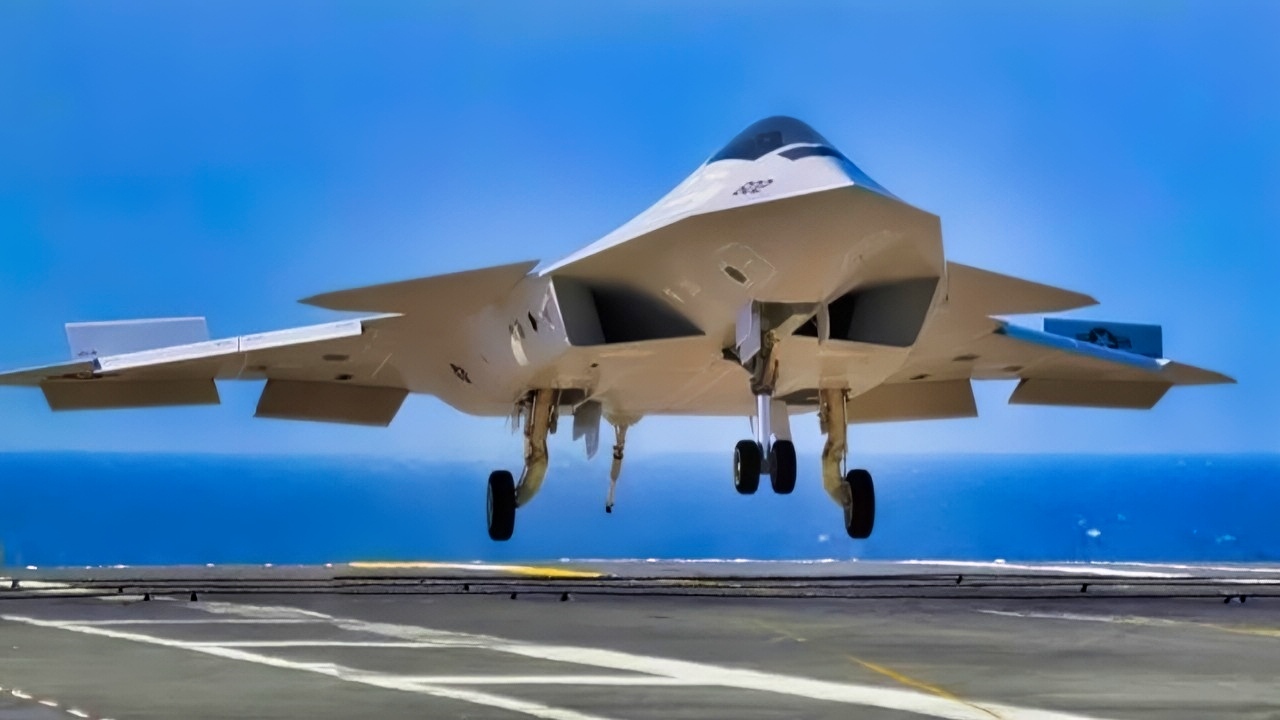
F/A-XX Fighter. Image Credit: Creative Commons.
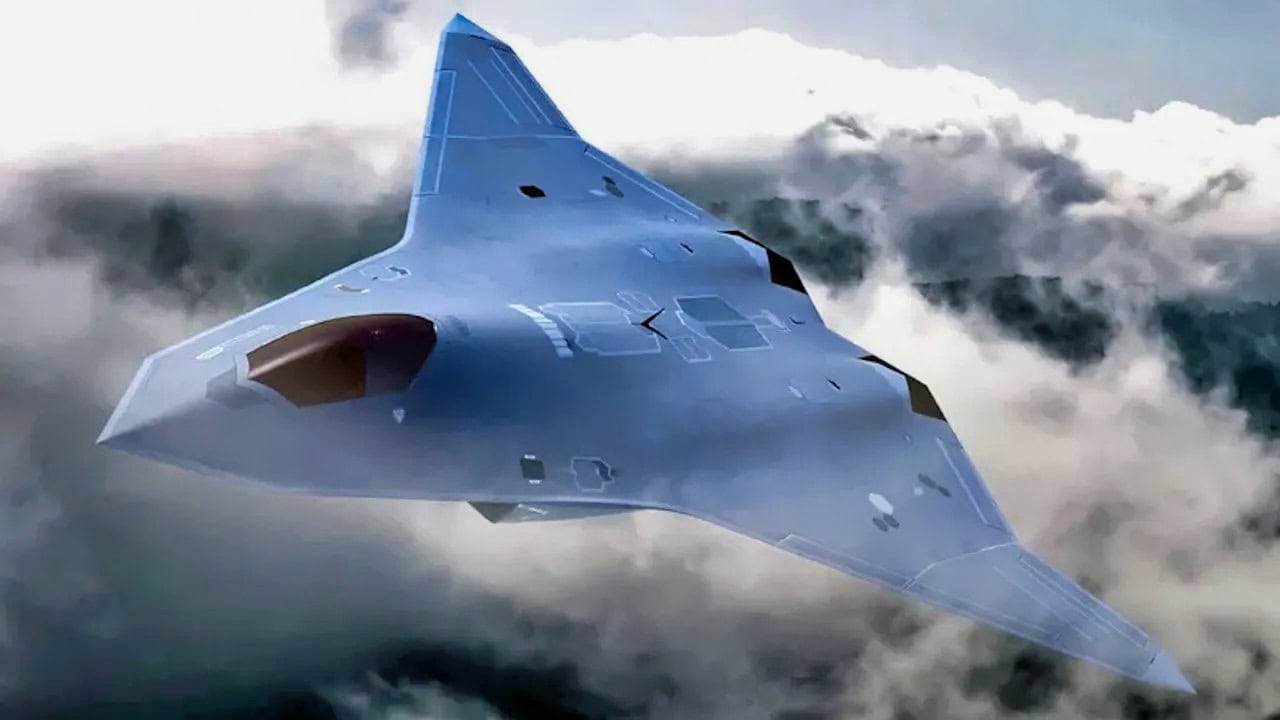
F/A-XX Fighter Mockup. Image Credit: Creative Commons.
The comments matter for a few reasons. First, amid ongoing uncertainty about the program, it’s clear that the funding is coming from Congress, and the Navy supports the continuation of the program, as well as its timely completion. But it also matters because the U.S. Secretary of Defense, Pete Hegseth, reportedly disagrees.
Earlier in December, Hegseth reportedly reaffirmed his opposition to the program – not just its timing, but its existence altogether. Hegseth and the White House have repeatedly suggested that moving forward with the F/A-XX program alongside the U.S. Air Force’s NGAD is simply too risky.
Despite that, Congress is fighting hard to deliver the funding the Navy’s top officials are calling for.
A draft version of the latest National Defense Authorization Act (NDAA) was released over the weekend, with a topline of roughly $8 billion more than the Department of Defense originally requested.
The increase is likely to stick, too. Speaking to reporters in recent days, Rep. Adam Smith, the ranking member of the House Armed Services Committee, said that while appropriators would ultimately decide on the topline, he believes it has a strong chance of being approved.
“We’re going to put a market out there that’s like $8 billion above the president’s budget, but we’ll see,” he said. “It’ll depend on what the appropriators work out.”
When Will the Decision Come?
While the timing of a final decision remains uncertain, there are some indicators suggesting a resolution could arrive soon. In fact, recent reports indicate that the Pentagon is said to be near a decision on the Navy’s next stealth fighter.

F/A-XX U.S. Navy Fighter. Image Credit: Creative Commons.

F/A-XX U.S. Navy Fighter. Image Credit: Creative Commons.
In October, reports suggested that the Pentagon was preparing to finally name the defense contractor that would build the Navy’s next fighter jet, citing a U.S. official and others familiar with the matter.
The reporting suggested that a decision was expected as early as that week – however, months have passed and no decision has yet been made.
Now, the question is who wins: the Secretary of Defense who is reportedly still opposing a decision being made, or Navy officials telling the press that movement needs to occur soon.
But Hegseth’s opposition is reportedly two-fold, and the Navy is still up against him: the defense secretary reportedly believes that the U.S. aviation industry cannot credibly sustain production of two separate sixth-generation fighters at once, despite the contractors saying otherwise.
For Hegseth, the risk of cost overruns or delays is too high. Additionally, Hegseth also contends that the overlap would ultimately duplicate capabilities and divert resources away from higher-priority efforts.
Still, with Congress restoring full funding and senior Navy leaders pressing publicly for a quick decision, momentum seems to lie with those who want the program to succeed.
About the Author:
Jack Buckby is a British author, counter-extremism researcher, and journalist based in New York who writes frequently for National Security Journal. Reporting on the U.K., Europe, and the U.S., he analyzes and understands left-wing and right-wing radicalization and reports on Western governments’ approaches to the pressing issues of today. His books and research papers explore these themes and propose pragmatic solutions to our increasingly polarized society. His latest book is The Truth Teller: RFK Jr. and the Case for a Post-Partisan Presidency.


