

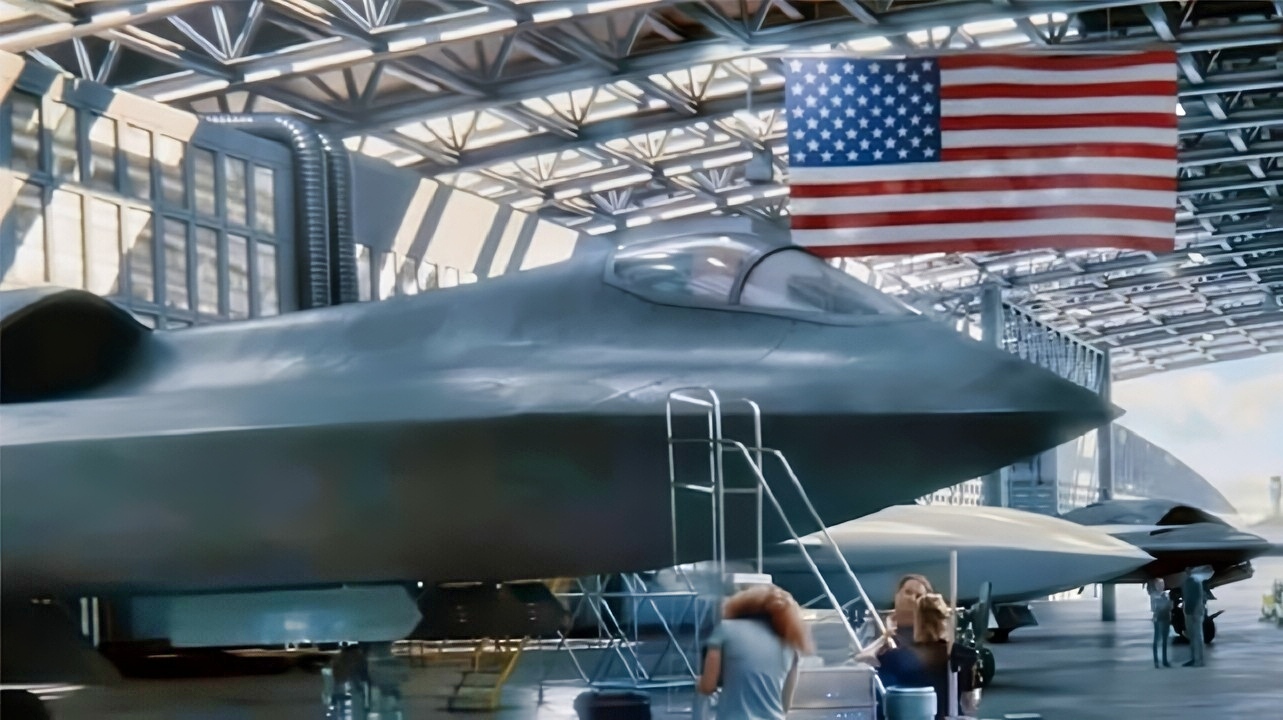
Key Points and Summary – The Pentagon has officially delayed the U.S. Navy’s F/A-XX, the sixth-generation carrier fighter meant to replace the F/A-18E/F and fly alongside the F-35C.
-While the Air Force’s NGAD F-47 is already in full-scale development, the Navy’s program has been pushed into an undefined future after the CAPE office moved to cut and reprogram $454 million in FY25 funding.
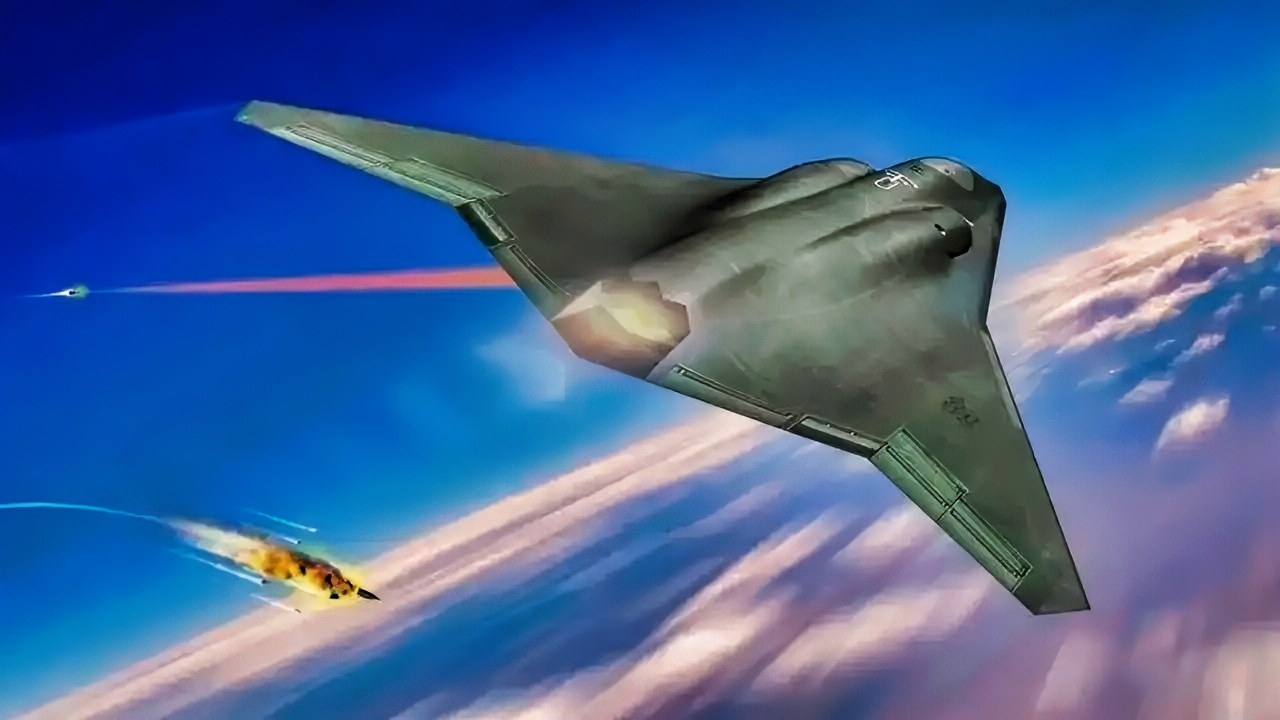
F-47 NGAD Artist Impression. Image Credit: Creative Commons.
-Senior officials worry the U.S. industrial base can’t design and build two advanced stealth fighters in parallel and are determined to avoid another “one-size-fits-all” F-35 scenario.
-Boeing and Northrop Grumman remain in contention, but schedule, funding, and industrial capacity all remain open questions.
F/A-XX on Ice While F-47 Surges Ahead: Did the Navy Just Lose the Fight?
The US War Department has officially confirmed there will be a delay in the US Navy’s F/A-XX carrier-capable fighter aircraft program.
The development of what was supposed to be a 6th-generation stealthy platform to replace the fleet’s current tactical fighter, the F/A-18E/F Super Hornet, was initially proposed in 2008.
This new aircraft would eventually be flown in service alongside the stealthy F-35C that already operates aboard the carrier.
The US Air Force (USAF) program to replace the F-22 Raptor, the Next-Generation Air Dominance (NGAD) fighter, was awarded to Boeing in March and designated the F-47.

F-22 Raptor National Security Journal Image
The USAF aircraft’s relatively expeditious selection and transition into its full-scale development stage are credited to the “X-planes” attached to the effort, which flew several years ago and validated many of the NGAD design concepts.
Paradoxically, the F-47, already in development, is replacing the F-22, an aircraft that is more than a decade younger than the Super Hornet.
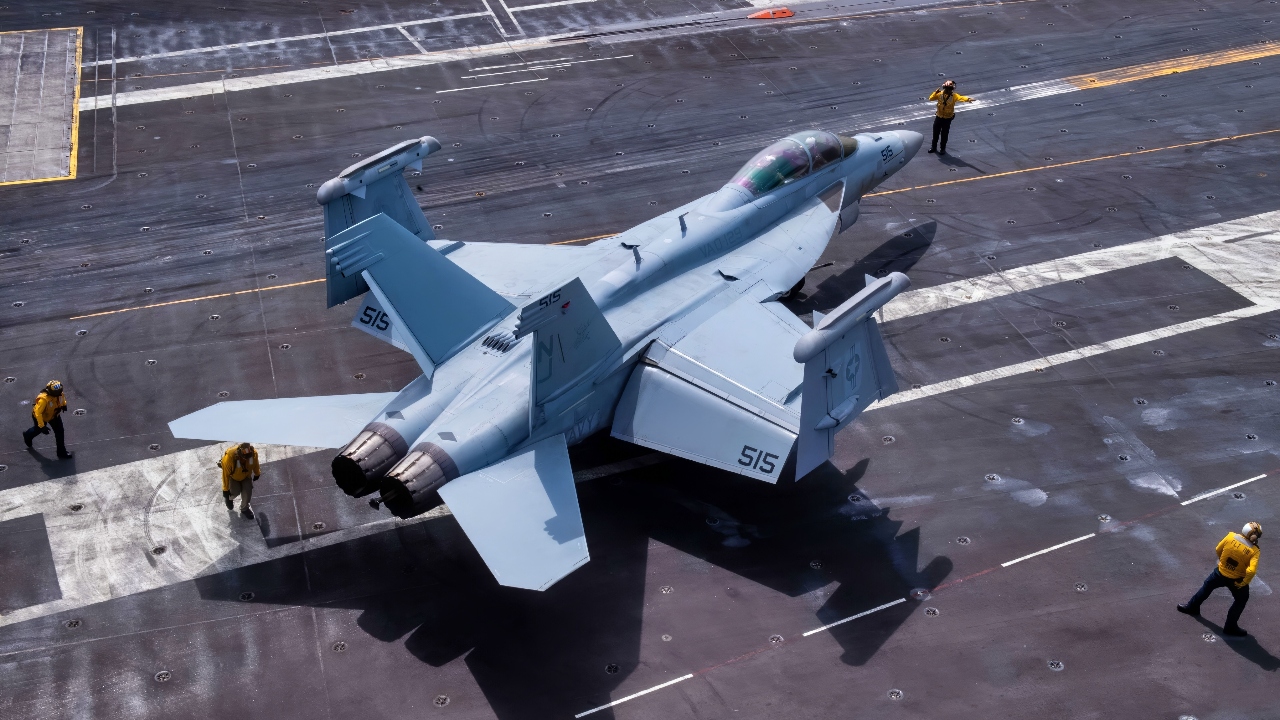
PACIFIC OCEAN (Aug. 11, 2025) – U.S. Navy Sailors direct an E/A-18G Growler, assigned to the “Vikings” of Electronic Attack Squadron (VAQ) 129, on the flight deck of the Nimitz-class aircraft carrier USS Theodore Roosevelt (CVN 71), Aug. 11, 2025. Theodore Roosevelt, flagship of Carrier Strike Group (CSG) 9, is underway conducting exercises to bolster strike group readiness and capability in the U.S. 3rd Fleet area of operations. (U.S. Navy photo by Mass Communication Specialist Seaman Apprentice Cesar Nungaray)
Meanwhile, the F/A-XX languishes in an uncertain state, even though the aircraft it is designed to replace was initially conceived half a century ago, back in the 1970s.
So, when a decision is made on the Navy fighter aircraft, for now, the competition announcement and the selection of a contractor for the F/A-XX have already been postponed to a later and unspecified time frame.
The final die on the delay was cast when the Cost Assessment and Program Evaluation (CAPE) office of the US Secretary of War Pete Hegseth announced that it intends to cut funding for the F/A-XX and then reprogram the $454 million already allocated by Congress to the project in the 2025 fiscal year budget to other programs.
This made the status of the F/A-XX one of several significant initiatives that were discussed at the annual Reagan National Defense Forum last week.
Only One Thing at a Time
The late Andrew Marshall, the long-time Director of the Office of Net Assessment in the Pentagon, was famous for saying that the US armed services could “only do one thing at a time.”
That appears to be part of the concern holding back a source selection for the F/A-XX while the F-47 moves forward, according to some forum participants.
Numerous reports from various defense media outlets cite concerns within the civilian side of the Pentagon leadership that the US defense industrial sector is not capable of carrying out the design, prototyping, and series production of two highly sophisticated, stealthy fighter aircraft.
This concern is exacerbated by the reality that the mission, requirements, and technical characteristics for the two jets diverge markedly and will continue to do so once in service.
At the same time, the US armed forces are determined that these two programs are not going to be kludged together and turn into, as more than one senior USAF and USN official has said, “another F-35-like program” that forces a standard design on both services.
The USN and USAF reportedly lobbied the Trump Administration to keep the two programs as separate as possible.
However, while the two aircraft designs will have very little in common overall, the USN and USAF have agreed to pool, to the extent possible, any innovations in primary system technologies such as propulsion, avionics, sensors, and weapons.
But it is the development of so many emerging but not yet mature technologies that has the Pentagon concerned.
They contend that within the US industrial base, the levels of engineering talent, design facilities, and production challenges within the US do not support running the two programs in parallel.
The Downselect Decision
A downselect is expected to narrow to a choice between Boeing and Northrop Grumman.
During a panel discussion at the Reagan Forum, Michael Duffey, the Undersecretary of Defense for Acquisition and Sustainment, said the Pentagon will nonetheless commit to the program.
Still, the date for that decision and the funding allocation both remain question marks.
“I do think there’s a commitment for us to deliver this capability,” Duffey said. “There’s an interest to make sure that we can, from our standpoint, [ensure] that the industrial base is able to support it, and I think we’ll be working through that question as quickly as we can.”
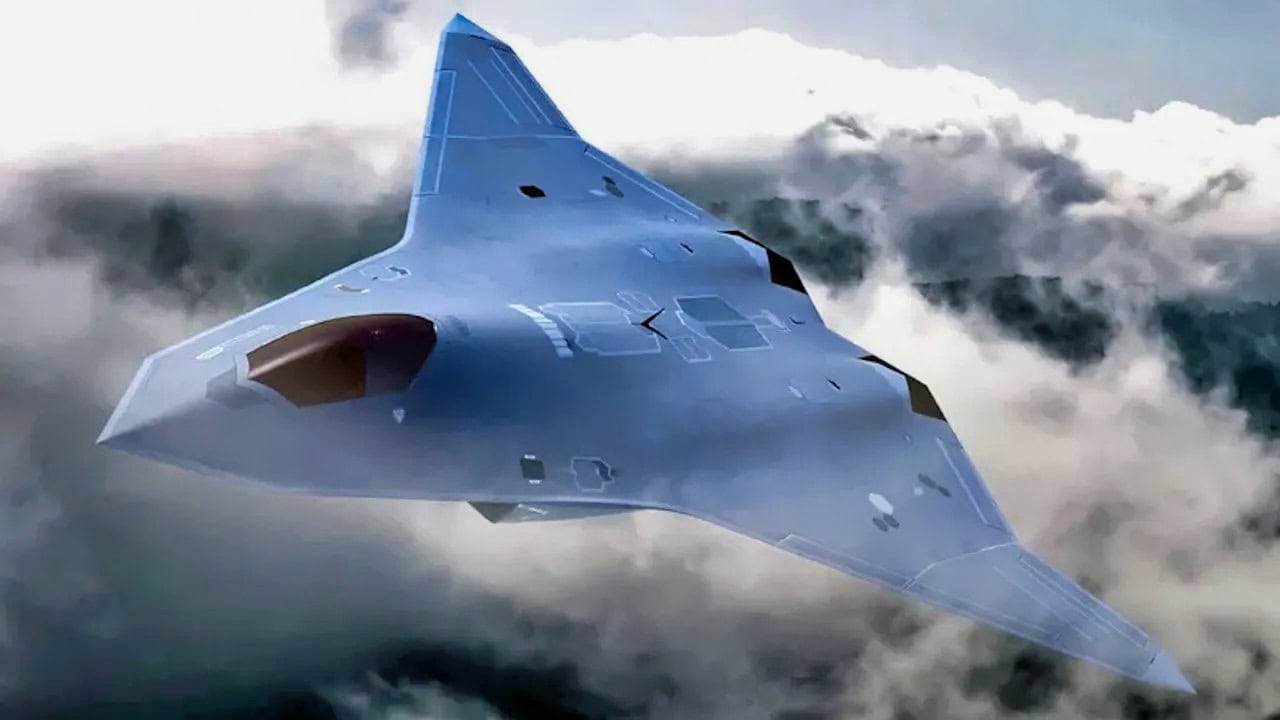
F/A-XX Fighter Mockup. Image Credit: Creative Commons.
Duffey then asked specifically if one of the two contractors still left in the running could handle the workload the F/A-XX would demand. “I don’t have an opinion right now; that’s one of the things that we’re working through,” he responded.
In the meantime, the Navy has awarded contracts to both contractors to retain their design teams in place and continue developing the aircraft.
This money is not simply to “keep the lights on,” Duffey noted. “There’s a lot of work to be done.”
About the Author: Reuben F. Johnson
Reuben F. Johnson has thirty-six years of experience analyzing and reporting on foreign weapons systems, defense technologies, and international arms export policy. Johnson is the Director of Research at the Casimir Pulaski Foundation. He is also a survivor of the Russian invasion of Ukraine in February 2022. He worked for years in the American defense industry as a foreign technology analyst and later as a consultant for the U.S. Department of Defense, the Departments of the Navy and Air Force, and the governments of the United Kingdom and Australia. In 2022-2023, he won two awards in a row for his defense reporting. He holds a bachelor’s degree from DePauw University and a master’s degree from Miami University in Ohio, specializing in Soviet and Russian studies. He lives in Warsaw.


