


Key Points and Summary: Sweden’s next-generation A26 Blekinge-class submarine is poised to become the premier conventional hunter-killer of the Baltic Sea, despite a turbulent development history.
The Tech: It features Stirling Air-Independent Propulsion (AIP) for 18 days of submerged endurance and “GHOST” stealth technology to minimize acoustic and magnetic signatures.
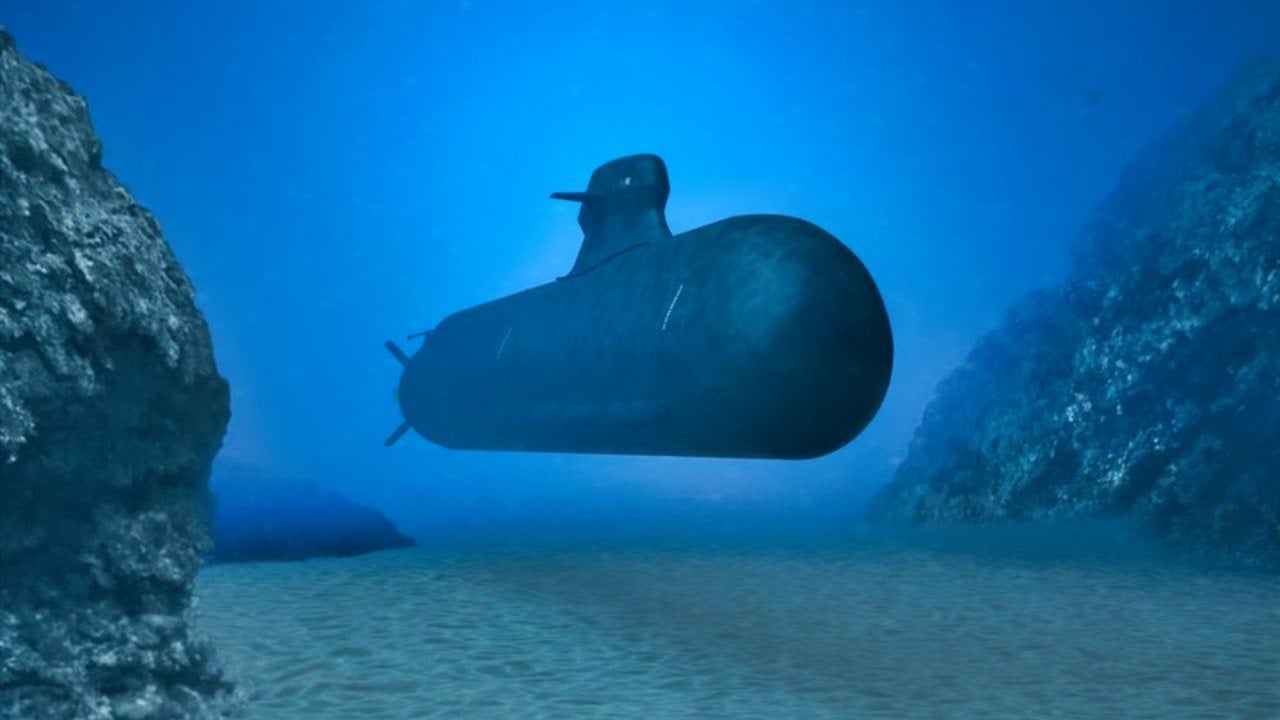
Blekinge-Class. Image Credit: Saab.
The Innovation: A unique 1.5-meter “Multi-Mission Portal” in the bow allows for the deployment of special forces, divers, and unmanned underwater vehicles (UUVs).
The Mission: Optimized for shallow, littoral waters where nuclear subs struggle, the A26 is designed to counter Russian naval activity and protect critical undersea infrastructure.
The A26 Blekinge: Why Sweden’s New ‘Ghost’ Submarine Can Stay Submerged for 18 Days
The Swedish Navy currently maintains a small submarine force of around four ships. Three of which are Gotland-class diesel attack subs and one Västergötland-class attack sub.
Recently, however, Sweden has been developing a new class of hunter-killer submarines, classified as the A26 Type or the Blekinge-class submarine. The Blekinge is promised to deliver state-of-the-art capabilities to the Swedish and Polish Navies. Though it had a troubled development, the first deliveries are expected in the 2030s.
The Blekinge-class’ Troubled Development
While the Blekinge-class is described as a game-changer, its development was long and mired in controversies and delays that would make even Russia’s Lada-class blush.
Its origins date back to the early 1990s under the “U-båt 2000” concept, which envisioned a next-generation submarine for the Swedish Navy. However, the collapse of the Soviet Union and the subsequent reduction in perceived naval threats led to the shelving of the project.
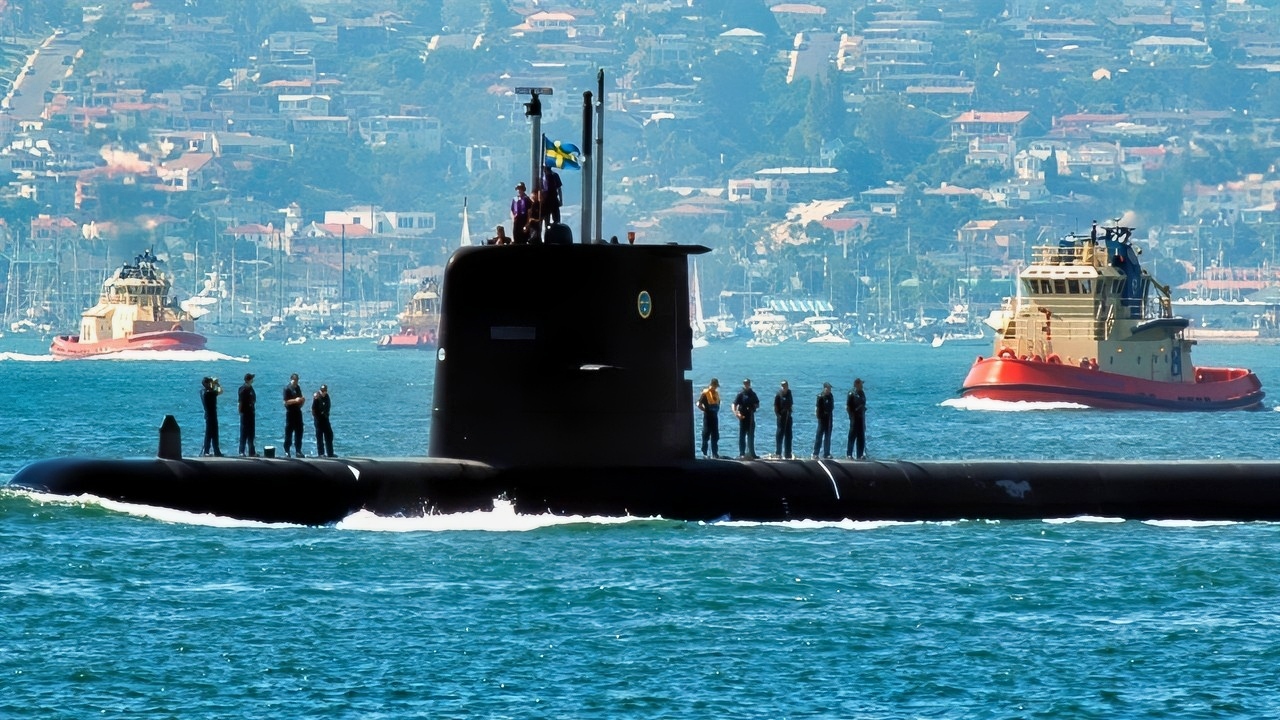
(Oct. 1, 2005) – The Swedish diesel-powered attack submarine HMS Gotland transits through San Diego Harbor during the “Sea and Air Parade” held as part of Fleet Week San Diego 2005. Fleet Week San Diego is a three-week tribute to Southern California-area military members and their families. U.S. Navy photo by Photographer’s Mate 2nd Class Patricia R. Totemeier (RELEASED)
By the mid-2000s, Sweden recognized the need to replace its aging submarine fleet, particularly the Södermanland-class, and revived the program. Initially, there were plans for a joint Scandinavian effort under the Viking-class program, but Denmark withdrew from submarine operations, leaving Sweden to proceed alone.
The program faced significant turbulence in 2014 when disagreements between the Swedish government and ThyssenKrupp Marine Systems, then-owner of Kockums, led to the project’s cancellation.
Sweden eventually regained control of Kockums, which was then merged into Saab, allowing the A26 program to resume under Swedish ownership.
The official contract for two submarines was signed in 2015. Although initial plans aimed for delivery in 2027–2028, delays and cost overruns have pushed the timeline to 2031 and 2033 for the first two Swedish boats: HSwMS Blekinge and HSwMS Skåne.
Design and Specifications
The design behind the Blekinge-class emphasizes modularity, enabling future upgrades and mission-specific configurations.
Its hull consists of multiple segments that can be adapted for propulsion, payload, and mission systems.
This modular approach ensures long-term relevance and export flexibility. A defining feature of the design is the Multi-Mission Portal, a 1.5-meter-diameter lock integrated into the bow.
This portal allows the deployment of special forces, swimmer delivery vehicles, and unmanned underwater vehicles, enabling seabed warfare and operations on critical underwater infrastructure.
In terms of technical specifications, the Blekinge-class measures approximately 66 meters in length with a beam of 6.75 meters and a draught of 6 meters.
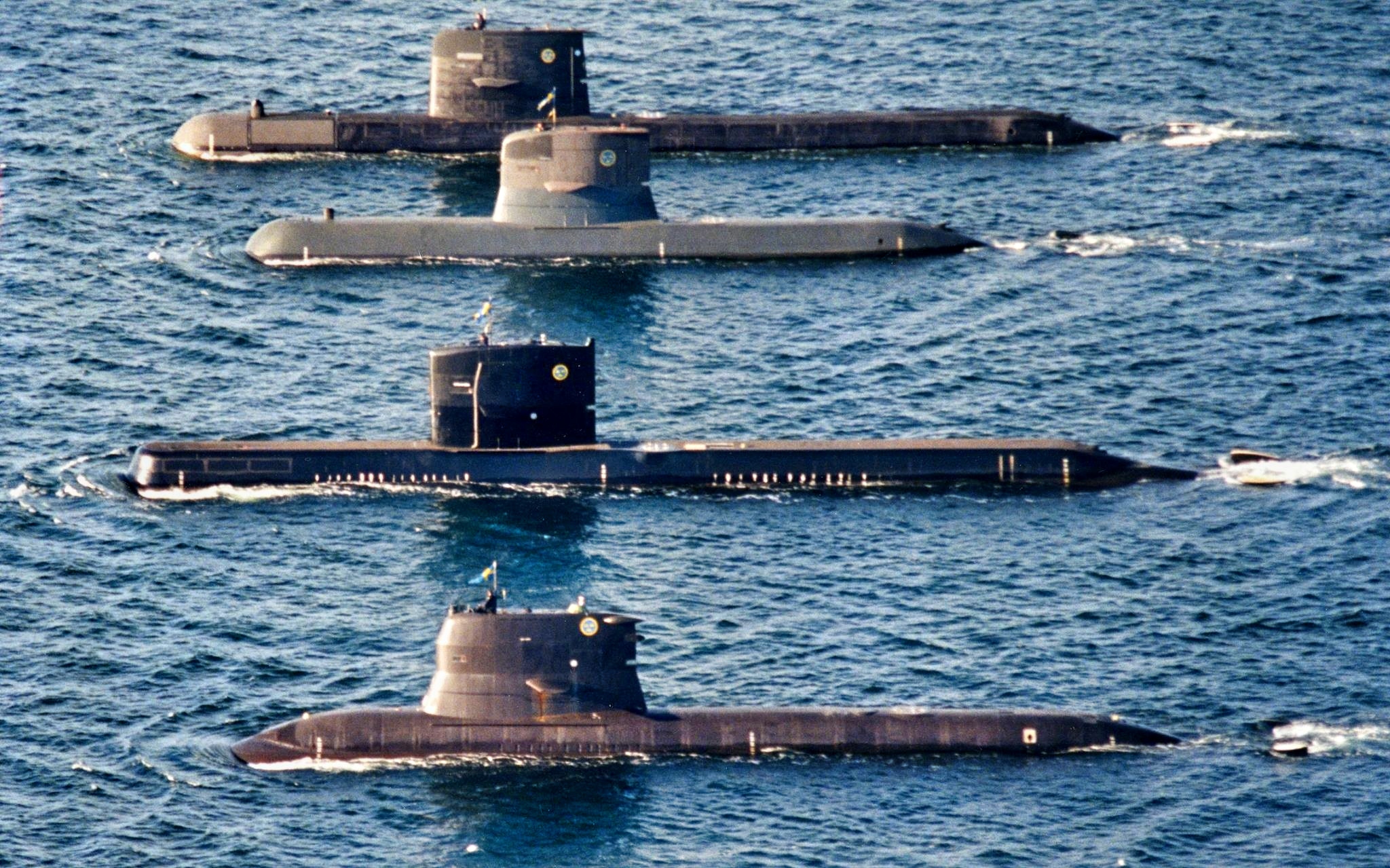
Gotland-Class Submarines. Image Credit: Creative Commons.
It displaces around 1,925 tonnes surfaced and about 2,100 tonnes submerged. The crew complement ranges from 17 to 26, with space for up to 35 personnel when special forces are embarked. Propulsion is provided by a diesel-electric system combined with Stirling Air-Independent Propulsion (AIP) using three to four Kockums MkV engines.
This configuration allows the submarine to achieve speeds of up to 20 knots on diesel-electric power and maintain silent running at around 6 knots using AIP. Endurance is impressive for a conventional submarine, with an overall mission duration of 45 days and the ability to remain submerged for up to 18 days without surfacing thanks to the AIP system.
Armament includes four 533 mm torpedo tubes for heavyweight Torped 62 torpedoes, two 400 mm tubes for lightweight Torped 47 torpedoes, and the capability to deploy naval mines. Future upgrades may include unmanned underwater vehicle integration.
The sensor suite features advanced sonar systems from Atlas Elektronik, mine avoidance sonar from Kongsberg, and optronic masts from Safran.
Stealth Systems
The Blekinge-class incorporates Genuine Holistic Stealth (GHOST) technology, which reduces acoustic, magnetic, radar, electric, infrared, and visual signatures.
Specialized hull coatings minimize target echo strength, while adaptive degaussing reduces magnetic emissions. The Stirling AIP system is critical to its stealth profile. Unlike fuel-cell-based AIP systems, Stirling engines use stored liquid oxygen and diesel fuel in a sealed external combustion cycle, producing minimal vibration and noise.
This allows the submarine to remain submerged for weeks without surfacing, a vital advantage in the shallow and acoustically complex Baltic Sea. Additionally, the hull is reinforced for shock resistance, improving survivability against underwater explosions, which is particularly useful for operations in contested littoral zones.

BALTIC SEA (March 13, 2016) Swedish submarine HSWMS Halland surfaces in preparations for a small-boat transfer during exercise BALTOPS, June 7, 2016. BALTOPS is an annual recurring multinational exercise designed to improve interoperability, enhance flexibility and demonstrate the resolve of allied and partner nations to defend the Baltic region. (U.S. Navy photo by Lt. Daniel Foose/Released)
The Blekinge-class is designed for multi-domain missions, combining traditional hunter-killer roles with advanced intelligence, surveillance, and reconnaissance capabilities.
It can conduct anti-ship and anti-submarine warfare using heavyweight and lightweight torpedoes, gather electronic intelligence through advanced sonar and optronic systems, and support special operations by deploying divers and swimmer delivery vehicles through the Multi-Mission Portal.
The submarine is also capable of seabed warfare, including the protection or sabotage of undersea cables and pipelines, and can integrate unmanned systems for covert surveillance and strike missions.
Sweden’s Next Generation Submarine
The Blekinge-class is expected to become the cornerstone of Sweden’s defense posture in the future. The Baltic Sea is shallow, averaging just 60 meters in depth, and is characterized by complex acoustic conditions.
Large nuclear submarines from Russia or the United States are ill-suited to this environment, but the compact, ultra-quiet A26 is optimized for it.
The Blekinge-class enhances Sweden’s deterrence posture against Russian naval activity, particularly in light of recent gray-zone operations such as undersea cable sabotage. Its stealth and endurance allow it to operate undetected near adversary coastlines, providing both defensive and offensive options.
Currently, Sweden has two submarines on order, expected to be delivered in the 2030s. Poland has also placed an order for three submarines in the class to modernize its own submarine force.
With Sweden’s recent admittance into NATO, the Blekinge-class is expected to work alongside the best of NATO’s attack submarines and patrol the Baltic Sea to deter potential Russian Navy activity. Compared to other NATO subs, the A26 is unique for its modularity.
While it is not a nuclear submarine, it still fills a valuable niche within NATO’s broader naval framework.
About the Author: Isaac Seitz
Isaac Seitz, a Defense Columnist, graduated from Patrick Henry College’s Strategic Intelligence and National Security program. He has also studied Russian at Middlebury Language Schools and has worked as an intelligence Analyst in the private sector.


