

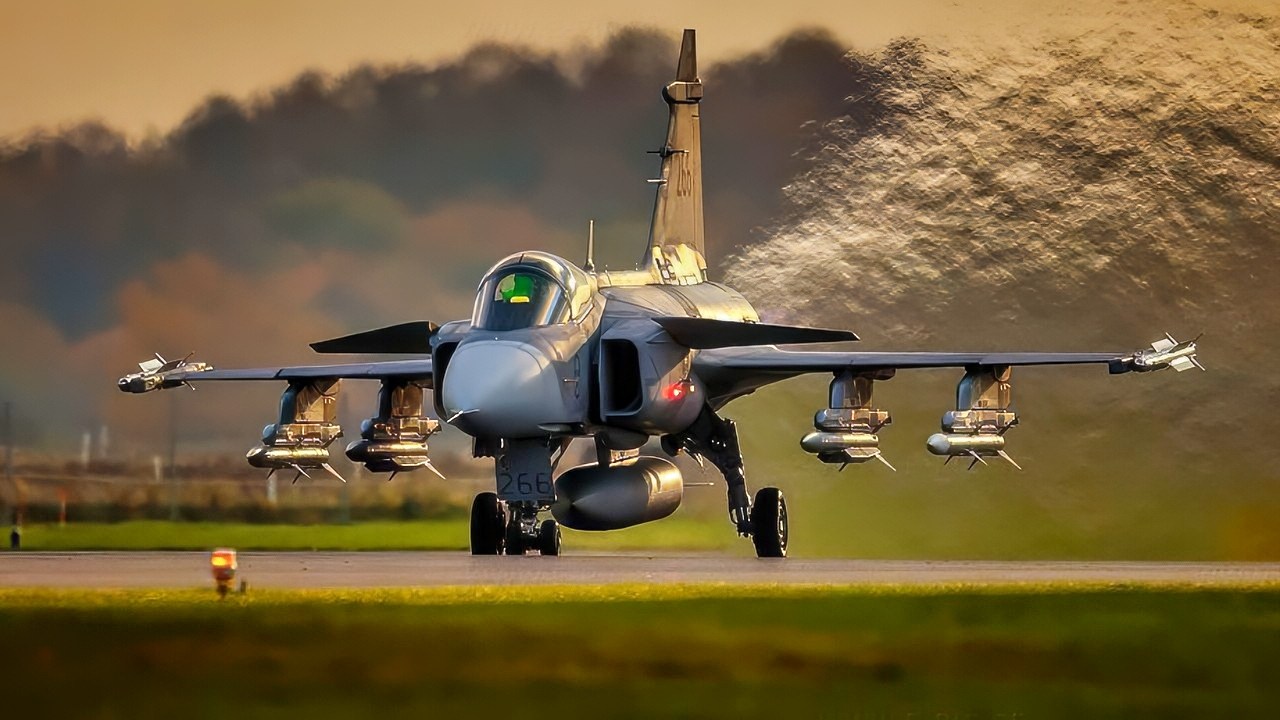
The Ukrainian Air Force just got another weapon that could be a game-changer in its war with Russia. Sweden announced that it will donate 16 JAS 39 C/D Gripen aircraft to Ukraine, while the administration of President Zelenskyy also announced that Ukraine will purchase 20 Gripen E/F aircraft.
Sweden is replacing the donated aircraft with recently built Gripen E/F models. The first Gripens are expected to begin flying for Ukraine early in 2027. The expected cost will be $2.9 million or €2.5 billion.

JAS 39 Gripen E Fighter. Image Credit: Creative Commons.
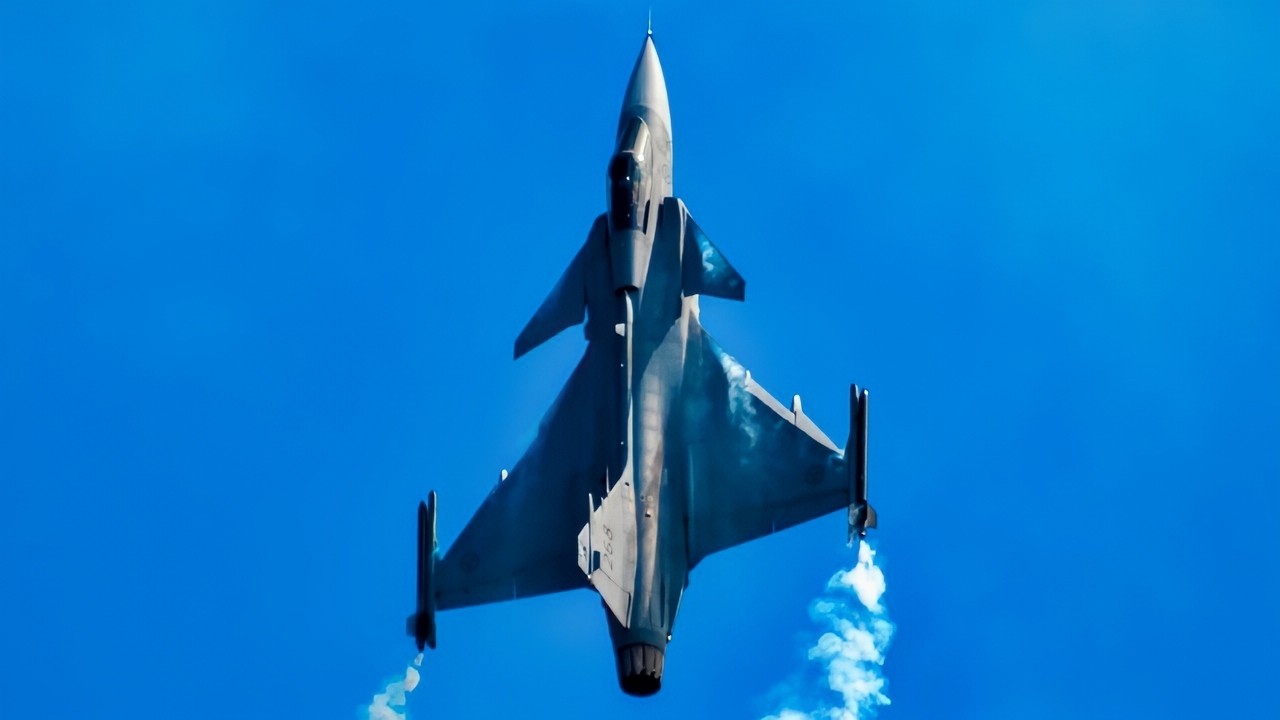
A Swedish Air Force Saab JAS 39 Gripen climbs during the 2019 Royal International Air Tattoo at RAF Fairford, England, July 20, 2019. This year, RIAT commemorated the 70th anniversary of NATO and highlighted the United States’ enduring commitment to its European allies. (U.S. Air Force photo by Tech Sgt. Aaron Thomasson)
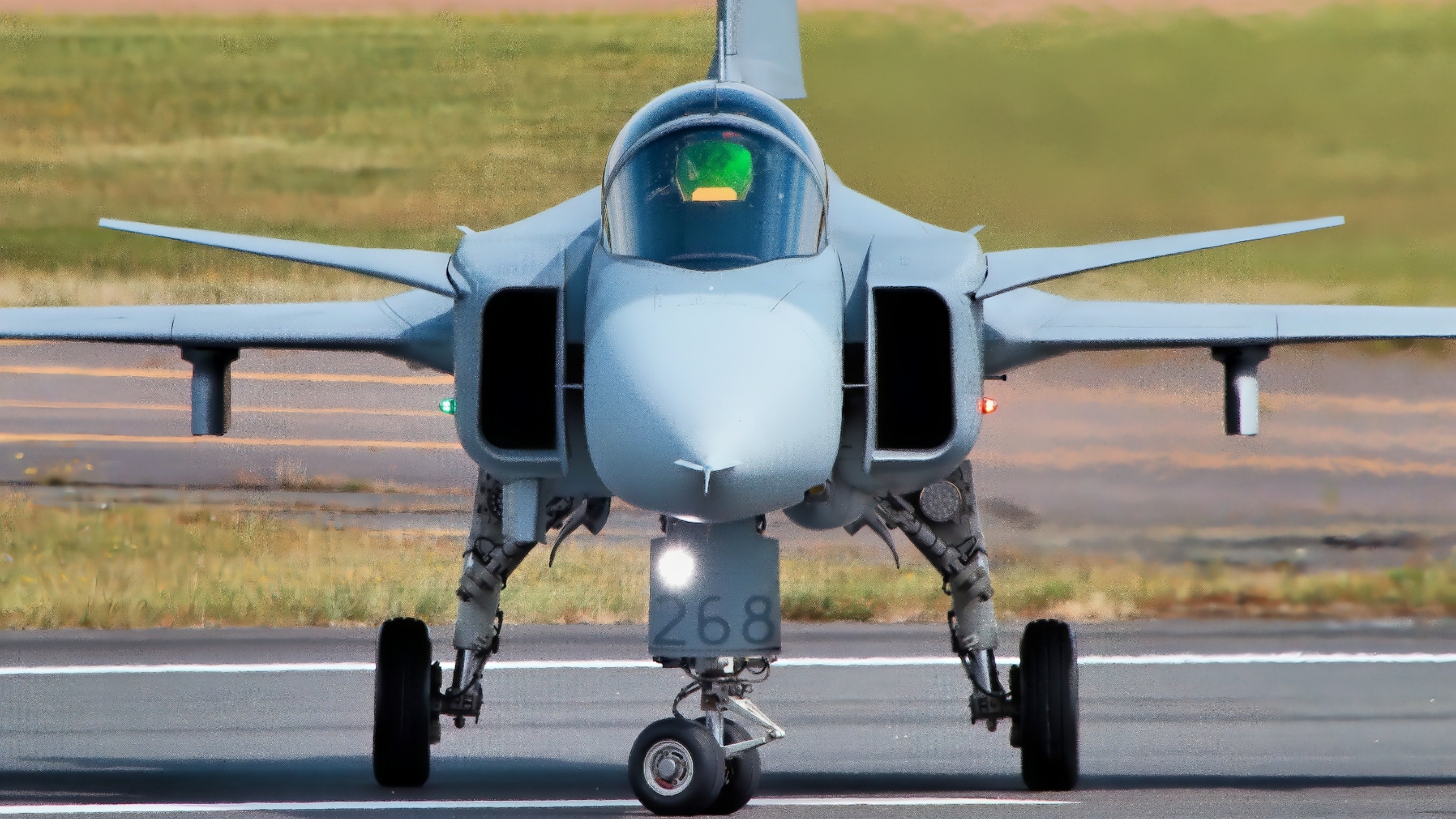
JAS 39 Gripen Front and Center. Image Credit: Creative Commons.
The Swedish donation also includes advanced ammunition, consisting of IRIS-T missiles, advanced medium-range air-to-air missiles (AMRAAM), and long-range Meteor air-to-air missiles.
The Rubber Finally Hits The Road For The JAS 39 Gripen
Ukraine will mark the first serious combat test for the highly-regarded JAS 39 Gripen. It was designed to protect Swedish airspace from Russian aggression. Now it will face its perceived enemy for the first time.
“This will be something completely different; it will be a test against the systems that this aircraft is actually designed to face: Russia,” said Lieutenant Colonel and Swedish Defense University lecturer Johan Huovinen. “It will be a test of Swedish technology in the end.”
“We need these jets, and for us this is really a new page for Ukraine,” Ukrainian President Zelenskiy said.
The Gripen Was Designed For This War
The JAS 39E Gripen is an excellent aircraft prized for its advanced tech (AESA radar, powerful F414 engine, digital systems), operational flexibility (it can operate from dispersed roads, low maintenance for conscripts), and cost-effectiveness, making it a highly capable multi-role fighter, especially for smaller nations needing independent, versatile air power against larger threats like Russia.
Although designed for the Swedish military, it will fit perfectly with the Ukrainian defenses and should be an outstanding addition to their air force.
The JAS 39E/F, often just called the Gripen, is a highly maneuverable, multi-role fighter aircraft developed by Sweden. The Gripen has been in service since 1996 and is a mainstay of the Swedish Air Force, with several other nations also adopting it.
It perfectly represents the Swedish defensive philosophy, emphasizing dispersed air operations and rapid maintenance. Ukraine’s philosophy is much the same.
The Gripen E model’s new avionics package places it at the very acme of dogfighting fighter jets.
The Gripen E was just a refresh; it was a radically re-engineered aircraft that incorporates a larger fuel supply, the outstanding GE F414 engine, and a modern sensor-and-computing stack emphasizing situational awareness, AESA radar, IRST, and sensor fusion, according to Saab.
Ukrainian And Swedish Basing Systems Are Similar
The Gripen E is the centerpiece of Sweden’s Bas 90 air basing system, which eschews large, centralized air bases in favor of small groups of aircraft dispersed throughout the country. This makes them harder to target and hit with missiles targeting airfields.
The Bas 90 defense program is taken from lessons learned from the 1967 Six-Day War, in which the Israeli Air Force destroyed virtually the entire Egyptian fleet of aircraft, as well as dozens of other aircraft in other Arab countries. If a shooting war with Russia happens, the Swedes have done their research and homework, resulting in a strategy that works perfectly for them.
Bas 90 reduces the risk of having its aircraft taken out on the ground through its nationwide network of small, austere air bases. Gripens can use public roads to land and take off at these dispersed locations, requiring only a 500-meter strip of pavement. A good thrust-to-weight ratio, robust landing gear, and flight control systems aid this.
Unlike more advanced and much more capable aircraft, such as the F-35, the Gripen was explicitly designed for rapid servicing by young conscripts without much training or specialized experience.
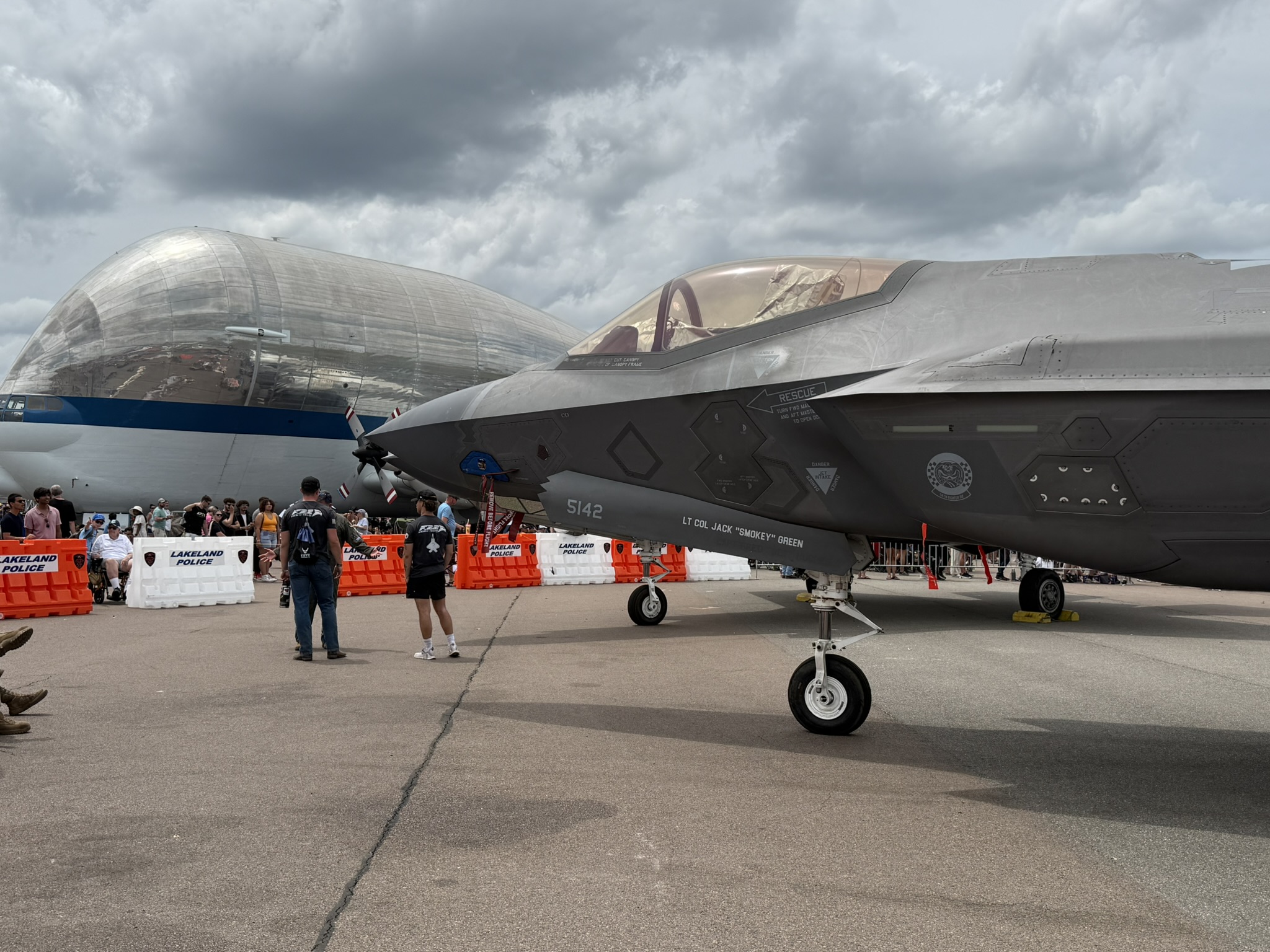
F-35. Image taken at the Lakeland Air Show. National Security Journal Original Image.
Refueling and rearming the Gripen E for an air-to-air mission takes less than 20 minutes, and only a limited number of ground crew and equipment are needed, ensuring rapid re-engagement. With low maintenance requirements per flight hour, the Gripen E spends more time airborne than in the maintenance shop.
Western aviation analysts have long argued that the Gripen would be a perfect fit for Ukraine. A report in November 2022 from the UK’s Royal United Services Institute (RUSI) defense and security think tank judged the aircraft “by far the most suitable candidate” of Western-manufactured combat jets, capable of meeting operational requirements.
The JAS 39E Powerful GE F414 Engines
The Gripen E has an outstanding power-to-weight ratio, powered by a single General Electric F414 turbofan engine, and can reach a maximum speed of Mach 2 (approximately 1,500 miles per hour). The F414-GE-39E, a single-engine variant of the proven F414-GE-400, has been chosen to power Saab’s Next Generation Gripen aircraft.
The General Electric engine allows the Gripen E to supercruise without kicking in the afterburners. GE has said that utilizing new fuels would increase the range by up to 20 percent.
The F414 engine features 3D aerodynamics, an improved high-pressure turbine, and an advanced cooling system (16 percent more airflow than the F404 fan). The JAS-39E’s ferry range is 2,000 miles, but its combat range is 930 miles.
JAS 39E Carries A Blend Of Weapons
The JAS 39E Gripen has 10 hard points, offers the best-in-class weapons and pods worldwide, and has an unrivaled ease of store integration. The Gripen offers a nice blend of US and Swedish weapons, making it versatile and deadly.
Gripen E can conduct “air-to-air, air-to-surface, and reconnaissance missions. Air supremacy is achieved by carrying up to seven Meteor Beyond Visual Range Air-to-Air Missiles and two Within Visual Range IRIS-T missiles.
Weapons like these, combined with the ability to use offensive and defensive means simultaneously, enable the Gripen E to detect, engage, and suppress or destroy targets effectively.”
The Meteor And IRIS-T Missiles
The Meteor missile is 3.65 meters long, weighs 185 kg, travels at Mach 4, and has a classified range, estimated at 62+ miles. The Meteor also touts its large “No Escape Zone,” which means it can bring doom to adversarial airplanes before they know what is happening.
Adversaries can be engaged and destroyed at very long ranges, as the Meteor can lock on to a target and resist countermeasures. The two-way datalink enables the launch aircraft to provide mid-course target updates or retargeting, including data from off-board third parties.
The IRIS-T missile is 2.94 meters long, weighs 87.4 kg, travels at Mach 3, and has a range of up to 25 km. Enhanced acquisition range, higher hit accuracy and warhead effectiveness, as well as superior resistance to countermeasures. IRIS-T can also successfully engage targets behind the launching aircraft and be used in lock-on before and after launch operations.
The Gripen E also carries the 27 mm Mauser BK-27 cannon, and can carry air-to-air missiles such as the AIM-9 Sidewinder, air-to-ground missiles such as the AGM-65 Maverick, and anti-ship missiles such as the RBS-15.
The JAS 39E’s Avionics
The Saab Gripen’s avionics can be updated to ensure continuous capability growth. This changes the paradigm of extensive and costly mid-life upgrades that burden the availability of competing fighter fleets.
Saab says the aircraft’s core architecture permits upgrades to the mission software without affecting flight-critical functions.
“We code in the morning and fly in the afternoon,” explained Johan Segertoft, head of the Gripen business.
“In software, there are no generations, only speed.”
All of Gripen’s avionics are fully integrated via five MIL-STD-1553B digital data buses, an operation described as “sensor fusion.” This total integration makes the Gripen a “programmable” aircraft, enabling software updates over time to improve performance and expand its operational roles and equipment capabilities.
The Ada programming language was adopted for the Gripen, and is used for the primary flight controls on the final prototypes from 1996 onwards and all subsequent production aircraft.
The Gripen’s Operational Costs Are Quite Affordable
The flyaway cost per aircraft is about $85 million, which is lower than the $100 million for the F-35. And its cost per flight hour is $5,800, easily beating the F-35, which runs about $35,000 per flight hour.
Maintenance is cheaper, easier to perform, and ordinary airmen can carry out most refueling and rearming functions, making it a perfect fit for Ukraine.
The Gripen Is Still A 4th+-Generation Aircraft. Can It Survive?
Although Saab has said that the Gripen E has made generational talk “redundant,” the fact remains that, although an outstanding fighter aircraft that can hold its own against anything, it is still a 4th-generation aircraft without stealth capability.
The Gripen E’s design is more conventional, without the specialized shapes and materials to minimize radar signatures, making it more easily detectable by radar.
The aircraft uses jamming and countermeasures to protect itself, whereas other fighters, such as the F-35, are invisible to radar.
It’s why much of Europe now operates the F-35. And NATO’s enemies are all developing stealth fighters. Will the Gripen be able to operate in a high-threat environment against Russia?
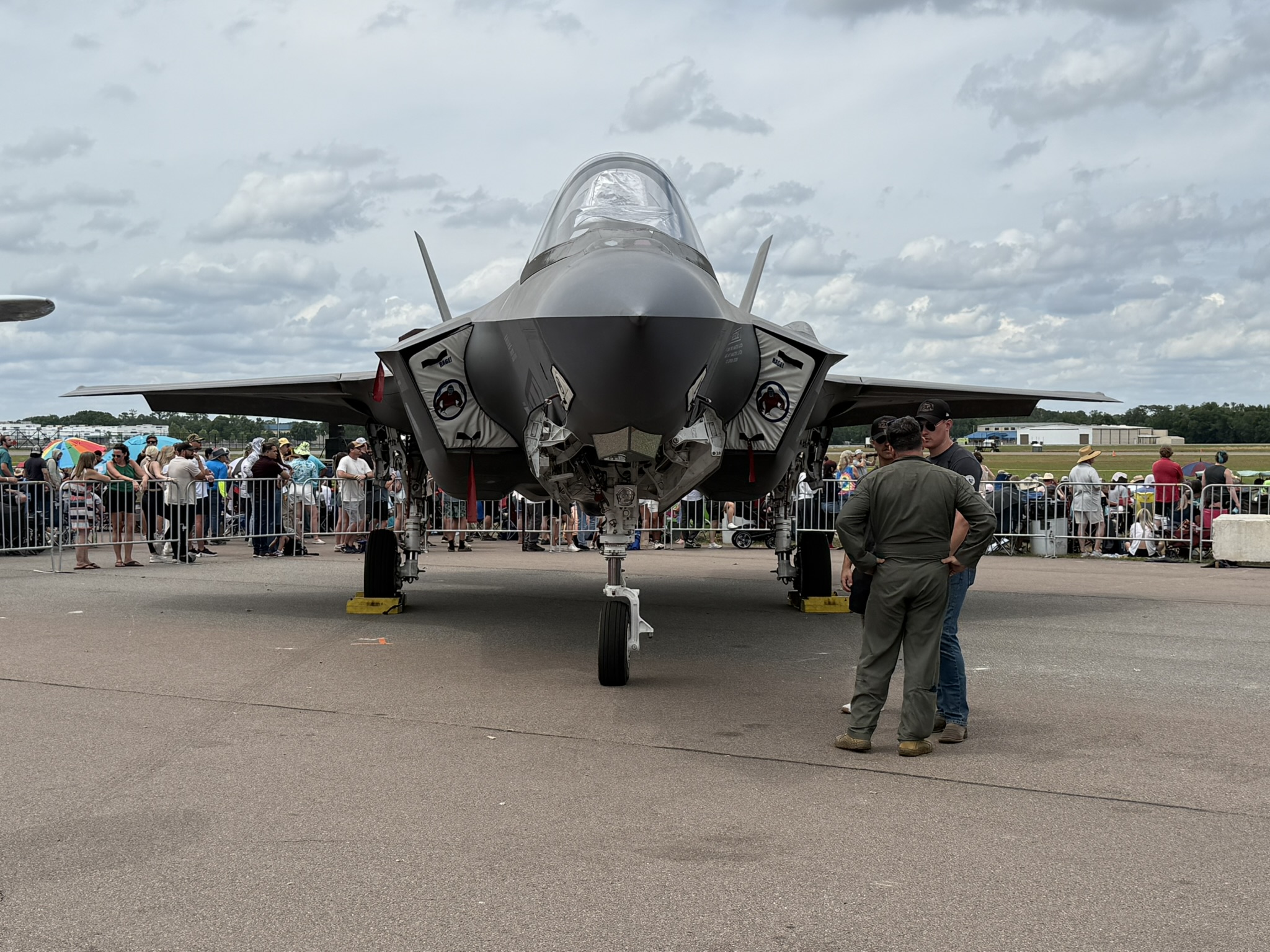
F-35 from Lakeland Air Show. National Security Journal Original Photo.
Ukraine will not enjoy air superiority, and the aircraft (as any would) will have difficulty neutralizing Russia’s air defenses, such as the S-400. But the Gripen is tailor-made for this conflict.
“One of the things that the Gripen is really good at is turn rate, doing things really fast, but at the same time the Gripen is also super easy to fly,” Major Henrik Björling, a Swedish air force Gripen display pilot, said.
And the pilot training for Ukrainian pilots by their Swedish compatriots will be a significant factor in their ultimate success.
About the Author: Steve Balestrieri
Steve Balestrieri is a National Security Columnist. He served as a US Army Special Forces NCO and Warrant Officer. In addition to writing on defense, he covers the NFL for PatsFans.com and is a member of the Pro Football Writers of America (PFWA). His work was regularly featured in many military publications.


