


Key Points and Summary – An unclassified Air Force plan says the service needs 1,558 combat-coded fighters by 2035—about a 22% jump from the projected 1,271 in FY26—to meet the administration’s defense guidance. The roadmap leans on accelerating F-35A and F-15EX buys (while retiring A-10s and older F-15/16s), but flags funding and supply-chain risks.
-Boeing could hit 24–36 F-15EXs per year with investment; Lockheed targets up to 165 total F-35s annually across variants by 2030.

Lt. Col. Richard Turner, 40th Flight Test Squadron commander, pilots the F-15EX, the Air Force’s newest fighter aircraft, to its new home at Eglin Air Force Base, Florida March 11. The aircraft will be the first Air Force aircraft to be tested and fielded from beginning to end through combined developmental and operational tests. The 40th FLTS and the 85th Test and Evaluation Squadron personnel are responsible for testing the aircraft. (U.S. Air Force photo/Samuel King Jr.)

Master Sgt. Tristan McIntire, 40th Flight Test Squadron, marshals the F-15EX, the Air Force’s newest fighter aircraft, to a stop at Eglin Air Force Base, Fla. March 11, 2021. The F-15EX will be the first Air Force aircraft to be tested and fielded from beginning to end through combined developmental and operational tests. (U.S. Air Force photo by Samuel King Jr.)
-The report also spotlights the F-47 NGAD and Collaborative Combat Aircraft as the top modernization priority, with first flight targeted by 2028, stressing that CCAs augment—not replace—manned fighters.
The Air Force Says It Needs Hundreds More Fighters
The Air Force is seeking a 22 percent expansion of its fighter fleet to 1,558 aircraft by 2035, citing global security requirements and an aging inventory as major impediments to achieving this goal.
While this report does not explicitly ask Congress to provide the Air Force with a blank check to cover the expense of expanding the fighter fleet, it does recommend that Congress explore ways to boost fighter aircraft production.
The Air Force released a new, unclassified, ten-year fighter force structure plan dated this month and submitted to Congress, which says that the service needs a total of 1,558 combat-coded fighter jets—nearly 300 more than the current estimated inventory of 1,271 in fiscal 2026—to meet the Trump administration’s Interim National Defense Strategic Guidance.
Air Force Secretary Troy Meink signed the report, obtained by Breaking Defense. Ordered by Congress as part of the 2025 National Defense Authorization Act, it outlines how the Air Force plans to balance modernization with affordability as it prepares for threats from “near-peer” competitors, primarily China, as well as Russia.
“The Department of the Air Force (DAF) is focused on modernizing current fifth-generation and legacy capability fighter aircraft fleets, expanding exquisite warfighting capabilities, and acquiring new advanced fighter capability,” the report says, adding that the Air Force will “procure aircraft commensurate with production of full combat capability.”
More F-35s, F-15EXs Are Needed
To reach the goal, the service would need to boost production of both the Boeing F-15EX Eagle II and the Lockheed Martin F-35A Lightning II, fifth-generation stealth fighters. The report states that Boeing could achieve a maximum production rate of 24 F-15EXs per year by 2027 and potentially up to 36 annually with new funding for facilities.
The Air Force plans to buy 129 F-15EXs in total, with 126 deliveries expected by 2030. However, the report states that it is “nine months behind schedule.” New international export orders are crucial for the longevity of the production line.
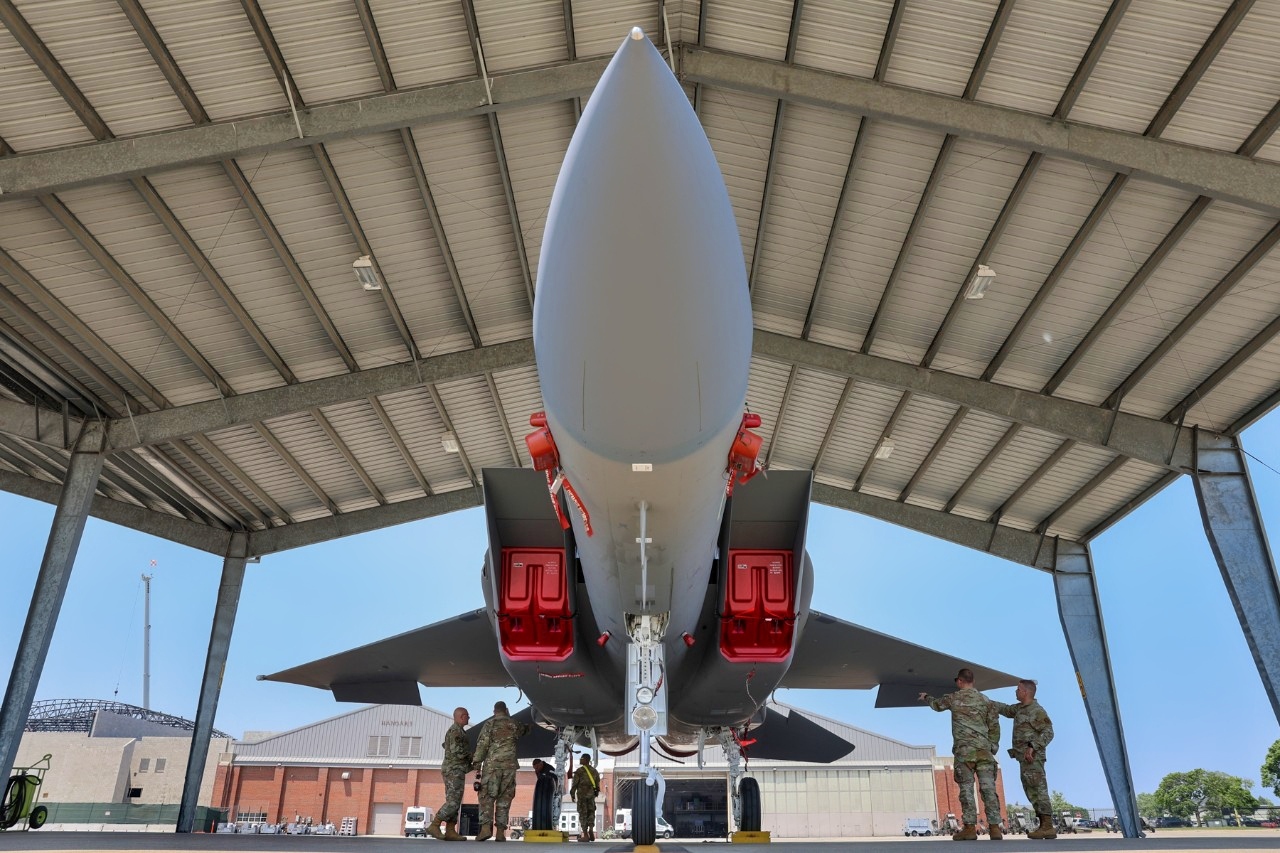
An F-15EX Eagle II from the Defense Contracting Management Agency Boeing St. Louis, sits on the flight line at Selfridge Air National Guard Base, Michigan, June 11, 2025. The aircraft visited the base as part of a site activation task force, an initial step to prepare the 127th Wing with the right infrastructure, personnel, and support the incoming F-15EX and KC-46 Pegasus missions . (U.S. Air National Guard photo by 1st Lt. Elise Wahlstrom)

The F-15EX, the Air Force’s newest fighter aircraft, arrives to Eglin Air Force Base, Florida March 11. The aircraft will be the first Air Force aircraft to be tested and fielded from beginning to end through combined developmental and operational tests. The 40th Flight Test Squadron and the 85th Test and Evaluation Squadron personnel are responsible for testing the aircraft. (U.S. Air Force photo/1st Lt. Karissa Rodriguez)
The production line is currently experiencing delays due to supply chain issues, material shortages, and a recent labor strike at Boeing’s St. Louis facility.
Mark Sears, Boeing’s Vice President for Fighters, stated that the F-15 production line is expected to remain active well into the next decade due to both U.S. Air Force and international customer interest.
Global demand for new builds and upgrades, coupled with potential U.S. Air Force purchases to replace aging aircraft, is the primary driver for keeping the line open.
The F-35 remains “the foundation of the Air Force fighter force structure,” and says the service aims to increase procurement once current upgrade delays are resolved. Lockheed Martin says it can build up to 165 total F-35s a year across all variants by 2030, with 100 of those potentially destined for the Air Force.
Lockheed officials have stated that the firm can currently produce a total of 156 aircraft per year, which could increase to 165 with the addition of new capacity through a new partnership with the German company Rheinmetall to produce center fuselages.
“The F-35 offers the most advanced fighter capability and technology and is the most affordable option to ensure America and its allies remain ahead of emerging threats. We appreciate the US Air Force’s continued confidence in the combat-proven F-35 and investment in national defense,” Lockheed said to Breaking Defense in a statement.
“This solidifies our confidence in the build rate, and we are positioned to meet the increased demand,” the spokesperson added. “We will continue to work closely with the [F-35] Joint Program Office to ensure we are supporting the requirements of our U.S. and international customers.”
However, upgrading and buying more F-35s, while listed as a significant priority but fielding those new jets is “inherently risky” given funding woes and “industry delivery delays,” the report added.
The F-47 NGAD Fighter Is Set To Begin Production
The report also references the F-47, a next-generation aircraft being developed under the Air Force’s Next Generation Air Dominance program.
Production lines for the jet are expected to open soon, though no unclassified figures were provided. The F-47 and the collaborative combat aircraft prototypes are the service’s “number one modernization priority.” Service officials plan to have the F-47 ready for its first flight by 2028. This is a year ahead of schedule, as earlier reports had cited 2029 as the expected date for the service to reach.
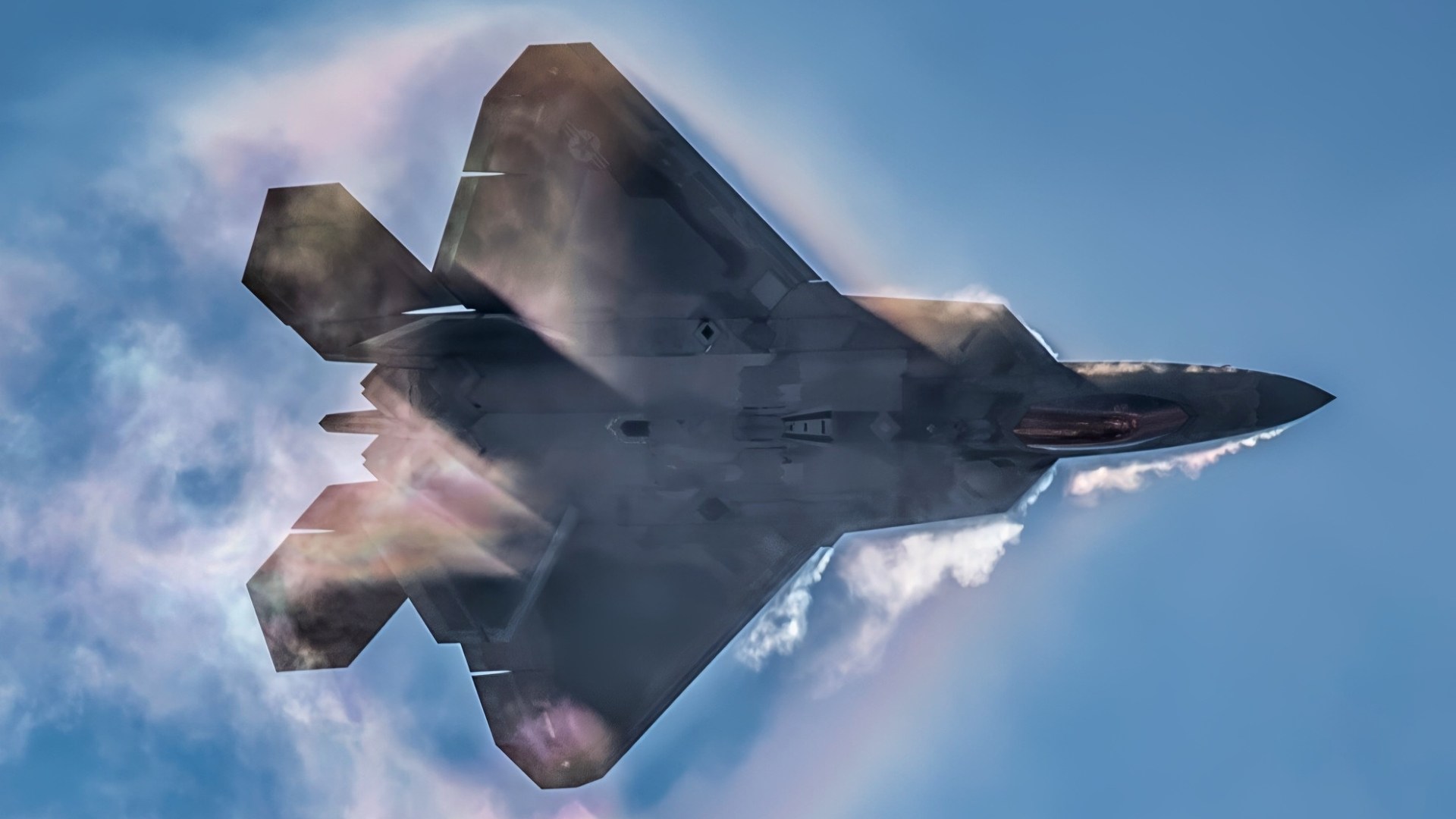
U.S. Air Force Maj. Josh ‘Cabo’ Gunderson, F-22 Raptor Demonstration Team commander, performs during an air show in Fort Worth, Texas, Oct. 17, 2020. The F-22’s raw power and thrust vectoring technology gives the aircraft super maneuverability in the air-to-air battlespace. (U.S. Air Force photo by 1st Lt. Sam Eckholm)

U.S. Air Force Maj. Joshua “Cabo” Gunderson, F-22 Raptor Demonstration Team commander and pilot, performs during the Orlando Air and Space Show at the Orlando Sanford International Airport, Florida, Oct. 30, 2022. The F-22A is a fifth-generation fighter incorporating fourth-generation technology, radical maneuvering capabilities, the ability to fly at supersonic speed without afterburners and unprecedented pilot situational awareness. (U.S. Air Force photo by Airman 1st Class Joshua Hastings)
Earlier this past spring, Air Force Chief of Staff David Allvin posted a chart that said the F-47 will be operational in “2025 to 2029,” have a combat radius of more than 1,000 nautical miles, and fly faster than Mach 2.
For comparison, the F-22 Raptor has a combat radius of 590 nautical miles and a top speed over Mach 2, while the F-35 has a combat radius of 670 nautical miles and a top speed of Mach 1.6.
The chart lists each jet’s stealth capabilities: the F-47 will have “stealth++” capabilities, while the F-22 has “stealth+” and the F-35 is merely listed as “stealth.”
Homeland Defense Strategy Is “Complex”
The report cites the “complexity” of adapting to the administration’s new defense strategy.
“Homeland defense, forward posturing, power projection (deterrence), contingency response, modernization, and aircrew production are the key missions the USAF must balance through deliberate basing, procurement, and management of tactical fighter aircraft,” the report states.
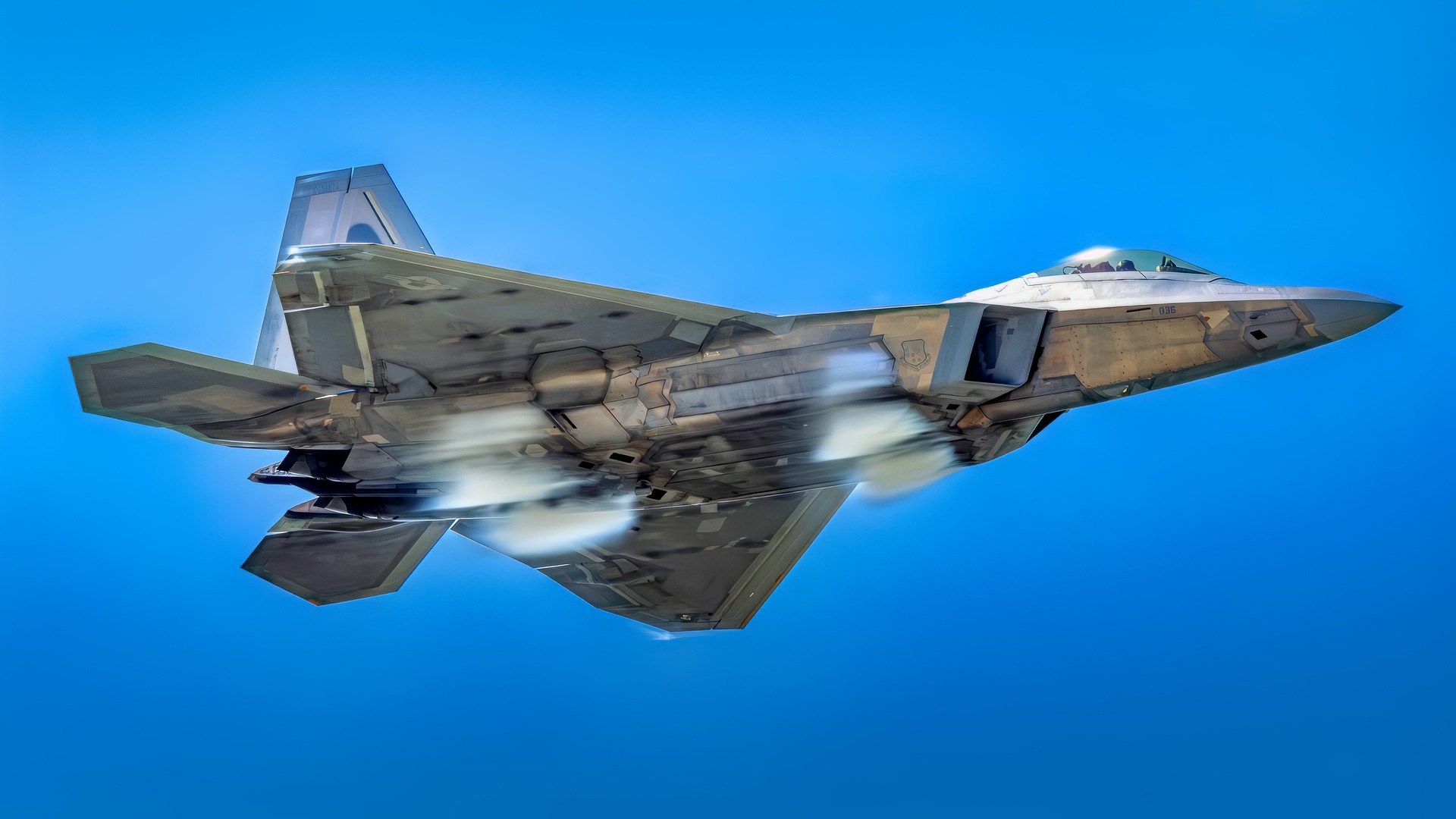
An F-22 Raptor performs an aerial demonstration at Naval Air Station Oceana, Virginia, Sept. 19, 2025. During the demonstration, the aircraft can reach speeds up to 723 miles per hour, showcasing the incredible power and precision of its twin Pratt & Whitney F119 engines. (U.S. Air Force photo by Staff Sgt. Lauren Cobin)
“Balancing these diverse requirements with limited resources adds complexity to an already significant challenge to meet force structure demands.”
To aid in freeing up much-needed budget cash, the Air Force plans to continue retiring aging aircraft, as the A-10 and older F-15 and F-16 models will be phased out.
About the Author: Steve Balestrieri
Steve Balestrieri is a National Security Columnist. He served as a US Army Special Forces NCO and Warrant Officer. In addition to writing on defense, he covers the NFL for PatsFans.com and is a member of the Pro Football Writers of America (PFWA). His work was regularly featured in many military publications.
More Military
Canada’s F-35 Fighter Debate Summed Up in 3 Words
The U.S. Air Force’s B-52J Bomber Crisis
Mach 5.1 X-51 Waverider ‘Hypersonic Scramjet’ Has a Message for the Air Force
Beast Mode: How the F-35 Stealth Fighter Bolts on 22,000 Pounds of Bombs


JOEL JUSTIN CARLSON
November 1, 2025 at 4:09 pm
Keep ’em Coming. The Soviets and Chinese have ramped up production. So should we