


Key Points and Summary – An unclassified, 10-year plan obtained by Breaking Defense says the Air Force needs 1,558 combat-coded fighters by 2035—about 300 more than today—to meet the President’s Interim National Defense Strategic Guidance.
-To close the gap, USAF wants to accelerate F-15EX and F-35A buys, even prioritizing U.S. orders over exports, while divesting A-10s by FY26 and partially retiring Block 20 F-22s.
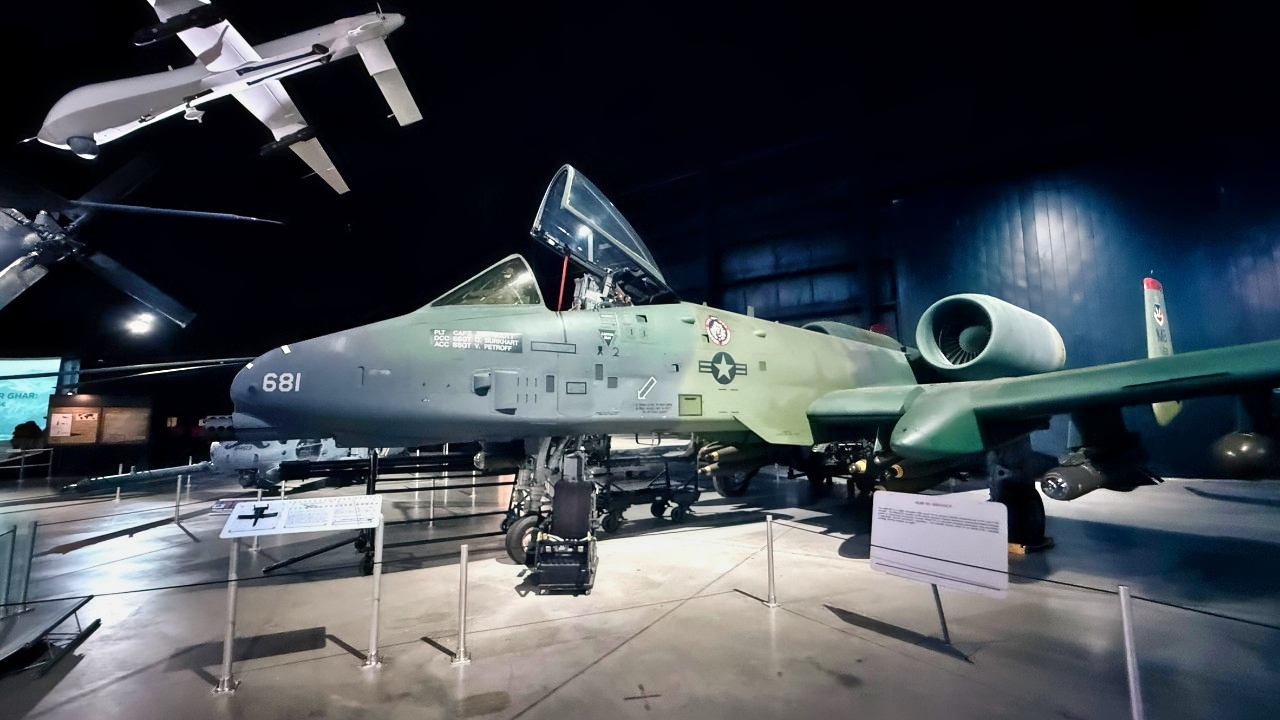
A-10 Warthog National Security Journal Photo.
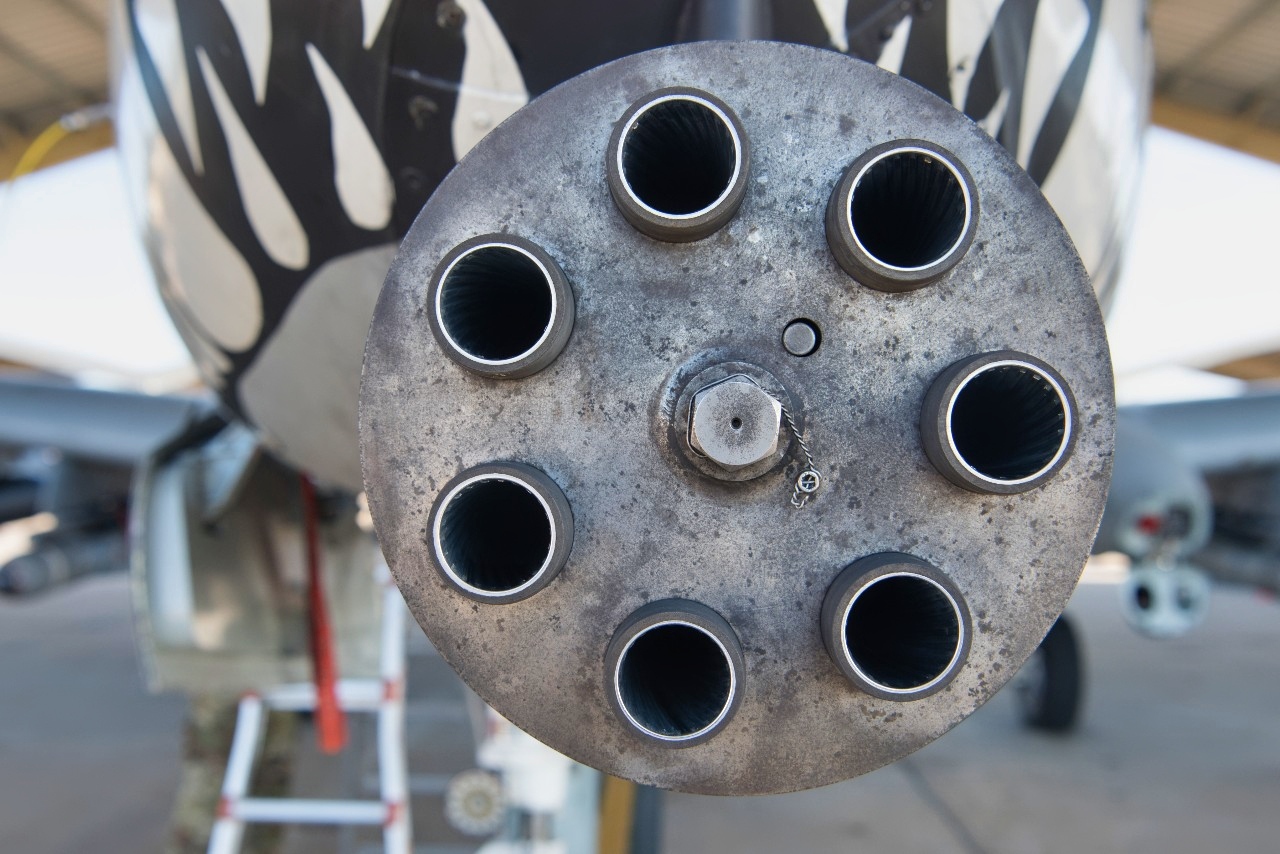
A GAU-8 Avenger 30mm cannon in the nose of an A-10 Thunderbolt II, assigned to the 442d Fighter Wing, at Whiteman Air Force Base, Missouri, April 9, 2021. The GAU-8 is a hydraulically-driven rotary autocannon capable of firing 3,900 rounds per minute with a variety of ammunition types for close air support missions. (U.S. Air Force photo by Senior Airman Parker J. McCauley)
-CCAs are central but won’t replace manned jets; they’ll team with F-22/F-35 first, then the sixth-gen F-47 (NGAD). The hurdle: funding, production capacity, and a brittle industrial base.
-The guidance spotlights China/Taiwan deterrence, sharpening the urgency of near-term procurement.
The U.S. Air Force’s Great Expansion?
The US Air Force needs more than 1,500 fighter jets in its full inventory —hundreds more than it currently has —to meet the President’s Interim National Defense Strategic Guidance.
That’s according to a ten-year fighter force structure plan, which is unclassified and was submitted to Congress, and obtained by Breaking Defense.
According to the Breaking Defense article, the Air Force “needs to dramatically grow its fighter fleet by hundreds of manned, combat-ready jets over the next decade in order to meet expected threats to America—a massive expansion of procurement plans that may not be feasible due to funding limits and production constraints.”
According to the report, the Air Force has 1,271 combat-coded fighter jets as of fiscal 2026, but will need 1,558 to meet the National Defense Strategic Guidance.
Air Force Secretary Troy Meink signed the report, which was mandated by last year’s National Defense Authorization Act. According to Breaking Defense, the report is not a specific request for additional funds, but is “likely intended to encourage lawmakers to consider providing greater resources to the service.”
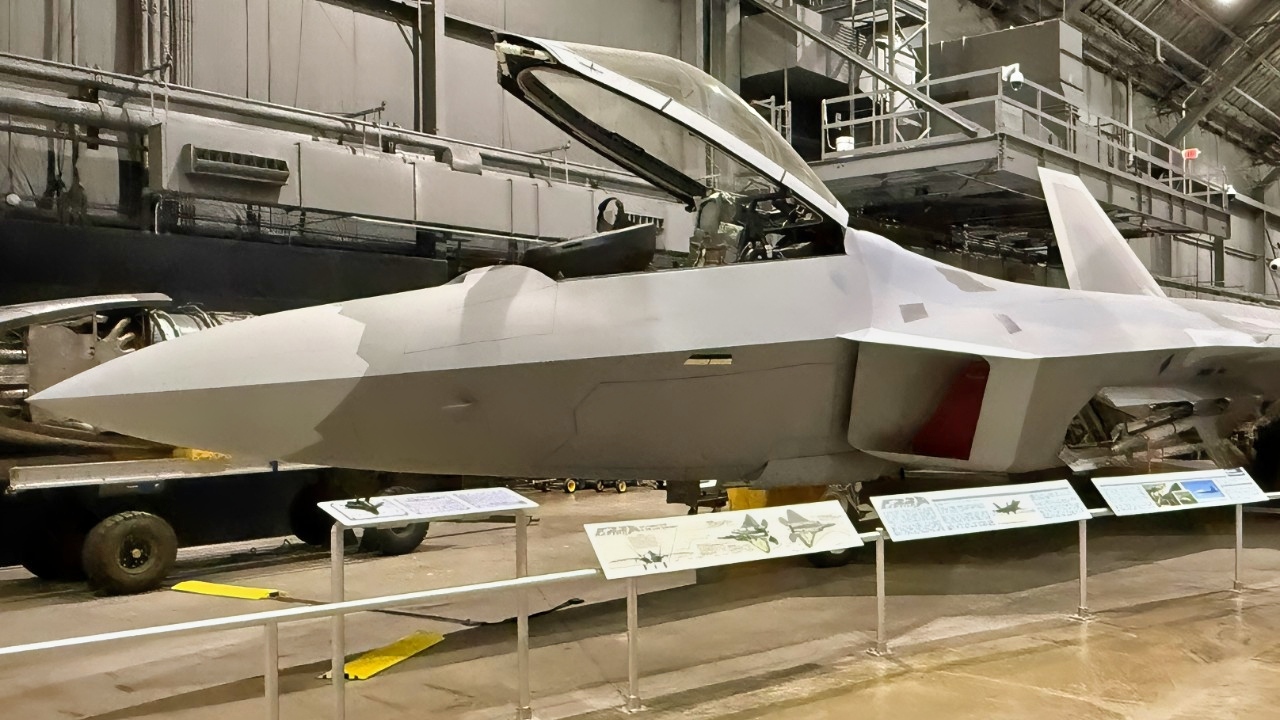
F-22A Raptor In Dayton, Ohio National Security Journal Photo.
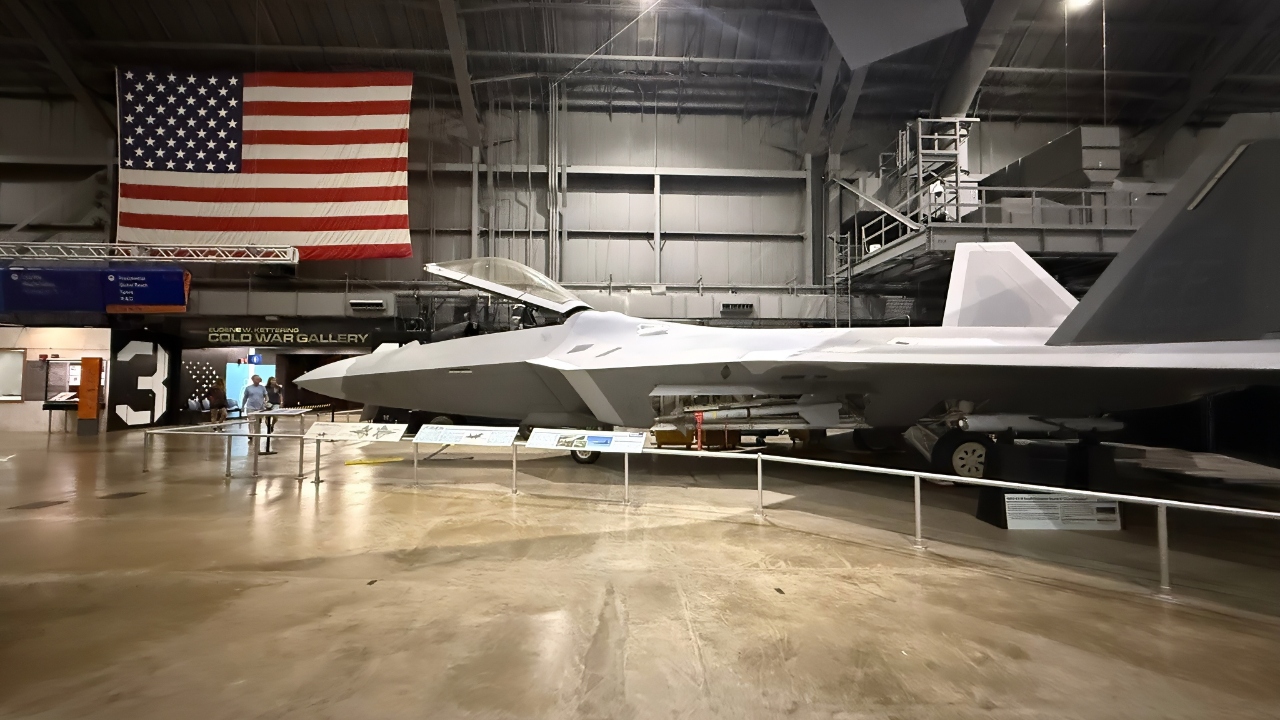
F-22 Resting at U.S. Air Force Museum. Image Credit: National Security Journal.
But to meet that goal, the Air Force says, it needs to procure jets at a faster rate.
“The Department of the Air Force (DAF) is focused on modernizing current fifth-generation and legacy capability fighter aircraft fleets, expanding exquisite warfighting capabilities, and acquiring new advanced fighter capability,” the Air Force report says.
“Maxing Out”
To meet that goal, the report states, the Air Force needs to accelerate the procurement of two specific jets: the Boeing F-15EX and the Lockheed Martin F-35A.
What would that look like?
Boeing “could achieve a max annual production rate of two dozen F-15EXs by FY27,” the report said, a number that could go up to 36 if additional funding is provided for facilities.
“We expect the F-15 production line to remain active well into the next decade, with aircraft operating through the 2050s. With current international F-15 customers expressing interest in new builds and upgrades to existing platforms, Boeing plans production for domestic and international customers,” Mark Sears, Boeing vice president for fighters, told Breaking Defense in a statement.

The Air Force’s newest fighter, the F-15EX Eagle II, was revealed and named during a ceremony April 7 at Eglin Air Force Base, Fla. The aircraft will be the first Air Force aircraft to be tested and fielded from beginning to end, through combined developmental and operational tests. (U.S. Air Force photo/Samuel King Jr.)

A U.S. Air Force F-15EX Eagle II, assigned to 85th Test and Evaluation Squadron, Eglin Air Force Base, Florida, lands at Kadena Air Base, Japan, July 16, 2025.This short-term visit marked a key milestone in the Department of Defense’s ongoing effort to modernize U.S. airpower in the Indo-Pacific. (U.S. Air Force photo by Airman Nathaniel Jackson)
What of the F-35 Program?
And despite the manifold issues with the F-35 fighter jet program, the report describes the F-35 as “the foundation of the USAF fighter force structure,” and states that the Air Force “seeks to increase F-35 procurement rapidly.”
However, the report also suggests that the needs of the Air Force may require procurement to be prioritized over the export of the jets. There are 19 nations, allied with the US, that use the F-35, and the jets have seen action of late in Europe, as Russian drones have begun to cross into NATO airspace.
“The F-35 offers the most advanced fighter capability and technology and is the most affordable option to ensure America and its allies remain ahead of emerging threats. We appreciate the US Air Force’s continued confidence in the combat-proven F-35 and investment in national defense,” a spokesman for Lockheed Martin told Breaking Defense.
But it isn’t just about those jets. The new sixth-generation F-47, announced earlier this year as part of the Next Generation Air Dominance (NGAD) initiative and with Boeing selected as the manufacturer, is part of the projection.
Another issue is that some planes are being retired, which is “complicating the math,” according to Breaking Defense.
“An important feature of the Air Force’s fighter structure strategy requires retiring aging aircraft, such as the service’s goal of clearing out A-10s from its inventory by the end of FY26 and the ‘partial retirement’ of Block 20 F-22 aircraft that lawmakers have previously blocked,” Breaking Defense said in the report. “Restricting the aircraft the Air Force can divest, the report says, ‘decreases overall aircraft availability rates and directly impacts operational readiness.'”
What About CCAs?
There’s also the question of unmanned Collaborative Combat Aircraft (CCAs) and whether they can be part of the solution in the future.
The report doesn’t appear to view that as the solution, at least on its own.
The new report “stresses that CCA are ‘not a replacement for manned fighter aircraft’ and that the drones will be paired with F-22s and F-35s, with the F-22 serving as the ‘threshold platform’ for drone integration,” as reported by Breaking Defense. “The Air Force will eventually link drone wingmen to the F-47, while other platforms like the F-15E, F-15EX, and F-16 are under consideration as well.”
About That Guidance
The Interim Defense Strategic Guidance was announced in April, the first in the tenure of the now “Secretary of War” Pete Hegseth.
Per an op-ed published this spring in The Hill, the new Interim Defense Strategic Guidance “emphasizes the centrality of the China challenge, with a particular focus on deterring a possible invasion of Taiwan.” The document also discusses the issue of fentanyl crossing the border, and treating this as “a national security threat and not simply a law enforcement problem.” The op-ed did not address the issue of jet procurement.
In that op-ed, however, author Michael O’Hanlon, the Phil Knight Chair in Defense and Strategy at the Brookings Institution, offers some criticisms.
“Yes, a Chinese assault on Taiwan to seize the island of 23 million people—and most of the world’s best semiconductor production facilities—is the worst-case scenario that should concern American defense planners,” O’Hanlon writes. “But it is also probably the least likely way that China might attack Taiwan.”
He also raised concerns about the possibility of military action to stop the flow of drugs into the country, which is a warning that it appears to have not been heeded.
“We need to avoid the kind of unilateralist action that might, in a surprise attack, achieve a few impressive hits, only to founder thereafter as cooperation with Mexico dried up and fentanyl production went further underground.”
About the Author: Stephen Silver
Stephen Silver is an award-winning journalist, essayist, and film critic, and contributor to the Philadelphia Inquirer, the Jewish Telegraphic Agency, Broad Street Review, and Splice Today. The co-founder of the Philadelphia Film Critics Circle, Stephen lives in suburban Philadelphia with his wife and two sons. For over a decade, Stephen has authored thousands of articles that focus on politics, national security, technology, and the economy. Follow him on X (formerly Twitter) at @StephenSilver, and subscribe to his Substack newsletter.
More Military
Canada’s F-35 Fighter Debate Summed Up in 3 Words
The U.S. Air Force’s B-52J Bomber Crisis
Mach 5.1 X-51 Waverider ‘Hypersonic Scramjet’ Has a Message for the Air Force
Beast Mode: How the F-35 Stealth Fighter Bolts on 22,000 Pounds of Bombs


Brian H
November 2, 2025 at 6:24 pm
What a joke and a con job. Talk about glorified beat cops. When was the last time one of our fighters took a shot at another aircraft in-flight? When was last time someone shot at us? Good Lord what a waste of money and resources. Nobody knows better than the military how future battles and wars will be fought. Joystick, no pilot, secure location, relatively cheap drone. 6th generation fighters, yet somehow B-52 bombers manage to work perfectly fine and were built when????