

Key Points and Summary – Time for a rethink of the U.S. Army’s canceled Strategic Long Range Cannon (SLRC), an ultra-long-range concept meant to fire hypersonic projectiles up to 1,150 miles—ranges that could threaten targets from the Philippines to Shanghai or from Japan to Beijing.
-Congress cut funding in 2022 over cost, risk, and redundancy with cruise and ballistic missiles, while a National Academies review flagged railgun-like launch and Mach 5+ shell challenges.
From a gun that shot at trees to an $18 billion boondoggle, these are the 5 worst and most disastrous weapon systems in U.S. Army history. Image Credit: U.S. Army.
-The Ukraine war shows artillery’s enduring value, and current options like PrSM (≈311 miles) can’t match SLRC reach. With China in mind, he says the Army should revisit SLRC despite expense and complexity.
The U.S. Army’s Ultra-long Range Cannon Deserves a Second Look
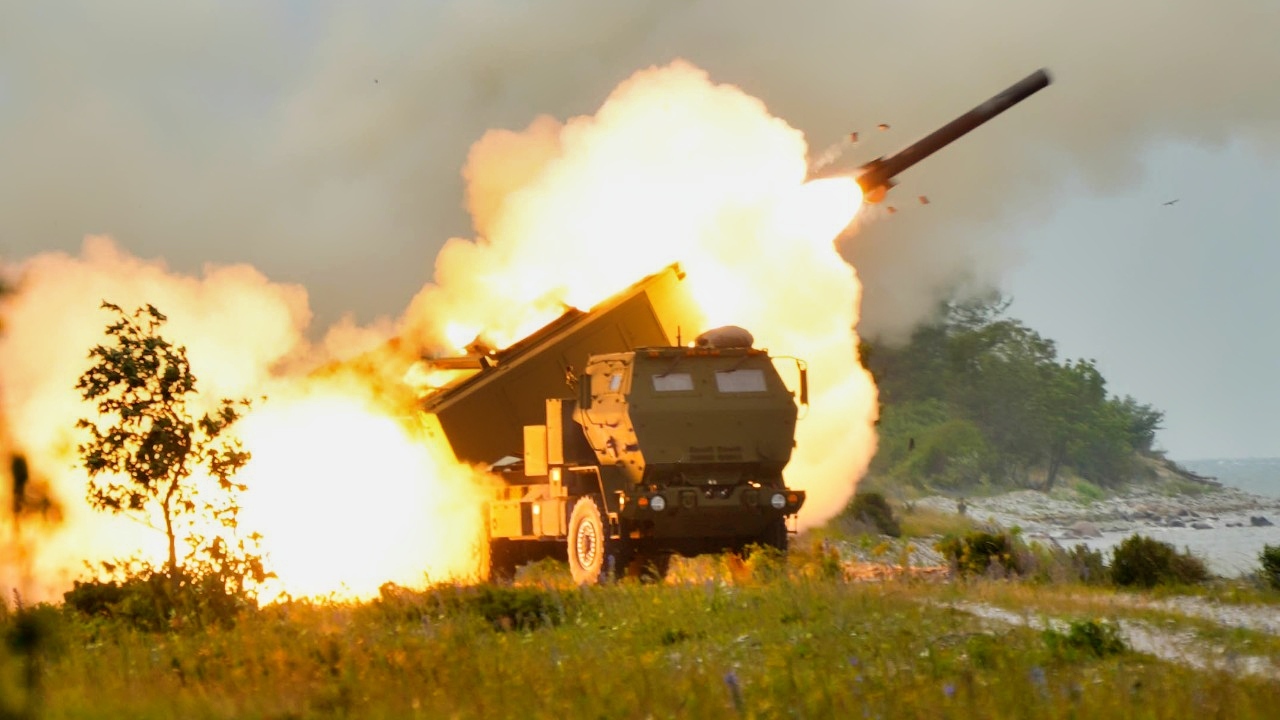
If there is going to be a conflict in East Asia, the ensuing warfare will likely be executed by stand-off missiles and drones. But the war in Ukraine has shown that long-range artillery, particularly multiple-launch rocket systems, may still be a valuable standby to destroy targets from many miles away.
But what if I told you that three years ago, the U.S. Army was working on an artillery system that could lob shells 1,150 miles?
This would have been a welcome addition to the arsenal in the Indo-Pacific, where distances of targets eclipse even the mightiest artillery the Army currently has.
The earthshattering Strategic Long Range Cannon (SLRC) was going to be a difference maker should it have come to fruition. There has been no other howitzer ever built that had that kind of range. But would it have worked?

The 1-148th Field Artillery Regiment is the latest unit in the Idaho Army National Guard to upgrade its combat capability as modernization efforts across the U.S. Army and Army National Guard take shape.
There were obvious technical challenges of firing rounds that far away. The SLRC had warfare in the Indo-Pacific in mind, though, and it showed that the Army was prioritizing weapons systems that could reach out and touch the enemy from extended range.
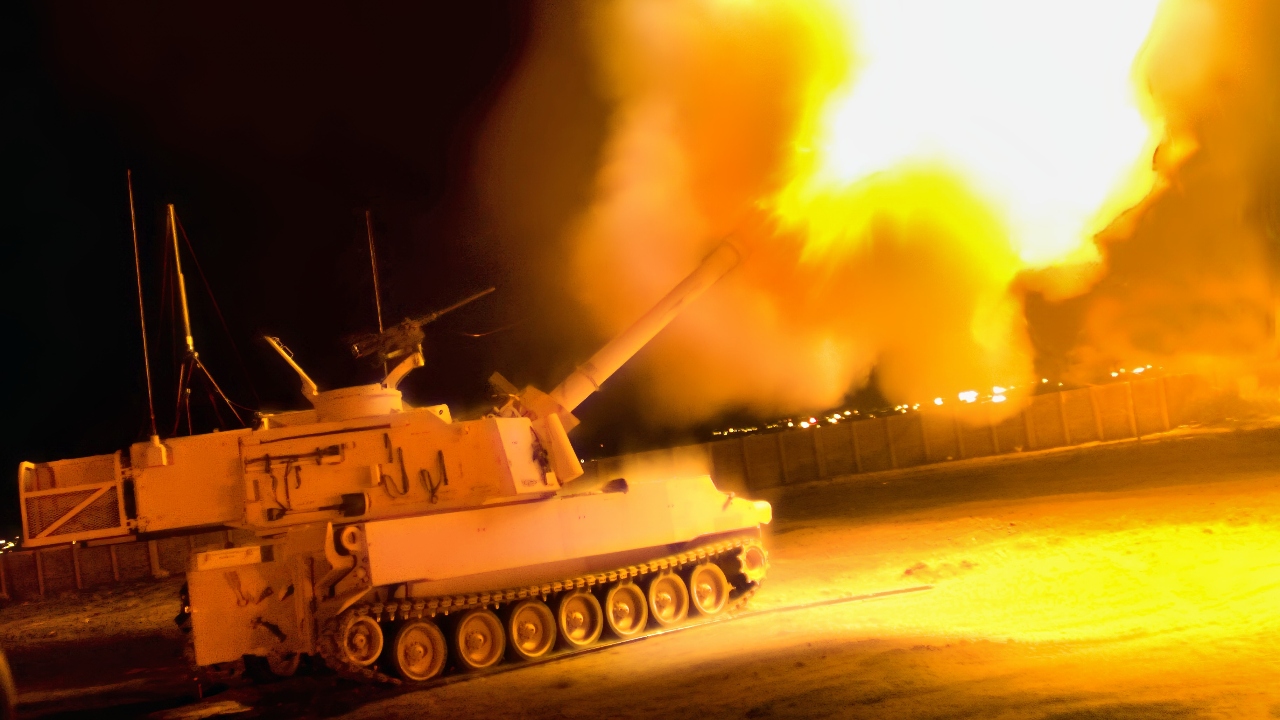
By comparison, the Army’s Paladin self-propelled 155mm howitzer has only a range of 19 miles. Even the big 16-inch guns of an Iowa-class battleship could only hit targets from a distance of 29 miles.
In Like a Lion, Out Like a Lamb
But the SLRC was doomed from the start. It needed the kind of research and development that would have been expensive and time-consuming. The Army had never trained soldiers on how to operate ultra-long systems such as the SLRC. Congress concurred with this assessment and pulled funding away from SLRC in 2022.
Other Systems Can Do the Same Thing
Lawmakers believed that the SLRC was redundant – meaning that other long-range missiles like the Tomahawk cruise missiles fired from submarines could do the same thing without the new development expenses and time that needed to be invested. The SLRC was estimated to have cost in the billions of dollars and this created an ample level of sticker shock to legislators on Capitol Hill.
China Would Have Worried About the Long-range Weapon
But did the naysayers act too soon? With a 1,150-mile combat radius, SLRC could have been placed in the Philippines and hit Shanghai, according to Popular Mechanics. If deployed in Japan, the SLRC could have reached Beijing. These projectiles would have been difficult for the Chinese to counteract since they were coming from a cannon at high speed.

Image Credit: Creative Commons.

South Korea Artillery K9 Thunder. Image Credit: Creative Commons.
The SLRC would have been able to hit Chinese ships and militarized islands in the South China Sea, too. This weapon was going to be extremely valuable. It could be resurrected now that China is such an erstwhile adversary. It would require considerable effort and a substantial investment of time, money, and resources, but these capabilities would have significantly changed the way the Army’s artillery branch conducts warfare.
Strategic Long Range Cannon: Give It an Extra Set of Eyes
The potential of SLRC enthralled the Army, but it needed an outside feasibility study first. The National Academies of Sciences, Engineering, and Medicine went to work to research possible outcomes and what would be required to produce the SLRC in numbers. The committee met for only four months.
These scientists determined that the giant cannon would have to use electromagnetic launch like a railgun. The shell needed to travel at MACH 5+ hypersonic speed to be effective.
The researchers were unsure whether the Army and defense contractors had this kind of technology ready to deploy.
But the Army already had a program called Precision Strike Missile that was going to be fired from a HIMARS battery. The Precision Strike Missile only has a range of 311 miles, considerably shorter than SLRC. The advantage of the Precision Strike Missile is that the Army would not have to develop a completely new launch system, which may or may not have been successful. It is believed that the Precision Strike Missile could have an extended range due to what the Army has learned from the artillery use by Ukraine and Russia during the war.
Then SLRC would not have been needed. This thing does sound great on paper, though. That kind of combat radius would have been a natural fit for warfare in the Indo-Pacific that will entail the use of long-range stand-off missiles.
If there is going to be a war against China, the SLRC would have gladly welcomed to the force.
Let’s Give It Another Shot
The Army may have given up too early on the SLRC. It should have collected other opinions on feasibility. No one wants to waste money on technology that was never going to work, but I would have voted to spend more time and cut loose some funding on SLRC. This is the kind of forward-looking thinking that will be necessary to defeat adversaries like Russia and China, should there be a shooting war. North Korea would be a use case, too.
It is time to rethink older weapons that the Army uses and look for ways to transform the future battlefield. The service branch could benefit from new ideas that emerge from lessons learned in Ukraine and Russia. The SLRC is an excellent concept, and the Army should take another look at how this could be produced. It wouldn’t be a bad idea to resurrect it.
That 1,150-mile range is irresistible. Time to relook at the Strategic Long Range Cannon.
About the Author: Brent M. Eastwood
Brent M. Eastwood, PhD is the author of Don’t Turn Your Back On the World: a Conservative Foreign Policy and Humans, Machines, and Data: Future Trends in Warfare plus two other books. Brent was the founder and CEO of a tech firm that predicted world events using artificial intelligence. He served as a legislative fellow for US Senator Tim Scott and advised the senator on defense and foreign policy issues. He has taught at American University, George Washington University, and George Mason University. Brent is a former US Army Infantry officer. He can be followed on X @BMEastwood.
More Military
The F-4 Phantom II Has a Message for the U.S. Military
The Iowa-Class Battleships Have a Message for the U.S. Navy
Russia’s Kirov-Class Battlecruisers Have a Message for the U.S. Navy
Russia’s PAK DA Stealth Bomber Has a Message for the U.S. Air Force
The Sturgeon-Class Nuclear Attack Submarines Have a Message for the U.S. Navy


