


Key Points and Summary – The U.S. Army, having “fallen massively behind” in the low-cost, high-volume drone warfare perfected in Ukraine, is now launching a “massive campaign” to fix its “drone deficit.”
-Despite excelling at expensive, high-tech systems, the Army lacks the sheer numbers of small, expendable commercial-style drones. To fix this, a new Pentagon Task Force has been created.
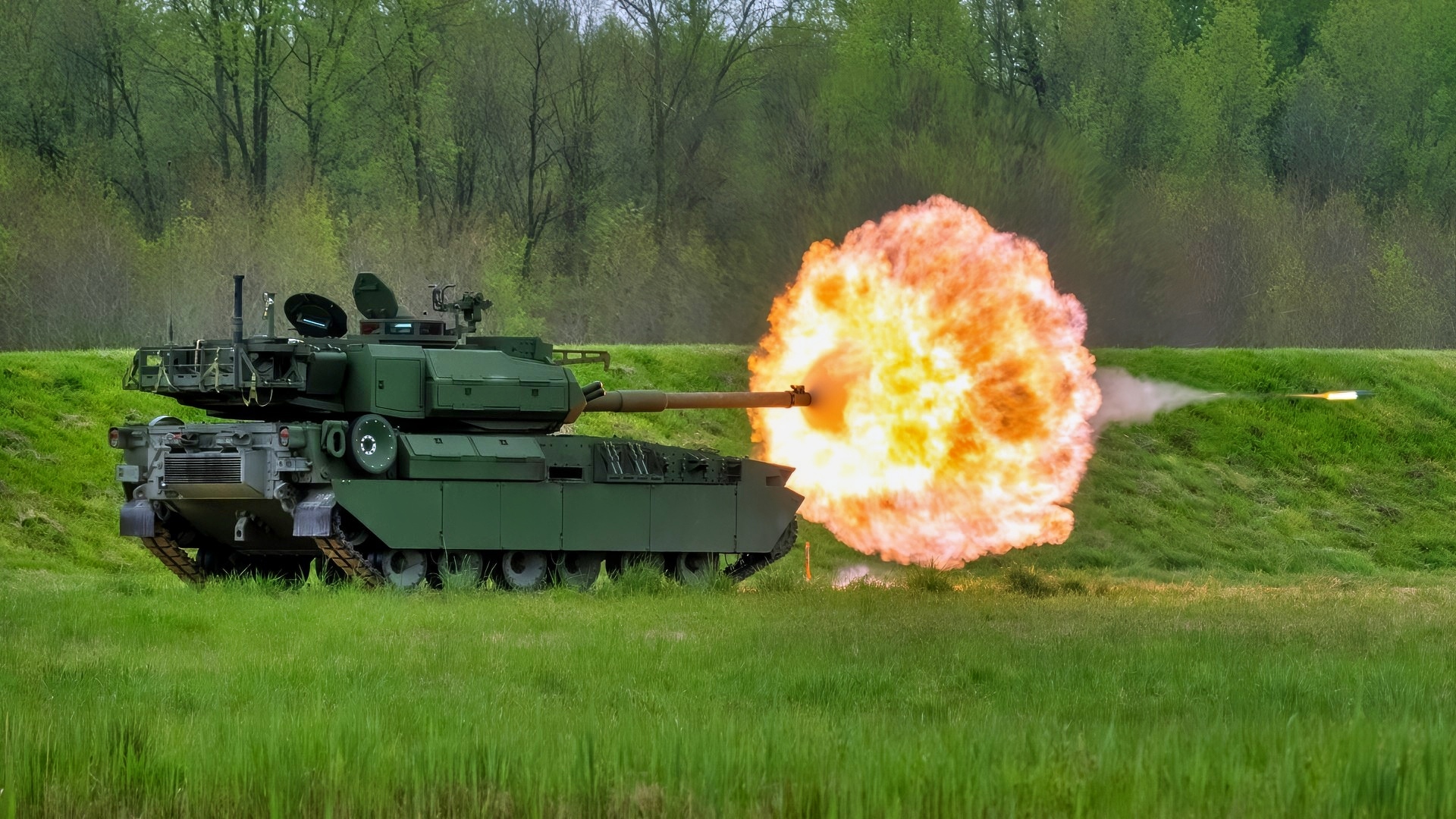
A live fire demonstration of the Army’s newest and most modernized combat vehicle, the M10 Booker, marks the conclusion of the M10 Booker Dedication Ceremony at Aberdeen Proving Ground, in Aberdeen, Md., April 18, 2024. (U.S. Army photo by Christopher Kaufmann)
-The Army aims to equip every combat division with over 1,000 drones and counter-drone systems within two years by streamlining acquisition and building new U.S. manufacturing lines to avoid Chinese-made components.
The Army Has a Drone Problem
The United States Army is among the many militaries around the world now racing to address the massive tactical and technological deficit created by advanced drone combat operations in Ukraine.
The war between Russia and Ukraine has been nothing short of paradigm-changing in the realm of drone warfare, as innovations continue to redefine offensive and defensive concepts of operation.
Switchblade kamikaze drones have been tracking and destroying Russian tanks at an alarming rate. Drone swarms are being used to blanket areas with surveillance, overwhelm defenses, and generate large-scale “area” attacks.
Certainly, Russian and Ukrainian fighters have been enterprising and have found new uses for existing technologies, helping to create the emergence of some new technologies. However, the drone explosion primarily pertains to the widespread, low-cost availability of small attack and surveillance drones.
Not only are they commercially available and inexpensive, but the drones being used are proving to be adaptable and modifiable to fit operational war aims.
In some cases, grenades have been attached to inexpensive drones, and small, inexpensive drones are being used in swarms to evade defenses and take down high-value targets.
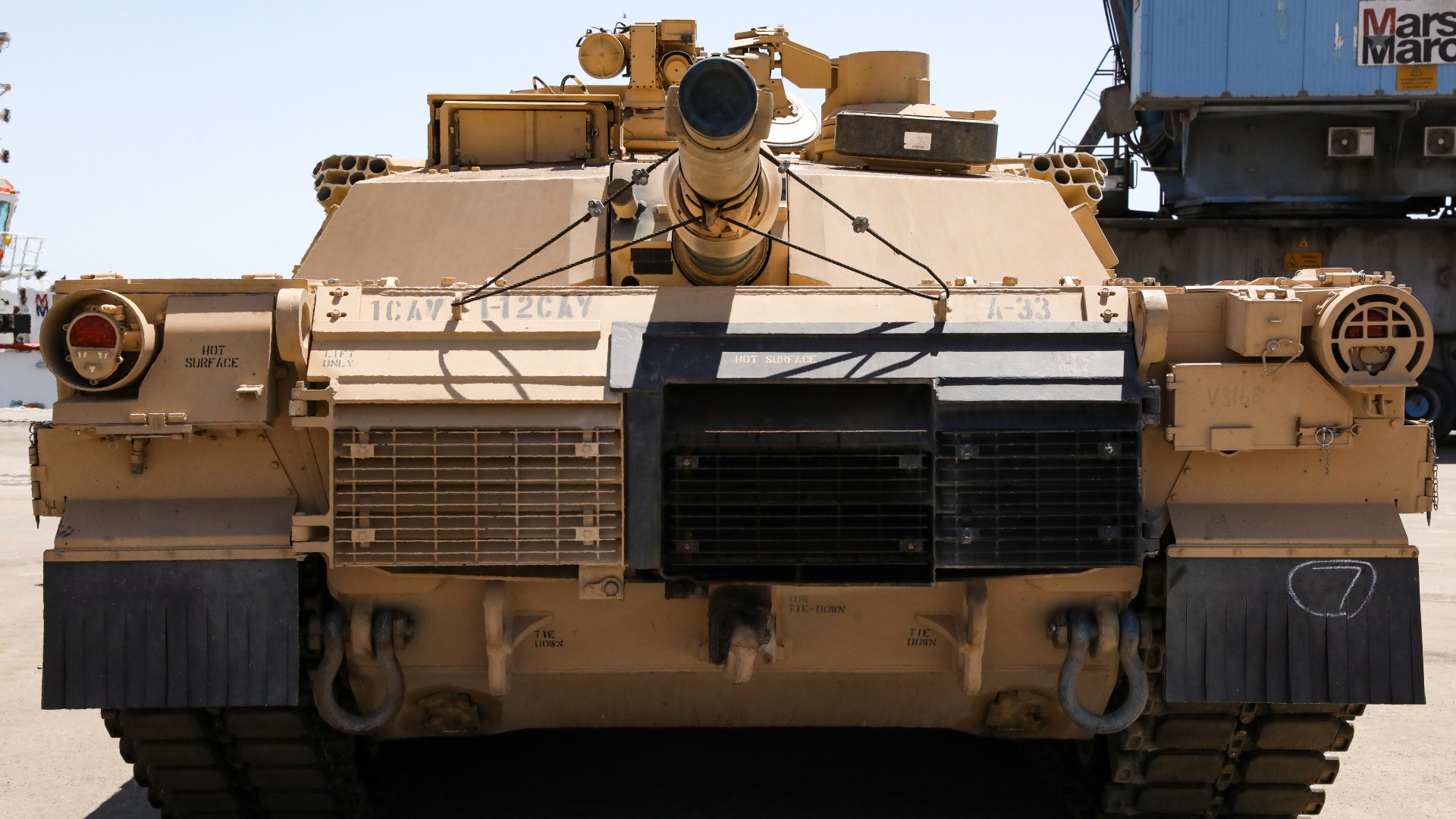
A U.S. Army M1A3 Abrams Tank from the 1-12 Cavalry Squadron, 1st Cavalry Division waiting to be guided onto a loading vehicle and secured for transport at the Port of Agadir, June 3, 2022, Agadir, Morocco. African Lion 2022 is U.S. Africa Command’s largest, premier, joint, annual exercise hosted by Morocco, Ghana, Senegal and Tunisia, June 6 – 30. More than 7,500 participants from 28 nations and NATO train together with a focus on enhancing readiness for U.S. and partner nation forces. AL22 is a joint all-domain, multi-component and multinational exercise, employing a full array of mission capabilities with the goal to strengthen interoperability among participants and set the theater for strategic access. (U.S. Army photo by PFC Donald Franklin)
All of these developments, and the extent to which they are shaping the war in Ukraine, have created a situation where the US Army and the rest of the world have fallen massively behind in the realm of drone warfare, innovation, tactics, and concepts of operation.
Army Drones
There is a certain irony to the Army’s drone predicament, because in one sense, the US Army arguably leads the world in advanced applications of small, AI-enabled unmanned systems, with technologies such as manned-unmanned teaming (MUM-T), multi-domain networking, and drone autonomy.
Yet, the service is nonetheless facing a drone deficit.
The Army simply does not have enough small drones and continues to surge its efforts to close the gap. Additionally, the Army has been disproportionately focused on expensive drone technologies, potentially missing or overlooking commercially available opportunities to acquire large numbers of small drones.
The Army appears to be aware of this. It is working intensively to ramp up its industrial capacity to manufacture small, expendable, commercially available drones at scale, thereby closing the gap.
Drone Overhaul
To address the problem, the Army has launched a massive campaign to equip every combat division with more than 1,000 drones and counter-drone weapons within two years.
To accomplish this, the service is strengthening industrial capacity and working to streamline acquisition processes, ensuring that commercially available drone technologies are acquired more quickly and on a large scale.
Much of this will likely require building new manufacturing capabilities in the US, as many small systems are currently manufactured in China.
Tactical Overhaul
Part of the drone overhaul involves training and tactics, as new weapons are now being employed. For example, weapons such as EW are being used in a much greater and more complex capacity, making drone guidance and “intercept” both more possible and, in some cases, more difficult.
In still other cases, Russian forces are attaching long, flexible fiber-optic cables to drones to prevent them from emitting an RF signal and being jammed.
Training is a significant part of the overhaul, as the Army utilizes lessons learned studies to identify tactical, technological, and strategic variables that can be gleaned from the ongoing war and integrated into the US Army’s thinking about drones.
Interestingly, the Army operates a Counter-Unmanned Aerial Systems (C-UAS) Counter Drone University based in Fort Sill, Oklahoma.
New Pentagon Task Force
The new Task Force designates the Army as the Executive Agent of a Joint, Multi-Service Task Force aimed at studying—and quickly integrating—lessons learned from Ukraine and other key global areas where drone attack technologies are being used and expanding.
The arrival of this Pentagon Task Force aligns with ongoing work at the Army-led C-UAS University, located at Ft Sill, Oklahoma, which is currently studying the operational uses of drone countermeasures worldwide.
“Here at the schoolhouse we help provide the lessons because we are part of a broader lessons learned effort. We go out to Europe and all the different COCOMs (Combatant Commands) to pull back those lessons and we implement them into training here. We have to be adaptable to the threat as it changes over time,” Lt. Col. John Peterson, Director C-UAS University, Fort Sill, Okla., told Warrior earlier this year.
About the Author: Kris Osborn
Kris Osborn is the President of Warrior Maven – Center for Military Modernization. Osborn previously served at the Pentagon as a highly qualified expert in the Office of the Assistant Secretary of the Army—Acquisition, Logistics & Technology. Osborn has also worked as an anchor and on-air military specialist at national TV networks. He has appeared as a guest military expert on Fox News, MSNBC, The Military Channel, and The History Channel. He also has a Masters Degree in Comparative Literature from Columbia University.
More Military
The British Army’s Big Challenger 3 Tank Mistake Still Stings
F-35 Stealth Fighter Program Has Passed the Point of No Return
The Iowa-Class Battleships Have A Message for Any Navy on Earth
Canada Has a Big Message for the Eurofighter Typhoon
The Mach 2 F-16 Fighting Falcon Fighter Has a Message for the U.S. Air Force


