


Key Points and Summary – The F-35 has endured schedule slips, software headaches, and endless debate.
-Yet air forces keep buying it for the same five reasons: it sees more, shares more, survives more, scales better with allies, and has a long runway for upgrades.
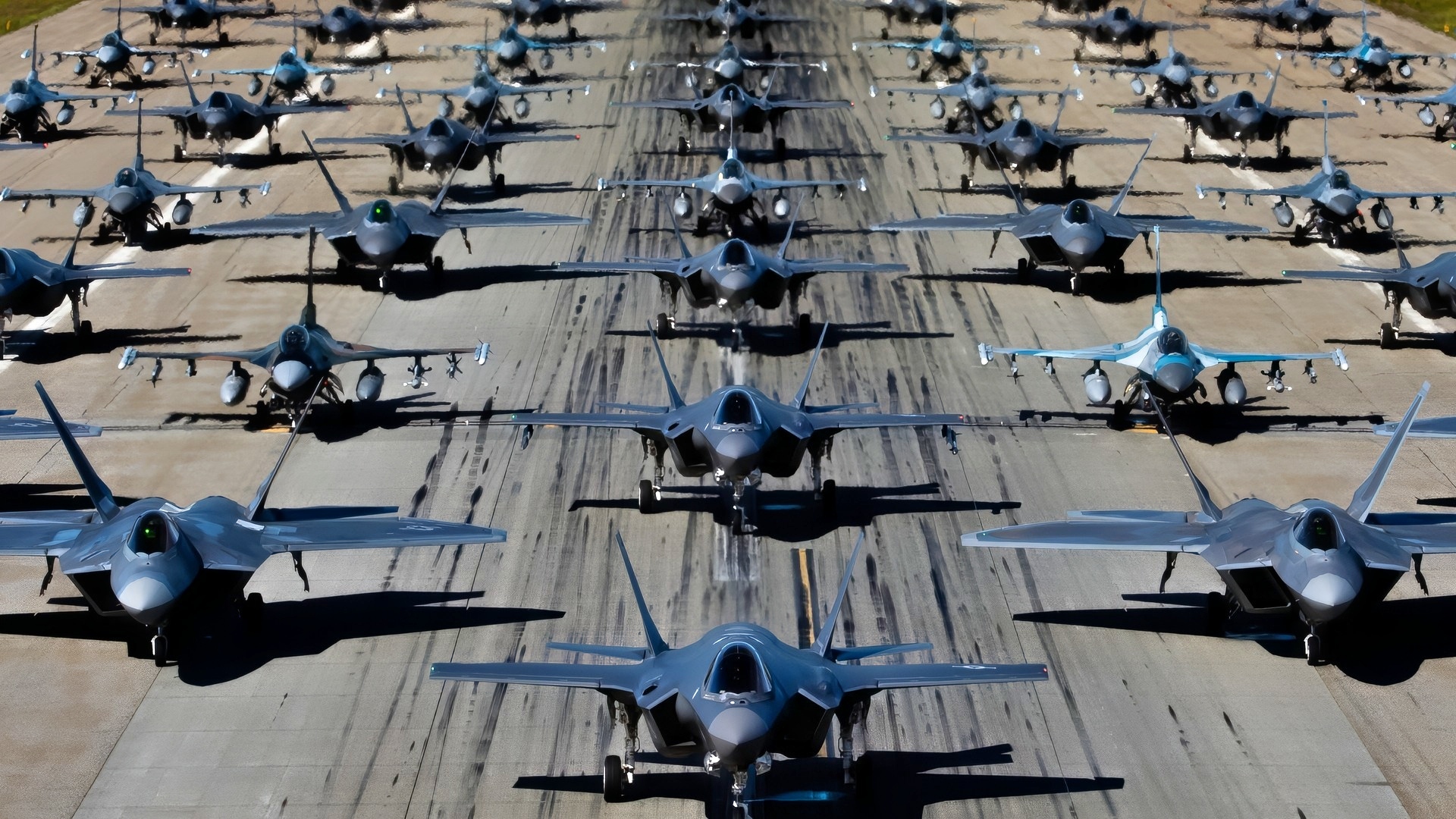
The 354th Fighter Wing conducts a 75-fighter jet formation at Eielson Air Force Base, Alaska, Aug. 12, 2022, in honor of the U.S. Air Force’s 75th Anniversary. This capabilities demonstration included F-35A Lightning II, F-16 Fighting Falcon and F-22 Raptor aircraft from across Pacific Air Forces. (U.S. Air Force photo by Senior Airman Gary Hilton)
-Stealth matters, but so does the jet’s “quarterback” role—fusing sensors, guiding teammates, and turning many shooters into one fight.
-Global commonality keeps costs manageable while capacity rises. Next-gen programs should complement, not cannibalize, a platform that’s already fielded and improving.
-If the price is right, a higher-end “Ferrari” F-35 variant could harvest sixth-gen tech without sacrificing the mass the force needs.
The F-35 Is the Best Fighter on Earth
Yes, the F-35 program has had a bumpy ride. Software has slipped. Upgrades have taken longer than planned. Sustainment costs still need to bend down.
Those are problems to fix, not reasons to abandon the only fifth-generation fighter in mass production across three U.S. services and a growing roster of allies.
The larger truth is simple: when commanders want a jet that can enter contested airspace, understand the whole fight, and quietly make everyone around it deadlier, they reach for the F-35.
That is why the order book keeps filling even when the headlines are rough.

U.S. Air Force Airman 1st Class Jacob Taylor, a dedicated crew chief assigned to the 48th Fighter Wing, communicates with an F-35 Lightning II pilot,during Point Blank 22-3, at Royal Air Force Lakenheath, England, June 23, 2022. Point Blank is a recurring joint training exercise designed to enhance tactical proficiency and interoperability with NATO allies and partners. (U.S. Air Force photo by Senior Airman Koby I. Saunders)
The F-35: 5 Reasons This Plane Dominates the Skies
Below are five reasons the F-35 should remain the backbone—while next-gen projects mature at a sensible pace.
1) It’s The “Quarterback,” Not Just A Stealth Airframe
If you strip away the buzzwords, the F-35’s signature strength is comprehension. Its sensors—radar, infrared, electronic support—and its computing stack fuse hundreds of inputs into a single, intuitive picture. Pilots don’t have to “stare and compare” between screens; the jet does the correlation for them and highlights what matters.
Just as important, it shares that picture with other aircraft, ships, and ground units over secure links, making the entire team smarter and faster.
That’s why operators call it a quarterback. It doesn’t just throw the pass; it reads the defense, calls audibles, and sees mismatches others miss. In practice, that means a pair of F-35s can silently mark targets for legacy fighters, cue a surface ship’s missiles, or direct uncrewed teammates—all while staying hard to find.
You can buy stealth. What’s harder to buy is the brain that turns stealth into outsized effect. The F-35 has that brain today.
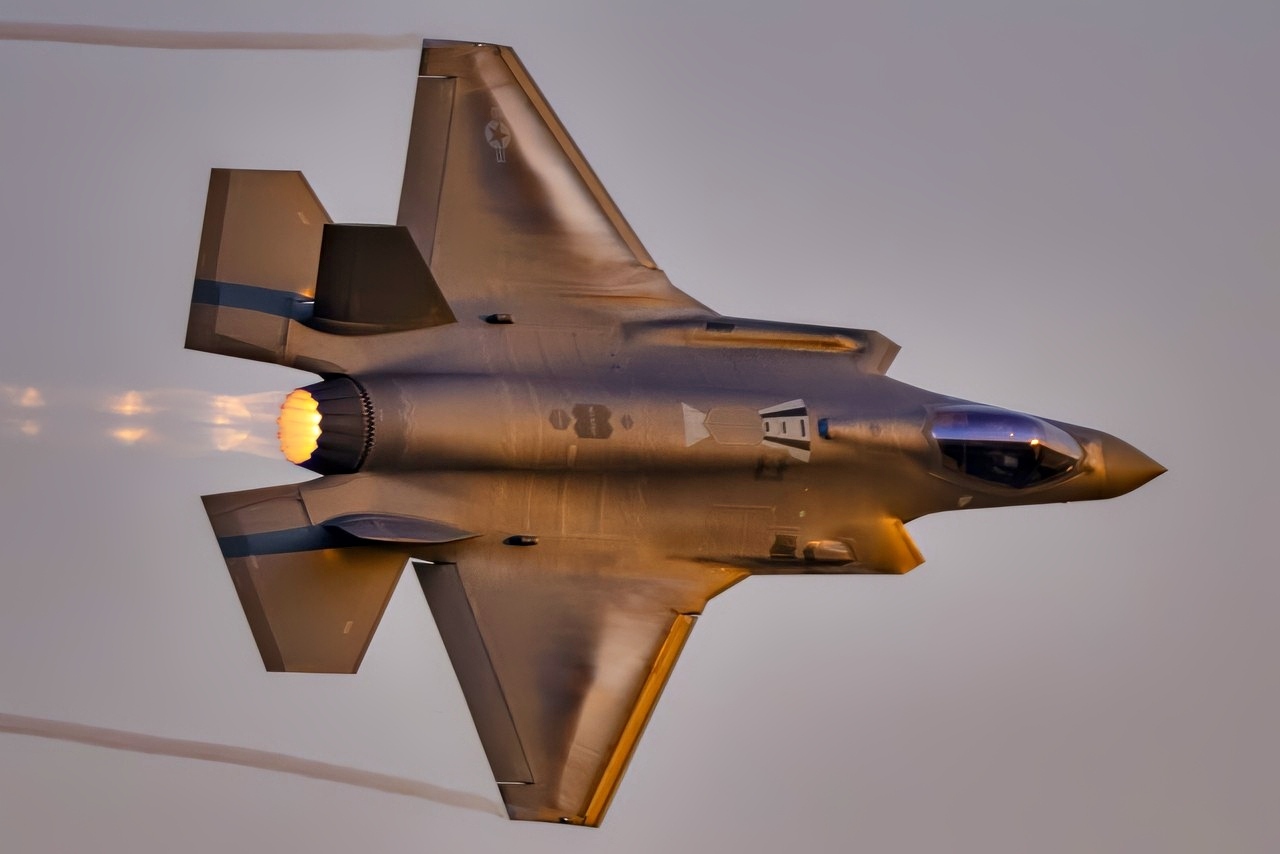
A U.S. Air Force F-35A Lightning II assigned to the F-35A Lightning II Demonstration Team performs at the Capitol Air Show over Sacramento, California, July 15, 2024. Innovations such as the F135 Smart Stacking Tooling Enhancement developed by the OC-ALC mechanics and engineers have significantly improved the rotor assembly process, increasing precision and enhancing the depot’s ability to produce the engine that powers the F-35 Lightning II. (U.S. Air Force photo by Staff Sgt. Zachary Rufus)
2) Survivability Where It Counts, When It Counts
Stealth isn’t a magic cloak. It’s a head start in a detection contest—and a tax adversaries must pay just to find you. Add disciplined emissions control and the F-35’s passive sensors, and you get an airplane that can pick its engagements and live to fight the next sortie.
Survivability also comes from tactics: using the jet as a forward sensor to guide standoff shooters; leveraging uncrewed wingmen for the riskiest tasks; and attacking the enemy’s kill chain, not just its airplanes.
In real operations, survivability isn’t measured by a single missile shot. It’s measured by whether your jet can get in, do useful work, and get out without asking a tanker to loiter in a danger zone or a jamming aircraft to shout its presence.
The F-35’s low observable design, fused awareness, and growing electronic-warfare toolset make that possible against the kinds of integrated defenses the United States and its allies care about most.

U.S. Air Force Airmen load a munition onto an F-35 Lightning II in preparation to conduct a scenario during Checkered Flag 24-1 at Tyndall Air Force Base, Florida, Nov. 1, 2023. Checkered Flag is a large-force aerial exercise held at Tyndall Air Force Base which fosters readiness and interoperability through the incorporation of 4th and 5th-generation aircraft during air-to-air combat training. (U.S. Air Force photo by Staff Sgt. Jake Carter)
3) One Family, Three Flavors, Dozens Of Allies
The F-35’s most underrated advantage is scale. The same basic airplane serves the U.S. Air Force (conventional takeoff A model), the Marines (short takeoff/vertical landing B model), and the Navy (carrier-capable C model).
That commonality simplifies training pipelines, maintenance, and software baselines. It also multiplies interoperability: U.S. services and allied air forces fly the same jet, share the same tactics, and plug into the same data fabric. When you want a coalition to move at the speed of trust, flying the same airplane helps.
Scale has a dollars-and-sense benefit, too. A global user base spreads development and sustainment costs across more tails, while the production line keeps humming. Nations that can’t afford bespoke fleets still get top-tier effects, and the United States inherits a deep bench of trained partners.
In a protracted crisis, that bench matters as much as any one exquisite platform.
4) A Long Runway For Upgrades (Even If The Road Has Potholes)
Modern air combat is a software sport. The F-35’s hardware refresh and Block 4 modernization are designed to give the jet more processing power, memory, and cooling, so it can field new sensors, weapons, and electronic-warfare tricks over time.
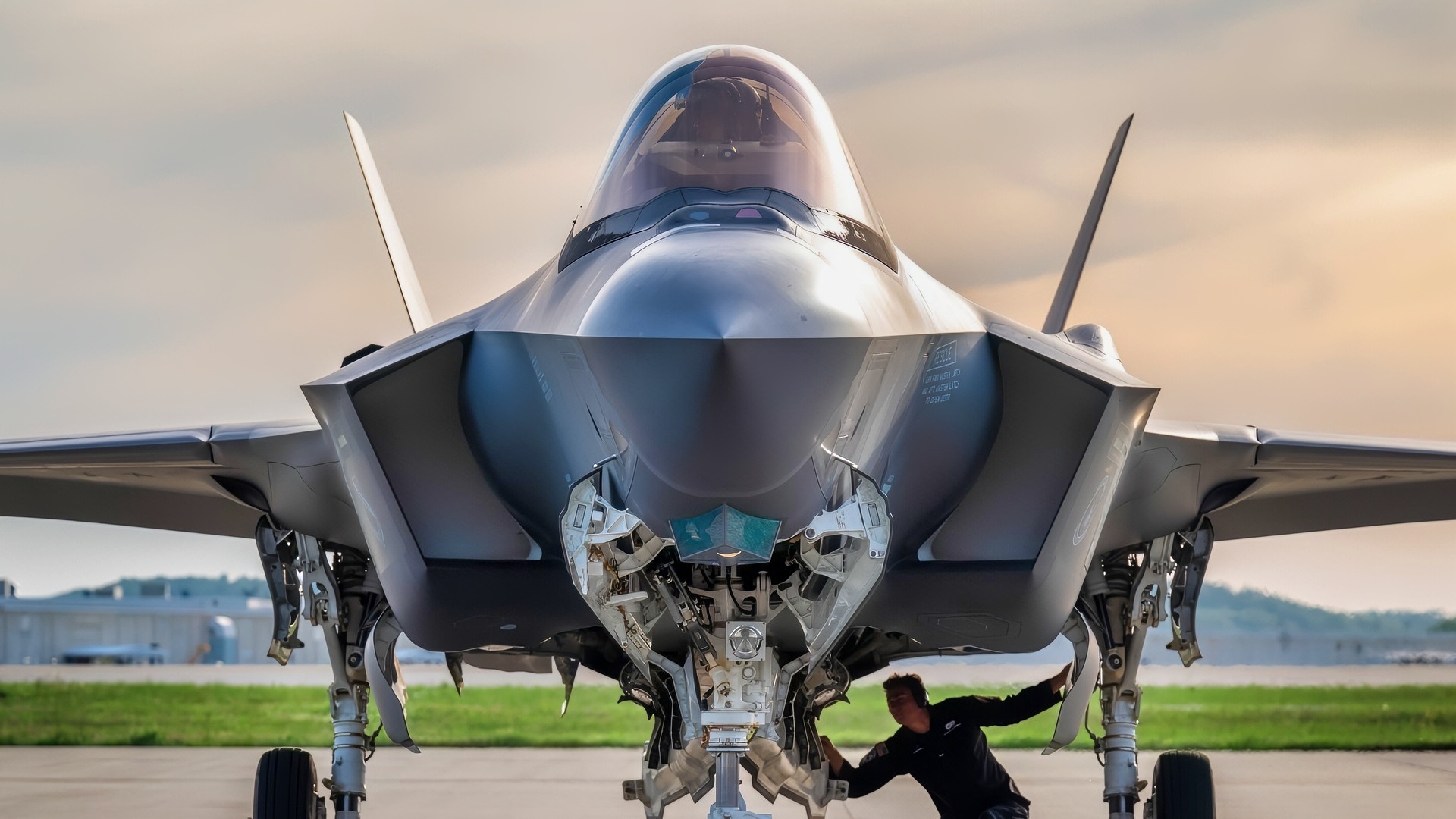
An aircraft from the U.S. Air Force F-35 Lightning II Demonstration Team arrives at the Kentucky Air National Guard Base in Louisville, Ky., April 19, 2023, in advance of the Thunder Over Louisville air show. The annual event, to be held along the banks of the Ohio River on April 22, will feature more than 20 military and civilian aircraft. (U.S. Air National Guard photo by Dale Greer)
Has that transition been slower and pricier than planned? Absolutely. But once you’ve paid for the bigger engine room, you can keep sliding in new machinery without redesigning the ship.
Why does that matter?
Because adversaries are learning, too. They will tweak radars, decoys, and jammers. They will field new missiles. The platform that can absorb new code and new payloads fastest wins the long game.
The F-35 already has the largest installed base to spread those upgrades across many users; when the compute foundation is finally locked, the cadence of improvements can quicken without derailing production.
5) Cost-Per-Effect Beats Sticker Shock
Fighter debates often devolve into price tags and cost-per-flight-hour charts. Useful—but incomplete. What commanders really buy is cost-per-effect: the price to achieve a mission with acceptable risk on an acceptable timeline. If an F-35 reduces the number of sorties to find, fix, and finish targets—or lets cheaper shooters hit with confidence because the F-35 has done the sensing—its true cost looks different.
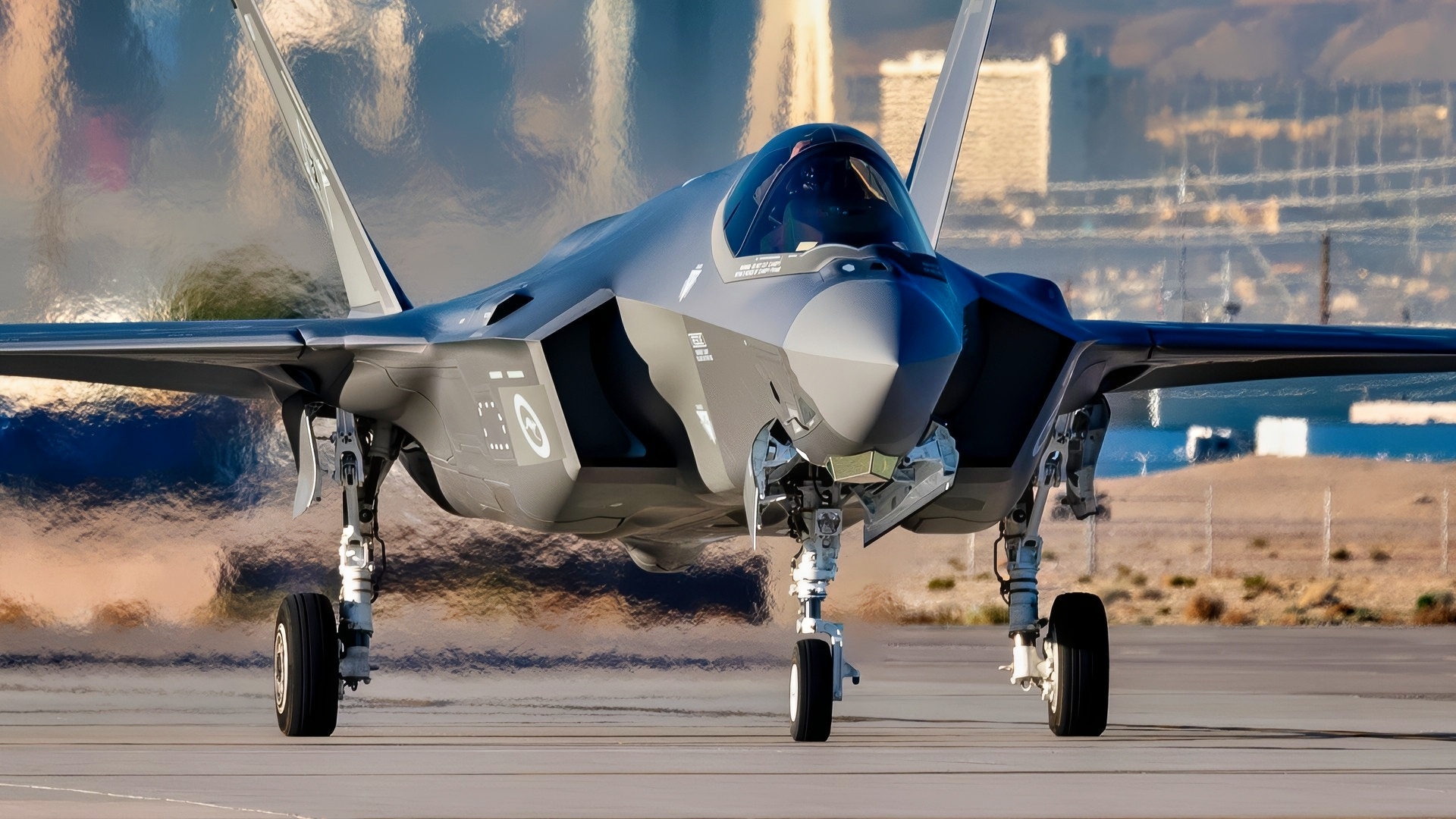
A Royal Australian Air Force F-35 Lightning II taxis out for a morning mission at Nellis Air Force Base, Nevada, Jan. 31, 2024. Approximately 150 Royal Australian aviators participated in Bamboo Eagle 24-1 with Royal Air Force and U.S. Air Force assets. These exercises build partnerships and is an opportunity to enhance the readiness and training necessary to respond as a joint force to any potential crisis or challenge across the globe. (U.S. Air Force photo by William R. Lewis)
The jet’s versatility matters here. It can police airspace over a capital on Tuesday, escort tankers on Wednesday, and serve as a stealthy forward sensor for a maritime strike package on Thursday. It can do these things with partner nations flying the same jet from bases across a theater, with the same datalinks and the same software.
That reduces friction, accelerates planning, and compounds the value of every hour flown. In cost-per-effect terms, the F-35 often pencils out better than critics admit.
Anticipating The Counterarguments—And Answering Them
“But availability and sustainment are still a problem.”
Sustainment is the hardest, least glamorous part of any fleet, and the F-35’s global footprint magnifies the challenge.
The remedy is not to starve the program but to finish the modernization steps that enable smarter diagnostics, parts commonality, and more repair capacity across the alliance. Scale can be a burden; it’s also the path to predictable support and lower unit costs.
“Block 4 delays show the jet is brittle.”
They show the risk of swapping engines mid-flight. The program chose to install a much more powerful computing stack to carry the jet for decades; that decision was sound, even if the execution has been choppy. Once the compute headroom is standard across the fleet, new software and weapons should land faster—and matter more—than if the program had stayed on smaller hardware and trickled out incremental features.
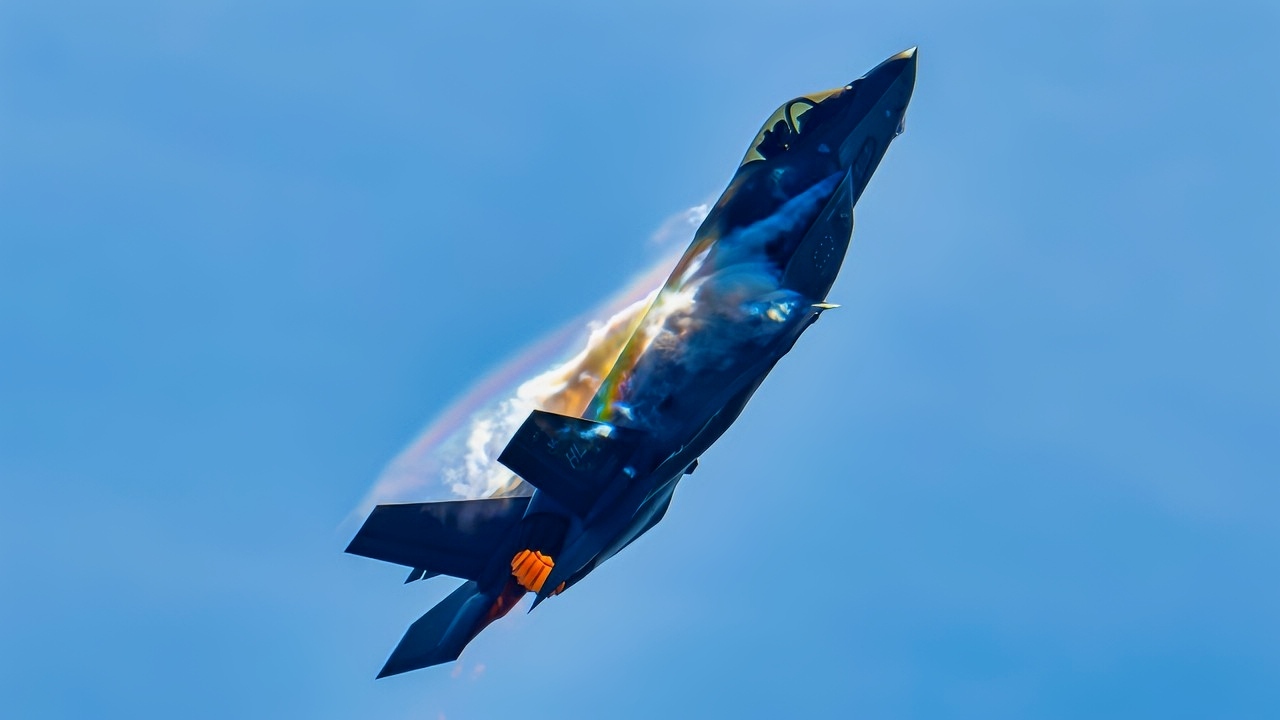
U.S. Air Force Maj. Melanie “Mach” Kluesner, F-35A Demonstration Team pilot, performs aerial maneuvers during the Abbotsford International Airshow in British Columbia, Canada, Aug. 9, 2025. The team travels worldwide to demonstrate the capabilities and precision of the U.S.’s most advanced fifth-generation fighter. (U.S. Air Force photo by Senior Airman Nicholas Rupiper)
“Shouldn’t we pivot hard to the next big thing?”
We should pursue next-gen capabilities without giving up the mass that deters war and wins the first week if deterrence fails. Boutique fleets don’t deter. Fielded, improving fleets do. The F-35 is already there, across the United States and allied air arms. It’s the wrong place to find “savings” for a future that will still need large numbers of capable jets to carry the load.
F-47 NGAD Is Coming. The F-35 Should Still Be The Floor, Not The Bill Payer
Sixth-generation programs—manned and uncrewed—will change tactics and unlock new concepts. They should. But the Air Force, Navy, and allies will fight with the force they have while the future arrives in batches. The F-35 is the force they have: proven, interoperable, and still climbing the upgrade curve. It should be the floor under the combat-air force, not the account we raid to start yet another moonshot.

NGAD Lockheed Martin Photo.
That’s especially true in the Indo-Pacific, where distance, logistics, and base vulnerability are the real enemies. A widely distributed fleet of F-35s, paired with tankers, standoff munitions, and uncrewed wingmen, gives planners options across geography and escalation thresholds. Take that away, and you will pay for it later with risk you didn’t need to run.
The Case For A “Ferrari” F-35—If The Price Is Right
There’s a practical middle path between “buy NGAD only” and “freeze the F-35 where it is.” Call it the Ferrari F-35: a higher-end variant that harvests certain sixth-generation technologies—smarter electronic warfare, better manned-unmanned teaming, improved cockpit and computing—without a clean-sheet airframe.
Think of it as the special-teams athlete you sprinkle into F-35 squadrons, not a whole new species that demands a new ecosystem.
What would make a Ferrari F-35 worth it?
A clear value proposition. It must deliver a measurable jump in sensing, survivability, and teaming—enough to change tactics, not just spec sheets.
A price and schedule discipline that protects volume. The baseline F-35 buys cannot collapse to fund a boutique trim level. The fleet needs mass.
Backwards-compatible software and training. The Ferrari should lift the whole fleet’s brains, not create islands of incompatible code and tactics.
Export sensibility. Some allies will want the capability; others will want the standard jet. The production system should accommodate both without chaos.
If those conditions hold, a Ferrari F-35 could be an elegant way to inject sixth-gen goodness into a fifth-gen fleet—fast—while NGAD matures and uncrewed systems scale.
The Bottom Line on the F-35
The F-35 is not perfect. No fighter is. But it is the only aircraft today that combines stealth, fused awareness, alliance-wide interoperability, and a credible upgrade runway at the scale modern strategy requires.
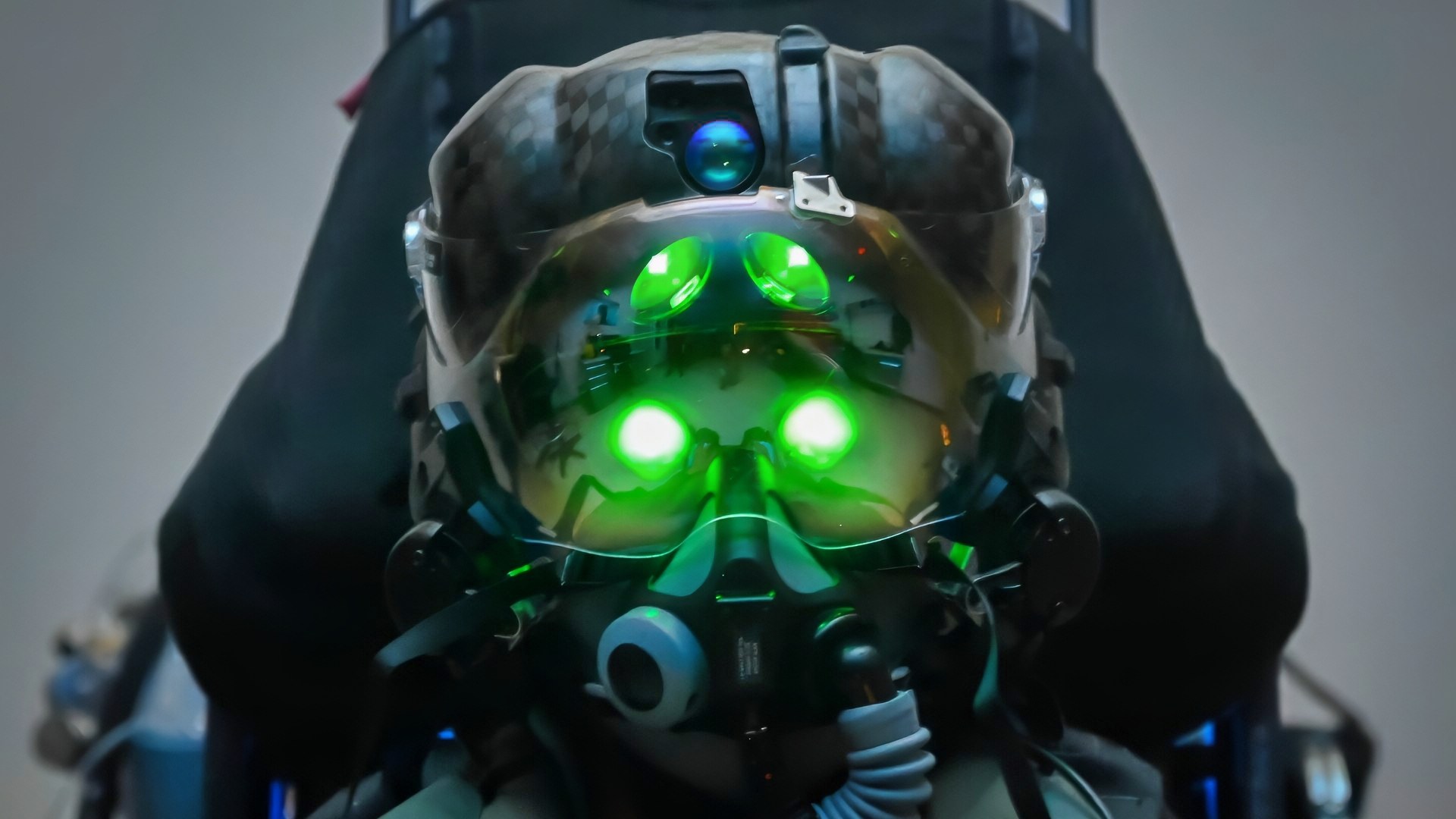
Capt. Ryosuke Sugimoto, a Japanese Air Self-Defense Force F-35 Lightning II pilot, sits in an ejection seat wearing his new pilot gear after completing the 1,000th fitting in the pilot fit facility at Eglin Air Force Base, Florida, May 22, 2024. This milestone fitting underscores the strong international partnership and commitment to pilot readiness and safety. (U.S. Air Force photo by 1st Lt. Jymil Licorish)
That’s why nations keep signing up. That’s why cutting F-35 buys to feed tomorrow’s promises would be a strategic own goal. Keep buying it. Keep fixing what needs fixing. Keep upgrading the brain. And if industry can truly deliver a higher-end “Ferrari” variant without starving the fleet, it’s worth a serious look.
Deterrence is a math problem: capability times capacity. The F-35 brings both. Let’s not forget the part of the equation that keeps the peace.
About the Author: Harry J. Kazianis
Harry J. Kazianis (@Grecianformula) is Editor-In-Chief and President of National Security Journal. He was the former Senior Director of National Security Affairs at the Center for the National Interest (CFTNI), a foreign policy think tank founded by Richard Nixon based in Washington, DC. Harry has over a decade of experience in think tanks and national security publishing. His ideas have been published in the NY Times, The Washington Post, The Wall Street Journal, CNN, and many other outlets worldwide. He has held positions at CSIS, the Heritage Foundation, the University of Nottingham, and several other institutions related to national security research and studies. He is the former Executive Editor of the National Interest and the Diplomat. He holds a Master’s degree focusing on international affairs from Harvard University. Email Harry: [email protected].
More Military
Why the U.S. Navy Finally Said No to the F-14 Tomcat
Israel’s Merkava Tanks Have a Message for Any Army On Earth
The Mach 1.4 X-59 Could Create Military Nightmares for Russia and China


JOEL JUSTIN CARLSON
November 2, 2025 at 8:23 pm
So build them both. Let’s have multi fighter squadrons. China will.