

The U.S. Navy is informally calling it the Nimitz Gap. The USS Nimitz, the oldest carrier in the fleet and originally scheduled for decommissioning, is now leading a task force in U.S. Southern Command. The USS Dwight D. Eisenhower’s retirement has been pushed past 2028. The Ford-class replacements — the USS John F. Kennedy and the USS Enterprise — are both delayed. The $13 billion USS Gerald R. Ford just returned from a 326-day deployment, battered by a laundry fire and broken plumbing. America has 11 aircraft carriers on paper. In practice, only a fraction are combat-ready at any moment.
The Nimitz-Gap Is the Aircraft Carrier Problem the U.S. Navy Can’t Solve

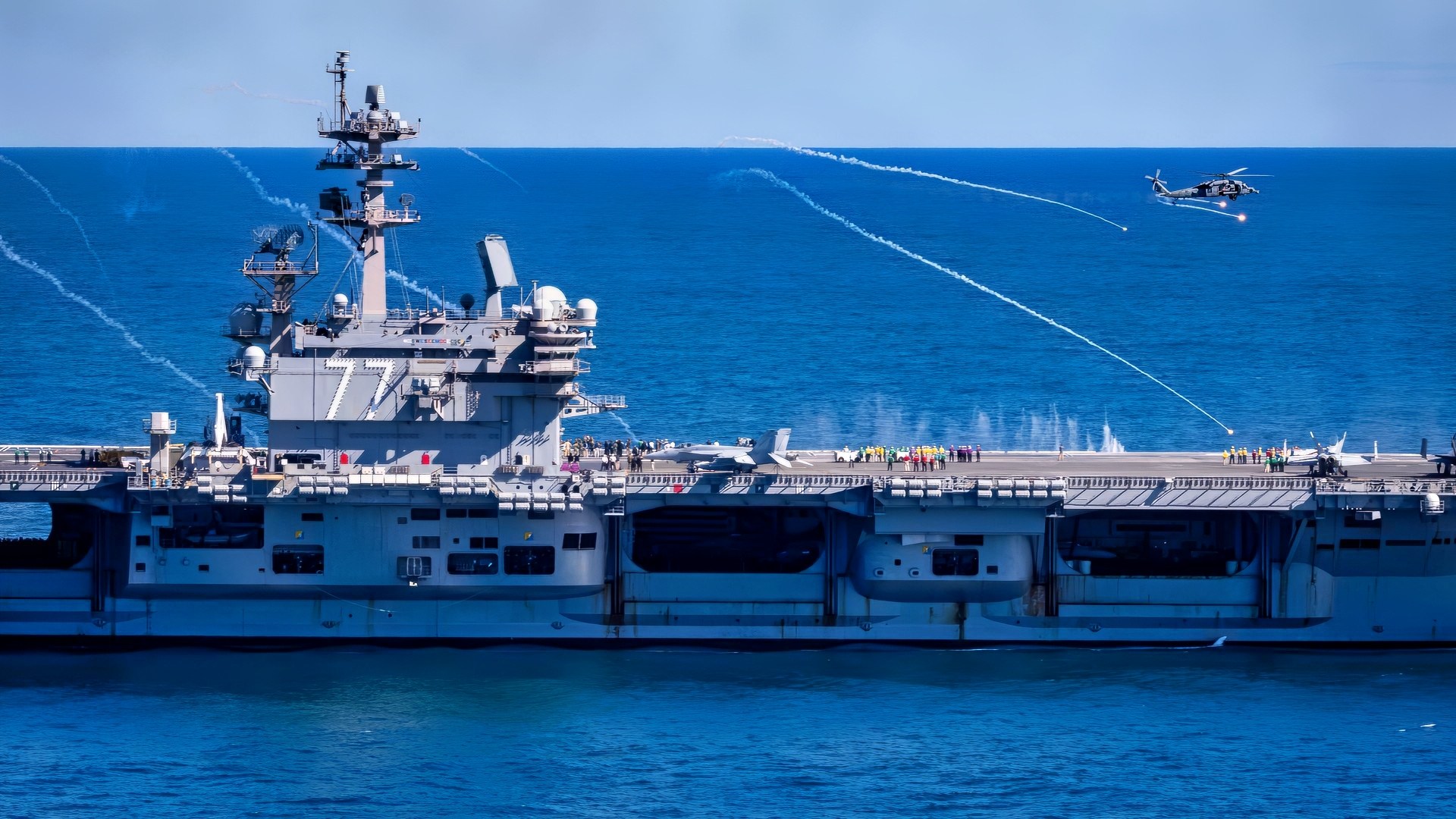
Nimitz-class carrier USS George H.W. Bush (CVN 77) transits the Atlantic Ocean while offloading munitions via helicopter to the world’s largest aircraft carrier, USS Gerald R. Ford (CVN 78), June 27, 2025. Gerald R. Ford, a first-in- class nuclear aircraft carrier and deployed flagship of Carrier Strike Group Twelve, incorporates modern technology, innovative shipbuilding designs, and best practices from legacy aircraft carriers to increase the U.S. Navy’s capacity to underpin American security and economic prosperity, deter adversaries, and project power on a global scale through sustained operations at sea. (U.S. Navy photo by Mass Communication Specialist Seaman Jarrod Bury)
The United States Navy is currently panicking over what the maritime branch is informally calling the “Nimitz gap.”
That’s a shocking turn of phrase, considering how gung-ho the Navy was for decommissioning the Nimitz-class aircraft carriers.
The Navy already dropped its long-standing plans to decommission the USS Nimitz earlier this year.
That ship, the namesake of her class and the oldest carrier serving in America’s declining fleet, is currently leading a task force in the United States Southern Command (USSOUTHCOM) area of responsibility (AOR), when it was supposed to be sitting in mothballs.
America’s next oldest aircraft carrier, the Nimitz-class USS Dwight D. Eisenhower, was also set to be decommissioned by 2028, but the Navy extended its service life.
Once again, the debate over extending this ancient (by today’s standards) aircraft carrier redounded to the fact that the Nimitz-class replacements, the Ford-class carriers, were precipitously–painfully–delayed.
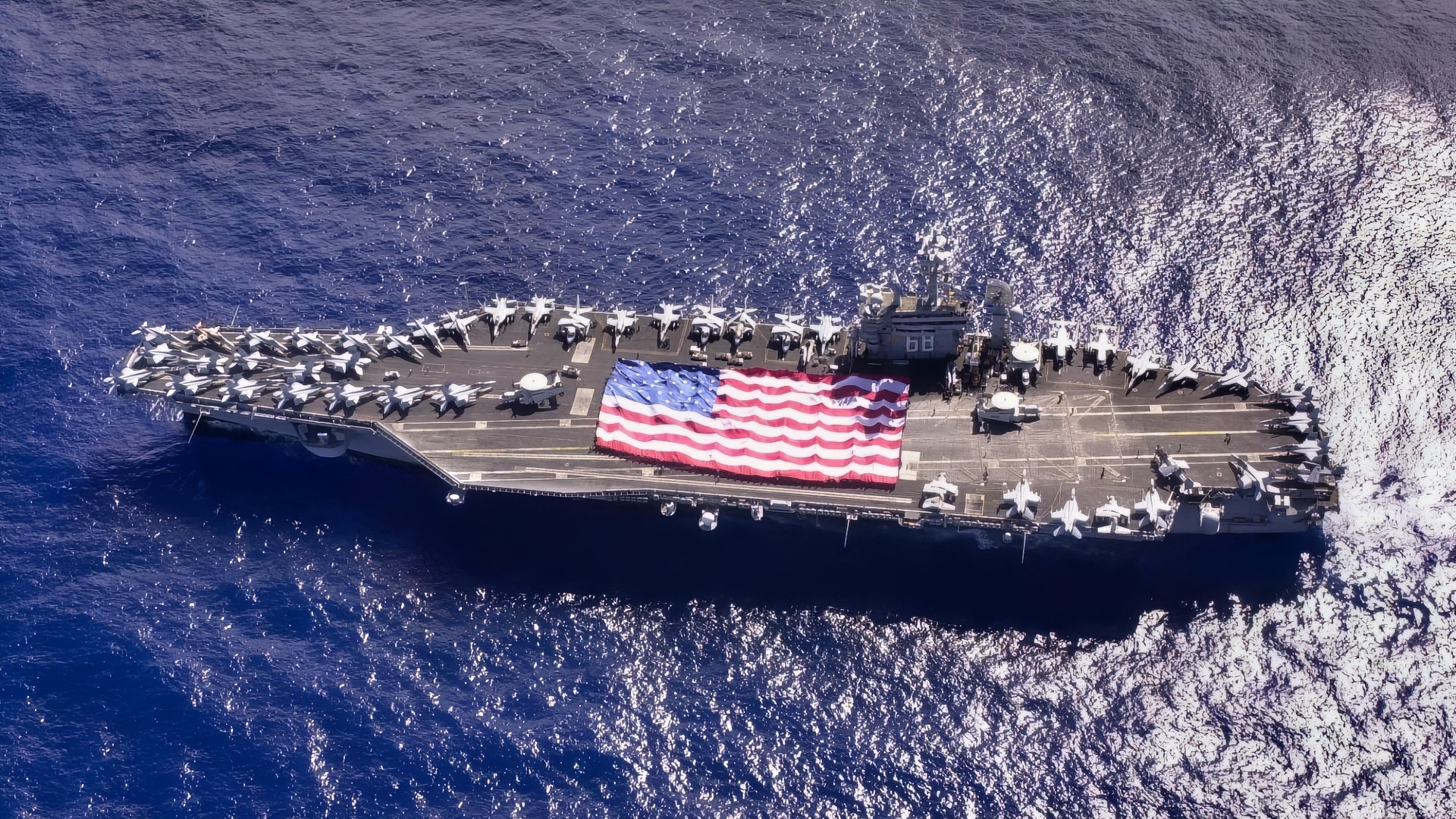
Pacific Ocean (Nov. 3, 2003) — USS Nimitz (CVN 68) crewmembers participate in a flag unfurling rehearsal with the help of family and friends on the ship’s flight deck during a Tiger Cruise. The Nimitz Carrier Strike Group and embarked Carrier Air Wing Eleven (CVW-11) are en route to San Diego, Calif., following an eight-month deployment to the Arabian Gulf in support of Operation Iraqi Freedom. U.S. Navy photo by Photographer’s Mate 3rd Class Elizabeth Thompson. (RELEASED)
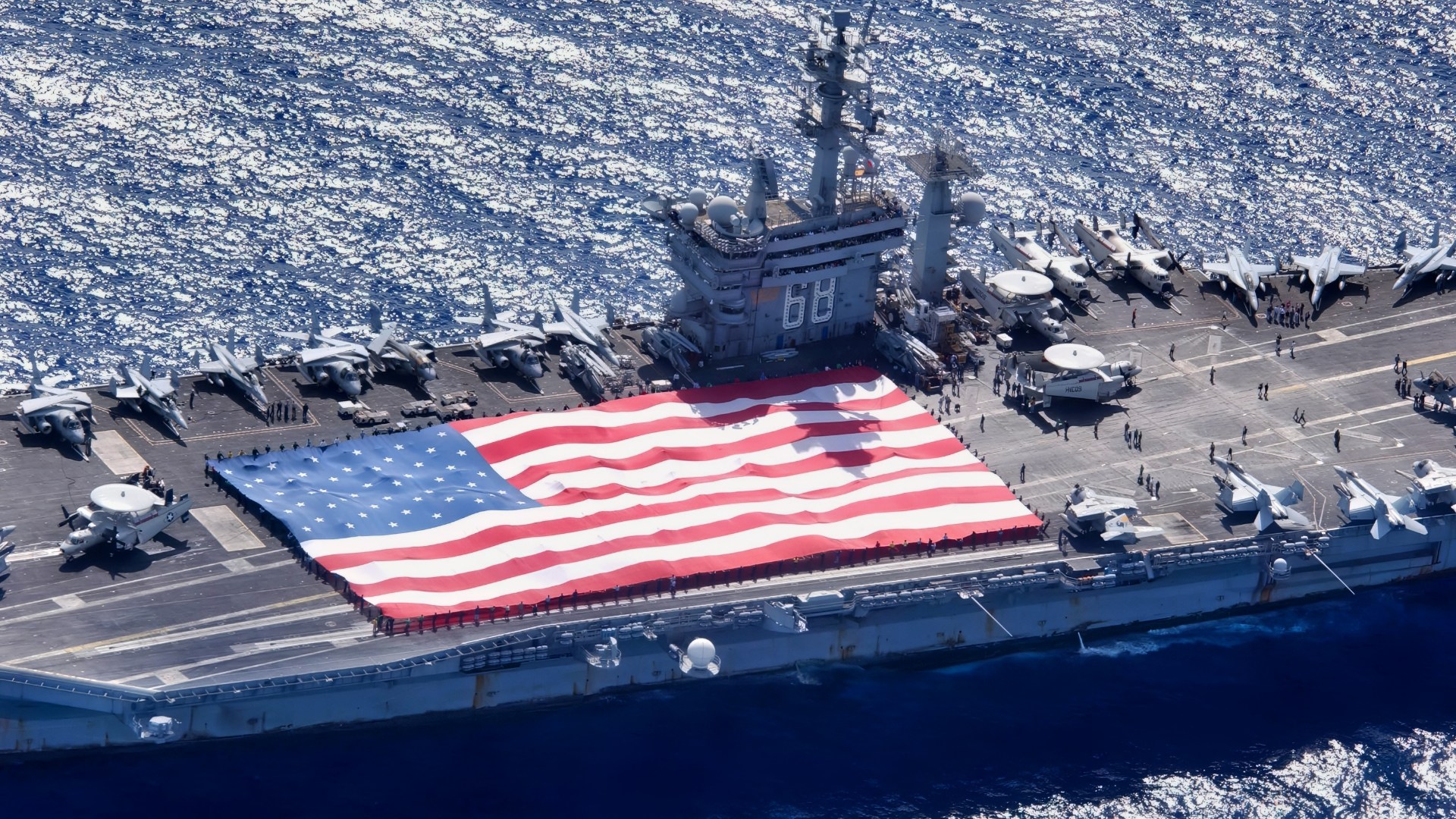
Pacific Ocean (November 3, 2003) — During Tiger Cruise aboard USS Nimitz (CVN 68), Nimitz and Carrier Air Wing Eleven personnel participate in a flag unfurling rehearsal with the help of fellow tigers on the flight deck. The Nimitz Carrier Strike Force and Carrier Air Wing Eleven (CVW-11) are in route to Nimitz homeport of San Diego, California after an eight-month deployment to the Arabian Gulf in support of Operation Iraqi Freedom. U.S. Navy photo by Photographer Mate 3rd Class Elizabeth Thompson
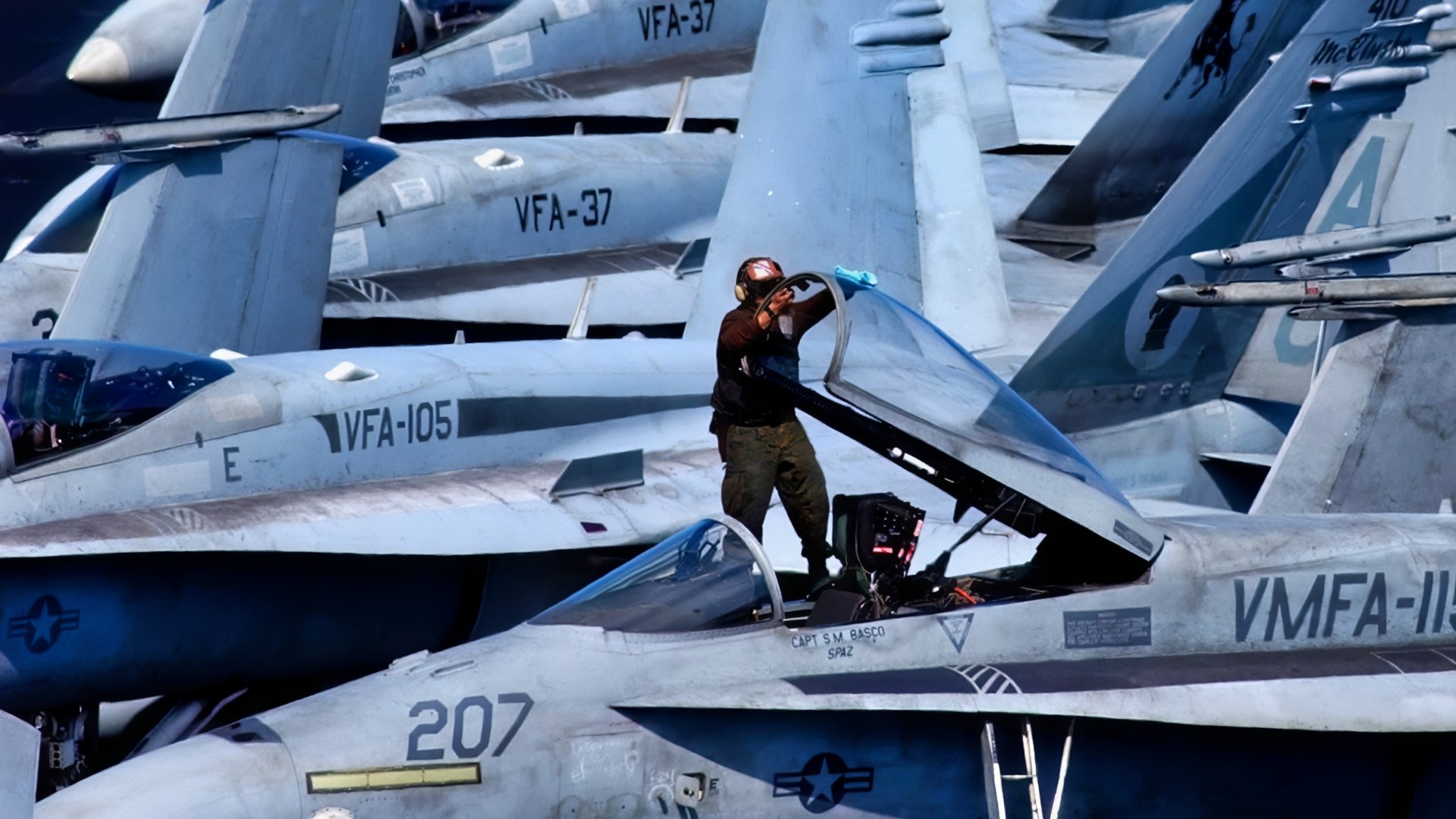
Marine Cpl. Rodger Lagrange cleans the canopy of a Marine F/A-18A+ Hornet onboard the USS Harry S. Truman (CVN 75) while the aircraft carrier operates at sea on Feb. 14, 2005. The Truman Strike Group and Carrier Air Wing 3 are conducting close air support, intelligence, surveillance, and reconnaissance missions over Iraq. Lagrange is attached to Marine Fighter Attack Squadron 115 deployed from Marine Corps Air Station Beaufort, S.C.
(DoD photo by Airman Philip V. Morrill, U.S. Navy. (Released))
The Ford-Class Failure
The fact that the Navy has had to extend the service lives of its aging Nimitz-class aircraft carriers despite having blown $13 billion on the USS Gerald R. Ford is not a bigger controversy, indicating how bereft the Pentagon is at the strategic level.
Think about it: the Navy has been uncompromising in its desire to maintain the aircraft carrier as the centerpiece of its surface warfare capabilities.
Yet, the Nimitz-class is old, and the Ford-class is supposed to be so new that it swims circles around its opponents.
But the Ford-class cannot even get out of the shipyard in one piece, let alone conduct combat operations effectively without some random laundry fire taking it out of service. That’s to say nothing about the growing threat that anti-access/area-denial (A2/AD) systems pose to all carriers.
Both the USS John F. Kennedy (CVN-79), the replacement for the USS Nimitz, and the USS Enterprise (CVN-80), the replacement for the USS Dwight D. Eisenhower, have been delayed by technical issues and shipyard delays.
Thus, the older carriers are being extended.
Why the Navy is Keeping Old Carriers Alive
But nuclear-powered carriers are not supposed to receive casual life extensions.
These ships operate under intense nuclear, structural, and maintenance demands. Extending their service lives means the Navy lacks the confidence that replacements will arrive fast enough–and that the Navy must direct finite resources toward rehabbing older ships rather than focusing on newer ones.
The Navy Times refers to the “carrier conundrum,” which highlights the Ike.
You see, in 2024, the Eisenhower endured a brutal deployment to the Red Sea against the Houthis in Yemen. The carrier spent roughly eight months under sustained operational stress defending commercial shipping lanes and conducting strike operations.
The Eisenhower Deployment Exposed the Carrier Crisis
Here’s why the Navy Times two years ago fixated on the Eisenhower’s experience because it exposes some ugly truths.
Namely, the Navy still depends heavily on carriers for crisis response, even as enemy A2/AD systems grow ever more robust (and increasingly so each year).
Plus, carrier deployments are becoming longer and are exhausting the equipment on board, the ships themselves, and the crews.
Meanwhile, maintenance schedules are collapsing under the intense operational demand. Due to these painful realities in the carrier force, the Navy lacks the requisite number of deployable carriers to operate properly.
During its deployment against the Houthis, the Navy desperately wanted the Ike back home. Commanders, though, openly struggled with how to replace that combat power once it returned home. This struggle is the crux of the “career crisis.”
Technically, America has 11 aircraft carriers. In practice, however, only a fraction are combat-ready at any given moment because several are always in overhaul, modernization, or repair.
And the delays in the Ford-class carrier program are complicating everything.
America’s Carrier Strategy No Longer Matches Reality
By keeping older Nimitz-class carriers alive, it buys time.
The Navy’s current doctrine requires it to maintain a global presence both for sea control (to keep vital global chokepoints open) and for deterrence.
But the shipbuilding delays and maintenance backlogs make that impossible without stretching older ships, like the Nimitz and Ike. Following through on the originally planned retirements of these older ships would drop the carrier fleet below its congressionally mandated 11-carrier force structure.
All these trends highlight a larger issue: supercarriers simply aren’t worth the investment anymore.
They are too expensive, far too vulnerable to missiles, onerous to maintain, and difficult to replace during wartime. Meanwhile, China’s shipbuilding industry massively outproduces America’s.
The Navy Must Rethink the Supercarrier Era
US policymakers must reassess their current force structure and ask themselves, can the Navy sustain a carrier-centric force in the era of hypersonic missiles, drone swarms, and collapsing American shipbuilding capacity?
During the Red Sea operations in which Ike participated, the carrier was key to sustained strike operations.
Yet by the time its tour ended, the great ship was exhausted from operational strain posed by a relatively low-level threat, such as the Houthis.
How would America’s carrier force perform against a peer rival, like China?
If the Americans don’t seriously ask themselves these questions, if the Navy keeps running on autopilot, and mindlessly supporting its carrier force, then it is setting itself up for a massive defeat at sea.
About the Author: Brandon J. Weichert
Brandon J. Weichert is the Senior National Security Editor at 19FortyFive.com. Recently, Weichert became the editor of the “NatSec Guy” section at Emerald. TV. He was previously the senior national security editor at The National Interest. Weichert hosts The National Security Hour on iHeartRadio, where he discusses national security policy every Wednesday at 8 p.m. Eastern. He hosts a companion show on Rumble entitled “National Security Talk.” Weichert consults regularly with various government institutions and private organizations on geopolitical issues. His writings have appeared in numerous publications, among them Popular Mechanics, National Review, MSN, and The American Spectator. And his books include Winning Space: How America Remains a Superpower, Biohacked: China’s Race to Control Life, and The Shadow War: Iran’s Quest for Supremacy. Weichert’s newest book, A Disaster of Our Own Making: How the West Lost Ukraine, is available for purchase at any bookstore. Follow him via Twitter/X @WeTheBrandon.


