

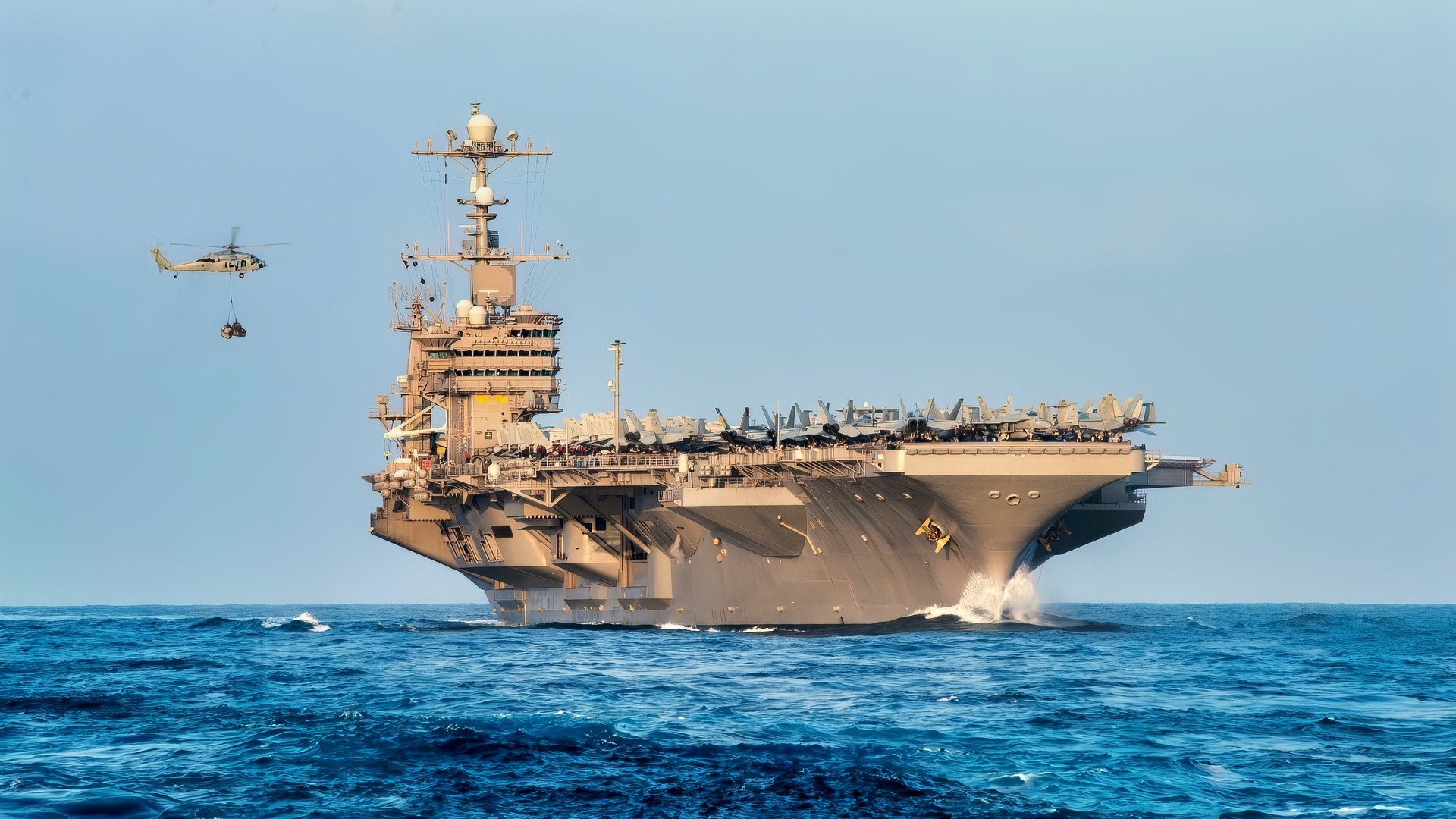
The Nimitz-class aircraft carrier is the most successful warship class in modern American history — and the lead ship, USS Nimitz herself, is currently transiting around Cape Horn on her final voyage before retirement in March 2027. Her replacement is the troubled Ford-class. The first Ford just came home from an 11-month combat deployment with a list of repair problems, the full scope of which nobody yet knows. The carrier era is about to change.
The Nimitz-Class Aircraft Carriers Are The Most Successful Warship Class In American History — And The Navy Is About To Lose The Lead Ship Of The Family
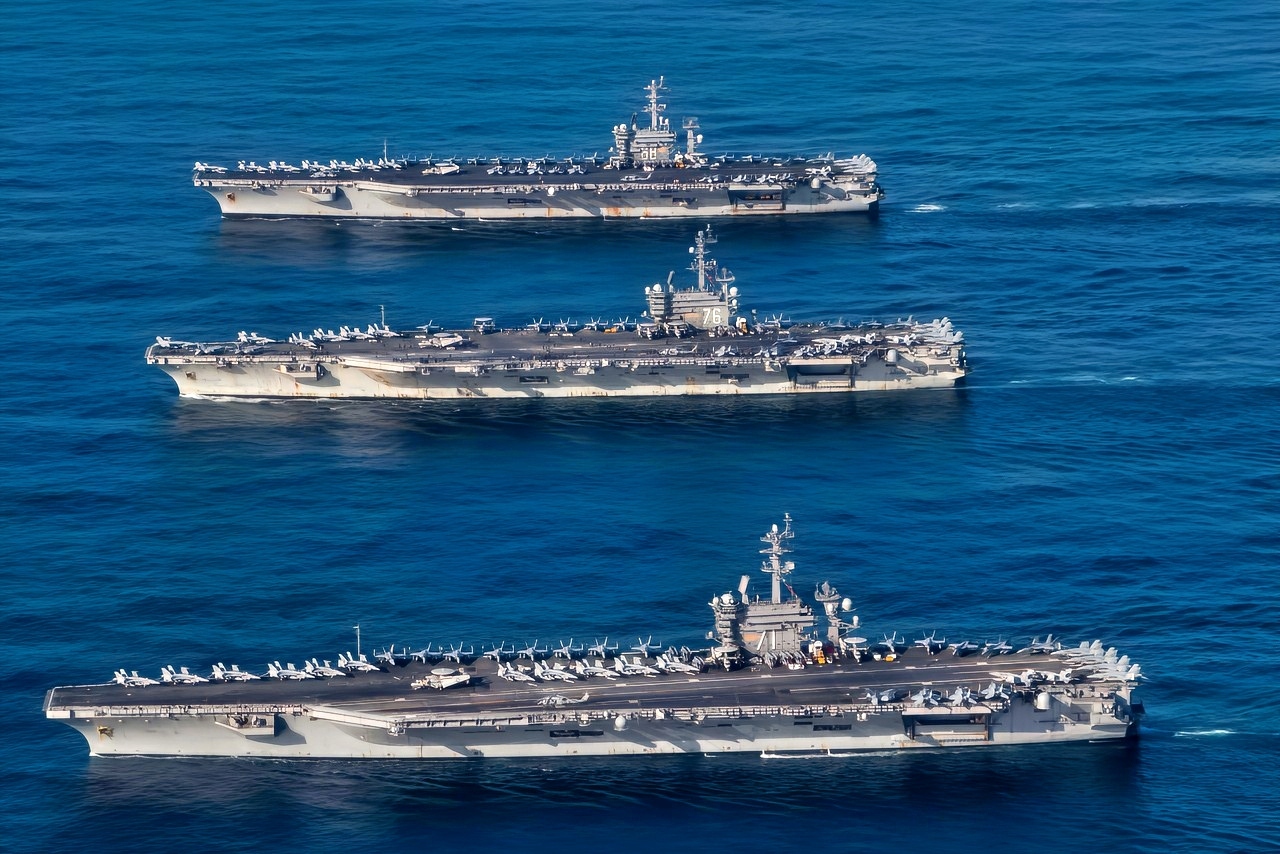
The U.S. Navy aircraft carriers USS Nimitz (CVN-68), USS Theodore Roosevelt (CVN-71) and USS Ronald Reagan (CVN-76) underway in the Western Pacific on 12 November 2017. The strike groups were underway and conducting operations in international waters as part of a three-carrier strike force exercise. This was the first time since August 2007 that three U.S. Navy carriers operated together. In 2007, USS Kitty Hawk (CV-63), USS Nimitz (CVN-68) and USS John C. Stennis (CVN-74) participated in exercise “Valiant Shield”.
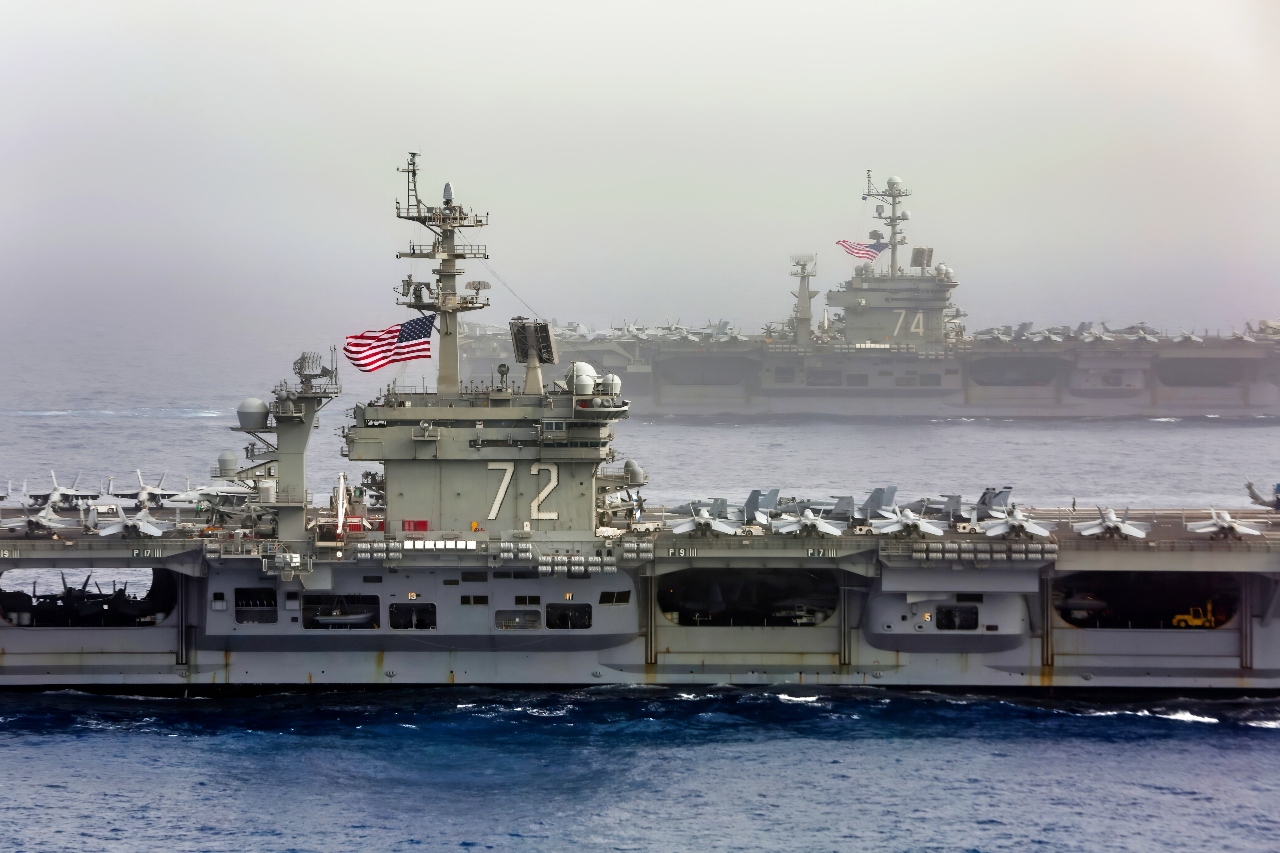
(April 24, 2019) The Abraham Lincoln and John C. Stennis carrier strike groups conduct carrier strike force operations in the U.S. 6th Fleet. Together, the strike groups will complete high-end warfighting training, enhancing interoperability with key allies and partners in the European theater. (U.S. Navy video by Mass Communication Specialist 1st Class Brian M. Wilbur/Released)
Every American president since Gerald Ford has used at least one Nimitz-class carrier to shape a crisis, deter an enemy, or strike a target.
The lead ship of that class, USS Nimitz (CVN-68), is currently steaming around Cape Horn on what was supposed to be her final voyage before retirement. The Navy has given her a 10-month reprieve — she will stay in service until March 2027, when the second Ford-class carrier USS John F. Kennedy commissions to replace her. The other nine Nimitz-class hulls are scheduled to retire on staggered timelines through the 2050s as the Ford-class delivers — assuming the Ford-class actually delivers.
The Nimitz-class is the platform that defined American naval power for half a century. The Ford-class is supposed to take that role for the next half-century. The first Ford, USS Gerald R. Ford, just came home from an 11-month combat deployment with a list of repair problems, the full scope of which nobody yet knows. The platform debate over whether the supercarrier remains the right anchor for American power projection has never been more open.
Here is my long-form take on how the Nimitz-class came to exist, what it accomplished, and what its retirement says about where the United States Navy goes next.
Why The Navy Needed The Nimitz
The Nimitz-class was conceived in the mid-1960s as a replacement for the aging Midway, Forrestal, and Kitty Hawk-class carriers, and as a more producible alternative to the one-off USS Enterprise (CVN-65), which had been commissioned in 1961 as the world’s first nuclear-powered aircraft carrier.

USS Intrepid Part of the Essex-Class. National Security Journal Photo.
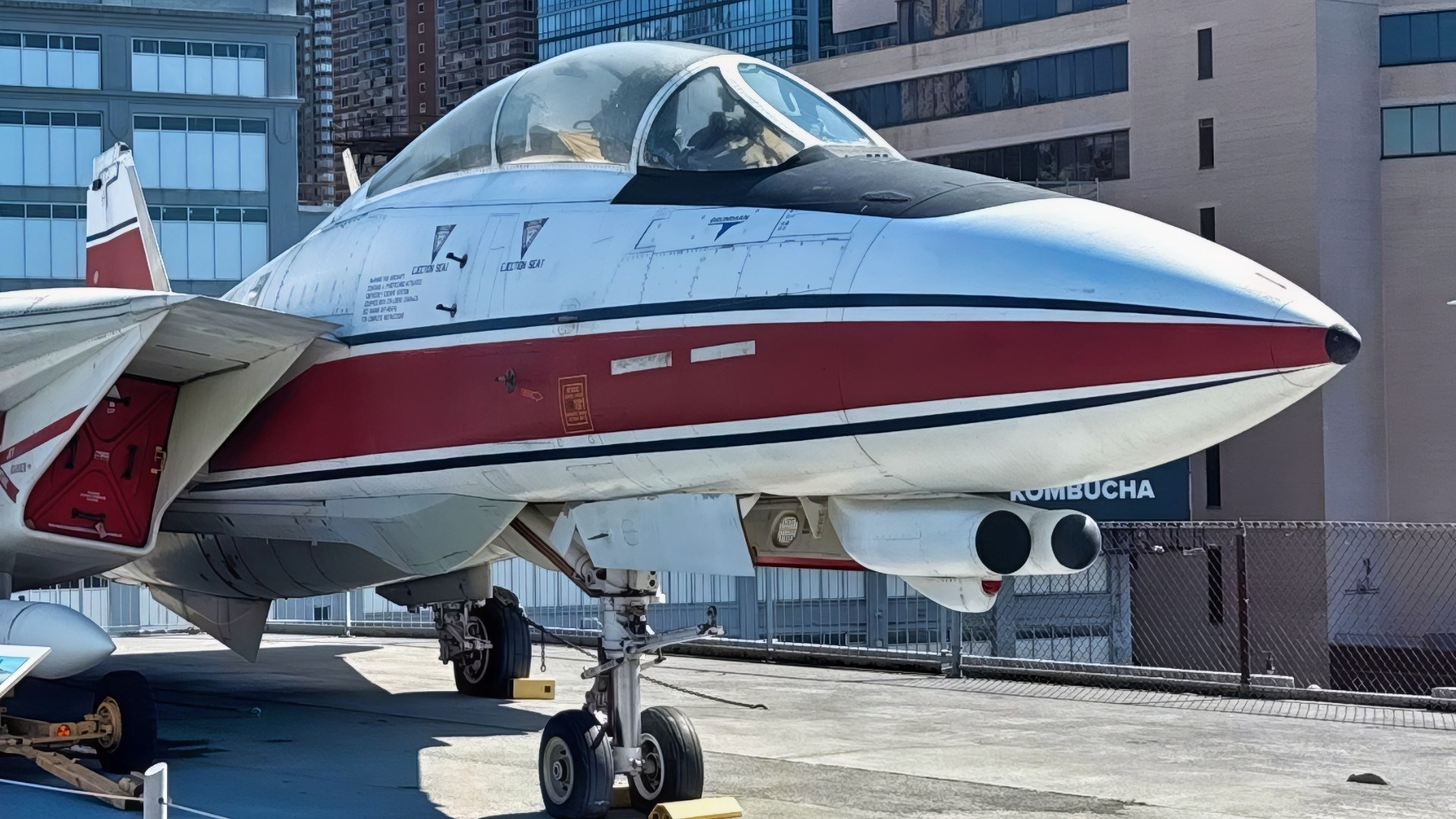
F-14 Tomcat on Flight Deck of USS Intrepid. National Security Journal Photo.
Enterprise was a triumph of nuclear propulsion. She was also a triumph of cost and complexity — eight A2W reactors, an enormous engineering plant, and a unit price that made it clear no one was going to build a second Enterprise on the same architecture. The Navy’s challenge in 1967, when the lead ship was authorized by Congress, was to take the strategic advantages of nuclear propulsion — unlimited range, multi-decade fuel cycles, and dramatically increased internal volume for aviation fuel and ordnance — and combine them with a producible design that could roll off the slipway at Newport News Shipbuilding in serial production.
The political turning point came in 1967, when Secretary of Defense Robert McNamara publicly acknowledged that, based on wartime experience, the cost to acquire, maintain, and protect a land-based airfield was comparable to that of an aircraft carrier, while the aircraft carrier offered the mobility advantage that land bases lacked. McNamara revised an earlier decision and authorized the Navy to maintain a force of 15 aircraft carriers, allowing the service to begin construction of three new nuclear-powered ships in fiscal year 1967. The lead ship would become CVN-68, the USS Nimitz.
The design itself drew on multiple sources. Per Naval Encyclopedia’s detailed history of the class, the preliminary design phase between 1965 and 1968 started with a slightly reduced USS Enterprise as the reference architecture. Alternatives considered included nuclear-powered versions of the last two Kitty Hawk-class carriers — both planned at one point as Enterprise sister ships before cost overruns killed those proposals. A “Kennedy sub-class” variant based on the USS John F. Kennedy hull form was also studied before being dropped in favor of an enlarged purpose-built design.
What the Navy ended up with was a carrier substantially smaller than Enterprise but with most of her operational capability — two large A4W pressurized water reactors instead of Enterprise’s eight smaller A2W reactors, simplified engineering spaces, increased aviation fuel and weapons stowage, and a hull designed for serial production rather than one-off custom construction. Each A4W reactor was engineered to require only one refueling during a projected 50-year service life. That refueling process, known as Refueling and Complex Overhaul (RCOH), takes several years and combines reactor refueling with a general refit of all ship systems.
How They Were Built And How Many
The Nimitz-class hull form is fundamentally a refinement of the Enterprise architecture — 1,092 feet long, 252-foot flight deck width, 102,000 tons displacement at full load, a crew complement of approximately 3,000 ship’s company plus another 2,500 in the embarked air wing. Top speed in excess of 30 knots. The flight deck supports four steam catapults and four arresting wires for CATOBAR carrier aviation operations.
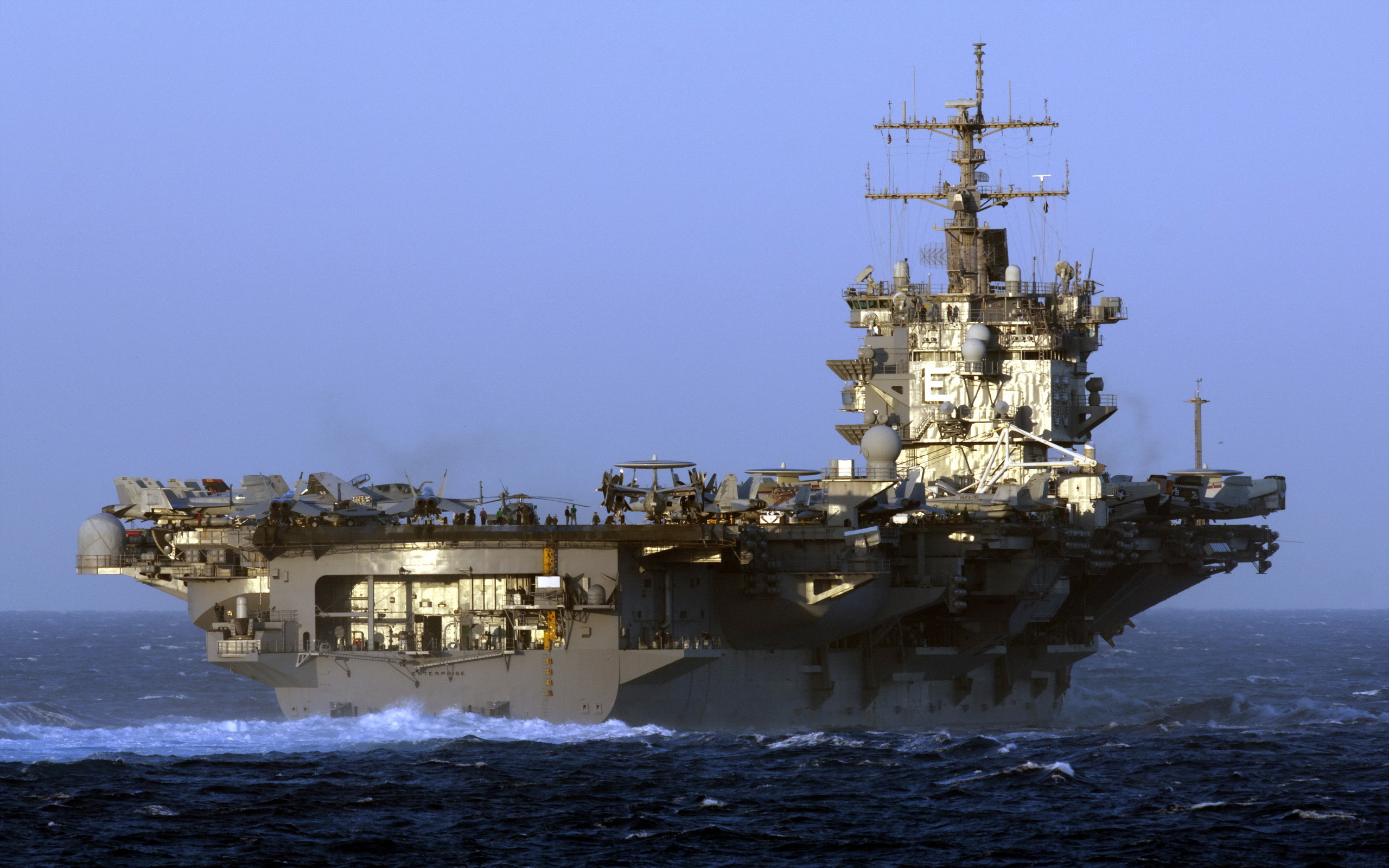
USS Enterprise. Image Credit: Creative Commons.
Newport News Shipbuilding built every one of the ten ships. The lead hull was authorized in fiscal year 1967, with the Newport News contract awarded at $106.5 million — equivalent to more than $1 billion in today’s dollars. USS Nimitz keel was laid down on June 22, 1968. She was launched on May 13, 1972, and commissioned on May 3, 1975, by President Gerald R. Ford at Naval Station Norfolk.
The class was delivered in serial production across the next 34 years. USS Dwight D. Eisenhower (CVN-69) followed in 1977. USS Carl Vinson (CVN-70) in 1982. USS Theodore Roosevelt (CVN-71) in 1986. USS Abraham Lincoln (CVN-72) in 1989. USS George Washington (CVN-73) in 1992. USS John C. Stennis (CVN-74) in 1995. USS Harry S. Truman (CVN-75) in 1998. USS Ronald Reagan (CVN-76) in 2003. USS George H.W. Bush (CVN-77), the final hull of the class, commissioned in January 2009.
Ten ships across 34 years. No comparable warship class in the post-WWII era was built at that scale and sustained at that operational tempo by any navy on Earth.
What The Nimitz-Class Was Built To Do
The mission set the Nimitz-class was designed to have three core functions:
The first was a carrier strike. Each ship could embark approximately 70 to 80 aircraft — F-14 Tomcats in the early decades, F/A-18 Hornets and Super Hornets later, E-2C and E-2D Hawkeye airborne early warning aircraft, S-3 Viking anti-submarine jets, EA-6B Prowlers and later EA-18G Growlers for electronic warfare, MH-60 Seahawk helicopters for ASW and search-and-rescue, and C-2A Greyhound carrier onboard delivery aircraft.
The second was forward presence. Nuclear propulsion enabled carriers to deploy anywhere on Earth without refueling stops, sustain combat operations for extended periods, and remain on station in crisis zones for months at a time without the logistics tail that conventionally powered carriers required.
The third was flag-of-power signaling. An American nuclear-powered carrier showing up off a foreign coast communicated a specific level of strategic commitment that no other military platform could match. The carrier was both a striking force and a diplomatic instrument.
The Nimitz-class delivered all three functions for half a century.
Operational History
The class’s operational record spans every major American military commitment since the late 1970s.
USS Nimitz herself participated in Operation Eagle Claw in 1980, the failed hostage rescue mission in Iran during the Carter administration. She supported operations off Lebanon in 1981 and 1983, fired her first shots in anger against Libyan air defenses in the Gulf of Sidra in 1981, and operated continuously across the Mediterranean and Indian Ocean throughout the Cold War.
USS Eisenhower deployed to the Persian Gulf during the Iran-Iraq War. USS Carl Vinson and USS Theodore Roosevelt supported the 1990 invasion of Panama and the 1991 Gulf War. USS Roosevelt alone, on the first day of Operation Desert Storm in January 1991, contributed substantially to the more than 2,000 strike sorties that the carrier force flew against Iraqi targets in the campaign’s opening 24 hours.
The class anchored American operations in the Balkans through the late 1990s. Nimitz-class carriers supported the 1998 Operation Desert Fox strikes against Iraq, the 1999 NATO air campaign over Kosovo, and the immediate American response to the September 11, 2001 attacks. USS Carl Vinson and USS Theodore Roosevelt launched the first strikes against Taliban and al-Qaeda targets in Afghanistan in October 2001.
Through the 2000s and 2010s, every American military operation that mattered involved at least one Nimitz-class carrier. The 2003 invasion of Iraq. The decade-long counterinsurgency campaigns that followed. Operations against ISIS in Iraq and Syria from 2014 onward. The continuous Persian Gulf and Western Pacific presence that defined American military posture during a period of accelerating Chinese naval expansion. USS George H.W. Bush conducted the first carrier strikes against ISIS in August 2014. USS Theodore Roosevelt and USS Nimitz both participated in operations off the Korean Peninsula during the heightened tensions of 2017.
USS Nimitz’s most recent operational record, as documented by Naval Today, includes more than 8,500 sorties and 17,000 flight hours during her nine-month 2024-2025 deployment, 50 underway replenishments, and more than 82,000 nautical miles steamed. Her embarked Carrier Air Wing 17 conducted strikes against ISIS targets in Somalia.
The class collectively accumulated tens of thousands of combat sorties, fired thousands of cruise missiles, and put American strike aircraft over every major theater the United States cared about across four decades.
Combat History And The Real Strategic Value
The Nimitz-class never fought a peer adversary. That fact matters for the carrier debate, but it does not diminish what the class actually accomplished.
The class served as the central platform for American power projection during the post-Cold War unipolar era. Carriers responded to crises in the Persian Gulf, the Adriatic, the Taiwan Strait, the Sea of Japan, the Eastern Mediterranean, and the South China Sea. Carrier strikes hit targets in Iraq, Afghanistan, Syria, Yemen, Somalia, Libya, Sudan, and a dozen other places where American interests required precision airpower without forward basing rights.

(July 11, 2014) – The aircraft carrier USS Ronald Reagan (CVN 76) is underway during Rim of the Pacific (RIMPAC) 2014. Twenty-two nations, more than 40 ships and submarines, more than 200 aircraft and 25,000 personnel are participating in RIMPAC exercise from June 26 to Aug. 1, in and around the Hawaiian Islands. The world’s largest international maritime exercise, RIMPAC provides a unique training opportunity that helps participants foster and sustain the cooperative relationships that are critical to ensuring the safety of sea lanes and security on the world’s oceans. RIMPAC 2014 is the 24th exercise in the series that began in 1971. (U.S. Navy photo by Mass Communication Specialist 2nd Class Jacob Estes/Released)
The strategic value was less the combat itself than the deterrent effect of being able to deploy the combat capability anywhere on demand. A Nimitz-class carrier appearing in the Eastern Mediterranean during a Middle East crisis, or transiting the Taiwan Strait during a flare-up with China, communicated American commitment in a way no other military platform could replicate. The carriers backed up American diplomatic statements with actual deliverable firepower.
The class also kept the American carrier-aviation institutional knowledge base alive across half a century. Pilots, deck crews, maintainers, air bosses, catapult officers, and the broader carrier-strike-group leadership pipeline rotated through Nimitz-class hulls continuously. Every operational lesson learned during that period — sortie generation rates, replenishment-at-sea efficiency, multi-carrier strike coordination, integrated air and missile defense — was developed and refined on the Nimitz platform.
That institutional knowledge will be the most important asset transferred to the Ford-class.
The Retirement And The Delays
The original plan called for the Nimitz-class to begin retiring as the Ford-class delivered. USS Nimitz herself was scheduled for inactivation in fiscal year 2025. The Ford-class was supposed to be ready to replace her.
The Ford-class was not ready.
The lead ship USS Gerald R. Ford was commissioned in 2017 but spent years in post-shakedown availability working through the developmental teething problems of EMALS, Advanced Arresting Gear, the Advanced Weapons Elevators, and the Dual-Band Radar. Her first combat-credible deployment was not until 2022. The second hull, USS John F. Kennedy, slipped repeatedly from its original delivery target and is now scheduled for March 2027.

The Ford-class aircraft carrier USS Gerald R. Ford (CVN 78) and the Italian aircraft carrier ITS Cavour (CVH 550) transit the Atlantic Ocean March 20, 2021, marking the first time a Ford-class and Italian carrier have operated together underway. As part of the Italian Navy’s Ready for Operations (RFO) campaign for its flagship, Cavour is conducting sea trials in coordination with the F-35 Lightning II Joint Program Office’s Patuxent River Integrated Test Force to obtain official certification to safely operate the F-35B. Gerald R. Ford is conducting integrated carrier strike group operations during independent steaming event 17 as part of her post-delivery test and trials phase of operations.
That slippage drove the Nimitz extension.
Stars and Stripes reported on March 15, 2026 that the Navy had formally extended Nimitz’s service life by 10 months, pushing her decommissioning from May 2026 to March 2027. The reason was statutory rather than operational — a 2011 law requires the Navy to maintain at least 11 active carriers, and decommissioning Nimitz before Kennedy commissioned it would have brought the fleet below that threshold.
Per Task & Purpose’s coverage of the extension, the Navy announced the change through a Department of Defense contract posting on Friday, March 13, 2026, with Breaking Defense reporting the development first. The Navy awarded Huntington Ingalls Industries a nearly $96 million contract modification for advance planning and long-lead material procurement for the carrier’s inactivation and defueling, with work scheduled for completion by March 2027 to align with the revised retirement timeline.
The administrative steps are now underway. Indian Defence Review reported that the $96 million contract represents the clearest public marker that the revised retirement schedule is being executed in parallel with preparations for defueling and inactivation at Newport News.
Nimitz left Naval Base Kitsap-Bremerton on March 7, 2026, beginning her homeport shift to Norfolk. She is currently transiting around Cape Horn — she is too large to fit through the Panama Canal — and participating in the Southern Seas 2026 maritime exercise with South American partner nations along the way. Per Navy Times, Carrier Air Wing 17 is currently embarked aboard her with F/A-18E/F Super Hornets, EA-18G Growlers, C-2A Greyhounds, and MH-60R/S Sea Hawks for the deployment.
The Ford-Class Follow-On And Its Problems
The Nimitz-class successor is the Ford-class — the most ambitious carrier program the United States has ever attempted, and one whose execution has been substantially less smooth than the Nimitz program before it.
USS Gerald R. Ford (CVN-78) commissioned on July 22, 2017, nearly two years behind schedule and at a final cost exceeding $13.3 billion — the most expensive warship ever built. The technological gamble that drove the cost was Defense Secretary Donald Rumsfeld’s decision to install four major developmental systems on the lead ship simultaneously: the Electromagnetic Aircraft Launch System, the Advanced Arresting Gear, the eleven Advanced Weapons Elevators, and the Dual-Band Radar.
All four systems experienced significant reliability problems during operational testing. The Pentagon’s Director of Operational Test and Evaluation reported repeatedly through the late 2010s and into the 2020s that EMALS and AAG were not meeting their reliability requirements and were not expected to do so until more than a decade after CVN-78 delivery. The Advanced Weapons Elevators were not all certified operational until years after commissioning. The Dual-Band Radar was eventually replaced with the SPY-6 Air and Missile Defense Radar family starting with CVN-79 Kennedy.
The Ford herself just came home this past weekend from an 11-month combat deployment that has put the platform’s first real stress test on the table. According to public reporting since her return, the carrier requires substantial repair and maintenance work — including damage from a March 12 fire that displaced 600 sailors from their berthing compartments, repeated mechanical problems with the vacuum toilet system, and the accumulated wear on EMALS, AAG, and reactor systems from sustained combat operations.
As USNI Proceedings documented in its institutional history of the Ford program, the original 2000 plan called for an evolutionary transition with three ships — CVN-77 as the last Nimitz with mature technology, CVN-78 with the new power plant and catapults, CVN-79 with the new aircraft and weapon elevators. That plan was revised in 2002, in part due to the immaturity of the new radars. CVN-77 reverted to a modified Nimitz repeat. CVN-78 absorbed the entire transformation burden — new power plant, new catapults, new arresting gear, new weapons elevators, new radars, and a completely redesigned interior — over significant Navy objections. The Navy is now living with the consequences of that 2002 decision.
The Future Of The Aircraft Carrier
The Nimitz-class is the carrier program that worked. The Ford-class is the carrier program that is trying to figure out what works. The platform debate that follows will determine whether the United States Navy builds another generation of supercarriers after the Ford-class delivers its planned six hulls.
The case for the carrier remains substantial. No other platform delivers the same combination of sovereign basing rights, sustained airpower projection, and strategic signaling. The F/A-XX sixth-generation fighter, scheduled for Navy contract award in August 2026, is designed to extend the carrier’s effective combat radius beyond the engagement envelope of Chinese long-range anti-ship weapons. Improvements in defensive systems, electronic warfare, and combat aircraft range are aimed at keeping the supercarrier operationally viable through the 2040s and beyond.
The case against the carrier is the same case that has been getting stronger every year for the past two decades. Long-range Chinese anti-ship missiles, hypersonic glide vehicles, advanced Chinese submarines, and increasingly capable cheap drones have changed the cost-exchange calculus. A $13 billion carrier defended by a strike group of $2.5 billion destroyers and $3.5 billion submarines is a single high-value target whose loss in combat would be strategically catastrophic. Critics argue that the same airpower projection capability could be delivered by distributed force structures of smaller surface combatants, attack submarines, and long-range strike platforms at substantially lower aggregate risk.
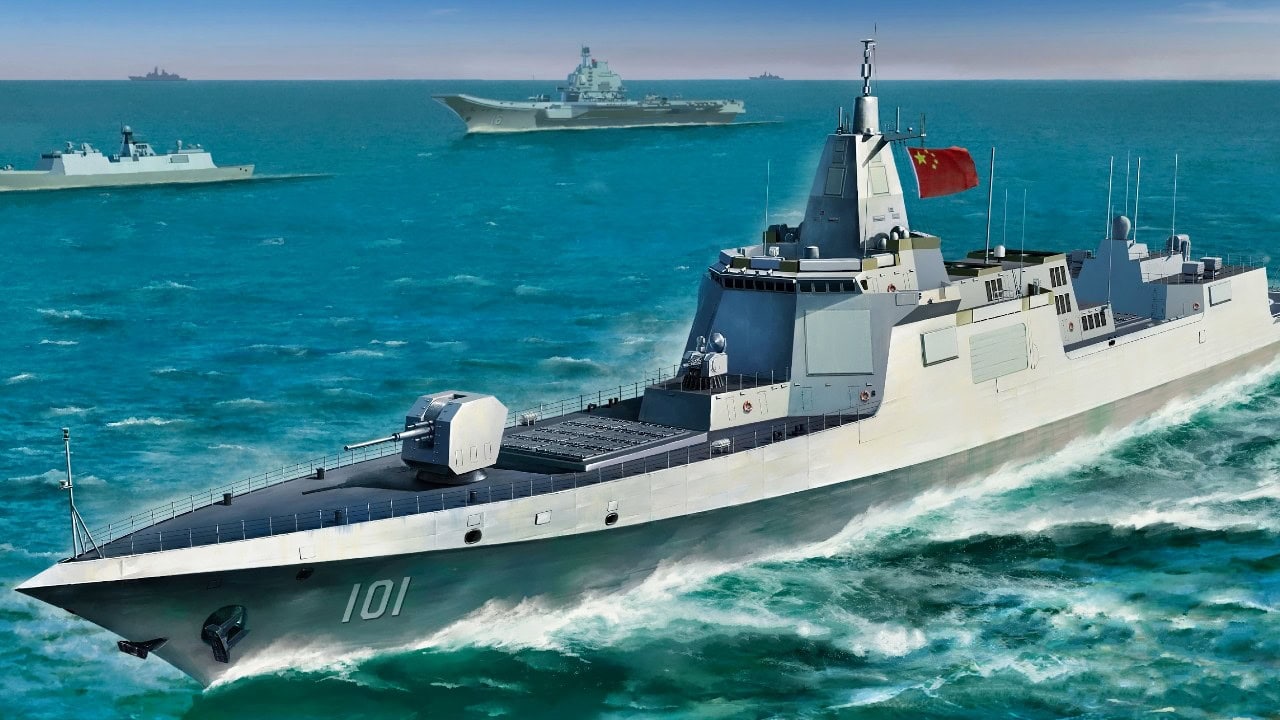
China’s Navy Graphic Artist Image Creative Commons.
The Nimitz-class lived through the era when that debate did not yet matter. Soviet anti-ship capability, while real, never seriously threatened American carriers in operating theaters where they actually deployed. The Nimitz-class spent the entirety of its operational life able to operate in any contested water on the planet without facing the kind of threats that would make carrier deployment a strategic gamble.
That era is ending. Whether the Ford-class can operate the same way in the 2030s and 2040s is the open strategic question of American naval power.
The Nimitz-class is the platform that defined American naval supremacy for half a century. Whether the supercarrier remains the right anchor for the next half-century is the question the next generation of admirals will have to answer.
When the USS John F. Kennedy commissions in March 2027 and the USS Nimitz decommissions the same month, the transition from the platform that worked to the platform that has to prove itself will be complete. The Ford-class either delivers on the promise the Nimitz-class established, or the American carrier era ends quietly across the back half of the 21st century.
About the Author: Harry J. Kazianis
Harry J. Kazianis (@Grecianformula) was the former Senior Director of National Security Affairs at the Center for the National Interest (CFTNI), a foreign policy think tank founded by Richard Nixon based in Washington, DC. Harry has over a decade of experience in think tanks and national security publishing. His ideas have been published in the NY Times, The Washington Post, The Wall Street Journal, CNN, and many other outlets worldwide. He has held positions at CSIS, the Heritage Foundation, the University of Nottingham, and several other institutions related to national security research and studies. He is the former Executive Editor of the National Interest and the Diplomat. He holds a Master’s degree focusing on international affairs from Harvard University.


Brian Wanck
May 18, 2026 at 5:27 pm
The case for the Nimitz and subsequently the Carl Vinson is whether Navy leaders can improvise and adapt. If they can see their way to stop using fast fliers on the oldest CVNs then the result is retirement of the catapults, flank bell speeds reduced and displacement(draft) reduced. You would still have over 80000 tons of sovereign US territory in service. I would bet that the NIMITZ reactors could serve 4-5 more years under reduced transient operation. This would still be double the capability of the current Marines VTOL capability. Countless Drone deployment capability, Tomahawk load out, Patriot load out etc. Still defendable and forward deployable. Time for cranial engagement Admirals…