


What A Second American Air War Against Iran Would Really Cost: The fragile truce between Washington and Tehran has hardened into a stalemate that satisfies no one. The shooting has mostly stopped, but the Strait of Hormuz, the artery through which close to a fifth of the world’s oil moves, remains effectively shut, and Iran shows no sign of handing it back. That leaves the United States staring at a tempting and treacherous option: restart the air campaign to force Iran to reopen the strait and abandon its nuclear program for good. It is the kind of choice that looks clean on a briefing slide and turns ruinous in contact with reality, because the real price of a second war would be paid far from the Persian Gulf, at the gas pump, in a Strategic Petroleum Reserve already running down, and ultimately in America’s capacity to fight the one war that would actually decide its future.
The Strait Of Hormuz Stalemate
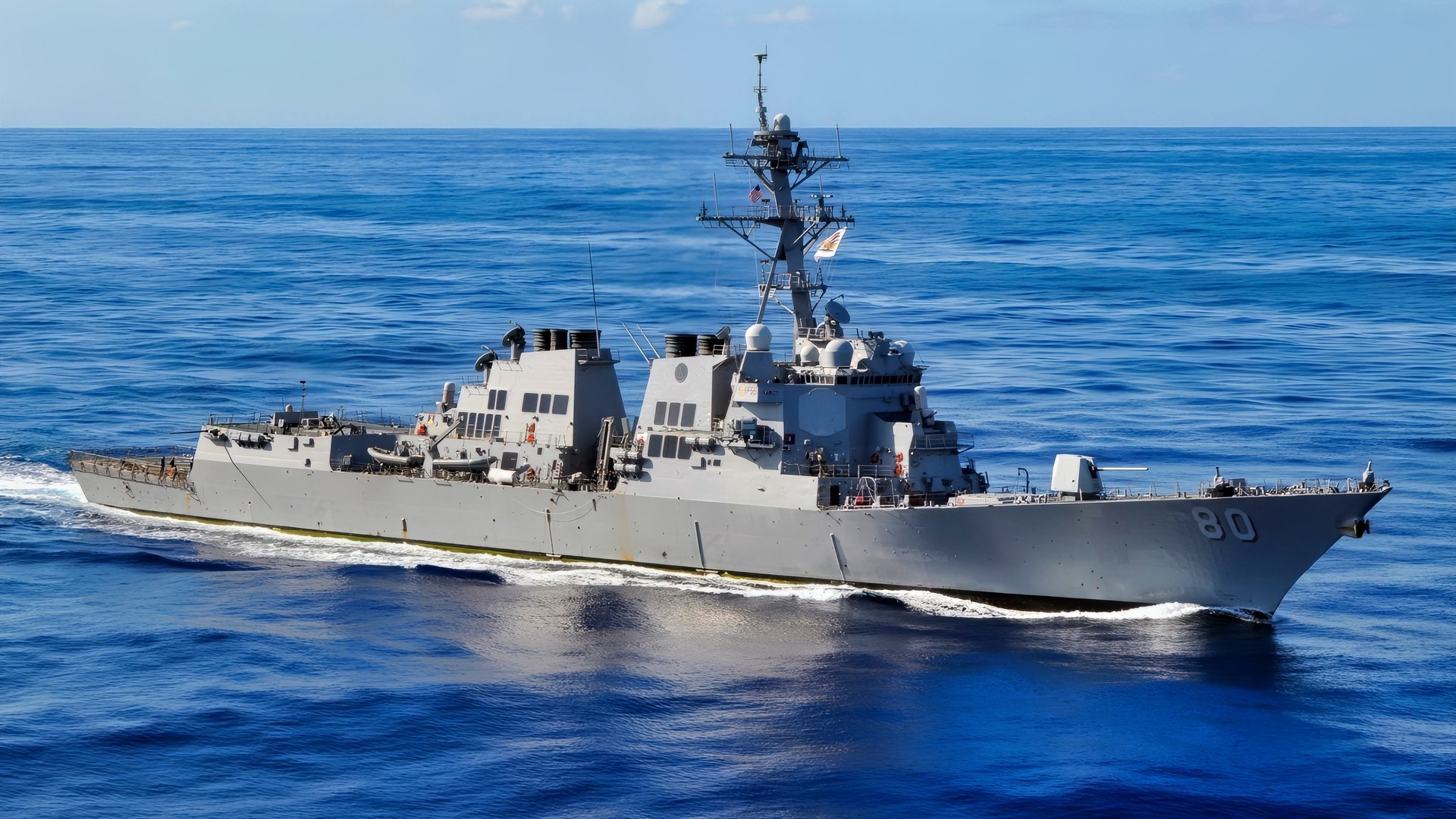
ATLANTIC OCEAN (Sept. 06, 2008) – The guided-missile destroyer USS Roosevelt (DDG 80) steams through the Atlantic Ocean. Roosevelt is deployed as part of the Iwo Jima Expeditionary Strike Group (ESG) in support of maritime security operations in the Navy’s 5th and 6th fleet areas of responsibility. The Iwo Jima ESG is made up of Roosevelt, homeported at Mayport, Fla.; the amphibious assault ship USS Iwo Jima (LHD 7); the amphibious dock landing ship USS San Antonio (LPD 17); the amphibious transport dock ship USS Carter Hall (LSD 50); the guided-missile cruiser USS Vella Gulf (CG 72); the guided-missile destroyer USS Ramage (DDG 61); all homeported at Norfolk, Va.; and the fast attack submarine USS Hartford (SSN 768), homeported at Groton, Conn. U.S. Navy photo by Mass Communication Specialist 2nd Class Jason R. Zalasky (Released)
Maybe a good place to start is why this is even a live question.
Since the ceasefire, the two sides have been deadlocked over Hormuz, and the waterway remains largely closed. When Iranian state media claimed a memorandum had been reached to reopen the strait to prewar traffic under Iranian and Omani management, the White House dismissed the report as a complete fabrication, and Trump declared flatly that no nation would control shipping there. Yet regional leaders increasingly believe Iran has already taken de facto control of the chokepoint, which is precisely the outcome Washington cannot accept.
Markets, meanwhile, have been pricing in peace. Crude has fallen roughly 20 percent from its 2026 peak on optimism that a lasting deal will finally unlock the strait, which carried about a fifth of global energy supply before the war, with the two sides reported at times to have mostly agreed on a 60-day memorandum to extend the truce, pending Trump’s signature. But that optimism rests on a thin reed. The strait stayed shut even during ceasefire talks, crude loadings inside the Gulf have been minimal, and any reopening is expected to be partial at best. The conditions that would justify a renewed campaign in the eyes of its advocates are simply today’s conditions left to fester. And Iran is now accusing America of violating the ceasefire as of this morning, June 7.
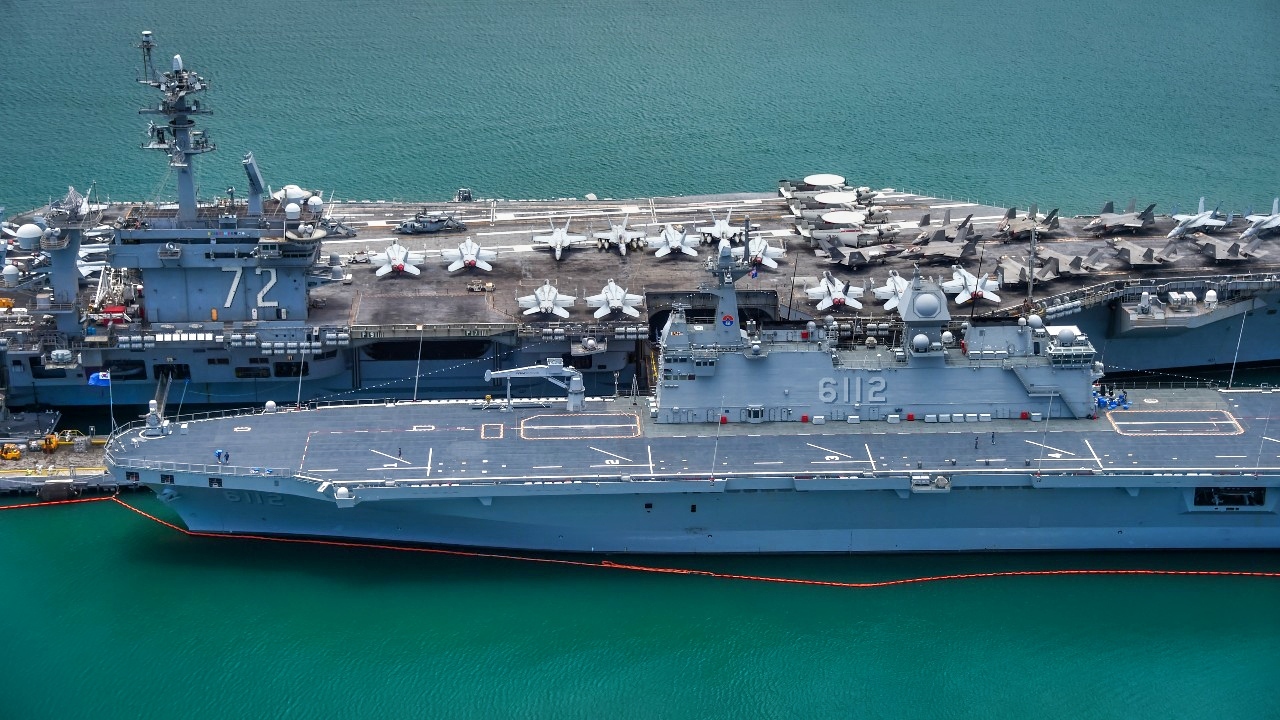
(July 7, 2022) – U.S. Navy nuclear-powered aircraft carrier USS Abraham Lincoln (CVN72) and Republic of Korea Navy amphibious assault ship ROKS Marado (LPH 6112) moored at Joint Base Pearl Harbor-Hickham, Hawaii, during Rim of the Pacific (RIMPAC) 2022. Twenty-six nations, 38 ships, four submarines, more than 170 aircraft and 25,000 personnel are participating in RIMPAC from June 29 to Aug 4 in and around Hawaiian Islands and Southern California. The world’s largest international maritime exercise, RIMPAC provides a unique training opportunity while fostering and sustaining cooperative relationships among participants critical to ensuring the safety of sea lanes and security on the world’s oceans. RIMPAC 2022 is the 28th exercise in the series that began in 1971. (U.S. Navy photo by Mass Communication Specialist Seaman Leon Vonguyen)
What Air War On Iran Would Target
A renewed campaign would be a coercion operation, aimed at bending Tehran to two demands: reopen Hormuz to normal commercial traffic and accept verifiable limits on its nuclear work.
To pry the strait open, American planners would have to suppress the very tools Iran uses to keep it closed, the anti-ship missile batteries along the coast, the swarms of fast-attack boats, the mine-laying vessels, the air defenses, and the command networks that tie them together, while resuming pressure on the nuclear complex.
The problem is baked into the objective. Iran has already shown how it answers pressure, firing ballistic missiles at Kuwait and sending drones toward the strait even as ceasefire talks proceeded, and earlier in the war, striking the American base at Al Udeid in Qatar.
A campaign meant to reopen Hormuz would invite exactly the retaliation, attacks on Gulf energy infrastructure and tankers, that keep Hormuz closed in the first place. You bomb to open the strait, and the bombing itself slams it shut.
That is the central contradiction of the entire enterprise, and no amount of air superiority resolves it.
The Oil Shock And A Drained Strategic Petroleum Reserve
The economic detonation would be immediate if the war restarts.
Hormuz handles on the order of 20 million barrels a day and more than a quarter of the world’s seaborne crude trade, so news that there is no hope for a reopening anytime soon would send prices climbing and ripple straight into American gasoline, diesel, and inflation figures. The usual answer to a supply shock is to crack open the emergency reserves, and that is where this gets dangerous.
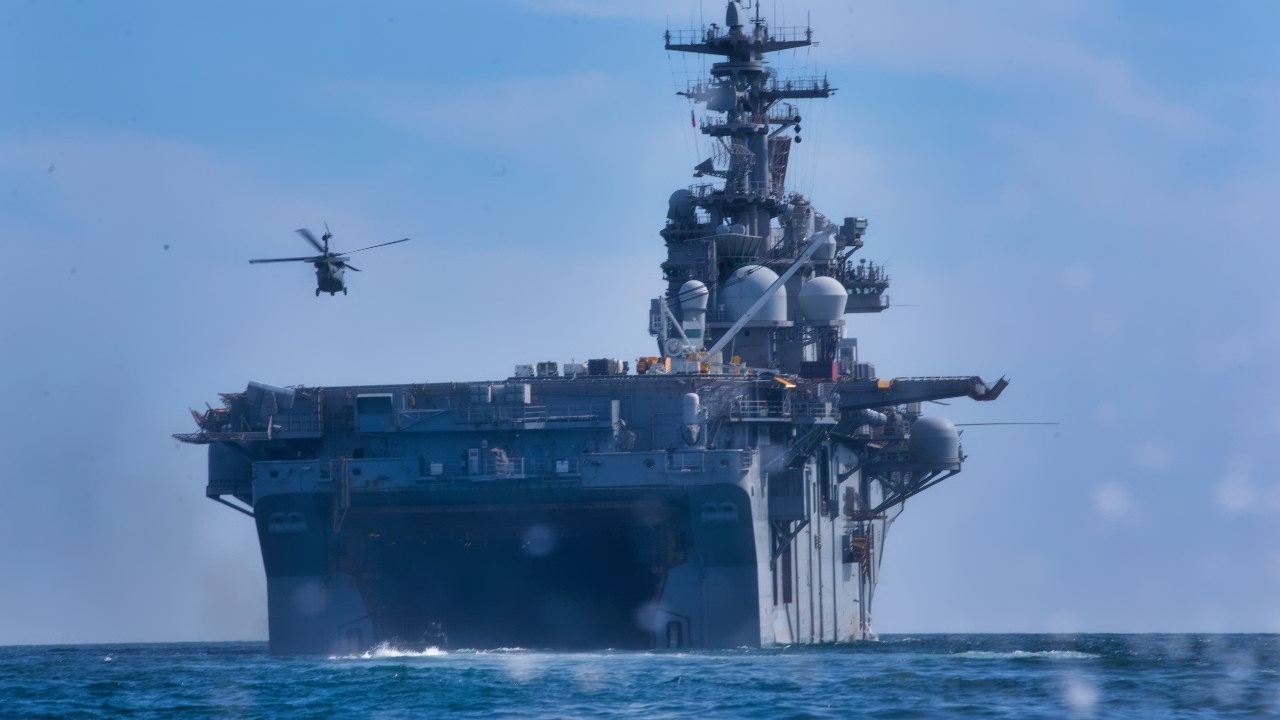
U.S. Marines with Bravo Company, 2d Assault Amphibious Battalion, 2d Marine Division approach the USS Wasp (LHD 1) in assault amphibious vehicles off of Onslow Beach during a three-day ship-to-shore exercise on Camp Lejeune, N.C., June 27, 2020. During the exercise, the Marines conducted amphibious maneuvers and dynamic ship-to-shore operations with the USS Wasp (LHD 1). (U.S. Marine Corps photo by Lance Cpl. Jacqueline Parsons)
The world’s strategic cushion is already being spent. According to government data, the International Energy Agency’s member governments held more than 1.2 billion barrels of emergency crude at the end of 2025, including roughly 415 million barrels in the U.S. Strategic Petroleum Reserve, as well as additional obligated industry stocks. A coordinated release is already drawing those reserves down, with the United States slated to put 172 million of its 415 million SPR barrels onto the market in what amounts to only the fifth emergency drawdown in the reserve’s history, after the 1991 Gulf War, Hurricane Katrina in 2005, the 2011 Libyan civil war, and Russia’s 2022 invasion of Ukraine. A second war would demand that the buffer be at its thinnest at the exact moment, and refilling the reserve afterward would take years.
The tool America would reach for to ride out an oil shock is the tool it has already half-emptied.
The Magazine Problem: THAAD, Patriot, And Tomahawk
Here is the cost almost no one factors in, and it is the one that should stop a second war before it starts.
The 39-day campaign against Iran, Operation Epic Fury, burned through American munitions at a rate the defense industrial base cannot come close to matching. In the first 16 days alone, U.S. forces expended more than 6,000 munitions, including 535 Tomahawk cruise missiles, nearly 17 percent of the supply, at a cost approaching two billion dollars, with the Payne Institute estimating that at that pace the United States would exhaust its stockpiles of several key munitions within a month.
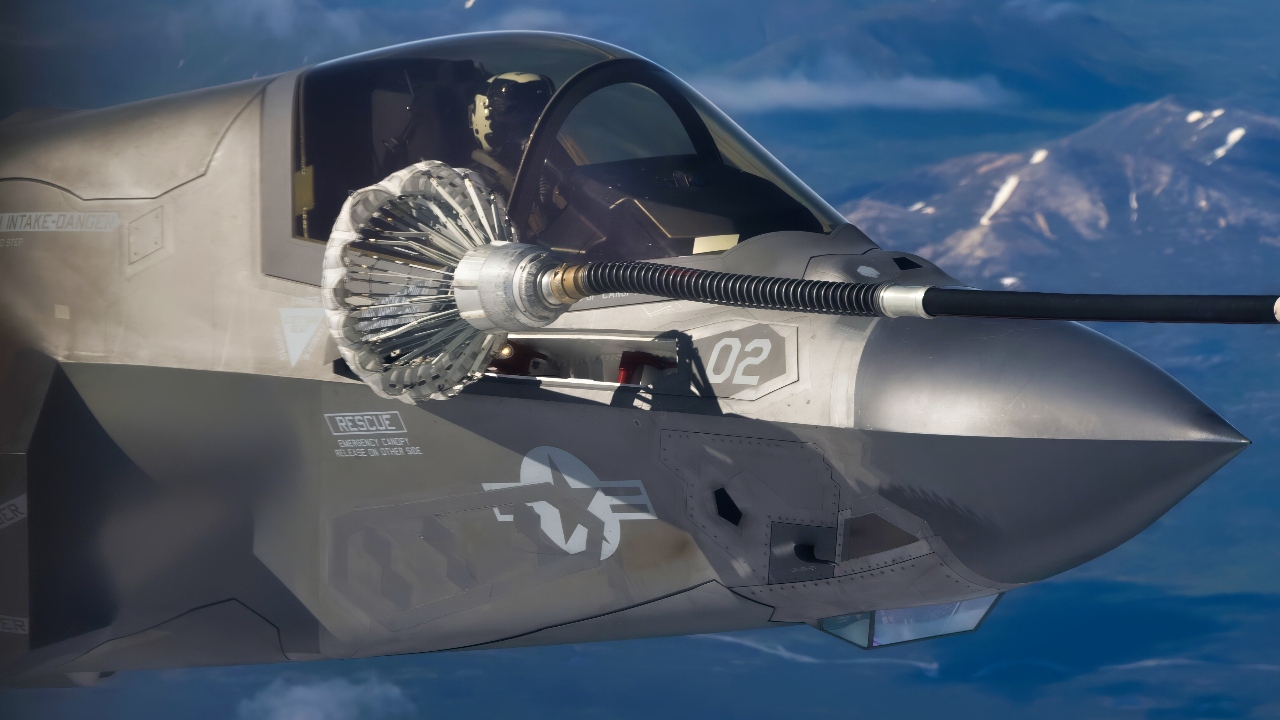
A U.S. Marine Corps KC-130J Super Hercules aircraft with Marine Aerial Refueler Transport Squadron (VMGR) 152 refuels an F-35B Lightning II aircraft with Marine Fighter Attack Squadron (VMFA) 121, both assigned to Marine Aircraft Group 12, 1st Marine Aircraft Wing, during exercise Red-Flag Alaska 25, at Joint Base Elmendorf-Richardson, Alaska, July 21, 2025. VMGR-152 partnered with the U.S. Air Force during Red Flag Alaska to enhance aerial refueling and assault support capabilities. Training in Alaska’s harsh environment sharpened the squadron’s combat readiness and lethality. (U.S. Marine Corps photo Lance Cpl. Cecilia Campbell)
The high-end interceptors fared worst. Estimates compiled from the fighting suggest Iran’s barrages consumed roughly half of America’s Patriot and THAAD interceptors, along with some 45 percent of its Precision Strike Missiles and 20 to 30 percent of its Tomahawks. By one analysis, Patriot batteries defending the Gulf fired more interceptors in the opening days than Lockheed Martin and Boeing’s lines produce in a year and a half. These are not cheap or quick to replace; a single THAAD interceptor costs about $ 15.5 million, and production lines run at dozens to hundreds per year, not thousands.
The Center for Strategic and International Studies has concluded the United States will need at least three years to rebuild the advanced stockpiles drained by the war, having fired more than 1,000 of roughly 3,100 Tomahawks at Iran. Another assessment puts full replenishment as far out as 2029. A second war would not just delay that recovery. It would deepen the hole.
Why Beijing And Moscow Are Watching The Gulf
This is where a Gulf campaign stops being a regional matter and becomes a global one. The munitions Iran forced America to expend are precisely the weapons a war with China would demand first.
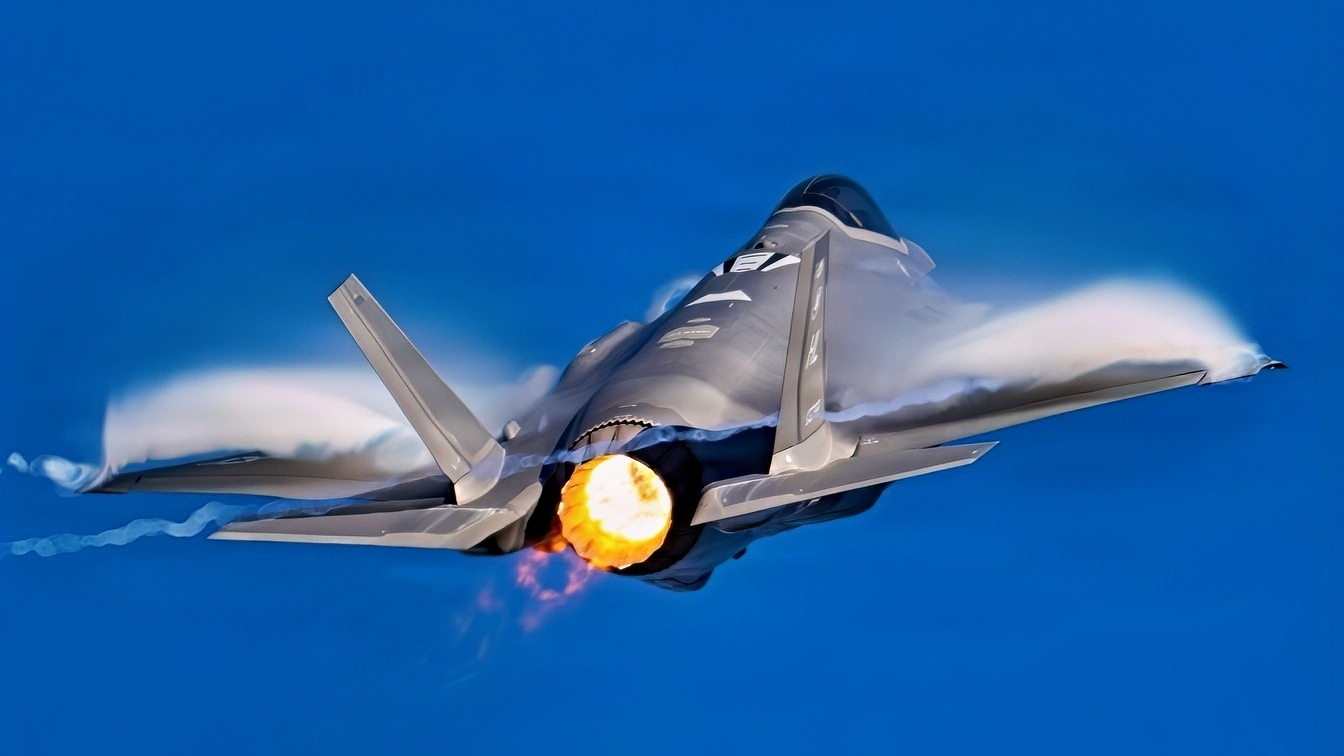
A U.S. Air Force F-35A Lightning II assigned to the F-35A Lightning II Demonstration Team performs a maneuver during the Feria Internacional del Aire y del Espacio (FIDAE) over Santiago, Chile, April 8, 2026. The F-35A Demonstration Team showcases the aircraft’s advanced performance and versatility through dynamic aerial maneuvers. (U.S. Air Force photo by Staff Sgt. Zachary Rufus)
Patriot and THAAD interceptors are what shield airfields, ports, and command centers from missile bombardment; Tomahawks would be the opening offensive salvo against enemy defenses; Precision Strike Missiles are built to hit exactly the launchers and naval formations a Pacific fight turns on. The systems hollowed out over Iran are the same ones a China conflict needs on day one, and the sobering part is that Iran fields a far smaller and cruder missile force than China, yet still drained them this badly.
The projections for a peer war are grim. A Heritage Foundation assessment warned that high-end interceptors like the SM-3, SM-6, PAC-3 MSE, and THAAD would likely be exhausted within days of sustained combat against China, some after only two or three major Chinese salvoes, and that aggregate U.S. vertical-launch inventories are insufficient for even one full reload of the fleet. CSIS has bluntly described a “window of vulnerability” for a Western Pacific conflict, and American military leaders have suggested Beijing could feel confident enough to move on Taiwan by 2027. Taiwan’s own deputy foreign minister, Chen Ming-chi, has warned that resupplying his country would be extremely difficult if China invades, while Washington is still rebuilding its own shelves.
The problem is now clear: spend the magazine coercing Iran over a waterway, and the United States could find itself unable to deter or fight the adversary that actually threatens its position in the world. The Gulf is the lesser theater. Burning through irreplaceable interceptors there to make a point to Tehran could forfeit the greater one to Beijing, and Moscow is watching the same math.
The Case A Hawk Would Make
None of this means a second strike is unthinkable, and the honest version of the argument has to concede the counterpoints.
A permanently Iran-controlled Hormuz is its own strategic defeat, handing Tehran a hand on the throttle of the global economy, and inaction carries real costs too. Defense Secretary Pete Hegseth has noted that American forces front-loaded their expensive standoff munitions early in the Iran war and have since shifted toward cheaper precision gravity bombs, which means a renewed campaign would not necessarily drain interceptors at the opening tempo. And the production ramp is real, with the Pentagon pushing contractors to increase THAAD output from 96 to 400 per year and Patriot PAC-3 output from 600 to 2,000 per year.
But those caveats only soften the problem; they do not remove it. The cheaper bombs require aircraft to fly closer to Iranian air defenses, raising the risk to pilots. The production surge, by the admission of CSIS analyst Mark Cancian, is still three to four years from delivering meaningful numbers, and it runs straight into a bottleneck of critical minerals like gallium and germanium that China largely controls, an irony almost too perfect to invent. The hawk’s case rests on the assumption that a second war could be kept short and cheap. The first one was supposed to be short and cheap, too.
Could Going to War Against Iran Again Work?
A renewed air war against Iran could, in theory, reopen the Strait of Hormuz and force a harder nuclear bargain. It could also reignite the oil shock, drain the emergency reserves meant to cushion it, and spend down the precise weapons America would need if the contest with China ever turned hot, all to settle a dispute over a waterway.
Coercion is seductive because it promises a decisive result for a manageable price. The arithmetic coming out of the last Iran war says the price would be neither manageable nor confined to the Gulf, and the country that benefits most from a second American war in the Middle East is the one waiting patiently across the Pacific.
About the Author: Harry J. Kazianis
Harry J. Kazianis (@Grecianformula) was the former Senior Director of National Security Affairs at the Center for the National Interest (CFTNI), a foreign policy think tank founded by Richard Nixon based in Washington, DC. Harry has over a decade of experience in think tanks and national security publishing. His ideas have been published in the NY Times, The Washington Post, The Wall Street Journal, CNN, and many other outlets worldwide. He has held positions at CSIS, the Heritage Foundation, the University of Nottingham, and several other institutions related to national security research and studies. He is the former Executive Editor of the National Interest and the Diplomat. He holds a Master’s degree focusing on international affairs from Harvard University.


