

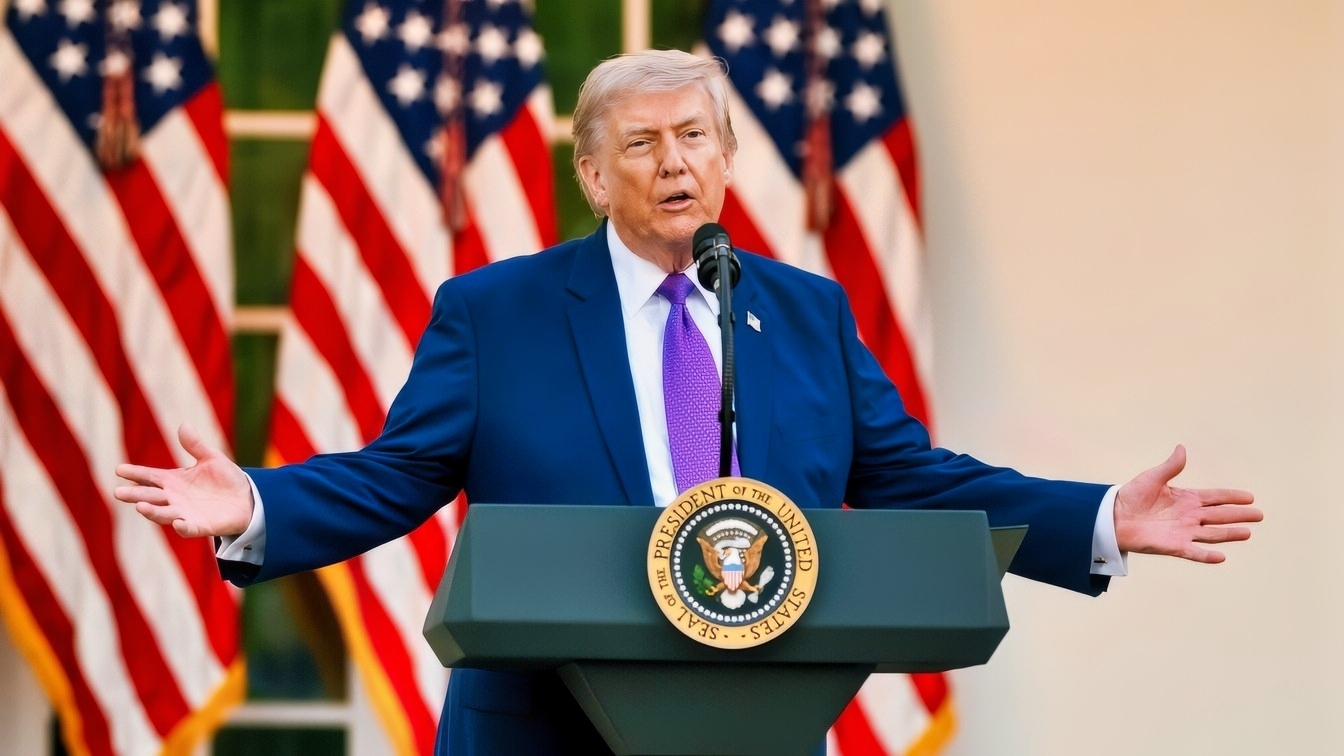
China’s Return to the Oil Market Could Trigger the Iran War’s Second Energy Shock: The Trump administration (and the rest of the world) has been riding at ease, despite the Iran War still raging, because oil prices have not gone stratospheric the way many of us in the Chattering Class believed (and, in my case, still believe).
Some of this was because Trump willingly did what few of his predecessors would ever have dreamed of doing: what at least appears to be manipulating the market by using the presidential bully pulpit to convince traders that any disruptions would be temporary at best.
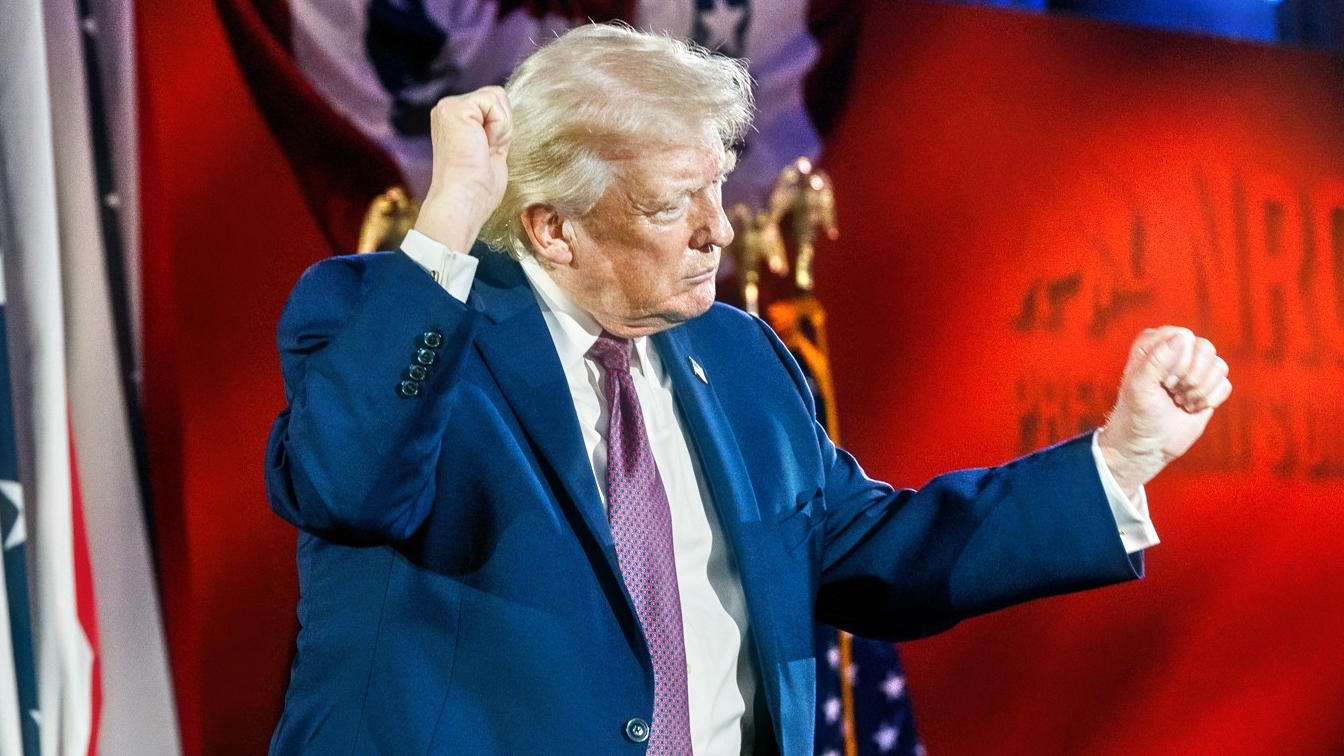
President Donald Trump delivers remarks at a meeting of the National Republican Congressional Committee, Wednesday, March 25, 2026, at Union Station in Washington, D.C. (Official White House photo by Joyce N. Boghosian)
Donald Trump Flickr/White House Photo
Then, of course, the president relied heavily on the 400-million-barrel Strategic Petroleum Reserve (SPR), liberally releasing its finite supply to both domestic consumers and even global producers to deflate what otherwise would have been skyrocketing oil prices. But the biggest help of all was the removal of China from the world market.
Beijing was not removed because of American actions. Instead, China’s leaders voluntarily pulled their country off the global market and relied heavily on their 1.4-billion-barrel SPR.
After more than 100 days of the Iran War raging, though, these buffers are coming down to their end. In the United States, the country is essentially at the bottom of the barrel. In China, however, they’ve burned through maybe a third of their SPR; however, hard numbers aren’t easy to come by.
Yet, China is the world’s largest importer of oil–especially from the Middle East. And while the country has lived off its reserves for the last few months, there is a limit to what Beijing is willing (or able) to do in terms of staying off the global oil market.
Why China Left the Global Oil Market
China withdrew from the global market when the oil supply from the Strait of Hormuz (SoH) was blocked by the Iranians and then by the American counter-blockade. Beijing did not voluntarily remove itself from the global oil market out of kindness. China’s leaders understand that, as an industrial economy–the world’s workshop in many respects–Chinese firms need the world to purchase their goods. But a full-fledged energy crisis of the kind the world faced when the Iran War was initiated would have meant complete demand destruction for Chinese goods.
So, China needed to take steps to mitigate the threat that a sudden oil crisis would have posed to its own economy by ensuring its customers worldwide did not feel too severe a pinch at the pump (and for all goods that energy touches). Hence, China removed itself and drained at least a third of its SPR.
Normally, China imports around 11-12 million barrels of oil per day. Instead, imports collapsed to roughly 8 million barrels per day, meaning 3 million barrels per day of demand vanished. But the Chinese will resume purchasing from the global market soon. And with the world’s energy markets still frozen by the Iran War, the return of Chinese purchasers to the world oil market will lead to catastrophe.
The World’s Hidden Supply Cushion
The problem is that those missing 3 million barrels per day effectively served as the world’s hidden supply cushion. Every barrel China did not buy was a barrel for Europe, India, Japan, etc. That reduction in demand prevented a frantic bidding war among the world’s largest energy consumers at precisely the moment supplies coming out of the Persian Gulf were under their greatest strain. It is one of the principal reasons why oil prices, while elevated, never reached the apocalyptic levels many analysts had predicted when the Iran War began.
That safety net is disappearing.
China’s Return Changes Everything
Tanker-tracking data and customs figures indicate Chinese refiners are cautiously returning to the international market. Beijing can only defer purchases for so long before it must begin replenishing its own SPR and feeding its enormous industrial economy. Even though slowing economic growth amid the rapid adoption of electric vehicles has reduced Chinese demand marginally, the country remains the world’s largest crude importer.
Shipping through the Strait of Hormuz, meanwhile, has slowed to a trickle. As a result, insurance premiums for tankers operating in the Gulf remain elevated, and spare production capacity elsewhere is insufficient to compensate quickly for any renewed surge in demand. In other words, China is preparing to reenter a market that never fully recovered from the initial shock of the Iran War.
The Second Energy Shock
This creates the conditions for a second energy shock–one driven not by a sudden disruption in supply, but by the reemergence of demand. Unlike the first phase of the crisis, however, policymakers have fewer tools available to cushion the blow. The United States has already depleted much of the SPR that it was willing to release. European governments have limited options after months of drawing down inventories. And China itself will no longer be acting as the world’s accidental stabilizer. Instead, it will aggressively compete for all available crude sources.
If that happens before the SoH is fully reopened and global shipping normalizes, the world may finally experience the oil price shock that many think we’ve avoided. The first phase of the Iran War was defined by China’s absence from the market.
The second phase may very well be defined by its return.
About the Author: Brandon J. Weichert
Brandon J. Weichert is Senior National Security Editor. He also manages The Weichert Brief on Substack. Weichert also hosts “National Security Talk” on Rumble. He is the author of four bestselling national security books, the most recent of which is A Disaster of Our Own Making: How the West Lost Ukraine (Encounter Books). Follow him via Twitter/X @WeTheBrandon.


