

When I worked as a Defense Department desk officer two decades ago, you could set a clock by it: Every few months, someone newly assigned to the Iran file, whether in the Joint Chiefs of Staff or the Central Intelligence Agency, would read somewhere that Iran was a multiethnic country and suggest supporting ethnic separatism in Iran to fragment the country.
Magic Formulas Never Work

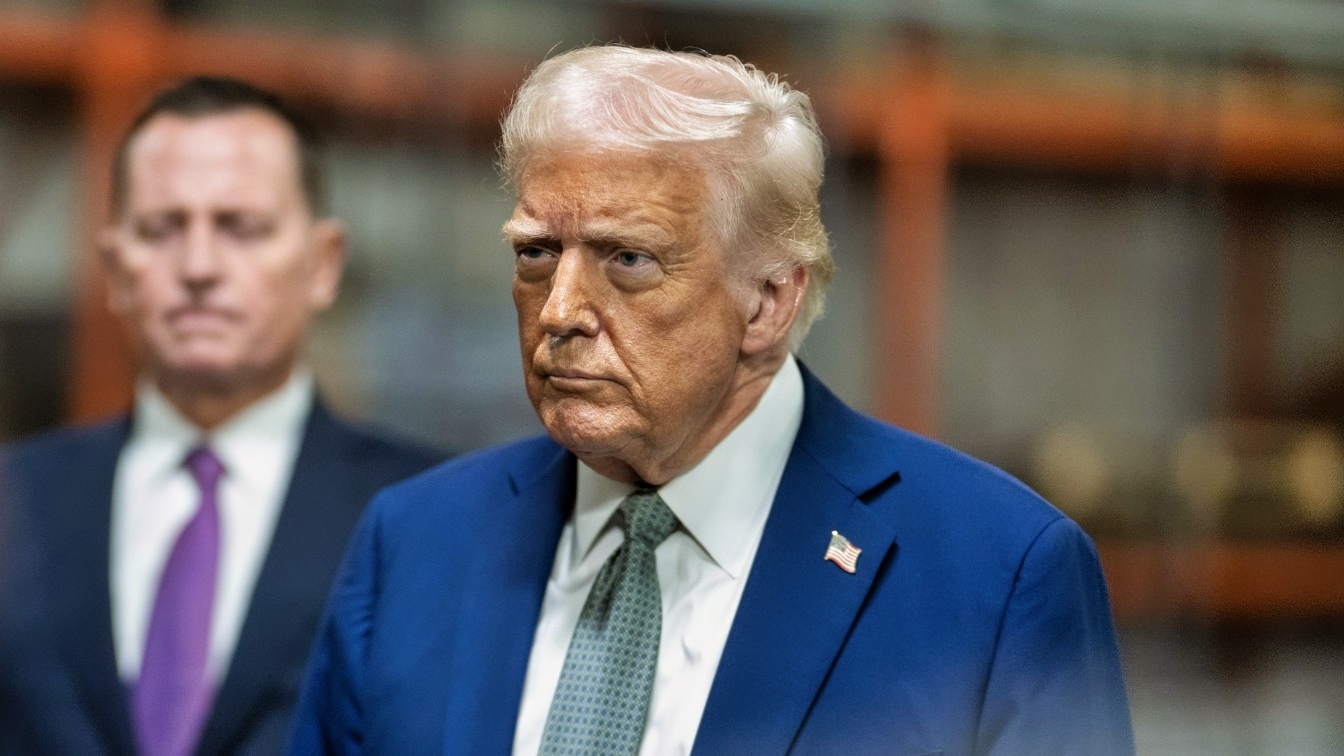
President Donald Trump gives remarks after presenting the newly-created “Medal of Sacrifice” to three fallen officers’ families from the Palm Beach County Sheriff’s Office, Monday, May 19, 2025, in the Oval Office. (Official White House Photo by Joyce N. Boghosian)
There should be a rule of thumb in Washington, and in diplomacy more broadly: Magic formulas do not exist.
They reflect both American policy arrogance and ignorance, but they always lead to failure. President Barack Obama embraced the fiction that Israeli settlements were the real impediment to diplomatic progress.
His subsequent promotion of the issue let Hamas and other corrupt Palestinian leaders off the hook and froze diplomacy for nearly his entire administration. The quest for a magic formula was also behind Secretary of State Hillary Clinton’s ill-fated “reset policy” with Russia, as well as Obama’s and President Joe Biden’s subsequent Saudi-bashing over Yemen.
In Iran’s case, promotion of ethnic federalism would backfire. Iran is multiethnic—Persians, Azeris, Kurds, Armenians, Baluch, Gilakis, Arabs, and more- but its sense of nationhood predates the ethno-nationalism around which European states began to organize in the 19th century. While there is an element of mythology, Iranians see a near-contiguous history dating back to the Persian Empire of millennia past.
That late Supreme Leader Ali Khamenei was Azeri was not an issue for his followers. Iranians do not consider Safavid or Qajar-era shahs non-Iranian simply because they were ethnic Turks. Nor are Iranians alone: While Gamal Abdel Nasser overthrew the Egyptian monarchy in 1952, Egyptians still honor their khedives, even if their court language was Turkish.
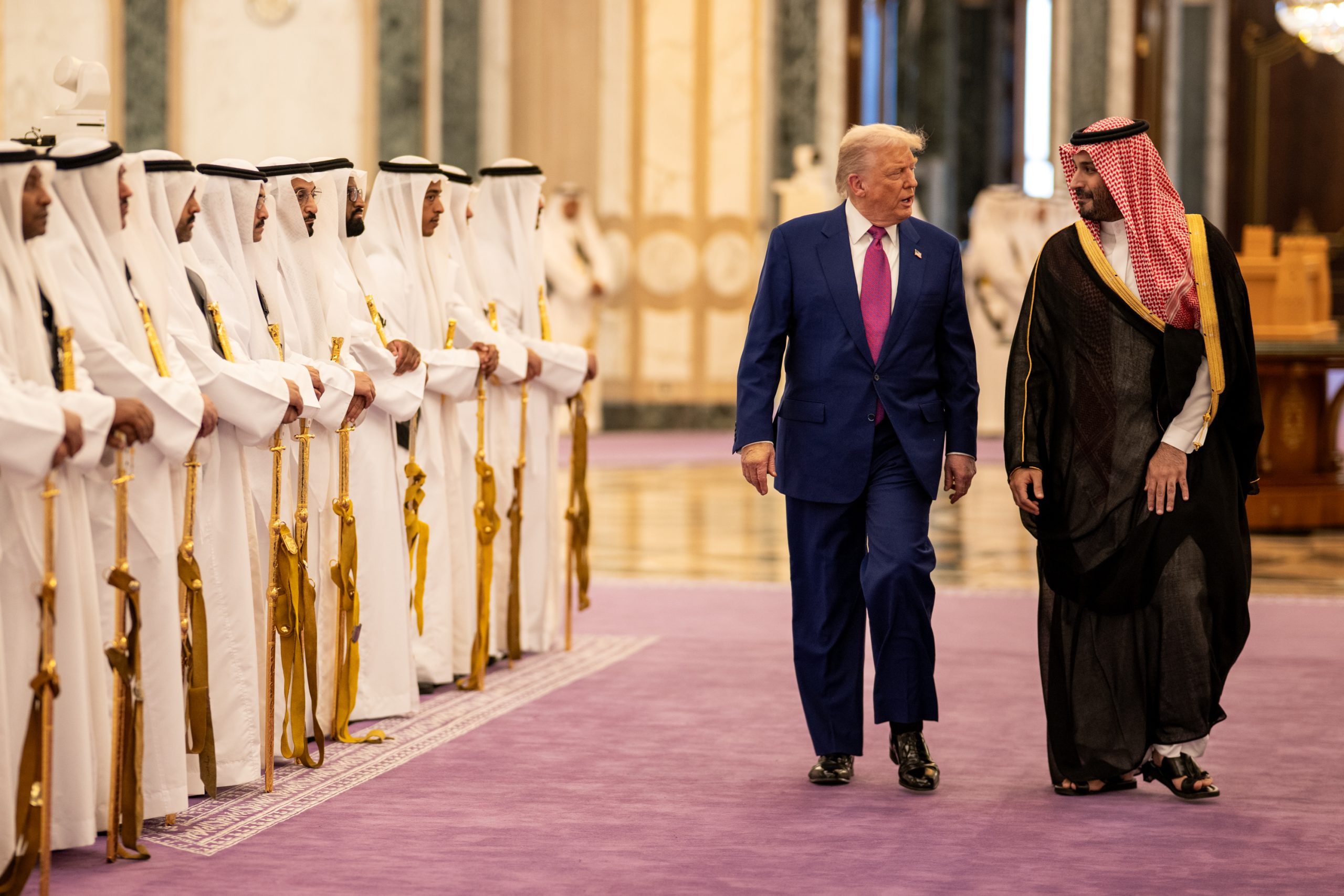
President Donald Trump participates in a welcome ceremony with Saudi Crown Prince Mohammed Bin Salman Al Saud at the Royal Court Palace in Riyadh, Saudi Arabia, Tuesday, May 13, 2025. (Official White House Photo by Daniel Torok)
A Short History of Iranian Separatism
Instead, Iranians associate ethnic separatism with imperialism. While in the 19th-century Great Game, the British and Russian Empires both coveted Persia, neither formally colonized it. Nevertheless, they considered it.
During the later 19th century, the British Empire flirted with the idea of supporting a separatist project centered on the Qajar Prince Zill as-Sultan. In the early 20th century, the British supported Sheikh Khazal, who led a separatist Arab state centered around the oil-rich Iranian town of Khorramshahr.
The Russians, too, sponsored ethnic separatist movements: The Kurdish “Mahabad Republic” in 1946 and the contemporaneous Azerbaijan People’s Government, which sparked the first real crisis of the Cold War.
Iraqi President Saddam Hussein’s 1980 invasion of Iran was a gift to Revolutionary Leader Ayatollah Ruhollah Khomeini because he rallied Iranians around the flag and promised the ethnic dissolution of Iran based on the idea of a “free Arabistan.” When Iranians realized Saddam wanted to destroy their country rather than simply end the Islamic Republic, they rallied around the flag even at the cost of enabling Khomeini to entrench himself.
Under the Islamic Republic, Kurds and Baluch have suffered disproportionately because they are double minorities, both ethnic and sectarian. Still, the stigma associated with foreign powers sponsoring separatist movements still overshadows political discourse 80 years on, with many Iranian nationalists, including Crown Prince Reza Pahavi, equating any talk of federalism with a conspiracy to dismantle Iran.
Why Ethnic Separatism Would Backfire
As the ceasefire ends and military clashes resume, the danger Iranians must face is an increasing desire in White House circles for a magic formula to end the war and its inflationary pressures. For better or worse, President Donald Trump refuses to adhere to diplomatic precedent and often displays impatience.
This leaves him open to those, be they sponsored by outside governments like Azerbaijan or Saudi Arabia, lobbyists, or simply career analysts rotating into positions but operating with a superficial understanding of Iran, who will urge Trump to play the ethnic card.
If the Pentagon fears taking Kharg Island because Iranians occupying the high ground on the mainland could fire drones and missiles at them, some analysts might argue that supporting Arab separatism could solve the problem by making the southern Zagros mountains part of a new Arab emirate. Ditto the oil fields of Khuzestan, the same region Saddam sought to annex, and American oil firms may covet. Already, proponents of “South Azerbaijan” appear louder on Pennsylvania Avenue in Washington, DC, than they do in Tabriz, the capital of Iranian Azerbaijan. Kurds also have a formidable lobby, though their actual demands are far more nuanced than Iranian nationalists believe.
For Trump, however, seeking a shortcut or magic formula out of frustration would backfire. Should the United States associate itself with the call for Iran’s destruction rather than the end of a hated regime, the same Iranians who have marched on the streets against the regime will hold their nose and support it, if only to save their country. For Trump or anyone around him to support the ethnic card would be the ultimate gift to the Islamic Revolutionary Guard Corps and could preserve a regime rather than hasten its end.
MORE – How the Ukraine War Could Mean a NATO-Russia War.
About the Author: Dr. Michael Rubin
Michael Rubin is director of policy analysis at the Middle East Forum and a distinguished fellow at India’s Usanas Foundation. A former Pentagon official, Dr. Rubin was a senior fellow at the American Enterprise Institute for more than two decades. He has lived in post-revolution Iran, Yemen, and both pre- and postwar Iraq.


Arhtur LAN
July 16, 2026 at 4:47 pm
As an Iranian, I consider this view entirely correct, and I strongly warn the United States against it.