

Ukraine Is Wrecking Russia’s Oil Refineries. How Much Damage Has It Done, and How Might Putin Respond?: Ukraine’s long-range drone campaign has hit all 11 of Russia’s largest oil refineries and triggered the worst fuel crisis of the war, though how much capacity is truly offline is fiercely disputed, with Kyiv claiming 43 percent and independent analysts estimating closer to a third.
The damage is real and mounting, but Russia has proven able to absorb it.

MSTA-S Russian Army. Image Credit: Creative Commons.
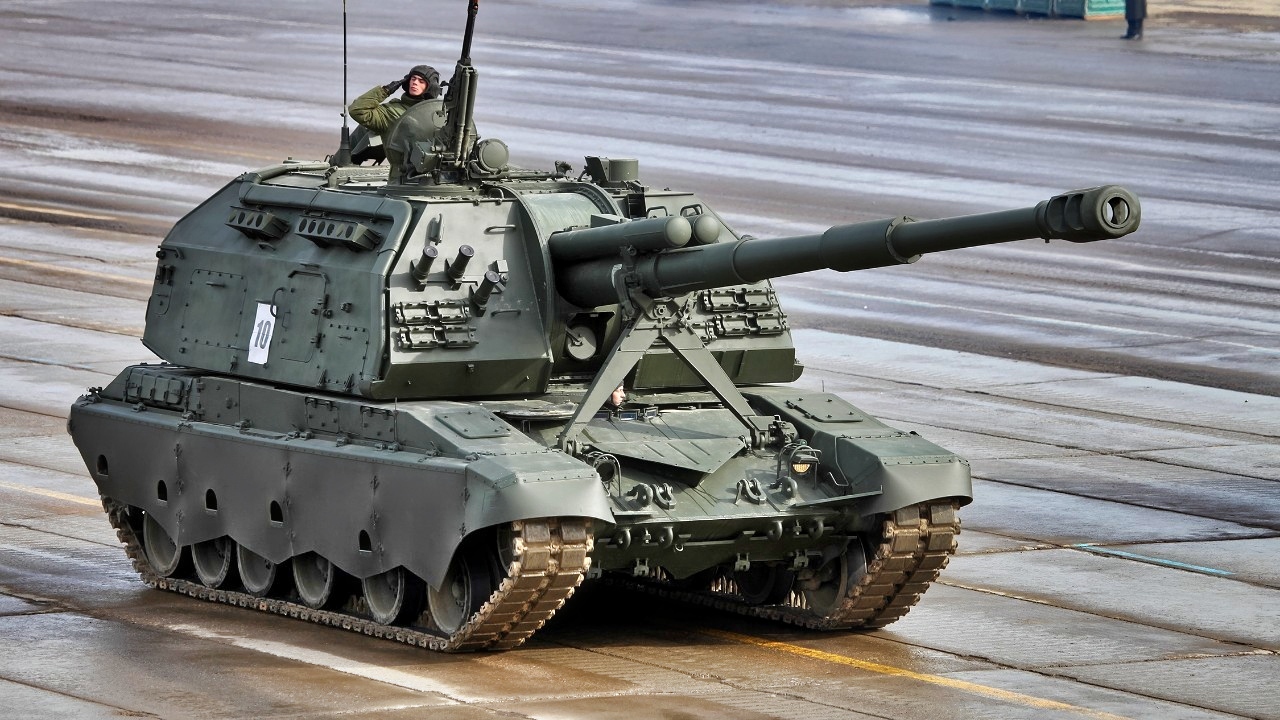
Msta-S Russian Army. Image Credit: Creative Commons.
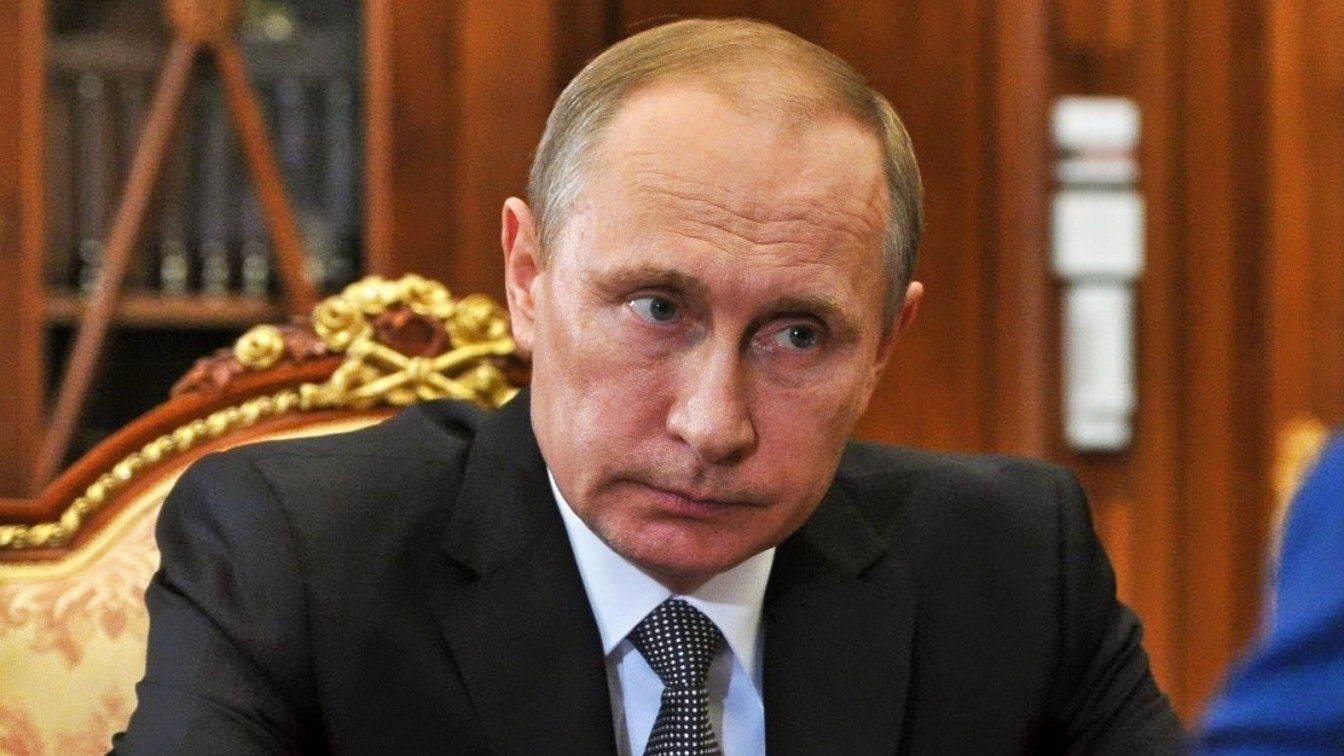
The harder question is how Vladimir Putin responds, and the evidence points more toward escalation than toward the negotiation that the strikes are designed to force.
Since the spring, Ukraine has turned its long-range drones and missiles into what President Volodymyr Zelensky calls “long-range sanctions,” a systematic campaign against the refineries that fund Russia’s war.
By early July 2026, it had struck all 11 of Russia’s largest oil refineries at least once, including the giant Omsk plant more than 2,500 kilometers from Ukrainian territory, and set off the most severe fuel crisis Russia has faced since the invasion began.
Just how much lasting damage the campaign has done is genuinely contested, and the more important question, what Vladimir Putin does about it, has no reassuring answer.
Here is what the evidence shows on both counts.
How Much Damage?
Ukraine’s own accounting is the highest. Its General Staff claims strikes have disabled 42.7 percent of Russia’s designed refining capacity as of early July, with eight refineries hit in the past month, more than 60 storage tanks destroyed, and cumulative losses of $13.5 billion since August 2025. Independent estimates are lower and vary widely.
The International Energy Agency puts capacity offline at “more than 20 percent,” analysts cited by Kyiv and Al Jazeera estimate closer to a third, and the Financial Times and Finland’s president have cited figures as high as 40 percent.
The most careful analysis, from the Carnegie Endowment, argues the actual drop in refined output is smaller, around 13 percent, because Russia offsets damaged units with spare capacity, the same adaptation that limited the hit in 2025. The honest reading sits in that range: Ukraine’s headline claim is the ceiling, a quarter to a third of capacity is a fair estimate of what is offline, and the real output loss is smaller but climbing.
Where the sources converge is on revenue. Ukraine has struck refineries at least 194 times in 2026, and both United24 and the IEA report that oil-sector income is no longer sufficient to offset Russia’s soaring military spending.
The Fuel Crisis and the Repair Problem for Russia
The domestic effect is not disputed at all. Fuel shortages have spread across most Russian regions, with the Financial Times estimating that 50 million people, more than a third of the population, are affected; Crimea has declared a state of emergency and is selling gasoline only via electronic vouchers.
Moscow banned diesel exports through July 31, and because Russia supplied roughly 11 percent of the world’s diesel, that pushed global prices to multi-year highs. To cover the gap, Russia is now importing gasoline from India, Kazakhstan, Belarus, and China.
The reason the crisis persists is that the damage is hard to undo: the complex crude-distillation units Ukraine targets can take up to two years to replace, the components are under Western sanctions, and repairs must be attempted under the threat of the next strike.
The Ryazan refinery, one of Moscow’s main fuel arteries, has been hit fifteen times.
The military logic behind all this is deliberate. Diesel is the fuel that moves Russian trucks and armor, and by striking at the peak of the summer harvest, Ukraine has forced the military to compete with farmers and civilians for a shrinking supply.
The deep strikes have also compelled Russia to pull air-defense assets back to shield refineries and Moscow, thinning its coverage elsewhere.
What Putin Can Do: Ukraine War Options
Putin’s options run from managing the pain to widening the war, and the evidence suggests which way he is leaning.
The first is simply to muddle through, his current public posture. He has acknowledged the shortages while dismissing them as a “temporary deficit,” relying on imports, rationing, and export bans, even as his own central bank warns that the disruption will dent 2026 growth. The trouble is that mitigation does not stop the drones.
The second, and the one Kremlin insiders describe as most likely, is escalation against Ukraine. Three sources close to the Kremlin told Reuters that Putin is rejecting negotiation and preparing to intensify the war; Putin himself told generals that the energy strikes justify seizing more Ukrainian land beyond the Donbas as a “security zone,” and a former defense official floated destroying 30 major Ukrainian industrial sites.
As winter approaches, that likely means more frequent strikes on Ukraine’s power grid.
A third, riskier option is to widen the pressure onto NATO: Russian analysts have openly discussed isolated attacks on the alliance’s eastern flank, which the Royal United Services Institute’s Jack Watling says would aim not at war but at dividing NATO, and could hand Putin a pretext for the conscription he has avoided.
That points to a fourth option, a mandatory draft to man the front, which some analysts consider necessary to take the Donbas, but which Putin has resisted as politically dangerous.
The fifth option is the one the entire campaign is meant to force: negotiation. Putin revealed that Ukraine has offered a mutual halt on deep strikes, along with a proposal to limit the fighting to the annexed regions.
He rejected it, casting the refinery strikes as an effort to fracture Russian society and insisting, “We will not give them that chance.”
What Happens Now?
Carnegie’s phrase captures it best: Russia’s oil sector is battered but not broken.
The damage is real, mounting, and the worst of the war, but it is gradual and partly offset, not a collapse, and Moscow has shown it can adapt and endure. On the evidence, Putin’s likelier response is not the deal Kyiv is trying to force but escalation, and the reason echoes the deeper bind of his rule: backing down would mean letting ordinary Russians reckon with the war’s true costs, a prospect more threatening to him than fighting on.
Ukraine’s campaign has genuinely shifted the war’s momentum while also raising the risk of wider escalation. The two developments to watch are whether the mounting pain finally produces the deep-strike truce Ukraine has put on the table, or the mobilization Putin has spent four years avoiding.
About the Author: Harry J. Kazianis
Harry J. Kazianis (@Grecianformula) was the former Senior Director of National Security Affairs at the Center for the National Interest (CFTNI), a foreign policy think tank founded by Richard Nixon based in Washington, DC. Harry has over a decade of experience in think tanks and national security publishing. His ideas have been published in the NY Times, The Washington Post, The Wall Street Journal, CNN, and many other outlets worldwide. He has held positions at CSIS, the Heritage Foundation, the University of Nottingham, and several other institutions related to national security research and studies. He is the former Executive Editor of the National Interest and the Diplomat. He holds a Master’s degree focusing on international affairs from Harvard University.


Swamplaw Yankee
July 11, 2026 at 11:14 pm
The 2014 Betrayal of the WEST by POTUS Barry Obama is still not owned by 2026 MAGA POTUS Trump + his Cabal.
This was long planned funded + finally ignited by POTUS Obama on February 6th , 2014.
Today, 2026 MAGA POTUS trump needs to clearly state one sentence: “Putin, immediately withdraw back to the 2013 border lines, NOW’. That stops the scam of stealing 60 Trillion in USD of Ukrainian resources + just leaves the process of collecting compensation and reparation from the million s of international war criminal KOLONIZING parasites who stole Ukrainian real estate back in 2014.