


President Donald Trump told reporters on Wednesday that the United States is getting along very well with Iran, that Iran’s denuclearization is moving along well, and that recent meetings in Qatar had gone well. He said it within hours of a report that he had spent recent days weighing whether to walk away from those talks and restart the war outright.
Both things are true, and the distance between them is the story. The Wall Street Journal, citing US officials familiar with the discussions, reported that Trump has been briefed on options for a return to full-scale strikes on Iran and has, for the moment, chosen to stay at the table.
The public message is that the agreement is working. The private deliberation has been over whether to tear it up.
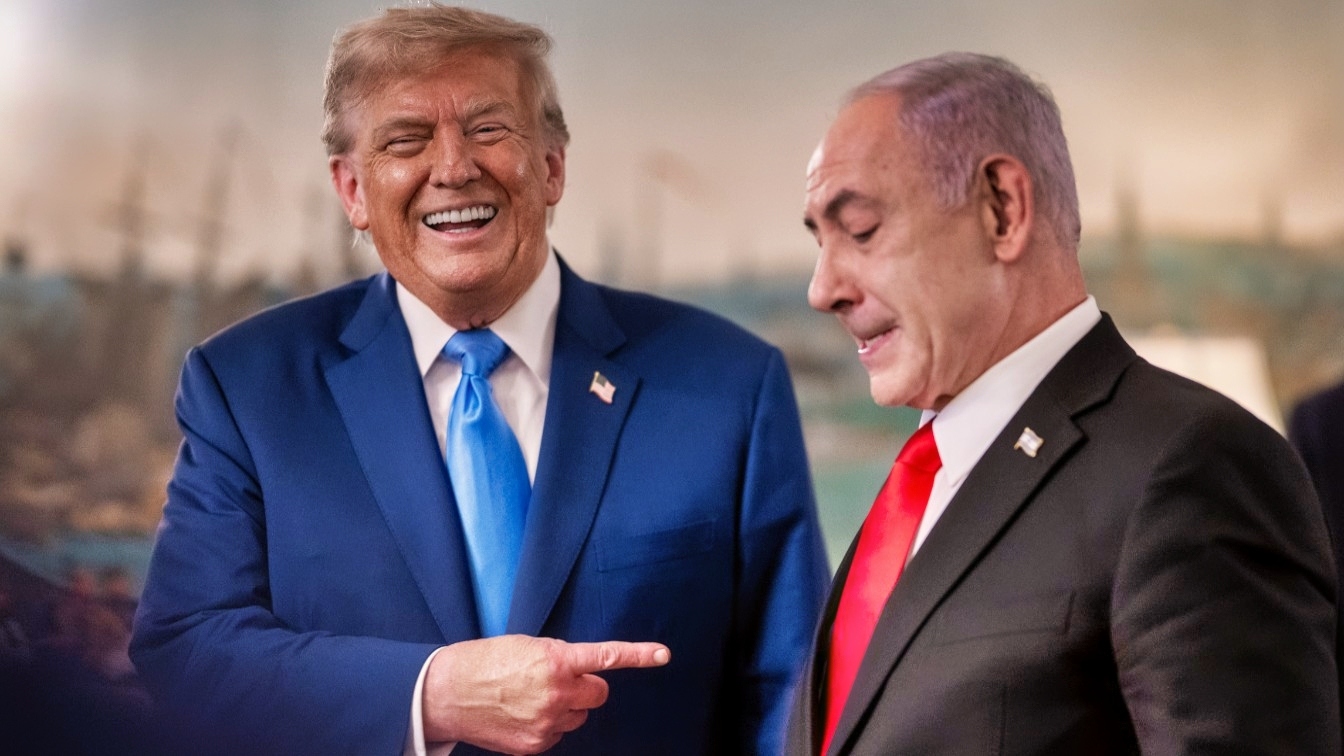
President Donald Trump and Israeli Prime Minister Benjamin Netanyahu speak privately in the Vermeil Room before a dinner, Monday, July 7, 2025, at the White House. (Official White House Photo by Daniel Torok)
What the Wall Street Journal Reported About Trump’s War Deliberations
According to the Journal, Trump held repeated conversations in recent days with Secretary of War Pete Hegseth and Joint Chiefs Chairman Gen. Dan Caine about whether Washington should abandon negotiations and resume large-scale attacks, an option some officials described internally as “finishing the job.”
He has not made a final decision.
He told aides that another round of full-scale strikes could derail diplomacy and undercut the longer-term goal of dismantling Iran’s nuclear program, and that he is comfortable letting negotiations run past an August 18 deadline, the close of the 60-day window opened by the memorandum of understanding the two sides signed in mid-June.
In the interim, the report said, Trump is satisfied with a narrower instrument: single retaliatory strikes whenever Iran violates that memorandum. The two governments have also opened a direct line between US Central Command and Iran’s Islamic Revolutionary Guard Corps, which a White House official described as active and already in use by both sides, a channel intended to keep an isolated clash from escalating into the war Trump says he would prefer to avoid.
The reporting relies on unnamed officials, and Iran’s public posture runs counter to the optimism Trump projected. But its shape matches his own conduct since the fighting paused.
The war itself began on February 28, when US and Israeli forces launched coordinated strikes on Iran, and it has moved through a series of ceasefires and flare-ups in the months since.
Why Trump Keeps Choosing Talks Over Strikes
For all the threats, Trump has repeatedly declined to authorize large-scale operations since the initial ceasefire in April.
He casts the restraint as leverage rather than retreat, arguing that Iran is conceding to his terms precisely because the alternative is a return to bombing.
The logic the Journal describes is direct. A fresh-air campaign would almost certainly collapse the negotiations and, by some officials’ own accounts, amount to admitting that the high-profile deal Trump has promoted had failed.
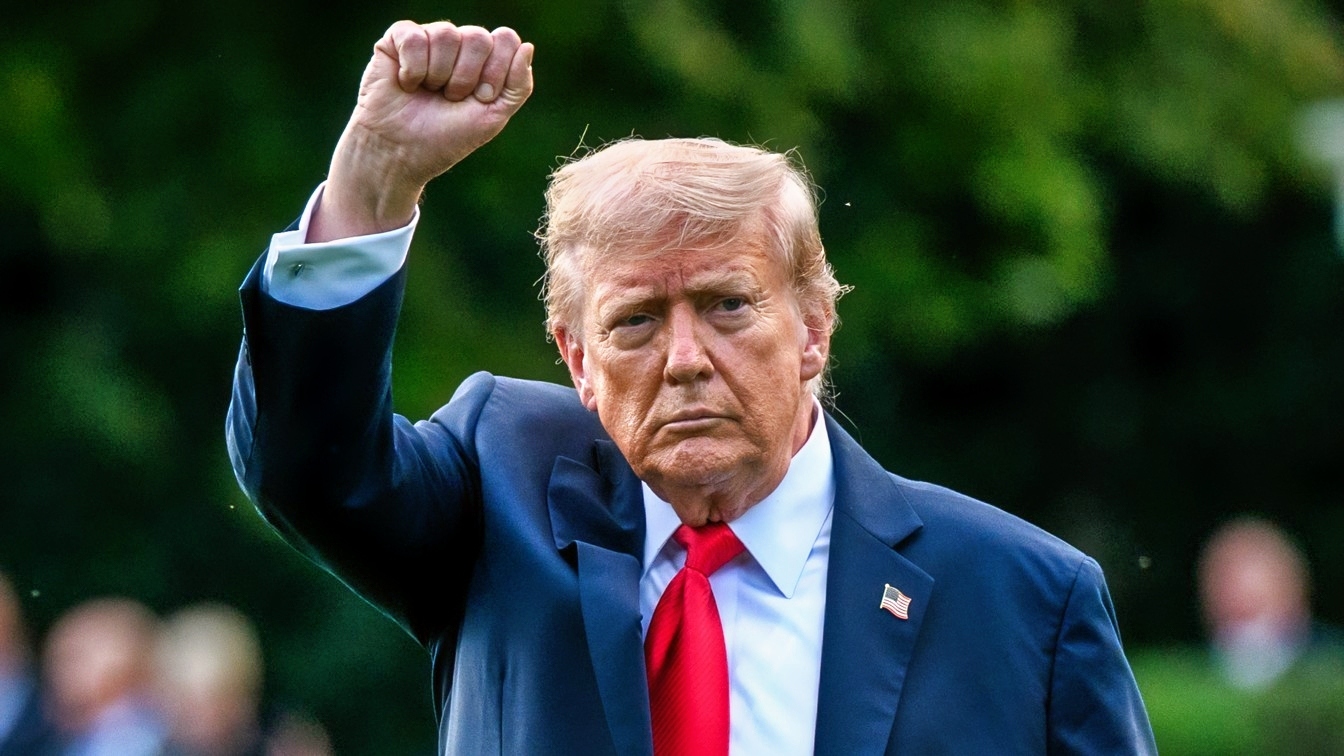
President Donald Trump boards Marine One on the South Lawn of the White House en route to Joint Base Andrews, Maryland on Thursday, September 11, 2025, for a trip to New York. (Official White House Photo by Molly Riley)
His stated red line is narrower than his rhetoric suggests. He has said he would only resume full-scale war if Iran killed American troops. Short of that threshold, the administration has leaned on a defensive operation, the War Department calls Project Freedom, built to protect commercial shipping in the Gulf, rather than a return to open conflict.
Vice President JD Vance and Secretary of State Marco Rubio have carried much of the diplomacy, with Rubio meeting Gulf foreign ministers in Bahrain last week. At home, the war has grown unpopular, and Senate Democrats have forced repeated votes aimed at curbing US involvement.
None of that makes the restraint permanent. Trump has kept the war option briefed and ready, and has told aides that no final decision has been made. What holds the line in place is a set of fragile arrangements that came close to failing only days ago.
The Weekend Strikes That Nearly Broke the Ceasefire
Over the weekend, the calm broke into open fighting. After Iran struck a Singapore-flagged cargo ship with a one-way drone near the Strait of Hormuz, US Central Command struck Iranian military sites, hitting missile and drone storage and coastal radar. Iran struck a second tanker the following day, the US retaliated again, and early Sunday, the Revolutionary Guard fired ballistic missiles and drones at US bases in Kuwait and Bahrain. A Qatari citizen was killed by shrapnel, and Gulf governments condemned the attacks.
Trump’s public reaction was not the language of two countries getting along. He wrote that Iran had again violated the ceasefire and warned that if the United States were forced to complete the job by force, the Islamic Republic would no longer exist.
By Sunday evening, both sides had agreed to stand down and let vessels move again. That exchange is the clearest measure of what the deconfliction channel and the single-strike posture are actually holding back, and of how quickly the arrangement can slip.
Doha, the Strait of Hormuz, and What Iran Will Not Concede
The talks Trump praised are thinner than his description implies. His envoys, Steve Witkoff and Jared Kushner, arrived in Doha on Tuesday, but the sessions there are indirect and technical, run through Qatari and Pakistani mediators, and a source told Reuters the two Americans were not expected to join the negotiations directly. Iran has denied that any high-level talks were even scheduled.
The two sides have not met face-to-face since a June 21 meeting in Switzerland, roughly 10 days ago, not the near week the day’s headlines suggested.
The substance remains where it has sat for weeks. The memorandum that paused the war requires Iran to allow safe passage for commercial ships through the Strait of Hormuz during the 60-day window, but Tehran insists it retains control of the waterway and is pressing to charge transit fees, a demand Washington rejects outright. Iran’s parliament speaker and lead negotiator, Mohammad Bagher Ghalibaf, has called the strait Tehran’s greatest instrument of power, and Iranian officials say final-deal talks will not begin until the current memorandum is fully implemented.
Tehran also continues to reject the deep limits on its nuclear program that Trump insists it has already accepted, even as its president says Iran is set to receive some $6 billion in frozen assets held in Qatar under the deal. One recent assessment held that the ceasefire stays fragile precisely because both sides are coming to realize they will not get what they want from it.
Wednesday’s optimism sits atop all of that. Trump can call the meetings very good and the denuclearization on track, but no final agreement exists; the two governments cannot agree on whether they are even holding direct talks, and the war option remains drafted and waiting for his signature.
What decides which version of this week prevails is not the tone of a comment before a flight to North Dakota. It is whether the next incident in the Strait of Hormuz kills an American, the single line Trump has said he will not allow Iran to cross.
About the Author: Harry J. Kazianis
Harry J. Kazianis (@Grecianformula) was the former Senior Director of National Security Affairs at the Center for the National Interest (CFTNI), a foreign policy think tank founded by Richard Nixon based in Washington, DC. Harry has over a decade of experience in think tanks and national security publishing. His ideas have been published in the NY Times, The Washington Post, The Wall Street Journal, CNN, and many other outlets worldwide. He has held positions at CSIS, the Heritage Foundation, the University of Nottingham, and several other institutions related to national security research and studies. He is the former Executive Editor of the National Interest and the Diplomat. He holds a Master’s degree focusing on international affairs from Harvard University.


