

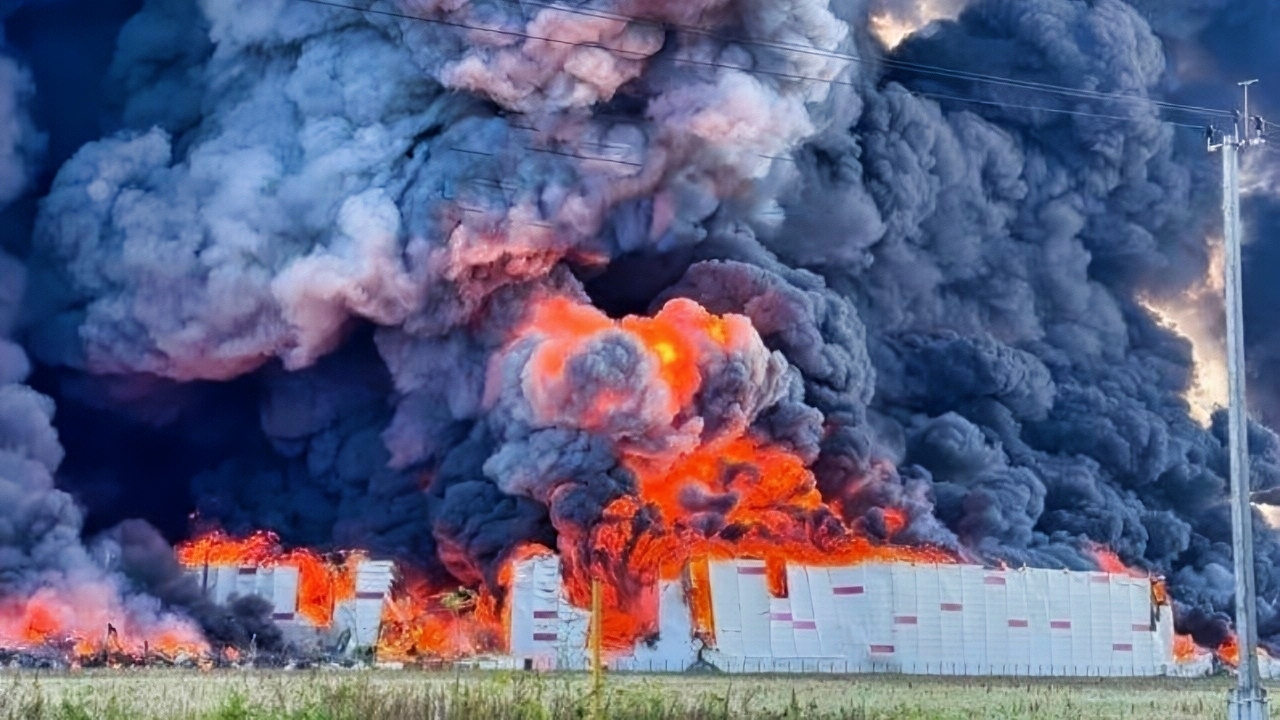
For roughly four years, Russia held the advantage in long-range strike capabilities.
Civilians in Ukraine were forced to endure years of bombardments from Russian missiles, with no end yet in sight.
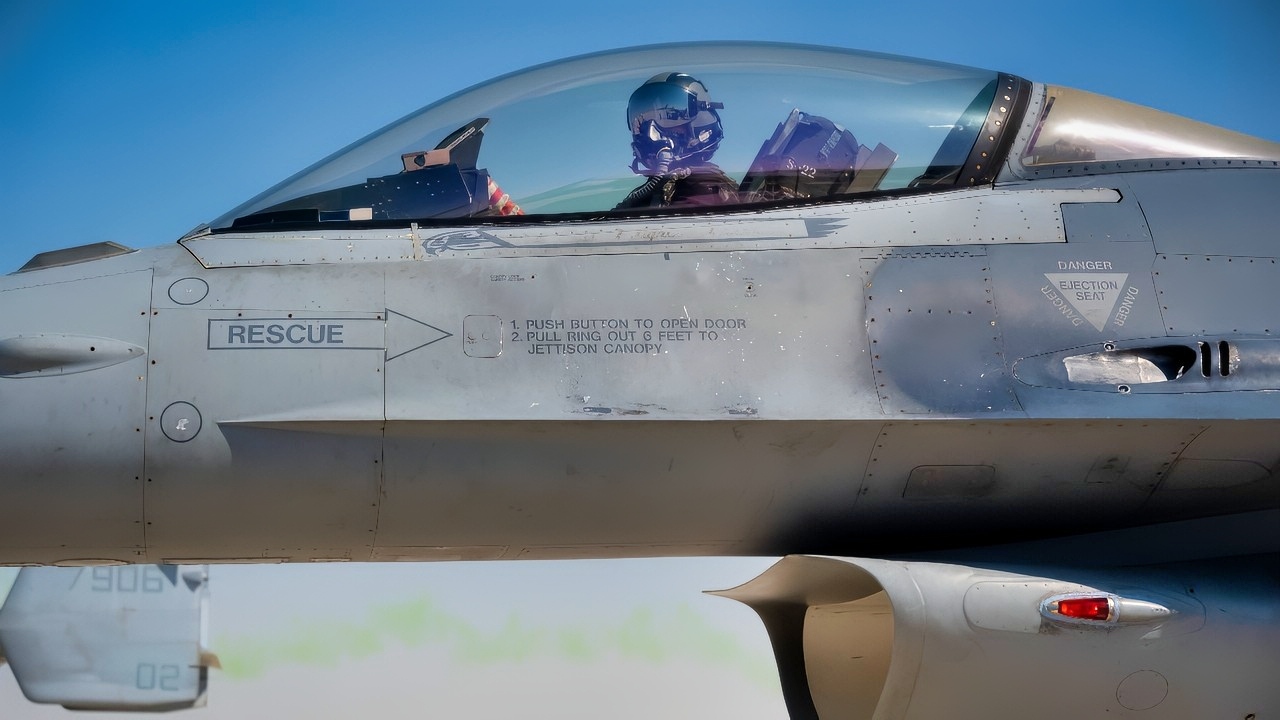
U.S. Air Force Maj. Josiah “Sirius” Gaffney, Pacific Air Forces Demonstration Team commander, prepares to fly a practice sortie before the Dubai Airshow in Dubai, United Arab Emirates, Nov. 11, 2021. In addition to the PACAF F-16 Demonstration Team routine, the air show will highlight a variety of U.S. Air Force, Navy and Marine Corps aircraft showcasing the range of U.S. military airpower capabilities. (U.S. Air Force photo by Staff Sgt. Matthew Kakaris)

Bohdan, a drone pilot from the Unmanned Systems Battalion of Ukraine’s 110th Separate Mechanized Brigade, pilots an FPV drone in Donetsk Oblast during active battle operations. Photo: David Kirichenko
However, in 2026, Ukraine finally started to bridge the gap in long-range capabilities when it launched its summer campaign against fuel refineries and warehouses belonging to Russia’s largest online retailers.
These attacks came as a shock to ordinary Russians who, until that point, had been relatively unaffected by the war in Ukraine.
Although Ukrainian strikes occur less frequently and on a much smaller scale than Russian strikes, Ukraine’s summer campaign was still a significant shock to the Russian population and successfully brought the war back to Moscow.
Shattering Putin’s Veil of Stability
For years, the Kremlin tried to minimize the impacts of the war in Ukraine as much as possible and maintain domestic stability as much as possible.
Despite the initial shock of Western sanctions, Moscow was still able to transform Russia’s newly isolated economy to minimize the economic ripples.
Since Ukraine’s long-range strike capabilities were limited, most ordinary Russians were largely unaffected by the war, with the exception of those living in the border regions next to Ukraine or in occupied Crimea.
This veneer of safety and stability has now been threatened after prolonged Ukrainian drone attacks against targets throughout Russia.
The strikes against online retailer “Wildberries” were something else entirely.
Now civilian sites, with indirect contributions to the war, were considered legitimate targets.
Ukraine justified these attacks, saying that the large online retailers contributed to Russia’s war economy and that the warehouses were being used to sell and assemble drones for the Russian military.
Russian officials, however, derided the attacks as needless terrorism against civilians.
From August to September, Wildberries lost about 32% of its total warehouse space and reported a 10% drop in sales, while website traffic fell by 28%.
Meanwhile, its main domestic competitor, Ozon, noted a 27% increase in customer activity, likely because it received fewer attacks from Ukraine.
Between August and September, around 12 warehouse workers were killed, with another 135 injured from Ukrainian strikes against Ozon and Wildberries warehouses.
As a result, both retail companies have been forced to implement new safety and defensive measures in case of Ukrainian drone/missile attacks.
Ozon, for instance, no longer employs minors at its warehouses in most regions, while workers in border regions like Kursk and Belgorod receive better compensation in case of war-related injuries.
Russia Strikes Back
Before the attacks on Wildberries and Ozon, Zelenskyy announced he had approved a 40-day “influence operation” against Russia, naming the Security Service of Ukraine (SBU) as the main agency tasked with carrying it out. According to Zelenskyy, the operation aimed to prompt Russia to end the war on Ukraine’s terms.
During that period, Ukraine hit 20 Wildberries warehouses and around 25 oil refineries in Russia.
The attacks caused widespread fuel shortages throughout the country, forcing Moscow to restrict all fuel exports in July.
Western news outlets reported every attack in great detail, with hopes that the shock of the attacks and the economic fallout would force political change in Moscow and end the war.
The campaign did force a change in Moscow, but not necessarily the change Kyiv hoped for.
Rather than entering into negotiations, Putin doubled down on the war.
In July, Moscow launched 381 missiles towards Ukraine, more than any month since the war began.
Following the attacks on Wildberries and Ozon, Russia attacked warehouses and logistics centers throughout Ukraine.
According to OSINT reports, Ukraine started the war with 4.2 million square meters of warehouse space, with 800,000 added since then.
However, as of October 1, Ukraine has lost 2.1 million square meters, roughly half of its pre-war warehouse inventory.
The majority of those warehouses were destroyed this year.
Companies across Ukraine are looking for places to store their goods, but there isn’t enough storage.
As a result, prices for certain goods have increased.
The Rising Civilian Cost of the War
Naturally, Russian and pro-Russian circles blame Ukraine for its current misfortunes, which is obviously untrue. Since 2022, Moscow has been striking civilian enterprises that it claims are supporting its defense industry.
However, the attacks against Wildberries and Ozon legitimized attacks against companies that indirectly support Russia’s war effort.
Again, this is not to say that Ukraine is responsible for Russian strikes, but unfortunately, it was only a matter of time before Russia responded in kind.
As the war drags on, both Russia and Ukraine have intensified their strikes against each other.
As a result, civilians have increasingly found themselves in the crossfire. Earlier this week, a Russian missile struck an apartment complex, killing at least 25 civilians and injuring around 118 others, roughly the same as all of Ukraine’s attacks against Wildberries and Ozon warehouses combined.
Whether Moscow intended to hit the building is a different question, but the incident highlights the growing civilian cost of the war.
The harsh reality is that war is awful, and civilians will always find themselves in danger no matter what steps are taken to reduce the fallout.
About the Author: Isaac Seitz
Isaac Seitz, a Defense Columnist, graduated from Patrick Henry College’s Strategic Intelligence and National Security program. He has also studied Russian at Middlebury Language Schools and has worked as an Intelligence Analyst in the private sector.


