

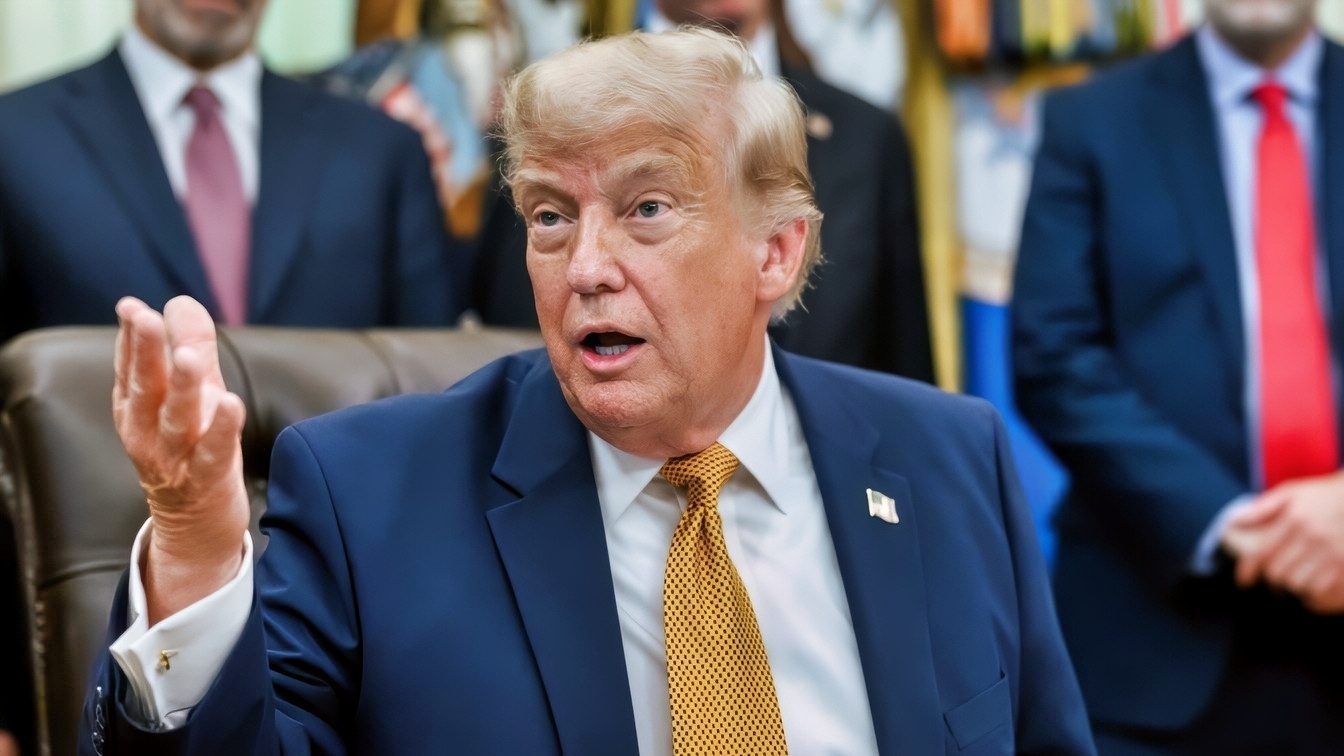
Trump’s Approval Falls to 36% as Republicans Face a Midterm Warning: President Donald Trump’s job approval has fallen near the lowest point of his second term, giving Republicans another warning as the November midterm elections approach. A USA Today report on the latest survey highlighted a widening gap between the president’s support and opposition.
The Economist/YouGov poll conducted from July 17 through July 20 found that 36 percent of Americans approved of Trump’s job performance and 60 percent disapproved. The net rating of minus 24 was near his second-term low. The survey included 1,602 U.S. adult citizens.

Donald Trump In New York City White House Photo
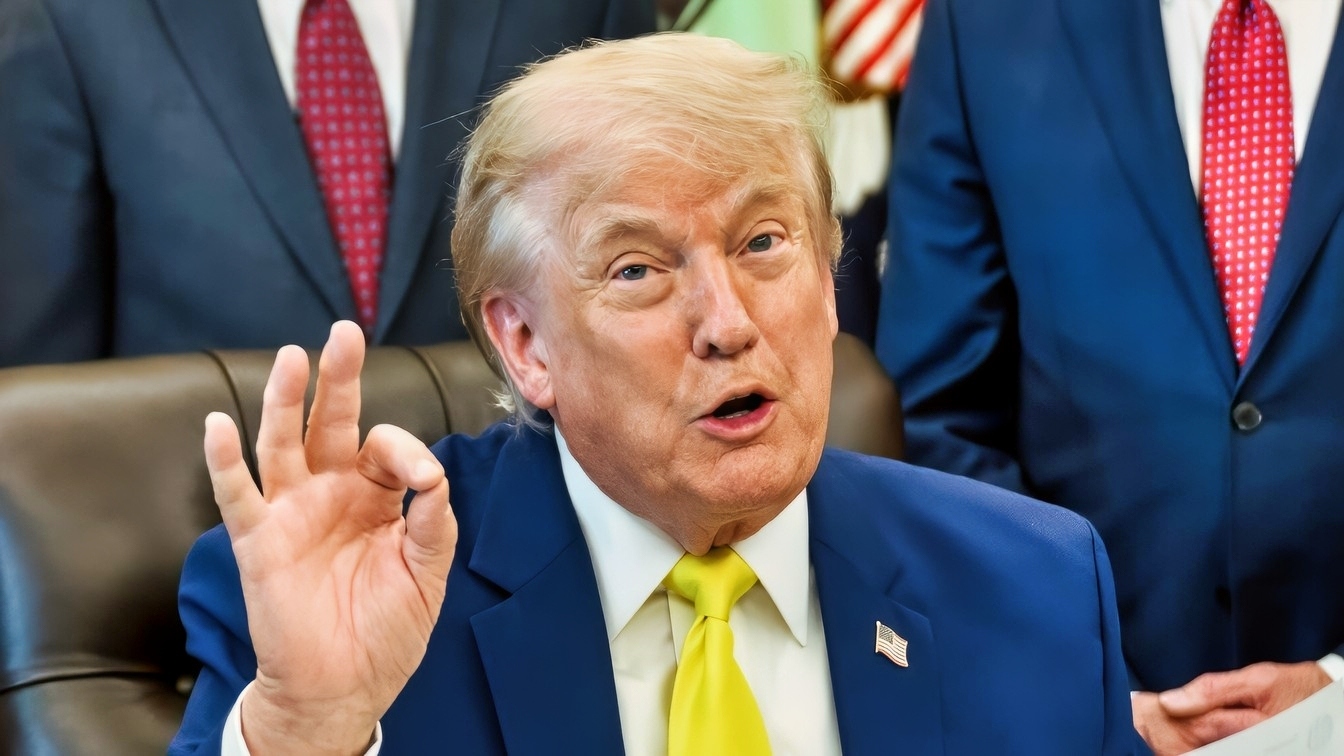
President Donald J. Trump, joined by Secretary of Energy Chris Wright, Secretary of the Interior Doug Burgum, EPA Administrator Lee Zeldin and others, makes an announcement on coal, Thursday, June 4, 2026, in the Oval Office. (Official White House Photo by Molly Riley)
The partisan breakdown still gives Trump a substantial base. Eighty percent of Republicans approved of his performance, compared with 26 percent of independents and 4 percent of Democrats. The same poll’s full results showed 75 percent describing the economy as fair or poor, 58 percent saying it was getting worse, and inflation or prices ranking as the leading issue.
The result fits a broader pattern rather than standing alone. Pew measured Trump at 34 percent approval in April, while an AP-NORC survey placed him at 33 percent. Different pollsters use different samples and methods, but several have found his approval in the mid-30s.
The latest survey also found a broader image problem. Fifty-two percent said Trump was too old to serve as president, 57 percent said he was not honest and trustworthy, and 62 percent said he cared little or not at all about people like them. At the same time, 52 percent credited him with generally saying what he believes, showing that voters can view his directness positively while disapproving of his overall performance.
Trump’s Economic Ratings Remain His Main Weakness
The cost of living continues to shape the president’s political position. A Reuters/Ipsos poll published in June found that 22 percent approved of Trump’s handling of household costs and 70 percent disapproved. That pressure has grown as the Iran war affects gasoline and shipping, bringing foreign policy into family budgets.
Trump returned to office after promising lower prices and stronger growth. Voters may judge individual statistics differently, but the latest polling shows widespread dissatisfaction with the economy they experience. The political risk is larger because public resistance to the Iran campaign appeared early, before months of higher military spending and energy disruption accumulated.
The Iran War Adds a Second Source of Pressure
A separate Reuters/Ipsos survey found that 24 percent believed the Iran war had been worth its costs, while 50 percent said it had not. Sixty-three percent doubted that the June truce would produce lasting peace. The continuing conflict has reinforced a sustained pattern of public skepticism.
The war alone does not explain Trump’s standing. Voters are also responding to immigration enforcement, tariffs, ethics concerns and views of his personal conduct. Iran still complicates the White House’s effort to improve economic sentiment because the available paths out of the conflict carry significant costs.
Republicans Still Have a Strong Partisan Floor
Trump’s 80 percent approval among Republicans limits the immediate danger of a complete collapse inside his party. The larger electoral problem lies with independents and less committed voters. The Economist/YouGov poll gave Democrats a 46 percent to 41 percent advantage among registered voters choosing between unnamed House candidates.
A national generic ballot does not forecast every congressional district. Candidate quality, turnout, redistricting and local issues will determine control of the House and Senate. Even so, low presidential approval can burden Republican candidates who need support beyond the party base. The latest numbers also reinforce concerns about the coalition Trump carried in 2024.
Trump Still Has Time to Improve His Standing
Approval ratings are snapshots rather than election results. Lower gasoline prices, an end to the Iran war, stronger growth or a successful legislative campaign could improve Trump’s position before November. Democrats also have to convert dissatisfaction with the president into support for their own candidates.
As of July 21, the trend remained unfavorable for the White House: 36 percent approval, 60 percent disapproval, weak economic ratings and a Democratic lead on the generic House ballot.
The next several polling cycles will show whether that level becomes a floor or whether continued war and cost-of-living pressure push it lower.
About the Author: Harry J. Kazianis
Harry J. Kazianis (@Grecianformula) was the former Senior Director of National Security Affairs at the Center for the National Interest (CFTNI), a foreign policy think tank founded by Richard Nixon based in Washington, DC. Harry has over a decade of experience in think tanks and national security publishing. His ideas have been published in the NY Times, The Washington Post, The Wall Street Journal, CNN, and many other outlets worldwide. He has held positions at CSIS, the Heritage Foundation, the University of Nottingham, and several other institutions related to national security research and studies. He is the former Executive Editor of the National Interest and the Diplomat. He holds a Master’s degree focusing on international affairs from Harvard University.


