

Sustained Ukrainian long-range drone strikes are beginning to take their toll on Russia’s oil industry to a dramatic extent.
The country’s refining capacity has been degraded to a degree that few would have predicted when Ukraine’s drone army first began striking Russian refineries months ago.

Vladimir Putin in Syria. Image Credit: Creative Commons.

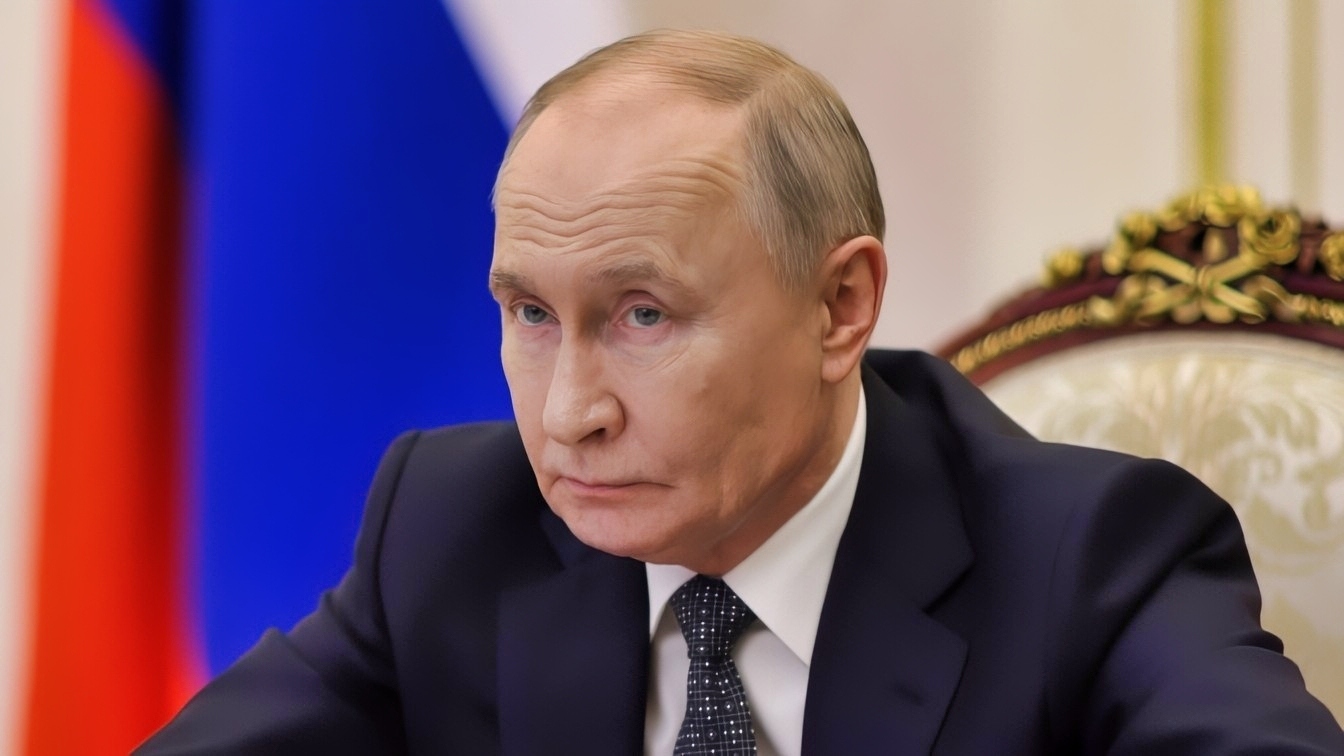
Putin in Briefing. Image Credit: Russian Government.
According to the energy industry analysis firm EA Analytics, Russia had been processing an average of 3.91 million barrels of crude oil per day.
A number that is now down to 3.80 million since the beginning of this month.
Not surprisingly, Russia no longer publishes official refinery statistics, so EA Analytics’ numbers are based on estimates of Russia’s refining volumes derived from satellite monitoring of oilfields and storage tanks, as well as real-time cargo flow tracking.
This is the lowest level of production from Russia’s refineries that has been recorded since March 2005. Records show this is more than 1.4 million barrels a day below the year-ago average, according to the latest data.
This news comes after a 29 July attack on the Rosneft-owned Ryazan Oil Refinery and a Wildberries logistics sorting center in Ryazan Oblast.
This strategic “two-pronged campaign”, as it has been referred to, has seen the first of the two put a rather considerable dent in Russia’s E-commerce market.
This is a sector that has become the “go-to” choice for most consumers after the pandemic and the exodus of foreign firms in the wake of sanctions imposed on Russia after the February 2022 invasion of Ukraine.
As has been the sequence of events with every such attack on the company’s storage sites, Wildberries confirmed it had “temporarily restricted” access to its Ryazan sorting complex and told sellers not to come to the warehouse.
Damage Assessment
As of today, Russian analysts have estimated that the bill for economic losses from the Wildberries attacks is up to 230 billion roubles (approximately US$ 2.9 billion).
Add to that the bill for rebuilding the damaged facilities, which is expected to cost an additional 35.8 billion roubles (approximately US$ 456 million USD).
Due to the 7 July changes in liability insurance coverage, instituted by the Wildberries ownership just prior to the series of attacks by Ukraine, insurers will not even come close to covering these losses.
The impact is not small in the macroeconomic sense. Wildberries handles 52 percent of Russia’s online purchases and employs more than 5 percent of Russia’s entire workforce. Combined with the next-largest E-commerce competitor, Ozon, they collectively account for roughly 8.5 percent of Russia’s GDP.
But it is that second prong of the Ukraine strategy – destroying progressively more and more of Russia’s refining capacity – that is paralyzing the capability of Moscow to fund its war machine.
At the same time, it has raised the cost of conducting any commercial business in Russia that relies on the ability to move products or services from point A to point B.
Fueling an Economic Slowdown
That kind of transport relies on petrol and diesel, both of which have seen significant production drops and major price increases.
According to a Reuters report, Ukrainian strikes on Russian refineries since the beginning of 2026 have reduced gasoline production to around 65 percent of the average summer demand by early July.
A recent Financial Times analysis finds that fuel shortages are already affecting 50 million Russians, or around 35 percent of the country’s population.
That shortfall has forced the Russian government to ban most diesel exports until the end of July.
Those export bans are in addition to other previously imposed restrictions on exports of refined petrol and jet fuel.
Reduced diesel exports from Russia, one of the world’s major suppliers, have pushed prices to multi-year highs.
This is also occurring at a time when the diesel market has already been tightening due to supply disruptions in the Middle East.
According to Bloomberg’s calculations, which are not official state statistics but based on an aggregate analysis of public statements by officials in Ukraine and Russia, Ukrainian forces have carried out around 50 strikes on Russian fuel infrastructure over the past 100 days.
Those attacks have successfully struck at least 24 of the country’s 34 major oil refineries.
About the Author: Reuben F. Johnson
Reuben F. Johnson has thirty-six years of experience analyzing and reporting on foreign weapons systems, defense technologies, and international arms export policy. Johnson is the Director of Research at the Casimir Pulaski Foundation. He is also a survivor of the Russian invasion of Ukraine in February 2022. He worked for years in the American defense industry as a foreign technology analyst and later as a consultant for the U.S. Department of Defense, the Departments of the Navy and Air Force, and the governments of the United Kingdom and Australia. In 2022-2023, he won two awards in a row for his defense reporting. He holds a bachelor’s degree from DePauw University and a master’s degree from Miami University in Ohio, specializing in Soviet and Russian studies. He lives in Warsaw.


