


In the rubble of key infrastructure losses to the U.S. military in the Middle East as a result of Iranian retaliation in Operation Epic Fury, there are lessons to learn for all forces forward. America must invest more heavily in acquiring air and missile defense capabilities, a suite of layered, varied counter-drone kits, and begin a major construction effort to put key assets and equipment underground, including overseas.
Operation Epic Fury: We Must Learn and Adapt

A Terminal High Altitude Area Defense (THAAD) interceptor is launched from the Pacific Spaceport Complex Alaska in Kodiak, Alaska, during Flight Experiment THAAD (FET)-01 on July 30, 2017 (EDT). During the test, the THAAD weapon system successfully intercepted an air-launched, medium-range ballistic missile (MRBM) target.
The days of exposed aircraft sitting safely on runways to prosecute operations unimpeded are over. But not nearly enough U.S. military bases at home or abroad are hardened or sheltered to protect our most capable equipment.
In a stunning security breach that went largely unanswered, unidentified drones swarmed above the skies of America’s bomber base in Louisiana for days in March. Barksdale Air Force Base is home to B-52 bombers and nuclear weapons storage facilities, and command and control assets. According to ABC News, the drones arrived in organized waves of 12 to 15 at a time for hours each day for a week. This threat caused troops to shelter in place and the flight line to shut down.
The drone blitzes over Barksdale were operating “with aircraft displaying non-commercial signal characteristics, long-range control links and resistance to jamming.” These same drones “used varied routes of ingress and deliberate maneuvering within restricted airspace.” An internal government briefing apparently found the drones “appeared to be custom-built and required ‘advanced knowledge’ of signal operations.”
The drones should have been neutralized on the first day of unauthorized intrusion, and the bombers should have been safely protected underneath a hardened hangar. Instead, the drones collected intelligence—including testing security responses—for nearly a week using “varied routes of ingress and deliberate maneuvering within restricted airspace” and “dispersed across sensitive locations on the base.”
This type of activity is only going to increase at home and abroad and will increasingly employ kinetic actions to achieve military effects.
A recent RAND report found the People’s Republic of China “made major investments in the quality and quantity of its missile forces between 2017 and 2024 … that could threaten [U.S.] air bases” in the region. Unfortunately, Iran has given the CCP a handy playbook. ‘
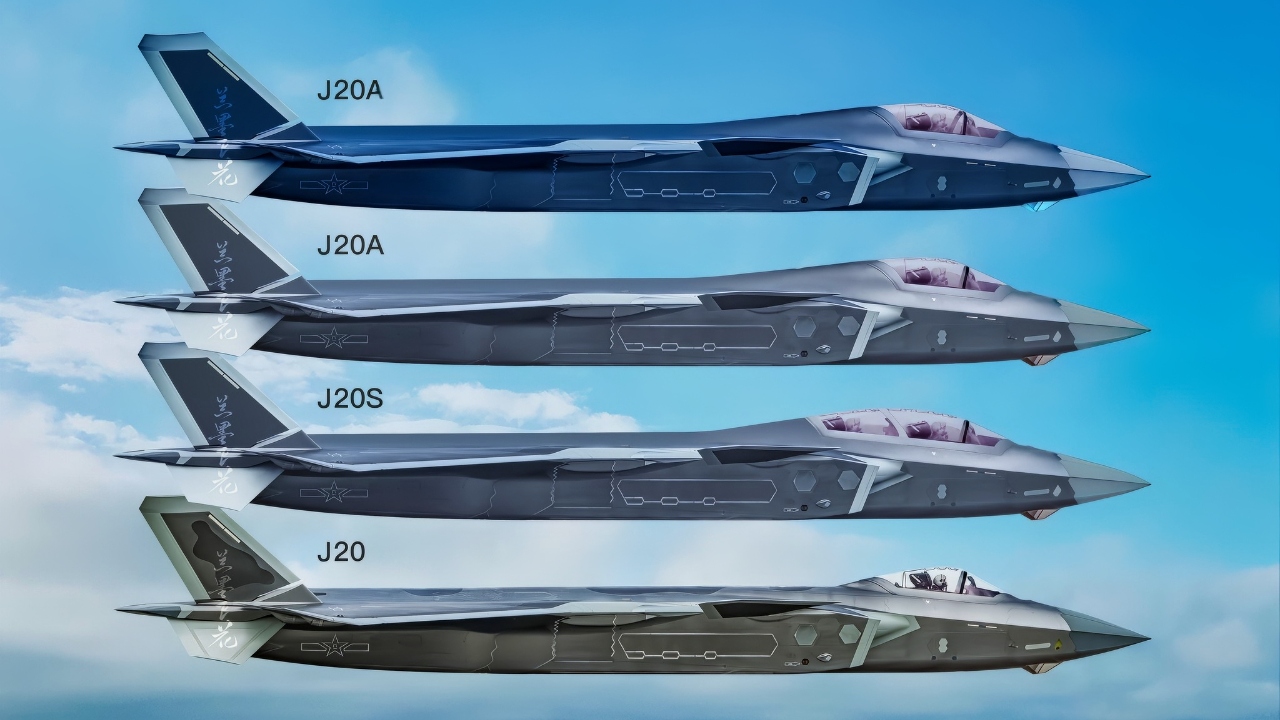
China J-20 Fighter X Screenshot.
What the Iran War Could Teach About a China War
As a preview of what China could do to American bases and equipment, look no further than the Middle East. In the opening weeks of Epic Fury, the IRGC destroyed dozens of American aircraft—some of which are no longer in production. A congressional research service report lists the aircraft combat losses from Epic Fury through early April 2026, including:
-4 F-15E Strike Eagle fighter aircraft
-1 F-35A Lightning II fighter aircraft
-1 A-10 Thunderbolt II ground-attack aircraft
-7 KC-135 Stratotanker aerial refueling aircraft
-1 E-3 Sentry airborne early warning-and-control system aircraft (AWACS)
-2 MC-130J Commando II special operations aircraft
-1 HH-60W Jolly Green II combat search-and-rescue helicopter
-24 MQ-9 Reaper medium-altitude long-endurance drone aircraft
-1 MQ-4C Triton high-altitude long-endurance uncrewed aircraft
America’s military equipment and base exposure stands in stark contrast to Iran’s effective subterranean warfare. After unrelenting bombardment using some of America’s biggest and heaviest bombs, the intelligence community reportedly assesses that 90% of Iran’s underground missile storage and launch facilities are still active. Iran possesses hardened underground “missile cities” to compensate for a lack of air superiority. These buried bases are holding up too well under withering attacks, providing space and time for Iran to repair damaged munitions.
While the Pentagon recently announced 5 domestic military bases will join an anti-drone pilot program, the government is way behind the threat. A recent bipartisan effort to harness battlefield lessons from Ukraine on drone warfare by Senators McConnell and Bennet cannot go fast enough.

T-84 Tank from Ukraine War. Image Credit: Creative Commons.
While the billions provided for acquiring low-cost counter-drone systems is essential, more funds must be spent to place America’s “high-value, hard-to-replace, and time-critical assets”—such as munitions, fuel distribution, command and control continuity nodes, and spares—out of harm’s way and “sheltered, underground or in space.”
According to Steve Blank at Stanford, the Earth’s surface is contested space, and “undefended high value fixed civilian infrastructure” is all at great risk. More simply: “the long-term math no longer favors the defender.” Placing more military assets underground can “preserve forces and enable maneuver.”
America’s armed forces must catch up to rapidly changing threats and do a better job protecting bases and equipment at home and overseas. More counter-drone, missile defenses, and subterranean protection are needed as soon as possible.
About the Author: Mackenzie Eaglen
Mackenzie Eaglen is a senior fellow at the American Enterprise Institute (AEI), where she works on defense strategy, defense budgets, and military readiness. She is also a regular guest lecturer at universities, a member of the board of advisers of the Alexander Hamilton Society, and a member of the steering committee of the Leadership Council for Women in National Security.



Jeff
May 15, 2026 at 4:53 pm
crediting Iran for all the losses is misinformation at best. were not some lost to friendly fire in Kuwait, wasn’t there some fueling mishap? I remember some damage and losses that were not Iran’s doing, unless the purpose is to prop up Iran and/or humble US?
Shane Ward
May 18, 2026 at 8:58 am
Exactly.Mackenzie is lacking in the truth department, as well as the making-a-point department.
geh-geh
May 15, 2026 at 5:52 pm
The War on iran this year has been a terribly mistake, a grave error, on the part of president chuanpu.
According to very top secret intelligence sources, iran has resuscitated or restored 30 of its missile sites along the strait of hormuz.
Also, iran has renewed or regained up to 70% of its missile arsenal, with the help of secret shipments of parts and components from china, and possibly north korea.
While over at hegseth’s place, the US has spent $29 bil so far on the War, while expending huge amounts of ammo.
The loss of so many US aircraft, including unmanned ones, is too big a loss to ignore.
That will surely affect the november midterm results.
Doyle
May 18, 2026 at 11:03 am
Democrats, you buds, do not vote at all on details, theirs like your TDS is what they vote on i.e. what they are told to do.
Ben Cates
May 18, 2026 at 8:35 am
Your article title is disingenuous at best.
The US may have ‘lost’ 42 aircraft – of which more than half were UAV’s
But Iran did not DESTROY 42 aircraft.
3 of the 4 F-15’s were lost to Kuwaiti friendly fire.
Both MC-130J were destroyed in place by US forces due to ground conditions that prevented them from taking off.
The only possible explanation for your title and premise is a desire to prejudice readers against US action.
Of the piloted aircraft on your list, only 3 were ‘destroyed’ by Iranian action. 1x F-15, 1x A-10 and 1x E3
The others were damaged and may have been ruled a ‘loss’ because they were too expensive to repair, but they were not ‘destroyed’.
25 of the 42 are long-range drones. Their losses are not remotely comparable to the ‘destruction’ of crewed combat aircraft.
If you want to be taken seriously as a defense journalist, don’t pander to political positions.
TrustbutVerify
May 18, 2026 at 10:08 am
Oh, come on. F-15s that were mistakenly targeted by Kuwait? 24 drones? Rescue planes and helicopters lost due to OUR mishaps, not any Iranian action at all?
Seems someone was desperate for an angle for their story or looking to construct a biased narrative.
Doyle
May 18, 2026 at 11:01 am
Clueless hump does not know the difference between damaged and shot down/destroyed and by whom. Worthless propaganda at best.