

Key Points and Summary – The U.S., Philippines, and eight allied nations just concluded the multinational naval exercise Sama Sama in the South China Sea. Running from Oct. 6-17, the annual drill is a direct show of force aimed at deterring China’s escalating aggression.
-The exercise, the largest in the event’s history, comes just days after Chinese vessels rammed Filipino boats and a Chinese fighter jet harassed a Philippine patrol plane.

NAVAL BASE GUAM (April 23, 2025) – The guided-missile submarine USS Ohio (SSGN 726) transits Apra Harbor, Naval Base Guam, April 23, 2025. Ohio, homeported in Bangor, Washington, and assigned to Submarine Squadron 19, is conducting routine operations in the U.S. 7th Fleet area of operations. U.S. 7th Fleet is the U.S. Navy’s largest forward-deployed numbered fleet and routinely interacts and operates with allies and partners in preserving a free and open Indo-Pacific region. (U.S. Navy photo by Lt. James Caliva)
-In a complex geopolitical signal, Russia also sent its own warships to the region in a show of support for Beijing, as allied forces conducted live-fire and anti-submarine drills.
US, Allies’ Warships Hold Military Exercises In South China Sea
The United States, the Philippines, and other allies, including France and Australia, have been conducting joint naval and military drills in the South China Sea, which is referred to by Manila as the West Philippine Sea.
These types of exercises often aim at increasing interoperability. The current exercises have included mock battles, resupply exercises, and combined patrols. China has warned the Philippines against these actions, calling them provocations.
The exercises are also viewed as a way to deter Beijing’s increasingly aggressive and dangerous actions in the South China Sea.
This particular exercise, Sama Sama (which means “together” in Tagalog), is part of a U.S.- and Philippine-led series that brings navies together to train off of Western Palawan in the Sulu and South China seas, USNI News reported.
The exercises first took place in 2017 and are held annually. Participants and observers for the 2025 exercises include the U.S., Philippines, Australia, Japan, France, the United Kingdom, Thailand, Italy, Canada, and New Zealand.
The USS Cincinnati (LCS-20) is among the vessels that were confirmed as participating in the exercise, which ran from Oct. 6-17.
This was the first Sama Sama exercise to be held under the new Western Naval Command, a recently stood-up Philippine military command structure meant to enhance coordination and operations in the country’s western exclusive economic zone.
The Philippine Navy has said the reorganization will help in the upcoming Comprehensive Archipelagic Defense Concept, Manila’s new defense strategy designed to counter modern threats, especially China.
U.S. and Filipino Marines were expected to simulate a maritime strike in cooperation with the task force’s aircraft and vessels.
The two units have previously simulated long-range fires during naval drills with ground-based missile systems.

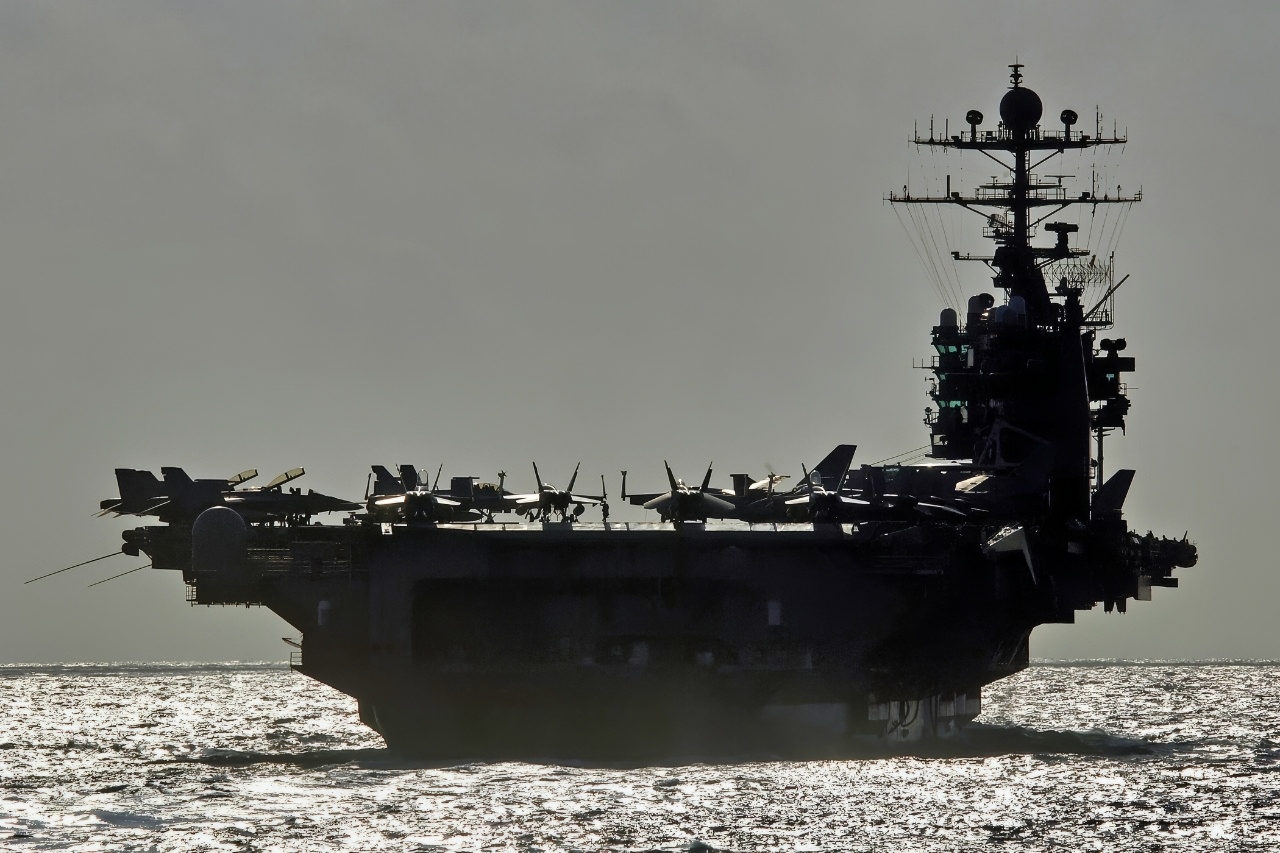
USS George Washington. Image Credit: Creative Commons.
Chinese Provocations Include Ramming Vessels, Water Cannons
Just five days ago, Chinese Coast Guard vessels rammed and fired water cannons at Filipino fishing vessels, causing minor damage.
This is far from an isolated incident.
Last June, Chinese ships rammed Filipino boats operating inside Manila’s economic zone.
During that provocation, a Filipino Navy SEAL lost a thumb in a boat collision.
China claims that the entire South China Sea belongs to it. Beijing bases its maritime claims on the bogus nine-dash line, which extends over waters and islands disputed by a collection of nations such as the Philippines, Vietnam, Malaysia, Brunei, and Taiwan.
China’s claims are based on historical “rights” and sovereignty over islands, but an international tribunal in 2016 ruled the nine-dash line has no legal basis under international law—a ruling China has rejected. The dispute is driven by the sea’s strategic importance and rich natural resources.
On Thursday, the Philippine Coast Guard (PCG) said a Chinese fighter jet harassed a patrol plane and endangered its safe flight path.
At the same time, a People’s Liberation Army Navy helicopter flew directly beneath it during a maritime domain awareness mission that spotted a floating buoy at the northern tip of Scarborough Shoal.
“The PCG’s MDA flight was subjected to aggressive interference by forces from the People’s Republic of China,” the service said in a statement.
In a move to support its ally of convenience, Russia sent a flotilla of ships to the South China Sea.
The ships included the frigate Marshal Shaposhnikov, the corvette Gremyashchy, and the large sea tanker Boris Butoma, which had previously arrived at the port of Da Nang, Vietnam, for what the Russian Embassy called “a friendly visit.”
Philippine Exercise Sama Sama, Largest Fleet Yet
This year’s Sama Sama exercise involved one of the largest flotillas of ships since the exercises began eight years ago. It combined warships and aircraft from five nations under Naval Task Group 44.1.
Composed of the USS Cincinnati (LCS-20), HMCS Max Bernays (AOPV-432), BRP Antonio Luna (FF-151), BRP Ramon Alcaraz (PS-16), BRP Valentin Diaz (PS-177), BRP Lolinato To-Ong (PG-902) and JS Ōnami (DD-111), the task force conducted live-fire gunnery, anti-submarine, anti-aircraft and other exercises at sea.
American, Philippine, and French naval aviation assets also participated in the exercise, including one of France’s Pacific-deployed Falcon 50M maritime surveillance aircraft and a U.S. Navy P-8A Poseidon maritime patrol aircraft.
The U.S. has also conducted bilateral and multilateral exercises this year with Brunei, Timor-Leste, Indonesia, Malaysia, Singapore, Thailand and Vietnam—both within and beyond the region.
About the Author:
Steve Balestrieri is a National Security Columnist. He served as a US Army Special Forces NCO and Warrant Officer. In addition to writing on defense, he covers the NFL for PatsFans.com and is a member of the Pro Football Writers of America (PFWA). His work was regularly featured in many military publications.
More Military
The First 48 Hours of a War With China ‘Could Be Ugly’
Russia Tried to Build Their Very Own F-22 Raptor. Calling It a Disaster Would Be a Gift
The Royal Navy’s Queen Elizabeth-Class Aircraft Carriers Simply Summed Up in 4 Words


