

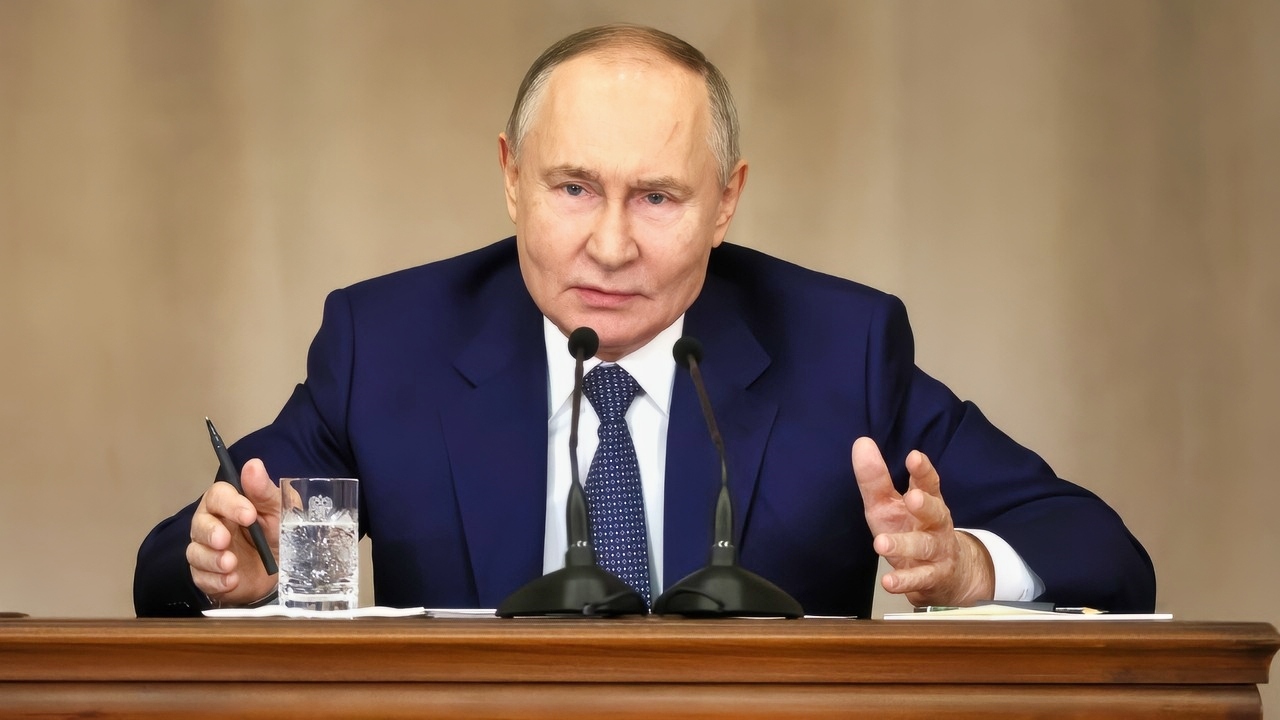
As if Russian President Vladimir Putin needed any more embarrassing news about his disastrous war with Ukraine, the latest fiasco is an even deeper blow.
Ukrainian drones struck energy and military sites in St Petersburg on Wednesday, hours before a large international economic forum gathered in the city.
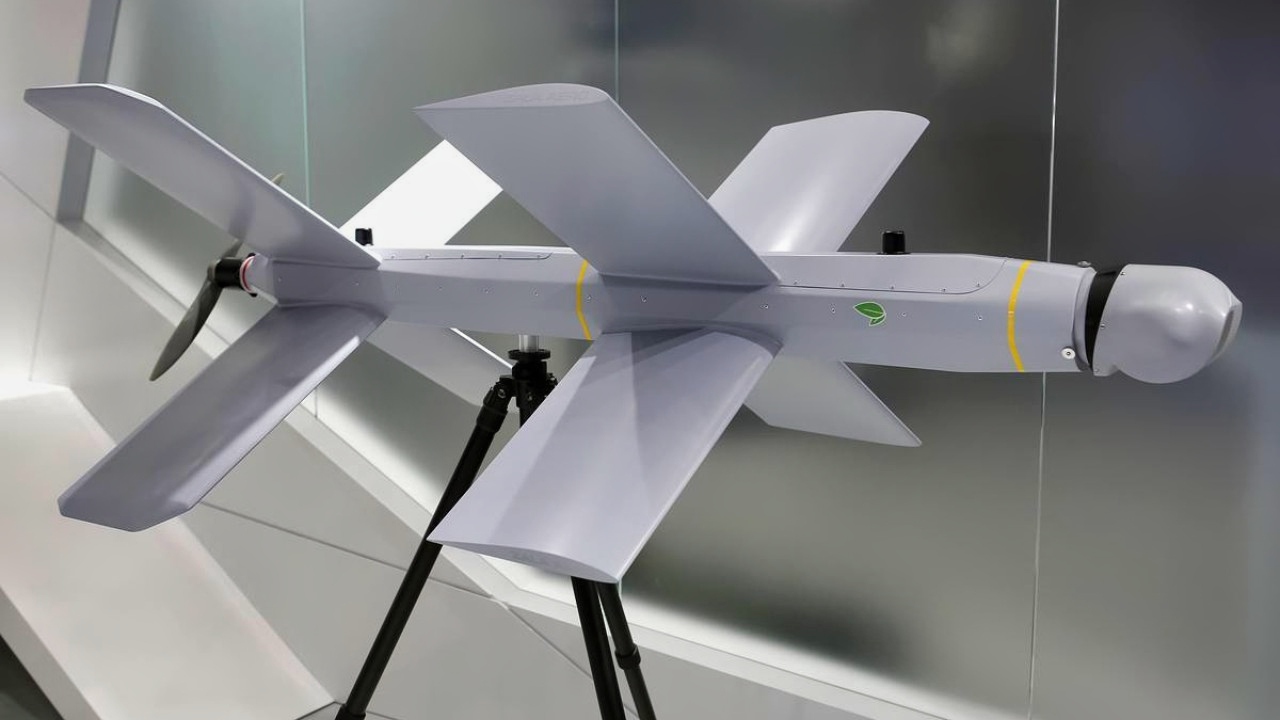
Lancet Drone. Image Credit: Russian State Media.
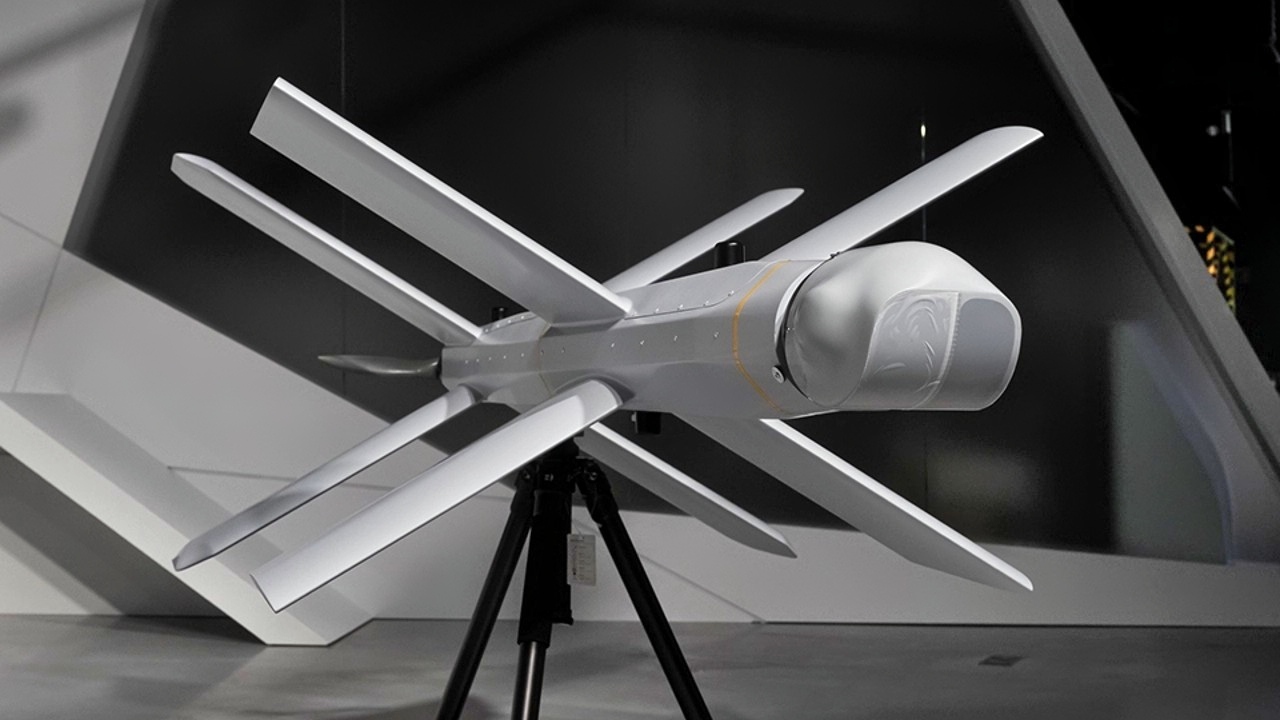
Lancet Drone from Russia. Image Credit: Creative Commons.
Russia’s depleted and failing air defense systems failed to shoot down the Ukrainian drones as they slammed into oil storage facilities, and billowed huge plumes of smoke and fire after the strikes.
Ukrainian drones also hit the Kronstadt naval base and shipyard in Leningrad oblast, which is home to Russia’s Baltic fleet.
Video footage showed a Ukrainian drone flying low above the port and hitting a corvette, the Boikiy, which caught fire. The guided missile warship was in dry dock, undergoing repairs, when it was struck.
Moscow’s Answer To Davos Is An Embarrassment To Putin
Putin was slated to address the economic forum, which is touted as Moscow’s answer to the Davos economic forum. Russia welcomed upwards of 20,000 visitors to St. Petersburg, where it has traditionally tried to court Western investors.
Instead, thousands of foreigners from over 130 countries around the world, including the United States, were witnesses to Ukrainian drones overflying the city, where plumes of black smoke were visible. The St. Petersburg Pulkovo airport was briefly shut down. It was another huge embarrassment to Putin.
“The Petersburg forum is opening with a nice plume of black smoke in the background after Ukrainian strikes,” posted Serhii Sternenko, an adviser to the country’s defense minister.
Oil Facilities In St. Petersburg Hit Hard
Ukrainian long-range drones have struck an oil terminal in St. Petersburg, setting it ablaze, according to President Volodymyr Zelenskyy.
Zelenskyy said on social media that the drones flew more than 1,000 kilometers (620 miles) to hit the terminal in Russia’s second-largest city, and Putin’s hometown.
Zelenskyy added that Russia’s oil industry and infrastructure are legitimate targets, and this attack came a day after a Russian attack on Ukraine killed 23 civilians and wounded 151 other people, as Moscow followed through with its threat of escalating its strikes on civilian targets.
Drones also hit a Russian weapons manufacturing plant in the Tambov region, 600 kilometers (about 370 miles) from Ukraine, Zelenskyy said.
“The Ukrainian plan of long-range sanctions is being implemented exactly as it is needed to bring peace closer,” Zelensky wrote, adding a euphemism for its long-distance strikes against Russia.
Ukraine was delighted to poke Putin and the Russian Bear with its gloating over the attacks. Denys Shtilierman of the Ukrainian defense company Fire Point posted on “X” formerly Twitter: “Due to such distinguished guests and the importance of the event itself, we couldn’t ignore it – and urgently flew to [St Petersburg].”
Ukraine Is Now Bringing The War To Russia
“St. Petersburg came under a large-scale attack by military drones,” the city’s governor, Aleksandr Beglov, posted on the messaging app Telegram on Saturday, saying three people had been injured.
“At least three tanks containing petroleum products are engulfed in flames,” said Ukraine’s Security Service (SBU). “This oil depot is a vital rear-area hub for the storage and supply of fuel to Russian troops in the southern and eastern sectors.”
Ukraine’s escalating long-range drone and missile strikes have increasingly crippled Russia’s economic and logistical foundations.
Ukraine has systematically targeted Russia’s oil infrastructure, supply chains, and military-industrial sites.
Ukrainian long-range drone strikes have disabled nearly all processing facilities in Central Russia, knocking out 25 percent of the country’s fuel production capacity.
With nearly a third of gasoline and a quarter of diesel output impacted, the strikes aim to cripple Moscow’s war economy and restrict battlefield logistics.
This is changing the entire outlook of the war, as the tide has turned toward a possible Ukrainian victory.
Ukrainian Drones Continue To Target Russia’s Major Oil Refineries
Since the Russians invaded Ukraine in February 2022, the Ukrainians have conducted at least 158 strikes against Russian oil refineries. And those strikes have been conducted against 24 of 33 major Russian refineries.
Those attacks have intensified in the past year. Up to this point in 2026, Ukrainian drone strikes against oil facilities have already surpassed all of 2024.
Evgeny Borovikov, deputy CEO of the Russian insurance broker Mains, said that direct damage to oil and gas infrastructure from drone attacks exceeded 100 billion rubles (around $1.1 billion).
He added that when other economic effects are taken into account—including lost production and secondary disruptions—the total impact rises above 1 trillion rubles (approximately $13 billion).
Russia’s economy relies on oil and gas taxes for 25 percent of its budget. It is already stretched tight, and this loss of revenue will stretch it to the breaking point.
Ukrainian drone attacks continue to target Moscow’s oil production facilities, effectively shutting down the Syzran Oil Refinery, which refines about 170,000 barrels a day. Six of Russia’s ten oil refineries were forced to shut down production, at least for a short time.
“Middle Strike” Drones Have Hammered Targets Deep In Russia
The Ukrainian drone attacks are savaging Russia’s air defense networks. According to United24, drones destroyed more than 250 air defense units in April; in March and February, the figures were similar—up to 300 units each month.
The destruction of Moscow’s air defenses is the basis of Ukraine’s Middle Strike Drone strategy and allows it to hit targets deeper inside Russia.
These Middle Strike attacks are less expensive than traditional missile systems and can be manufactured in greater numbers. The attacks are scalable and enable daily strikes against targets that sustain the Russian military.
And they enable more deep-strike operations, especially when Russian air defenses are neutralized.
The “Middle Strike” refers to the range between battlefield first-person-view (FPV) tactical drones and the long-range deep-strike missile systems.
These fixed-wing drones have eviscerated Moscow’s air defenses, allowing for deeper and more successful strikes against Russian infrastructure. This includes weapons and ammunition depots, warehouses, and command posts.
The ISW reported that since early May, Ukrainian “intensified intermediate-range strikes” (Middle Strike Drone attacks) have targeted Russian logistics at operational depths ahead of a planned Ukrainian maneuver.
Ukrainian forces notably began in May 2026 to interdict key Russian ground lines of communication (GLOCs) in occupied Donetsk, Zaporizhzhia, and Kherson oblasts. They have also limited Russia’s use of many of its main resupply routes.
These attacks have basically isolated the entire Crimean peninsula, as Moscow is wary of sending equipment, large troop concentrations, and ships to the ports there, lest they be attacked with virtual impunity.
Middle-strike drone strikes aren’t limited to Crimea. In mid-May, Ukraine launched more than 600 drones in an attack on Moscow itself. The targets struck by the Ukrainian drones included the Moscow Oil Refinery, the Solnechnogorskaya fuel-loading station, the Volodarskaya petroleum-product pumping station, and the Angstrem microelectronics plant in Zelenograd, outside Moscow.
Russia’s Air Defenses Have Not Been Able To Stop The Attacks
Russia, thus far, has been powerless to stop the Ukrainian drone attacks. If anything, they are only growing in size and effectiveness.
The campaign has been bolstered by tech-forward adaptations, such as the Hornet drone, which utilizes AI-assisted targeting and Starlink communications to maintain fire control over occupied territories.
These strikes have had a profound psychological effect on civilians. Deep strikes inside Russia are increasingly common, forcing the Russian populace to confront a war they previously believed they were immune to.
The attack on St. Petersburg also came one day after Putin rejected a Ukrainian peace proposal, stating he saw “no point” in a face-to-face meeting in a neutral country.
Now, in front of the world and many of its economic leaders, Putin was faced with a colossal embarrassment. Ukrainian Foreign Minister Andrii Sybiha said that things would “only get worse” for Russia.
“[The] failures will get more humiliating,” he posted on social media, warning that there are “no safe places in Russia that are exempt” from long-range Ukrainian attacks, and that the intensity of those attacks “will continue to grow.”
About the Author: Steve Balestrieri
Steve Balestrieri is a National Security Columnist. He served as a US Army Special Forces NCO and Warrant Officer. In addition to writing on defense, he covers the NFL for PatsFans.com and is a member of the Pro Football Writers of America (PFWA). His work was regularly featured in many military publications.


