
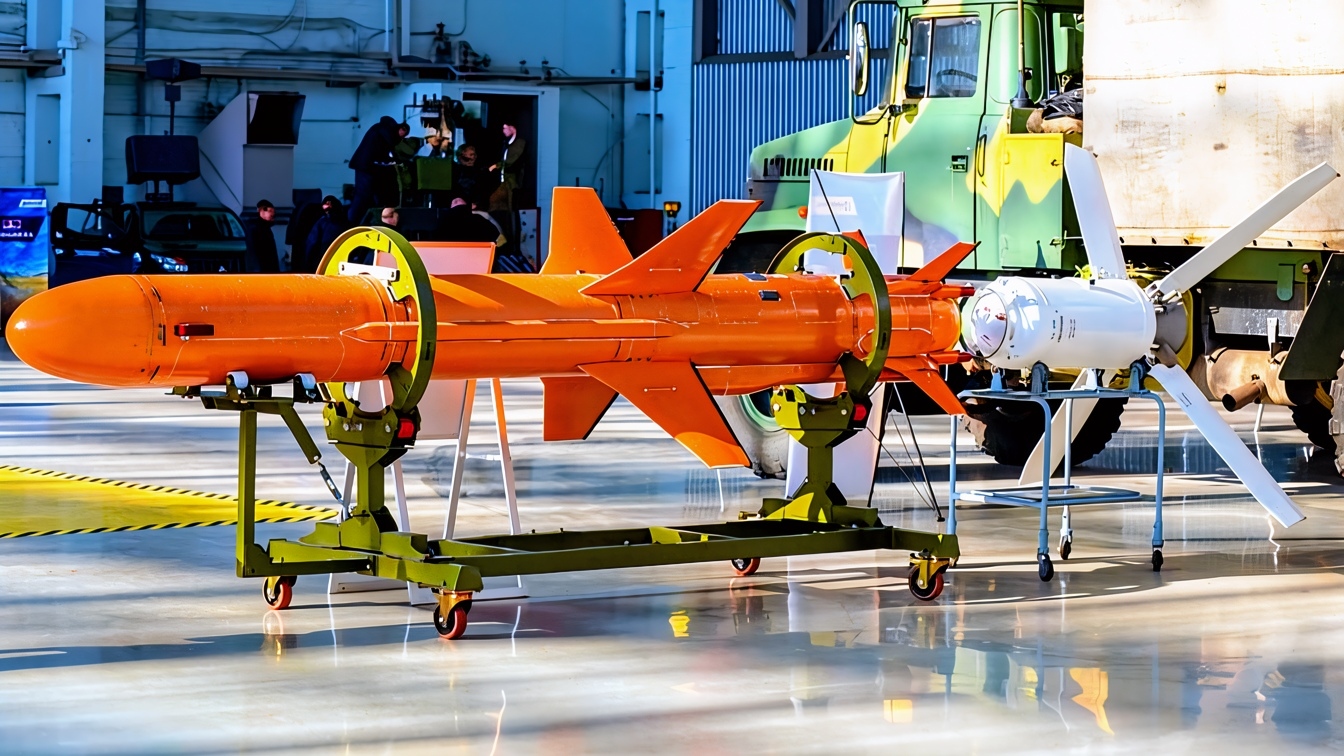
Ukraine’s long-range strike campaign is now causing significant damage to Russian grain exports, with drone and missile attacks knocking out two of the country’s largest grain export terminals.
The overnight attack in Novorossiysk is the latest example of Ukrainian forces widening their long-range campaign, which President Volodymyr Zelenskyy has described as “long-range sanctions” intended to raise the cost of sustaining the war.
Putin in July 2023 Creative Commons Photo
The August 12 attack combined missiles with aerial and naval drones, according to the Ukrainian president, and also targeted the naval base that has become the principal home of Russia’s Black Sea Fleet.
Industry sources also told Reuters that two major grain facilities ceased operations after sustaining damage.
It’s bad news for Russia because Novorossiysk handles as much as one-third of Russian grain exports, and Russia is the world’s largest exporter of wheat. Chicago wheat futures subsequently rose by around 3% following the attack.
At least three people, including an eight-year-old child, were killed in the wider attack, according to Krasnodar regional Governor Veniamin Kondratyev.
Two Major Grain Terminals Shut Down
The facilities impacted by the strike include the Novorossiysk Grain Terminal, run by Demetra Holding, and the Novorossiysk Bread Products Plant, known by its Russian initials NKHP.
The Novorossiysk Grain Terminal stopped operations after equipment used to move agricultural cargo was damaged. Infrastructure at NKHP was also damaged, forcing that facility to suspend operations while the companies assessed repairs.
Putin in May 2026 At Award Ceremony Creative Commons Image
No casualties were reported at either terminal. NKHP alone has an annual port transshipment capacity of approximately 7.1 million metric tons and a storage capacity of about 300,000 tons, according to company data.
Its loading equipment is capable of transferring around 2,000 tons of grain an hour.
Novorossiysk also has a third major grain facility, the KSK terminal, which has an annual capacity of more than 10 million tons. During the first half of 2026, KSK handled 3.75 million tons – an increase of more than 90% compared to the same period last year.
Russia Is Looking for Alternative Export Routes
After months of strikes, Moscow is well aware that its infrastructure and export routes are at risk and is reportedly preparing to divert its agricultural shipments from the Black Sea.
Following the attack, the Russian Ministry of Agriculture said it was working to redirect exports through Baltic and Caspian ports, as well as overland routes, due to ongoing logistical constraints.
The change may mitigate the problem, but it will create additional pressure on Russia’s transport network because Novorossiysk had become particularly important as other export routes come under sustained Ukrainian attack.
Russia already restricted shipping through the Sea of Azov in July after Ukrainian strikes hit commercial vessels, resulting in grain normally transported through those ports being redirected toward Black Sea terminals by rail and road.
Several terminals in Novorossiysk and Taman subsequently restricted truck deliveries as traffic increased and security conditions deteriorated.
Novorossiysk also imposed restrictions on nighttime vessel movements in July because of the drone threat.
Ukraine Keeps Up Long-Range Pressure
The campaign continued overnight into Thursday, August 13, with Ukrainian strikes hitting more Russian energy facilities deep behind the front lines.
Ukraine’s General Staff confirmed on Thursday that its forces struck the Gazprom Neftekhim Salavat complex in Russia’s Republic of Bashkortostan, more than 800 miles from the Ukrainian border.
The facility is one of Russia’s largest oil refining and petrochemical complexes and produces gasoline, diesel fuel, jet fuel and other petroleum products.
Reports described a fire and explosions at the facility following the attack, though the full extent of the damage was not immediately clear.
Russia Responds
Russian forces responded to recent Ukrainian strikes by attacking the Ukrainian Danube port of Izmail overnight into August 13, damaging port infrastructure and cutting electricity supplies.
Izmail is an important alternative route for Ukrainian agricultural exports and has taken on even greater significance recently as Russian attacks attempt to disrupt shipping through Ukraine’s Black Sea ports.
U.S. Asked Ukraine to Stop Tanker Attacks
The latest round of strikes also comes after Washington reportedly requested that Ukraine limit its campaign in the Black Sea.
Reports this week revealed how Ukraine has agreed to stop attacking oil tankers using Novorossiysk following a request from U.S. Vice President JD Vance late last month.
The agreement followed Ukrainian strikes on commercial vessels connected to Russian exports and concerns about the consequences for international shipping and the oil trade.
With oil supply still disrupted globally as a result of the war with Iran and the Houthi blockade in the Bab el-Mandeb Strait, the United States is seeking to prevent the disruption of oil flows – even from Russia.
That commitment, however, does not prevent Ukraine from attacking Russian infrastructure at Novorossiysk itself, with Kyiv’s forces working to disrupt a critical source of revenue for Moscow as the country begins to feel the economic consequences of war.
About the Author: Jack Buckby
Jack Buckby is a British researcher and analyst specializing in defense and national security, based in New York. His work focuses on military capability, procurement, and strategic competition, producing and editing analysis for policy and defense audiences. He brings extensive editorial experience, with a career output spanning over 1,000 articles at 19FortyFive and National Security Journal, and has previously authored books and papers on extremism and deradicalization.


