

Warsaw, Poland: On 12 June, the Commander-in-Chief of Ukraine’s Armed Forces, General Oleksandr Syrskyi, announced an initiative to aggressively recruit foreign mercenaries for Kyiv’s front-line military units. The announcement, made on the Telegram messaging platform, states that the ultimate goal is for these foreign, contract-paid soldiers to make up 30 to 50 percent of all of Ukraine’s assault and infantry units.
Up to this point, foreign fighters had largely enlisted in the Ukrainian military by volunteering with one of the organizations forming the international legions fighting against the Russians. But in a major policy shift, Kyiv will now actively recruit foreign military personnel into its ranks, and there will reportedly also be major changes to how the military staffs its combat units.
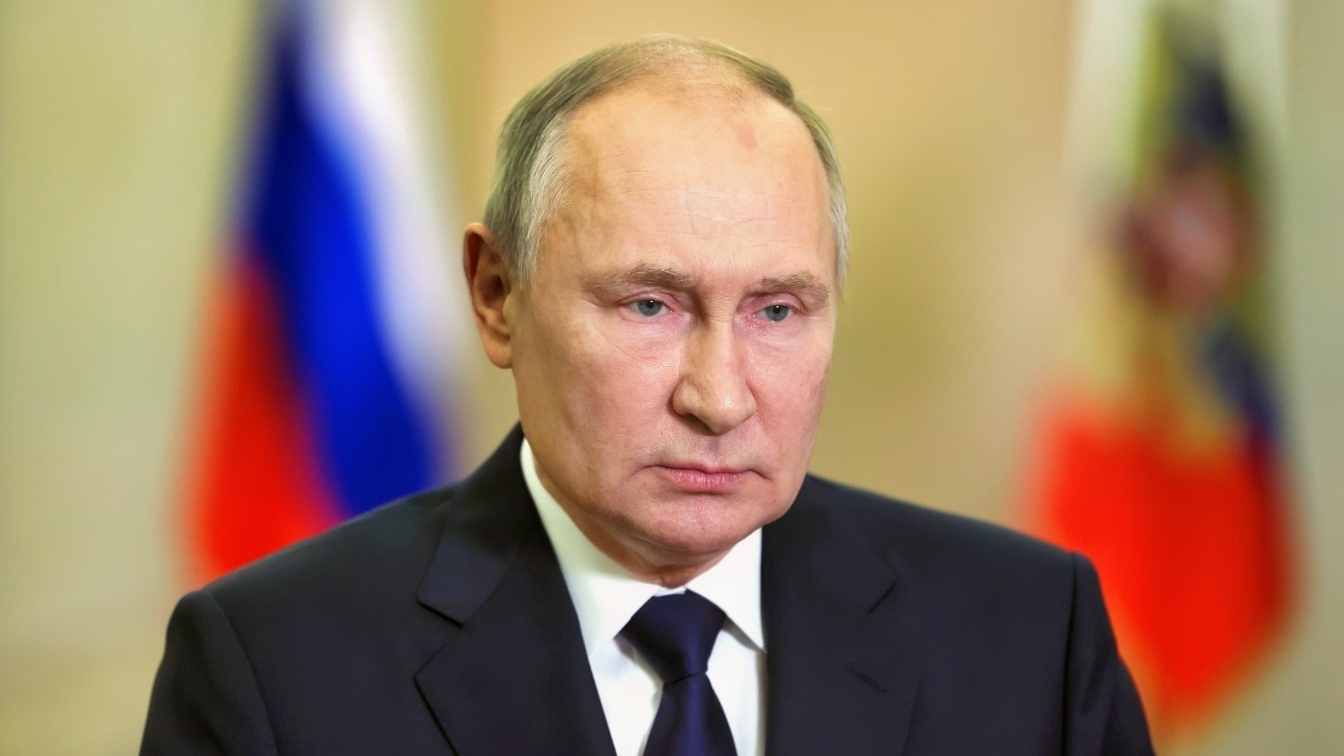
Russian President Putin in 2024 Russian Federation Photo
Zelenskiy’s government had previously announced in May that it would explore a series of measures to increase the number of military personnel. This lack of manpower has been a perennial problem for years now.
But simply bringing in more recruits is not the answer. As a Carnegie Endowment study on the issue from March 2026 reads, “improving Ukraine’s mobilization policy will not be enough on its own to resolve the country’s persistent manning and readiness problems.”
“The government’s ability to deliver additional recruits is not the only factor underpinning the effectiveness and readiness of military units…effective and sustainable force generation in Ukraine depends on a strategic force development approach based on a credible theory of victory, effective operating concepts, fast adaptation, and robotization.”
Why Ukraine’s Zelenskiy Took This Decision
While the endless talent for innovation and adaptation shown by Ukraine’s military in the use of drones to compensate for the country’s disparity in military personnel vis-à-vis Russia is evident, the dilemma remains that many Ukrainian soldiers fight month after month without any chance of home leave. This eventually has corrosive effects on unit effectiveness.
The Ukrainian President, Volodymyr Zelenskiy, had reportedly decided to take measures to significantly augment the number of foreign fighters in the ranks after negotiations on how to end the war with Russia made zero progress and had become, as several Western media outlets put it, a “Steve Witkoff-Kirill Dmitriev theatre.”
Under Syrskyi’s plan, this selection of foreign military personnel will now be conducted by private recruiting firms. The candidates will be screened, and the selection will be made from those deemed suitable.
These selected foreign fighters will be transferred to Ukraine, with the recruiting firms then receiving payment for each recruit who joins Kyiv’s military.
The decision to prioritize locating suitable candidates for these front-line positions, according to Syrskyi, was made to reinforce front-line combat units and reduce losses among Ukrainian personnel.

Troopers with 3rd Armored Brigade Combat Team, 1st Cavalry Division firing the 25mm canon on a Bradley fighting vehicle in order to zero the vehicles weapons systems at a range in Poland. Ranges such as these familiarize troopers with the vehicles systems in order to ensure combat readiness.
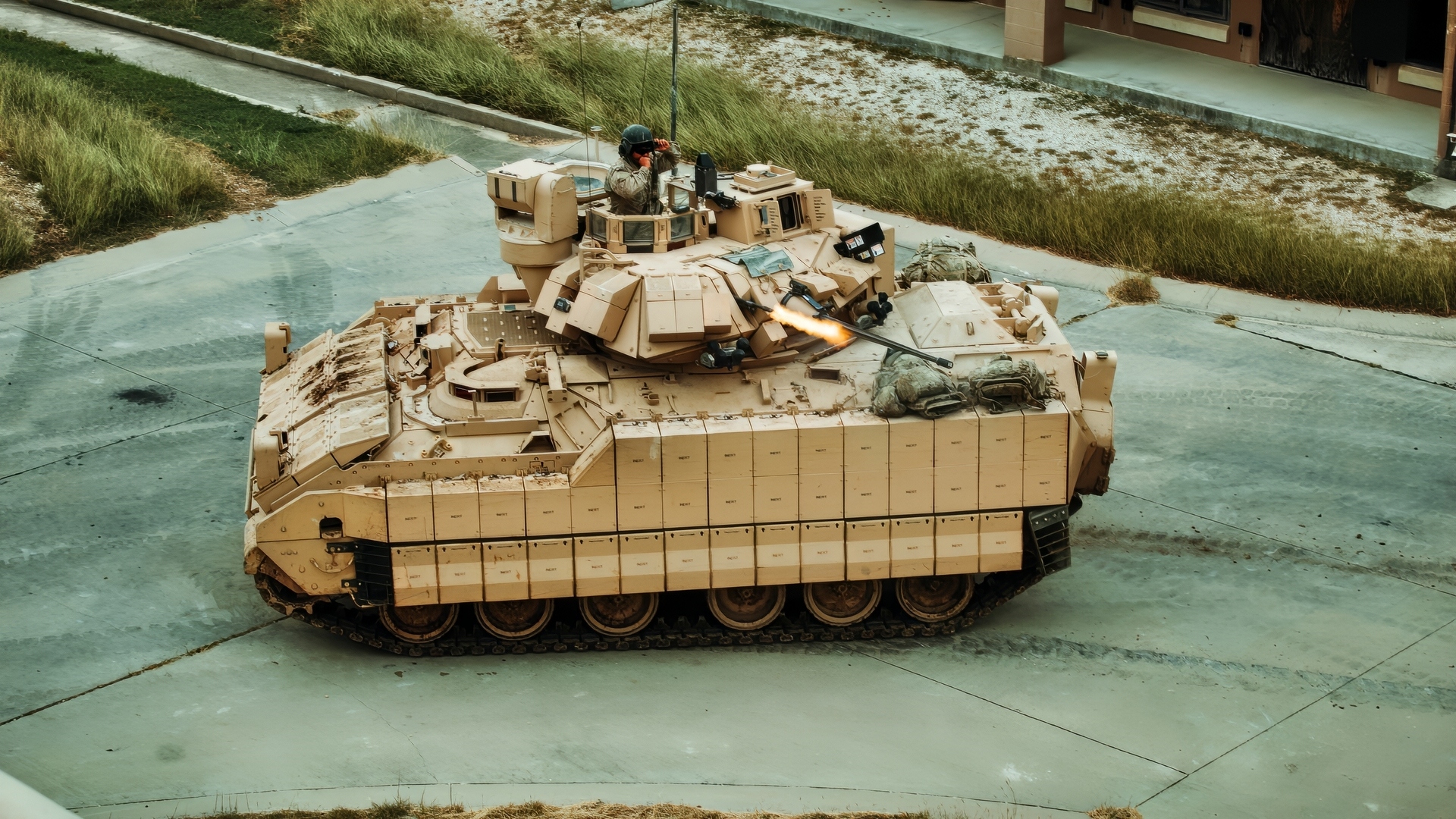
Troopers assigned to 1st Battalion, 12th Cavalry Regiment, 3rd Armored Brigade Combat Team, 1st Cavalry Division, engage an opposing force during the testing of the newest version of the Bradley Fighting Vehicle, Fort Hood, Texas, Oct. 24, 2020. Operational testing with the U.S. Army Operational Test Command (OTC), places First Team Troopers in a series of maneuvers and engagements where OTC can properly test the new vehicles. (U.S. Army photo by Sgt. Calab Franklin, 3ABCT, 1CD, PA NCOIC)
“We are opening the market for the recruitment of foreigners to strengthen combat units and preserve the lives of Ukrainian troops,” he wrote in his Telegram announcement. Which is why “our goal is to fill up to 30 to 50 percent of assault and infantry positions with foreigners.”
A First Step Towards Transformation
Syrskyi described this recruitment Initiative as the first stage towards what he described as a large-scale transformation. The foreign personnel drive will then be followed by a comprehensive overhaul of Ukraine’s recruitment and mobilization processes.
“We are building an army with clear rules and respect for the soldier. Human life is the greatest value,” he added. He also emphasized again that the primary objective of this effort is to preserve the lives of troops on the front line.
Data on the number of foreign recruits in Ukraine’s Defense Forces remains incomplete, and neither the Defense Ministry nor the Armed Forces publishes any comprehensive registries of foreign service personnel, largely for security reasons.
What is known of the history of foreign military personnel fighting in Ukraine is summarized here:
In 2022, the first year of the war, the initial International Legion was established, with Ukraine reportedly receiving more than 20,000 applications from 52 nations. However, that number is only a tally of those who expressed interest and registered, not the final count of those who traveled to Ukraine, passed all relevant screening processes, and enlisted in combat units.
By the 2023–2024 timeframe, the number of foreigners actively fighting in the International Legion was estimated at roughly 1,500-2,000 personnel. At the same time, there was also a greater number of foreigners serving in other pro-Ukrainian military organizations, estimated at 3,000 to 4,000.
In 2026, a more comprehensive assessment was conducted across all defense structures, including active foreign service members and veterans, with an estimated total of approximately 20,000 people. This current plan for a wider recruitment drive to open up service to more foreign recruits is also only one element of Ukraine’s first comprehensive overhaul of its armed forces since the war began.
This plan calls for a package of reforms that will pair changes to recruitment practices with higher pay for all personnel, fixed-term contracts, and more clearly defined terms of service.
About the Author: Reuben F. Johnson
Reuben F. Johnson has thirty-six years of experience analyzing and reporting on foreign weapons systems, defense technologies, and international arms export policy. Johnson is the Director of Research at the Casimir Pulaski Foundation. He is also a survivor of the Russian invasion of Ukraine in February 2022. He worked for years in the American defense industry as a foreign technology analyst and later as a consultant for the U.S. Department of Defense, the Departments of the Navy and Air Force, and the governments of the United Kingdom and Australia. In 2022-2023, he won two awards in a row for his defense reporting. He holds a bachelor’s degree from DePauw University and a master’s degree from Miami University in Ohio, with a specialization in Soviet and Russian studies. He lives in Warsaw.


Swamplaw Yankee
June 15, 2026 at 5:02 am
Well. Finally Ukrainians are catching on to the USA of 1939. Even though POLAND Vanished to the famous fervent ‘forever” marriage of Motherland Kremlin Muscovy ethnics to the NAZI Hitler Fatherland, the USA FDR choose to use foreign troops to die as he determined who the USA was going to endorse.
POTUS FDR viciously pushed Newfoundland – Canadian lads + lasses to die + be maimed fighting the Kremlin -Nazi marriage partnership. The Yellow sweat on the brows of millions of Yankee Hero Yud dripped monthly as they watched Canadian die as they cavorted in peace with their southern amigos.
Only when the fella Hirihito invited the Yankee to join on December 7th, 1941 did the POTUS FDR use of foreign troops to protect the USA slow down.
Not a single brave Yankee who joined the English or Canadian forces in 1939-42 is ever recognized by the official USA structures with, say, a super Purple Heart or its equivalent.
Many Brave Americans have joined the Ukrainian forces since the POTUS Barry Obama facilitation of the Balkanization of Independent Ukraine way back when in 2014.
Ad rem: the 2026 fear is that the MAGA POTUS Trump is refusing to declare openly that he, Trump, demands that the Prime Cold War enemy of the USA, Kremlin Muscovy Putin, retreats to the 2103 border lines! Maybe Trump wants to play “little Obama brain” + sell stolen Ukrainian resources to the Kremlinites.
jim
June 15, 2026 at 3:29 pm
This is not “analysis,” this is a mere summary with no real commentary.
As an American veteran and geopolitical observer, this news signals that Ukraine is on its last legs and the war will soon be over. When a nation at war can no longer raise replacements/reinforcements, but has to try to recruit foreigners to die for the cause (fat chance), the end is very close.
Ukraine needs to cut a deal with Putin FAST, because its bargaining chips are almost gone.
Once the Ukrainian front collapses, Russia won’t need to bargain or compromise. They merely have to advance into the growing vacuum and seize all of Ukraine.
Zelensky’s legacy will not be remembered fondly.
Edward D Van Cheri
June 16, 2026 at 12:39 pm
Why dont the military aged Ukrainian man up and enlist instead of foreigners carring the fight….we are tired of supporting this most corrupt government in Europe…..MAN UP UKRAINIAN MEN