

Key Points and Summary – The U.S. Army is struggling to define its role after COIN-era dominance and amid Ukraine’s lessons and an Indo-Pacific focus.
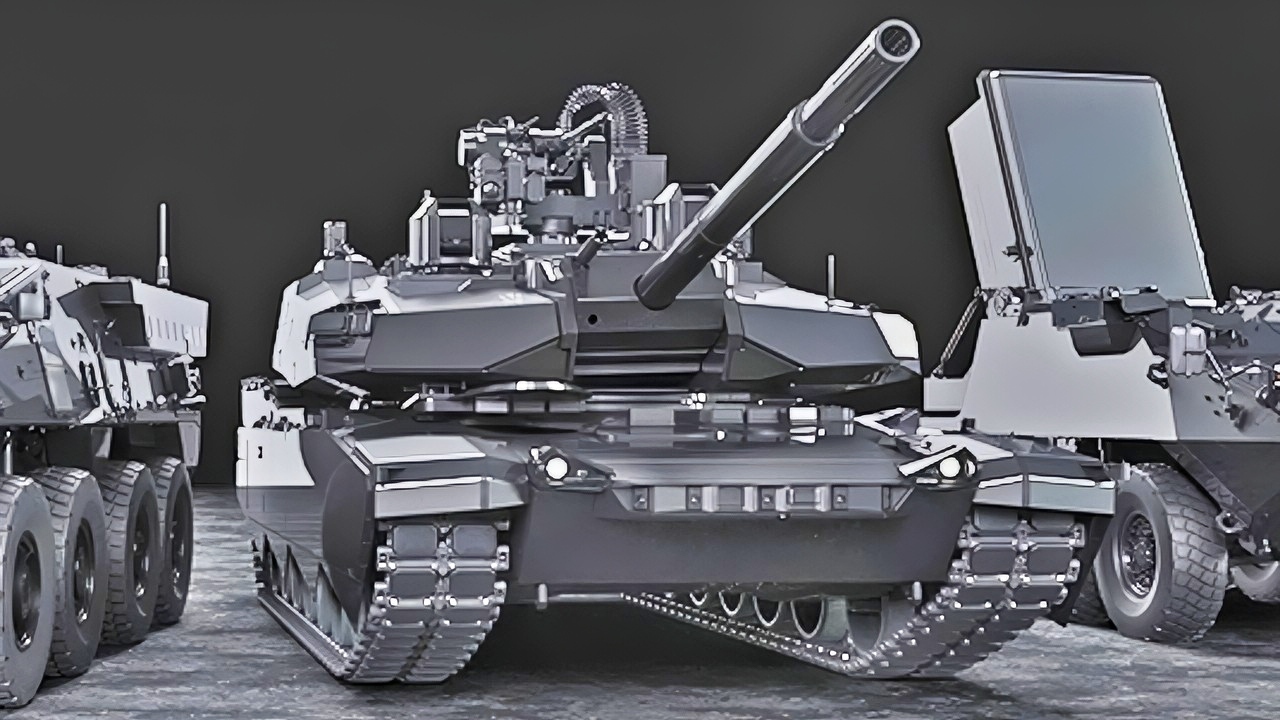
-Heavy forces still anchor plans—AbramsX and XM30—despite drones, ATGMs, and EW eroding armor survivability; the M10 Booker was canceled.
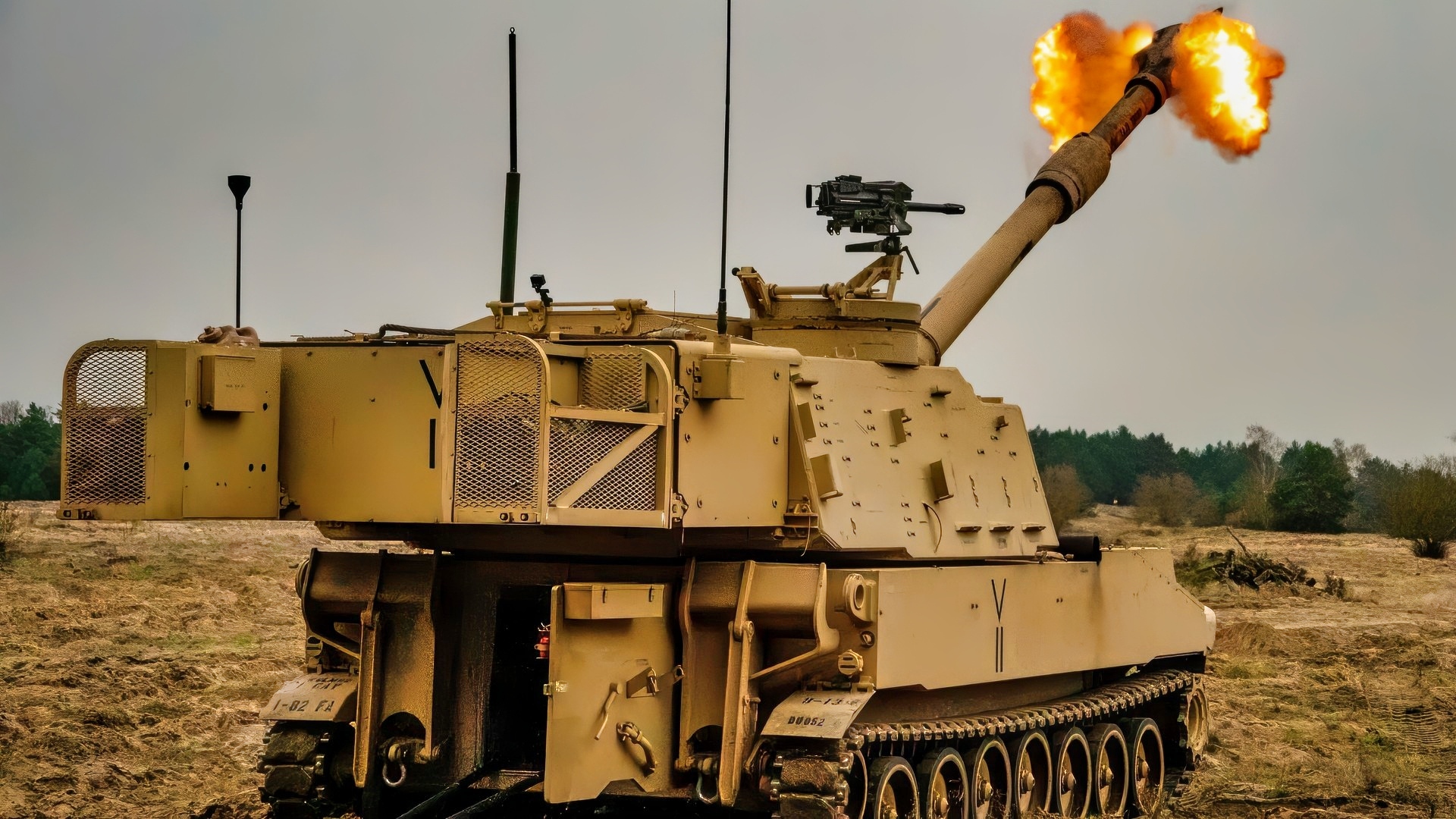
An M109 Paladin, assigned to 1st Battalion, 82nd Field Artillery Regiment, fires a round of high-explosive artillery during Dynamic Front on Forward Operating Site Torun, Poland, Nov. 19, 2024. Dynamic Front takes place from Nov. 4-24 in Finland, Estonia, Germany, Poland, and Romania, and demonstrates NATO’s ability to share fire missions, target information, and operational graphics from the Arctic to the Black Sea. It increases the lethality of the Alliance through long-range fires, builds unit readiness in a complex joint, multi-national environment, and leverages host nation capabilities to increase USAREUR-AF’s operational reach. Dynamic Front includes more than 1,800 U.S. and 3,700 multi-national service members from 28 Allied and partner nations. (U.S. Army photo by Spc. Julian Winston)
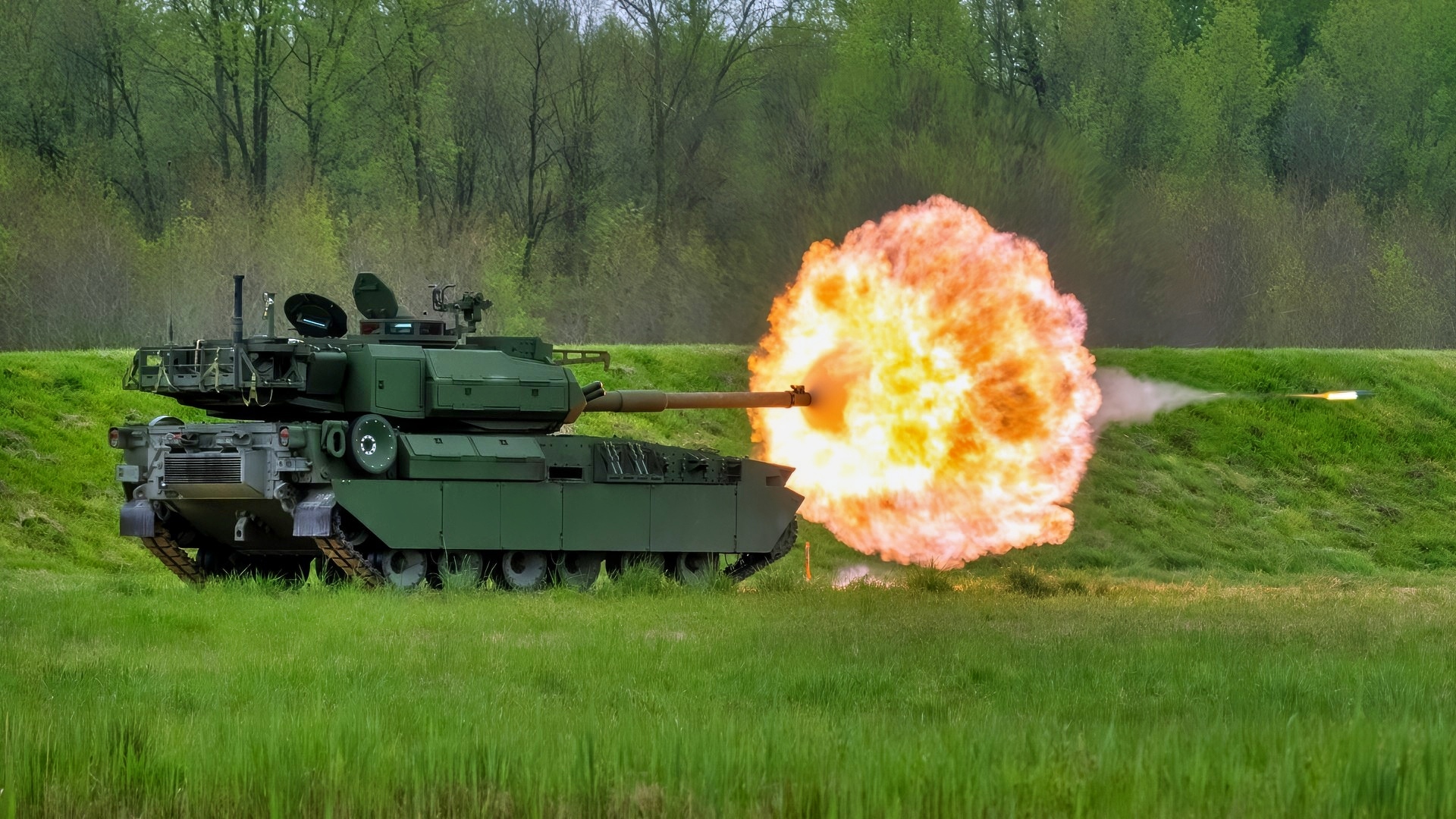
A live fire demonstration of the Army’s newest and most modernized combat vehicle, the M10 Booker, marks the conclusion of the M10 Booker Dedication Ceremony at Aberdeen Proving Ground, in Aberdeen, Md., April 18, 2024. (U.S. Army photo by Christopher Kaufmann)
-New rifles arrive, but strategy gaps persist, especially for a China fight dominated by air/sea missiles. Trump–Hegseth priorities tilt resources to Air Force/Navy, homeland defense, border and crime missions, and burden-sharing in Europe, leaving the Army to fund counter-UAS and unmanned systems under tight budgets.
-Without doctrinal change, the service risks relevance drift and becoming a primarily domestic security force instead.
What Does the Future Hold for the U.S. Army? A Reboot Is Slowly Taking Hold
The U.S. Army brass and their strategic planners are concerned about present and future warfare. The service branch has relied heavily on heavily mechanized brigade combat teams and special operations forces for years to conduct counter-terrorism and counter-insurgency missions.
This heavy/light one-two punch worked well after 9/11. A lightning mechanized strike was able to topple Saddam Hussein initially in the Second Gulf War, and special forces made the terrorists and insurgents pay dearly.
In those days, Army Special Forces, Rangers, and the special operations aviation regiment received huge budgets and attention. The Army figured it could even fight a two-front war in both the Middle East and Europe or East Asia.
There were plenty of Abrams tanks and Bradley Fighting Vehicles. Special ops had a significant pipeline of personnel, and they were holding their own in Iraq and Afghanistan. However, these Forever Wars were problematic. Armored combat teams were not a factor in counterinsurgencies. This fight was mainly for light infantry and paratroopers to patrol from isolated and deeply deployed forward operating bases.
Can the U.S. Army Resist Obsolescence?
With the end of the wars in Iraq and Afghanistan, the Army was looking to be relevant again. The Russian invasion of Ukraine in 2022 was a wake-up call.
The combat devolved into conventional battles. There were mechanized engagements with tanks and armored vehicles.
Old-fashioned towed and self-propelled artillery had a field day and were more critical than ever. Then there were multiple-launch rocket systems that were seen as a Cold War-era tool that had a newfound resurgence on the battlefield.
But most troubling is the use of anti-tank missiles and drones that rendered tanks and armored vehicles almost useless in Ukraine and Russia. The battlefield was littered with burnt-out tanks and personnel carriers with devastating losses on both sides.
The Americans offered Abrams tanks and Bradley Fighting Vehicles to Ukraine, but these had mixed effects. Tanks needed so-called “cope cages” to better survive against anti-tank missiles and loitering kamikaze drones.
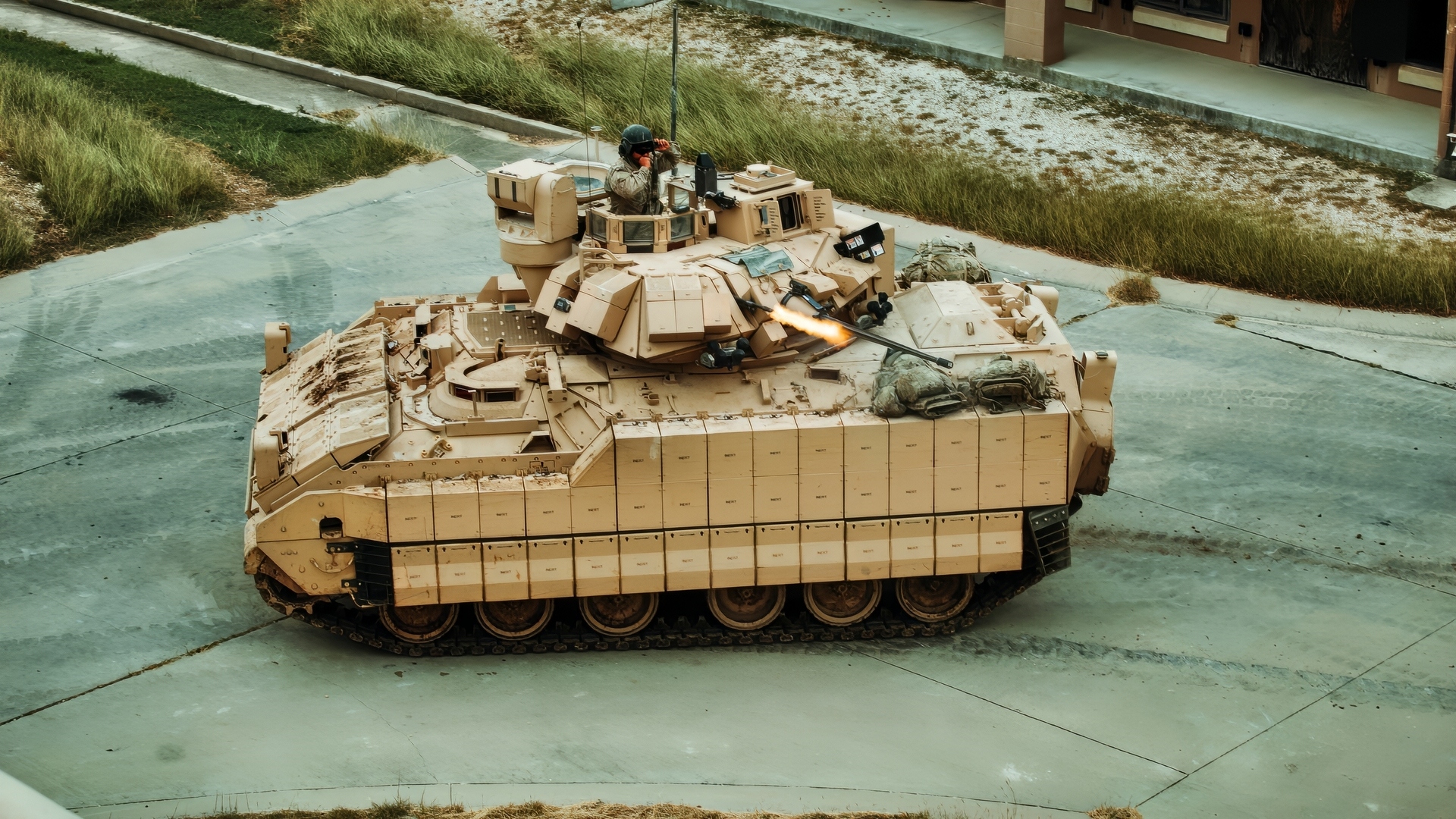
Troopers assigned to 1st Battalion, 12th Cavalry Regiment, 3rd Armored Brigade Combat Team, 1st Cavalry Division, engage an opposing force during the testing of the newest version of the Bradley Fighting Vehicle, Fort Hood, Texas, Oct. 24, 2020. Operational testing with the U.S. Army Operational Test Command (OTC), places First Team Troopers in a series of maneuvers and engagements where OTC can properly test the new vehicles. (U.S. Army photo by Sgt. Calab Franklin, 3ABCT, 1CD, PA NCOIC)
The Ukrainian-operated Abrams tanks were handily destroyed and damaged by Russia. The Bradley fared better but still took significant losses.
AbramsX and XM30 Are Still Singing In Tune With the Army’s Legacy and Tradition
The U.S. Army analyzed this combat action and determined that it still needed heavy vehicles, such as the AbramsX and the XM30 mechanized infantry combat vehicle, to replace the Bradley. It is doubling down on mechanized warfare. Battle planners still believed in heavy combat teams that would be needed in Europe. On the other hand, the U.S. Marine Corps divested itself of all tanks, relying more on ballistic missile launches to protect its amphibious warfare operations.

AbramsX. Image Credit: Creative Commons.
For the dismounted troops, the Army opted for new small arms, including the Sig Sauer M7 Rifle and the M249 Light Machine Gun.
This would replace the M4 carbine and the M249 machine gun. That’s good for individual soldiers, but it still does not solve broader strategic and doctrinal issues.
The Sad Saga of the M10 Booker Light Tank
Another weapon system was designed to protect dismounted infantry and the flanks of armored cavalry regiments. The answer was the M10 Booker light tank.
But the Booker experienced mission creep and questions about its survivability. The M10 was designed with heavier armor, which defeated the purpose of being a light tank.
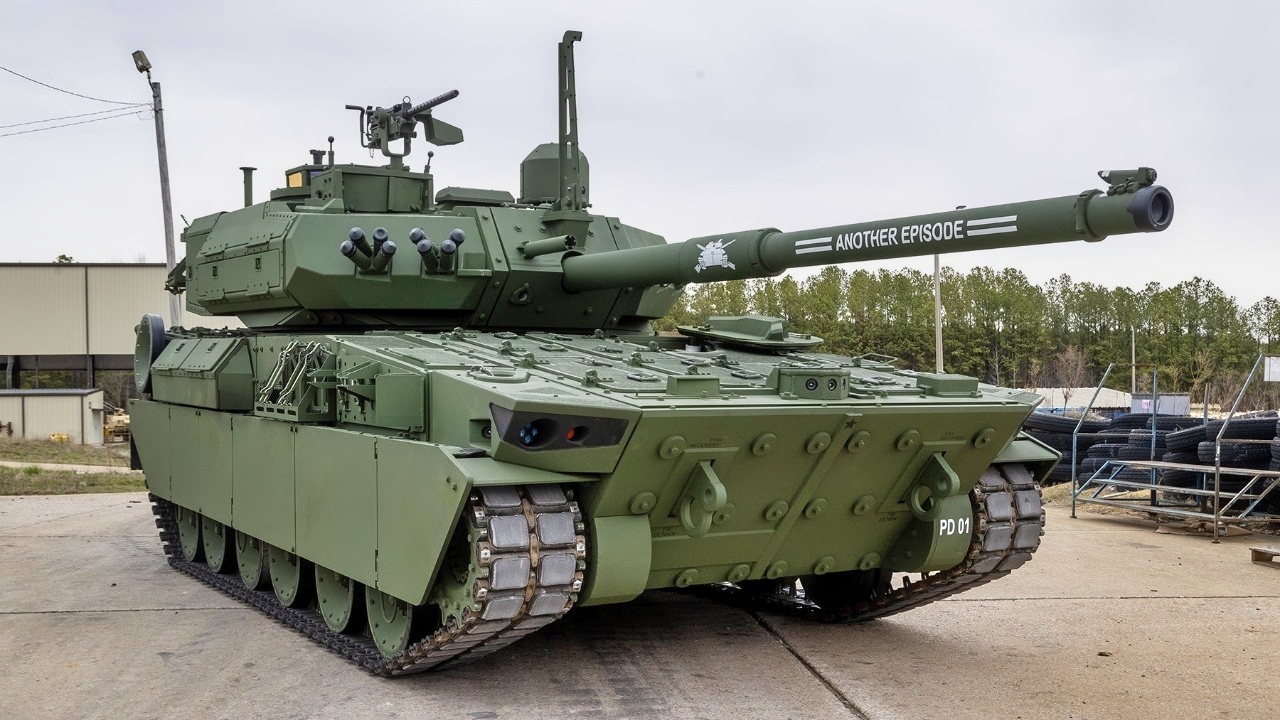
PD1 – Delivery of First Production Vehicle M10 Booker Combat Vehicle. Image Credit: U.S. Army.

The M10 Booker Combat Vehicle proudly displays its namesake on the gun tube during the Army Birthday Festival at the National Museum of the U.S. Army, June 10, 2023. The M10 Booker Combat Vehicle is named after two American service members: Pvt. Robert D. Booker, who posthumously received the Medal of Honor for actions in World War II, and Staff Sgt. Stevon A. Booker, who posthumously received the Distinguished Service Cross for actions during Operation Iraqi Freedom. Their stories and actions articulate the Army’s need for the M10 Booker Combat Vehicle, an infantry assault vehicle that will provide protection and lethality to destroy threats like the ones that took the lives of these two Soldiers. (U.S. Army photo by Bernardo Fuller)
It would no longer be easy to transport to join the light infantry in the fight. The program was cancelled this year.
U.S. Army: What About the Future Fight With China?
All of these new weapons systems still don’t answer the Army’s role in the Indo-Pacific. This will be a heavy missile fight against the Chinese if a war with that country happens.
The U.S. Navy and Air Force will be sending ballistic missiles at air and surface targets repeatedly until one side gives up after heavy losses of aircraft and damaged and sunken ships.
The Army does not have a clear role in East Asia. The Marines can handle the Chinese militarized islands in the South China Sea. A large-scale land war in China is unlikely. That leaves North Korea, where a massive armored decisive battle could unfold.
The U.S. Army needs a more pronounced strategy for future combat. President Donald Trump and Secretary of War Pete Hegseth, speaking this week to all U.S. flag officers in Quantico, Virginia, offered few clues about what the Army would become as part of a joint force.
Protecting the Homeland From Non-traditional Threats
It seems the Trump national security team is going to place much emphasis on the Western Hemisphere and against transnational criminal organizations like Tren de Aragua in Venezuela and other Latin American countries, to which the group has branched out.
Army National Guard troops are already patrolling Washington, DC, and may be deployed to other cities to protect against crime and leftwing terrorism. The Southern Border is also a priority, with reserve personnel serving in the southwest. Trump even suggested that active-duty Army troops could be deployed to American cities.
The new National Defense Strategy, which is being finalized with Hegseth, does not greatly specify the Army.
Still, it does call for increased homeland defense capabilities in the Americas, a shift in focus from Europe and the Middle East to China, and greater burden sharing with NATO members for defense against Russia. Spending will likely be more focused on the Air Force and Navy.
That leaves the U.S. Army wondering if it will get new tools and assets during this administration. Look for the AbramsX and the XM30 to be funded, but not to a great extent. If these programs suffer from schedule slips and cost overruns, Hegseth is likely to shift resources away toward more unmanned systems and ballistic missiles.
The Army also needs counter-UAS systems. There will come a time when all enemy soldiers will be outfitted with a first-person view drone that will be strong enough to take out tanks and infantry fighting vehicles.
The Army may find itself wondering just how much it can transform. The emphasis will still be on heavy armored systems. Special Operations Forces could be losing their luster after endless wars in the Middle East and South Asia have finally concluded. Armored Cavalry Regiments could become outdated as drones and anti-tank missiles become too much of a threat.
The service branch still has many questions to answer. It may find itself going to war with the same type of doctrine, operations, and tactics it already has.
Yes, there will be new tanks and infantry fighting vehicles with counter-drone technology, but no significant changes to overall strategy. This may become the laggard branch that will fight for relevancy, and Hegseth, an U.S. Army veteran himself, will view the service as more of a tool for homeland defense rather than expeditionary warfare.
About the Author: Brent M. Eastwood
Brent M. Eastwood, PhD is the author of Don’t Turn Your Back On the World: a Conservative Foreign Policy and Humans, Machines, and Data: Future Trends in Warfare plus two other books. Brent was the founder and CEO of a tech firm that predicted world events using artificial intelligence. He served as a legislative fellow for US Senator Tim Scott and advised the senator on defense and foreign policy issues. He has taught at American University, George Washington University, and George Mason University. Brent is a former US Army Infantry officer. He can be followed on X @BMEastwood.
More Military
The U.S. Navy’s Great Ford-Class Aircraft Carrier Reboot Has Arrived
The U.S. Navy’s Great Iowa-Class Battleship Reboot
Is the Ukraine War ‘Shapeshifting’ Into the Vietnam War?
China’s Great J-20 Mighty Dragon Stealth Fighter Reboot Has Arrived


