


Key Points and Summary – The USS Illinois (BB-65) was conceived as a tougher follow-on to the Iowa class and first of the planned Montana-type heavy battleships, with 45,000 tons of displacement, thick armor, welded construction, and nine 16-inch guns designed to hammer Japanese fleets and support amphibious landings.
-Pearl Harbor and the carrier battles of Coral Sea and Midway changed everything, pushing the U.S. Navy to prioritize flat-tops over big-gun ships.

16-Inch Iowa-Class Guns. Image Credit: National Security Journal.
-Work on Illinois stopped in 1942 and she was scrapped in 1958. In hindsight, she might have been valuable in Korea and Vietnam, but instead became a symbol of a lost battleship era.
The USS Illinois – A Forgotten Iowa-Class Battleship That Had Huge Potential
While we take aircraft carriers for granted these days, in the years leading up to World War II, it was the battleship that was the main vessel of the U.S. Navy.
Some carriers were in service, but battleships like the USS Illinois were planned to dominate warfare.
Unfortunately, the Illinois was never fully built due to shifting priorities and the need to produce more carriers. This is the story of a forgotten battleship – the USS Illinois.
The United States had acquired four Iowa-class battleships, but the Navy aimed for a dreadnought that was more survivable with even heavier armor than the Iowa-class. The USS Illinois (BB-65) and the USS Kentucky (BB-66) would be the first of the new Montana-class. In 1937, Japan was beginning its conquest of East Asia and had invaded China. This sent shock-waves throughout the American military establishment. Where would Japan stop in its plans for domination?
Pearl Harbor Changed Everything
The Navy changed its mind and had the Illinois and Kentucky transferred over to become Iowa-class battleships. Later, the devastating attack on Pearl Harbor showed that battleships could be vulnerable at port due to carrier-borne aircraft. The U.S. fleet was ravaged. Eight battleships were sunk or damaged.
Battle planners noted that naval warfare had shifted from large capital ships to aircraft carriers. This was going to be the new doctrinal concept throughout the war in the Pacific. The battleships’ big guns would be helpful during the island-hopping campaign to shell and prep the battlefield for amphibious operations.
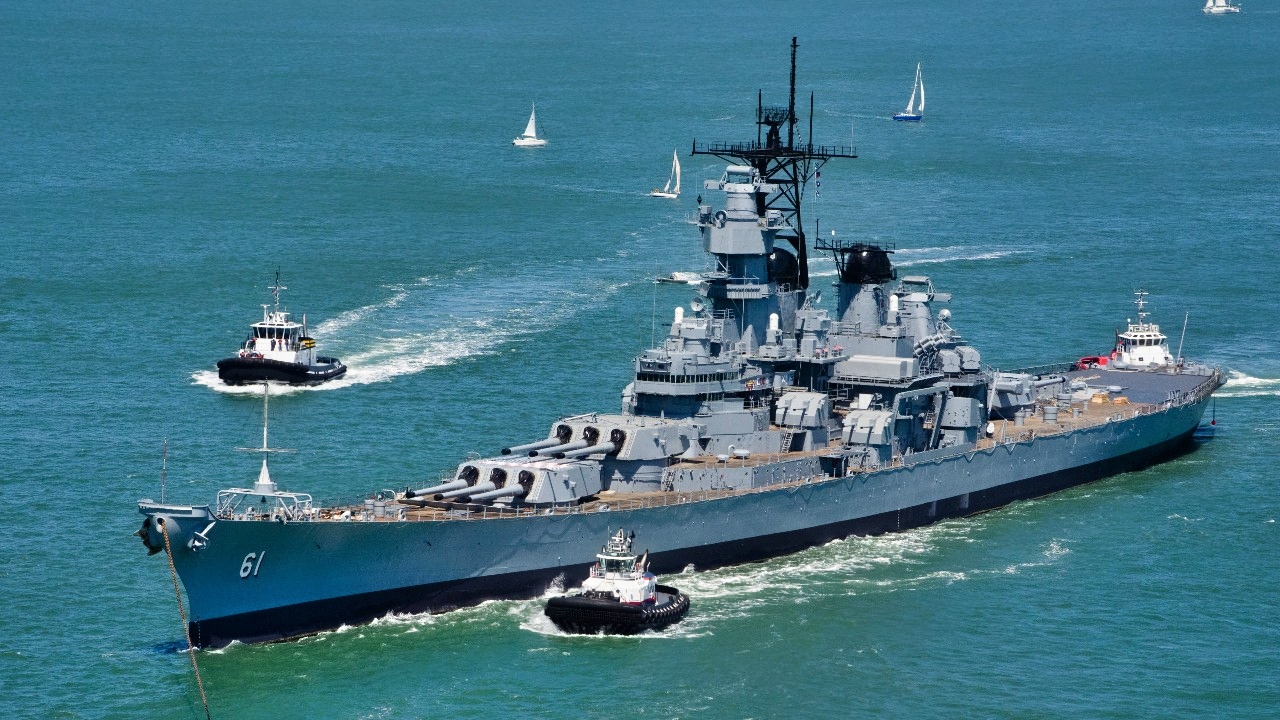
Iowa-Class Battleship USS Iowa. Image Credit: Creative Commons.

Iowa-Class Battleship U.S. Navy Full. Image Credit: Creative Commons.
Still, the battleship would now play second fiddle to the carrier.
The Navy Predicted Large Ships Would Face the Japanese in a Fight to the Death
The Navy had, before the war, assumed that there would be significant ship-on-ship battles in which massive losses could be sustained with larger, more powerful ships.
This belief changed during the battle of Midway and Coral Sea, when the Japanese and Americans never even glimpsed each other’s ships. This became a stand-off fight, and the enemy vessels were beyond the range of a battleship’s guns. The battleship transformed into more of an escort ship in carrier strike groups.
The Navy decided to cease construction of the Illinois in 1942 and cancelled it by the end of the war in 1945. The Illinois was finally scrapped in 1958.
Quick History of USS Illinois Iowa-Class
Let’s take a step back and examine the USS Illinois closer. The Georgia Congressman Carl Vinson proposed the Second Vinson Expansion Act of 1938. This was to jumpstart American shipbuilding with a large budget.
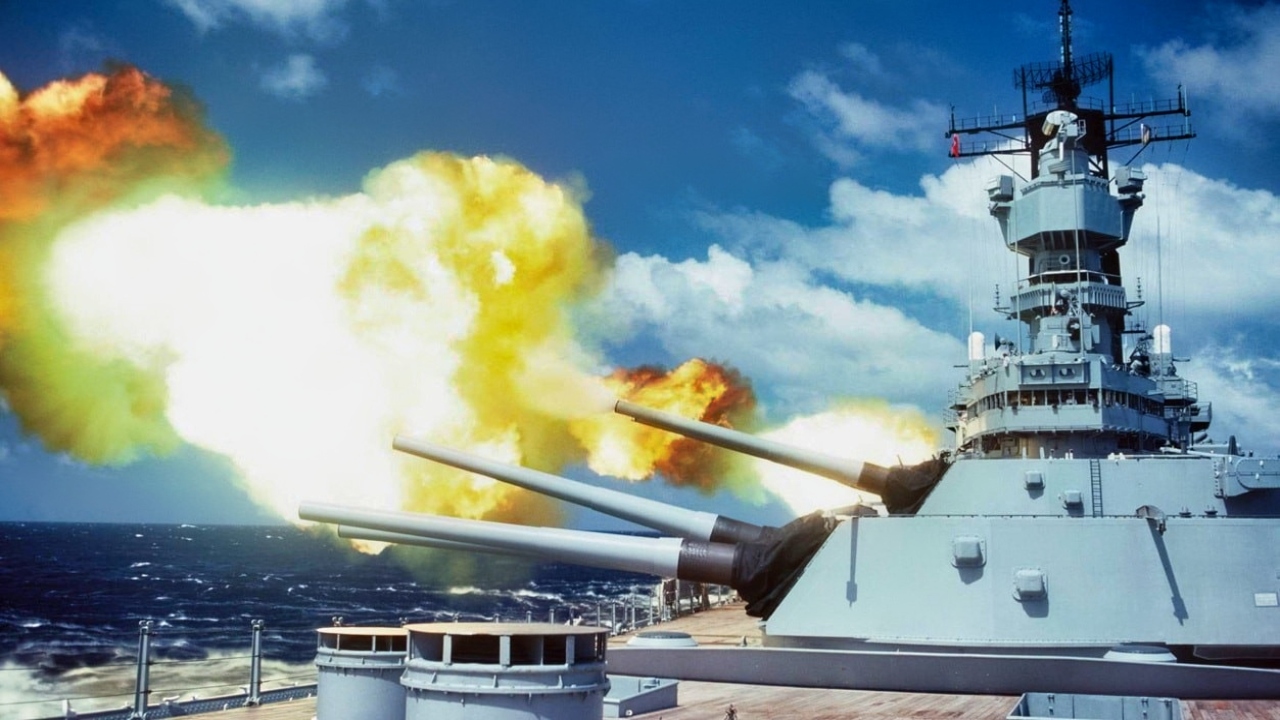
Iowa-Class Battleship. Image Credit: Creative Commons.
There would be a provision for 105,000 tons of battleships. This legislation authorized three Iowa-class vessels. There would also be a new carrier built, plus eight heavy and light cruisers, including new submarines and destroyers. This effort would cost around $1 billion to grow the Navy by 20 percent.
How Much Armor Could You Pack on a Ship?
The USS Illinois was ordered in 1940, and its keel was laid in 1942 as an Iowa-class. The Navy wanted to build the Illinois with a displacement of 45,000 tons. The length would have been 887 feet with a 108-foot beam and a draught of 37 feet. The armor was up to 12 inches thick in places. The turrets were protected by 20 inches of armor. The decks had 7.5-inch-thick armored plates.
With an all-welded construction, an innovation for the era, the Illinois would weigh less and cruise faster than other Iowa-class battleships. Illinois would be saddled with nine 16-inch/50 caliber Mark 7 guns that could send a 2,700-pound armor-piercing round up to 20 miles. 20 5-inch/38-caliber guns fired shells 10 miles away. These weapons were designed to punish the Japanese navy or shell landing zones for the U.S. Marine Corps.
However, the Navy shifted its priorities to aircraft carriers, and work was stopped in 1942. The Illinois was lost in the shuffle and never graced the high seas.
This was still a surprising development. Battleships remained effective and instilled pride among sailors. The United States could not have predicted other wars in which battleships could come in handy with their big guns, such as the Korean War and Vietnam, where fire support was critical. USS Illinois could have added to this mix for future ground support for soldiers and Marines in the coming decades.
The USS Illinois Should Have Been Constructed
I’m surprised the Illinois wasn’t built. If I were advising President Franklin D. Roosevelt at the time, I would have called for the full production of the Illinois and to allow it to join the fleet. Roosevelt was a huge proponent of the Navy – it was his favorite branch of the military.
He had served as the Assistant Secretary of the Navy from 1913 to 1920, and this greatly influenced his grand strategy for World War II.
The Japanese at Pearl Harbor crushed the battleship fleet, and one year later, will the Illinois become a lost relic?
It didn’t make sense that Roosevelt would not take up a personal interest in the battleship. This seemed to be a waste of money and resources to stop construction or even to slow the building effort. The United States certainly had the wherewithal to build the ship, but it was decided that the aircraft carrier was needed more.
Thus, USS Illinois was a victim of the shifting nature of sea war and the advent of carrier aviation that was to dominate the early to mid-1940s. We’ll never know if the Illinois could have survived in combat, but the battleship was still important in my eyes, and it’s a shame the battlewagon never steamed in the Pacific looking for targets for the big guns.
About the Author: Brent M. Eastwood
Author of now over 3,000 articles on defense issues, Brent M. Eastwood, PhD is the author of Don’t Turn Your Back On the World: a Conservative Foreign Policy and Humans, Machines, and Data: Future Trends in Warfare plus two other books. Brent was the founder and CEO of a tech firm that predicted world events using artificial intelligence. He served as a legislative fellow for US Senator Tim Scott and advised the senator on defense and foreign policy issues. He has taught at American University, George Washington University, and George Mason University. Brent is a former US Army Infantry officer. He can be followed on X @BMEastwood.
More Military
Who Has the Fastest Hypersonic Missile? Russia, China, or the US?


