
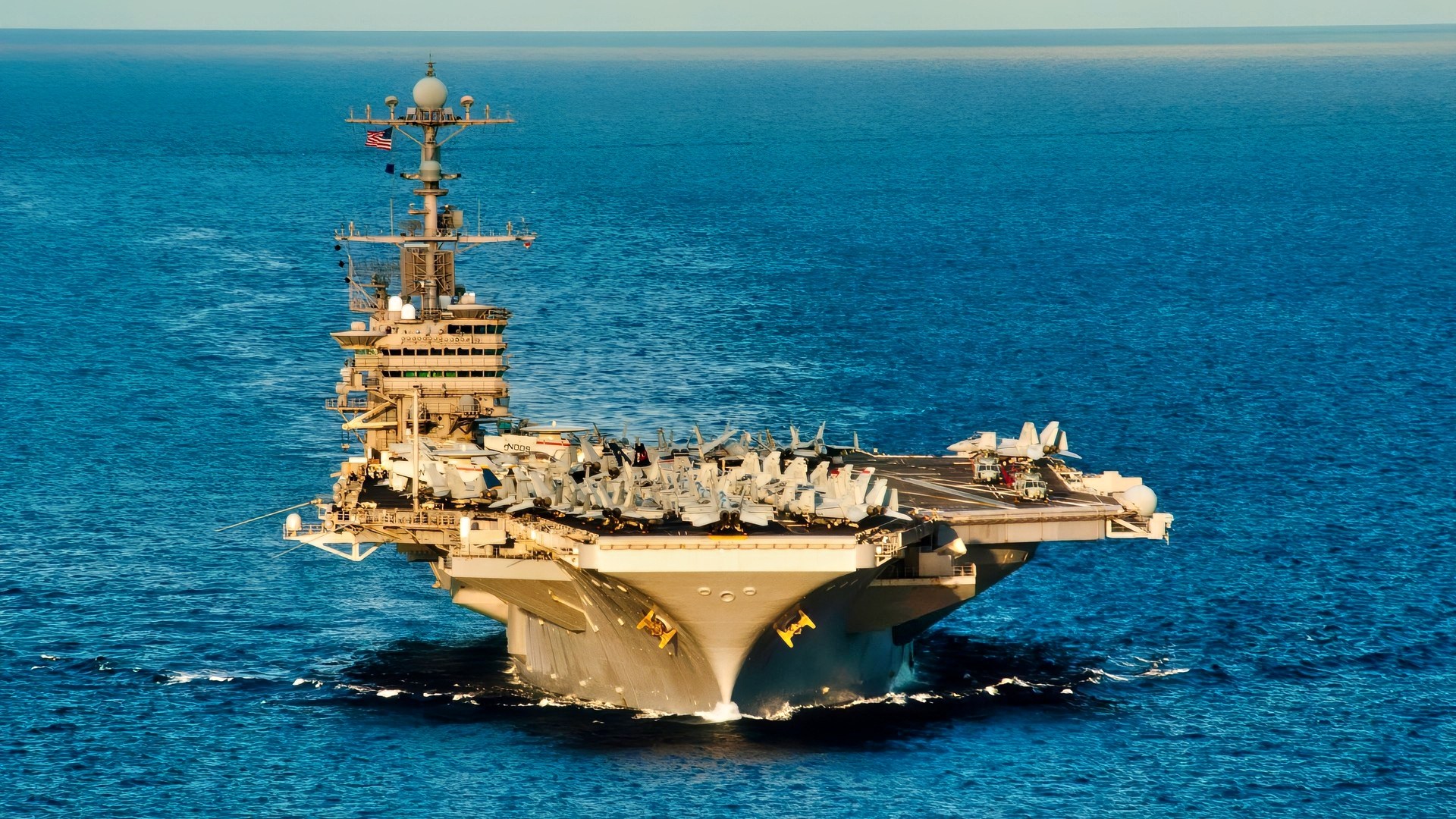
If you ask Washington, the Strait of Hormuz is open. U.S. naval forces are offering transit support to commercial vessels and monitoring Iranian threats, striking coastal systems that could be used against shipping.
These things are technically true, but traffic data also shows that the strait remains effectively closed, with shipowners and crews hesitant to move millions of dollars’ worth of cargo through an active conflict zone.
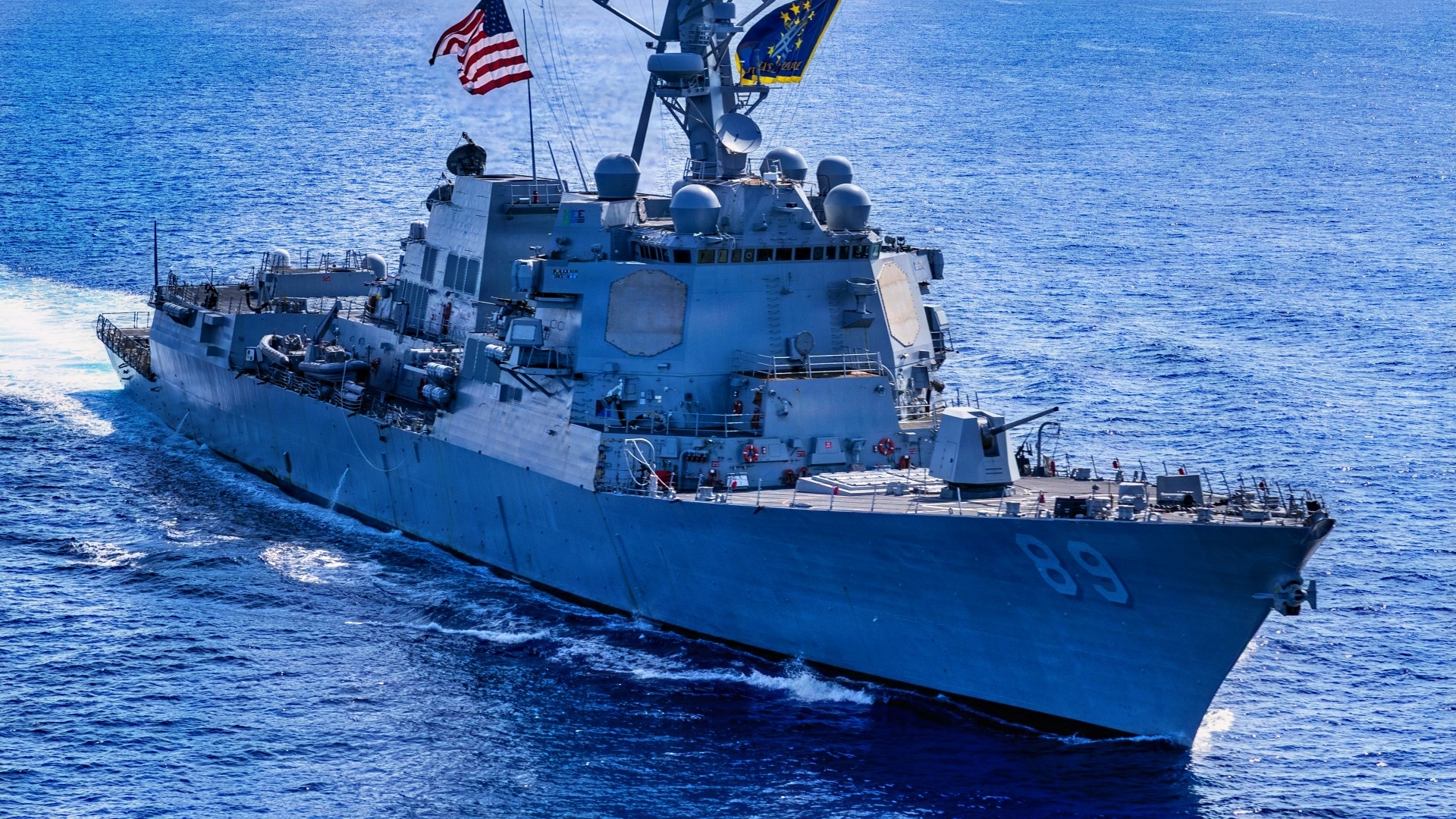
U.S. Navy Arleigh Burke-class guided-missile destroyer USS Mustin (DDG 89) steams in the Indian Ocean, July 2, 2026. Mustin is forward-deployed and assigned to Destroyer Squadron (DESRON) 15, the Navy’s largest DESRON and U.S. 7th Fleet’s principal surface force. U.S. 7th Fleet, the Navy’s largest forward-deployed numbered fleet, routinely interacts and operates with allies and partners in preserving a free and open Indo-Pacific. (U.S. Navy photo by Mass Communication Specialist 2nd Class Timothy Dimal)
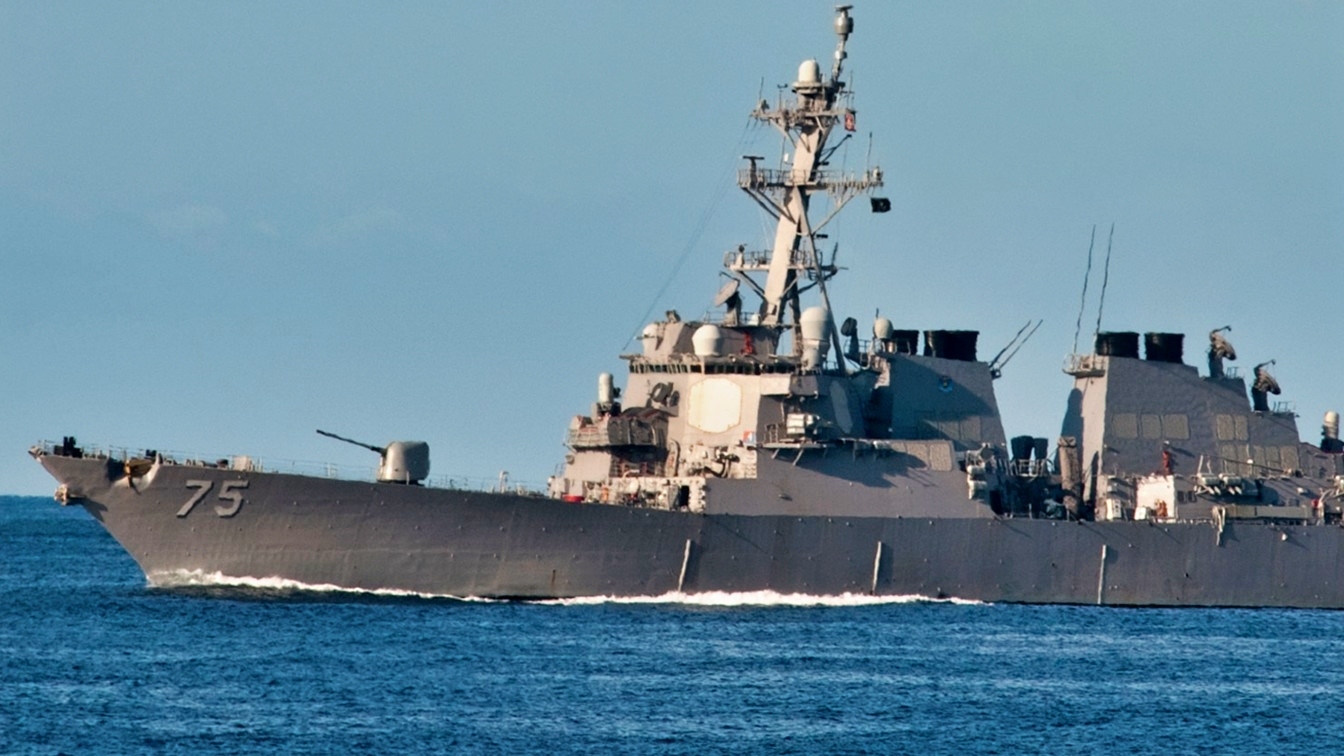
Arleigh Burke Class guided-missile destroyer USS Donald Cook is underway for a scheduled deployment in the U.S. Navy’s 5th and 6th fleet areas of responsibility. Donald Cook departed Naval Station Norfolk Monday, September 19th. (U.S. Navy photo by Petty Officer 3rd Class Scott Pittman)
There remains a risk to life, to the vessels, and to the cargoes – and while the U.S. is guaranteeing safety as ships pass, those promises have been made before. And Iran still attacked commercial vessels anyway.
Kpler recorded only eight ship crossings on July 16, down from 15 the previous day, and the lowest daily total in three weeks.
Some ships even reportedly used the northern route controlled by Iran rather than the U.S.-backed route closer to Oman, likely to avoid Iranian strikes on ships passing through a shipping lane that Tehran doesn’t recognize.
And now, Yemen’s Houthis are threatening Saudi shipping around Bab el-Mandeb, potentially placing the two main maritime outlets for the Middle East under pressure simultaneously.
The news is disastrous for President Donald Trump, and indeed for the global economy – and yet, the latter is still functioning, with refineries remaining supplied and crude prices still below the most alarming wartime predictions.
Hormuz Is Open, But Confidence Has Collapsed
U.S. Central Command (CENTCOM) has publicly insisted that the Strait of Hormuz remains open despite the ongoing – and escalating – strikes in the region.
In a July 12 statement, CENTCOM promised safe passage to all vessels lawfully transiting the waterway, which excludes ships coming to and from Iranian ports.
“The Strait of Hormuz is open to all vessels seeking to lawfully transit the international waterway.
U.S. forces are positioned and prepared to ensure that freedom of navigation remains available despite unwarranted Iranian aggression, harassment, threats, and arbitrary declarations.
Iran does not control the strait. Traffic is flowing,” the statement promises.
The assurances reflect what the U.S. military can, in theory, do: escort merchant vessels and provide missile warnings, monitor Iranian boats and drones, and attempt to keep designated shipping routes clear.
The U.S. cannot, however, compel commercial operators to use them if they believe the risk of being struck by an Iranian (or proxy) projectile is too great.
In order for a tanker to transit the Strait of Hormuz, there must be agreement between the vessel’s owner, charterer, cargo owner, insurers, captain, and crew that the route is safe.
And even when the U.S. military considers passage to be possible, any of those parties can decide that the threat from Iranian missiles or even of being boarded by the U.S. as part of the ongoing blockade against Iran is too great.
The traffic data proves that this reluctance exists right now. Gulf crude and condensate exports recovered to approximately 12 million barrels per day in early July, according to Kpler, after Hormuz briefly reopened in June.
However, that remained 32% below February’s prewar peak of 17.6 million barrels per day, and traffic began falling again after fighting resumed.
It goes to show that Iran does not need to sink every tanker or physically seal the strait to disrupt global oil supply and pressure Washington to make concessions and end the war.
In fact, Iran can take a heavy beating every single night, losing new nuclear power stations and critical military infrastructure – and it can still exert power over the strait.
Something Has to Give
Washington and its partners, aware of how much power Iran truly has over the global oil market, have so far prevented the regime’s leverage from causing a full-scale energy crisis.
International Energy Agency (IEA) members have released hundreds of millions of barrels of oil from emergency reserves, and the United States is also producing record volumes of crude.
Saudi Arabia also began redirecting exports through its East-West Pipeline to Yanbu, and refiners are drawing on commercial inventories to keep supply moving. Those measures, and more, are why oil is still moving and why prices remain below the most extreme forecasts.
But every single one of these buffers is finite. Strategic reserves will eventually become depleted, and in fact, they cannot be fully emptied.
Inventories must also eventually be replenished. What’s more, Saudi Arabia’s alternative route can only move a fraction of the oil that normally passes through the Strait of Hormuz, and is now under threat from further disruption by Yemen’s Houthis.
Sooner or later, something has to give. One possibility is that Washington will continue to escalate until Iran’s military and nuclear capabilities are so comprehensively destroyed that Tehran can no longer sustain the pressure.
That seems difficult, however, because Iran needs very few surviving missiles, drones, mines, or support from proxy forces to keep commercial operators scared of transiting the Strait of Hormuz.
Perhaps more plausible is another negotiated settlement.
Once Washington believes it has destroyed enough infrastructure to delay Iran’s recovery for years, the benefits of concessions may outweigh the costs.
That delay could also buy time to expand new pipelines and export routes to reduce the world’s dependence on Hormuz before Iran can rebuild.
About the Author: Jack Buckby
Jack Buckby is a British researcher and analyst specializing in defense and national security, based in New York. His work focuses on military capability, procurement, and strategic competition, producing and editing analysis for policy and defense audiences. He brings extensive editorial experience, with a career output spanning over 1,000 articles at 19FortyFive and National Security Journal, and has previously authored books and papers on extremism and deradicalization.


