


Key Points and Summary – With a second B-21 now flying, the Air Force and Northrop Grumman are leaning hard into cost control and production discipline to avoid F-35-style overruns.
-The Raider’s reported ~$692 million unit cost—about one-third of a B-2—reflects bulk buys, supply-chain planning, and an open, modular architecture that speeds upgrades without re-engineering. Building “at least 100” aircraft (and likely more) lowers unit costs further while fielding mass for great-power conflict.

The B-21 Raider was unveiled to the public at a ceremony December 2, 2022.
-The B-21 is also designed as a flying command-and-control node able to manage onboard AI, rapid software drops, new weapons, and teams of drones. Program morale—and Northrop absorbing early losses—bolsters production momentum.
As the second B-21 Raider stealth bomber enters the air war scene, and many anticipate the Pentagon buying more than the previously planned 100 aircraft, observers are likely sharpening their focus on costs, production efficiency, and manufacturing specifics.
The B-21 Raider: Cost Makes This Bomber Special
Northrop Grumman and the US Air Force have for years been sharply focused on taking measures to prevent cost overruns, streamline maintenance and modernization, and ensure a steady, reliable, and highly efficient production line for the Raider.
Interestingly, the B-21 effort has overall received favorable reviews for its manufacturing success and cost controls.
The Northrop and Air Force goal has been centered on ensuring there are no “F-35-like” cost overruns, production delays, and maintenance challenges for many years.
Overall, the effort has been successful, as numerous measures were taken to control costs years ago.
What Does the Raider Cost?
A single B-21 is reported to cost roughly $692 million, nearly “one-third” of a $2 billion B-2.

The B-21 Raider was unveiled to the public at a ceremony December 2, 2022 in
Palmdale, Calif. Designed to operate in tomorrow’s high-end threat environment, the B-21 will play a critical role in ensuring America’s enduring airpower capability. (U.S. Air Force photo)
This may seem somewhat striking given that the B-21 is much more advanced than a B-2 Spirit stealth bomber, yet it is the result of years of planning, supply-chain management, and “modular” or “open” technical standards.
Years ago, when going through early subcomponent prototyping and conceptual work on the B-21, senior Air Force leaders emphasized “modularity,” a term used to explain that open, common IP protocol technical standards were woven into the aircraft’s design since its inception for the purpose of ensuring commonality across the fleet and ensuring seamless, rapid modernization.
Common Standards & Modularity
With common standards, new technologies, sensors, weapons, and computing can be quickly accommodated and integrated successfully without having to “re-engineer” portions of the aircraft.
Since its inception, the B-21 Raider has been built with the intent to align with this kind of modular production and modernization approach.
The intent is to ensure that, years from now, the arrival of a previously unknown new weapon can be quickly and seamlessly added to the aircraft.
This is also of great significance in the realm of computing and AI, because new algorithms can be engineered to make massive performance improvements at lightning speed.
In a simple sense, costs are lowered by sheer volume, meaning the cost-per aircraft is lowered as more are built.
More B-21 Raiders Beyond 100?
There are only 19 operational B-2s in existence as the production effort was stopped years ago, yet the Pentagon plans for at least 100 or more B-21s.
This means that the acquisition and integration of standard parts and long-lead items can be streamlined, purchased in bulk, and applied across the entire fleet.
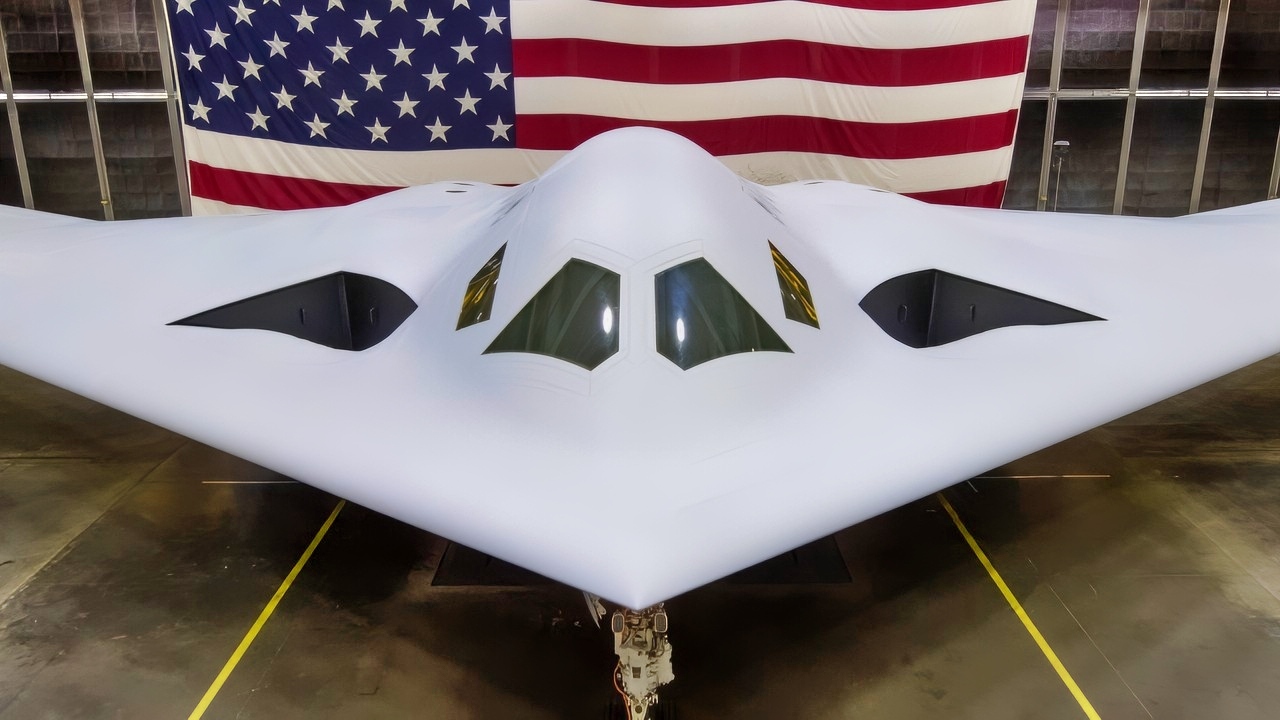
The B-21 Raider was unveiled to the public at a ceremony Dec. 2, 2022 in Palmdale, Calif. The B-21 will provide survivable, long-range, penetrating strike capabilities to deter aggression and strategic attacks against the United States, allies, and partners. (U.S. Air Force photo)
Should the Pentagon seek to expand its anticipated B-21 fleet size well beyond 100 airframes, something considered highly likely given today’s threat environment, costs will be lower further.
Additionally, Northrop Grumman took specific measures to mitigate cost overruns and complications early in the program and has reportedly agreed to absorb some initial losses to ensure a high-performing production program.
The Morale Factor on This Stealth Bomber
There is yet another variable likely contributing to the production success of the B-21 thus far, and it is far less palpable or observable to the eye than the clearly visible process of bending metal for hardware, stealth exterior, and weapons systems…. “Morale.”
Northrop Grumman and its industry partners, with strong collaborative support from the Pentagon, have accurately prioritized and fast-tracked the B-21, understanding that “mass matters” alongside the emergence of exquisite high-performance technologies.
Therefore, a large number of B-21s need to be built to ensure the kinds of large, wide-spanning theater formations deemed necessary for a potential large-scale, great-power conflict.
This is also particularly true given that the B-21 is also expected to operate as a “flying command and control” sensor node in the sky in position to gather, organize, analyze, and transmit critical time-sensitive combat data.
As part of this, the B-21 will also operate groups of drones from the cockpit.
About the Author: Kris Osborn, Defense Expert
Kris Osborn is the President of Warrior Maven – Center for Military Modernization. Osborn previously served at the Pentagon as a highly qualified expert in the Office of the Assistant Secretary of the Army—Acquisition, Logistics & Technology. Osborn has also worked as an anchor and on-air military specialist at national TV networks. He has appeared as a guest military expert on Fox News, MSNBC, The Military Channel, and The History Channel. He also has a Masters Degree in Comparative Literature from Columbia University.
More Military
The B-1B Lancer Bomber Can Come Back ‘From the Dead’ Thanks to the Boneyard
F-15EX Eagle II vs. China Brand New J-35 Fighter: Who Wins a Fight?
The B-21 Raider Has a New Enemy You Likely Never Heard Of
The Navy’s Biggest Nightmare: The Aircraft Carrier Is Obsolete


Doug Butler
September 14, 2025 at 8:48 pm
It’s small. So can it have the range to be a true strategic bomber ?