


Key Points and Summary – The F-111B set out to solve the Navy’s hardest problem: kill missile-armed bombers far from the carrier.
-It brought range, a big radar, and Phoenix missiles—on paper, the right tools.
-At sea, the package stumbled: rising weight, hot approach speeds, sluggish throttle response, and awkward deck handling eroded safety and confidence.
-The Navy kept what worked—the AWG-9/Phoenix system, two-crew intercept tactics, even swing-wing insights—and asked Grumman to build a fighter that fit the boat.
-The result was the F-14 Tomcat. The F-111B failed as a carrier fighter, but it won the argument that shaped U.S. naval air defense for decades.
How The F-111B Won Some Arguments, Lost The One That Mattered, And Shaped Naval Aviation
The F-111B is an easy punchline: a big Air Force fighter awkwardly shoehorned for carriers, canceled in public, remembered as a cautionary tale.
That’s not wrong, but it’s not the whole story either. If you care about how the Navy thinks, the F-111B is a revealing chapter—because it began with reasonable goals, demonstrated some genuinely strong attributes, failed for equally sound reasons, and still handed the fleet the radar, missiles, and tactics that defined the next generation. The Navy didn’t simply say “no.” It said, “not like this,” and then built a better answer around the same mission.
What follows is the long view: why the Navy considered the airplane at all, what Boeing and General Dynamics (and later Grumman) actually put on the ship, what the jet did well, where it came up short at sea, why the Navy pivoted, and what it learned that still matters.
Why The Navy Considered A Common Fighter In The First Place
Start with the mission that drove everything: kill incoming bombers before they launch anti-ship missiles. In the 1960s, Soviet air regiments practicing stand-off missile raids were the nightmare scenario for a carrier strike group. The outer air battle demanded range, loiter, a big radar, and a deep magazine of long-reach missiles—qualities that didn’t fit neatly into the single-engine, short-leg fighters aboard the decks then.
At the same time, Secretary of Defense Robert McNamara was determined to rationalize procurement and stamp out parochial designs. His “TFX” (Tactical Fighter Experimental) idea—one basic aircraft family to serve both the Air Force and the Navy—was harsh medicine sweetened by promises of cost savings and logistical commonality. On paper, a swing-wing jet shared across services, with variants tailored at the margins, looked like hard-headed modernization.
The F-111A would be the Air Force’s strike/penetration airplane. The F-111B would be the Navy’s long-range fleet air-defense fighter, carrying a huge radar and the new Phoenix missile to swat bombers a hundred miles out.
So the Navy didn’t start with romance. It started with a mission and a mandate.
What The F-111B Was Trying To Be
The airplane that materialized carried a lot of logic. Variable-sweep wings offered the promise of low-speed lift (for traps and cat shots) and high-speed dash (for the outer screen). A two-crew cockpit with a big radar optimized the division of labor for long-range intercepts in lousy weather. The side-by-side seating—a polarizing choice—made crew coordination easier and simplified some avionics integration. A deep fuel volume meant the jet could stay on station longer and meet tankers less.
Most important, the F-111B was designed as a weapons system, not a pointy-nose with missiles hung on as an afterthought. It was to pair the AN/AWG-9 radar with the AIM-54 Phoenix missile: a long-reach, multi-target intercept package able to detect and engage multiple bombers far outside the carrier’s inner defenses. That combination—big radar, big missiles, long reach—was the heart of the outer-air-battle concept, and it’s why some very smart Navy officers tried hard to make the F-111B work.
The Parts That Actually Worked
It’s easy to forget, because the program’s obituary is so famous, but the F-111B had real virtues—many proved in flight test.
It could carry the sensors and weapons that mattered. The radar-missile combination was the genuine article, and the airframe’s volume made it plausible to haul a serious load of Phoenix rounds with the electrical and cooling margins to run the radar for long periods. That’s not trivial on a pitching deck in November.
It offered reach and endurance. In the fleet’s mental math, every minute you aren’t hunting on the outer ring is a minute the strike group is vulnerable. The F-111B’s internal fuel and wing planform promised station time that would have been hard to get from lighter, hotter-rodded fighters of the day without leaning constantly on tankers.
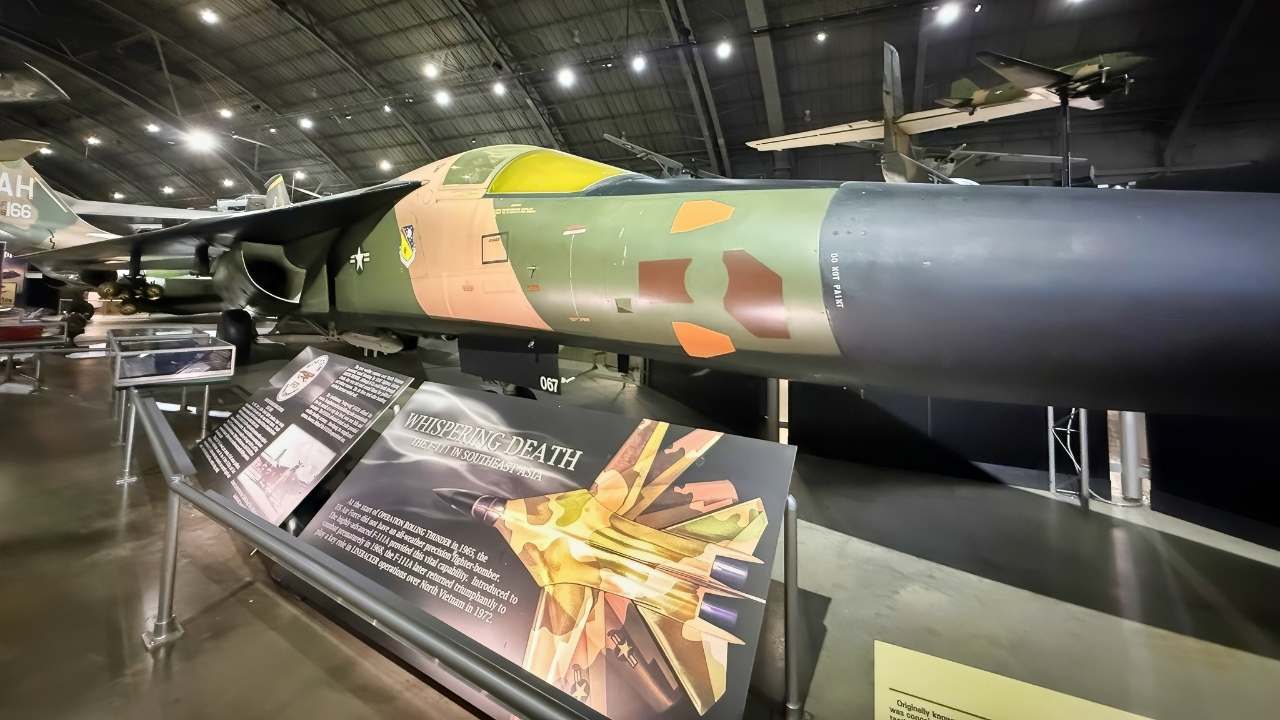
USAF Museum F-111 National Security Journal New Photo.
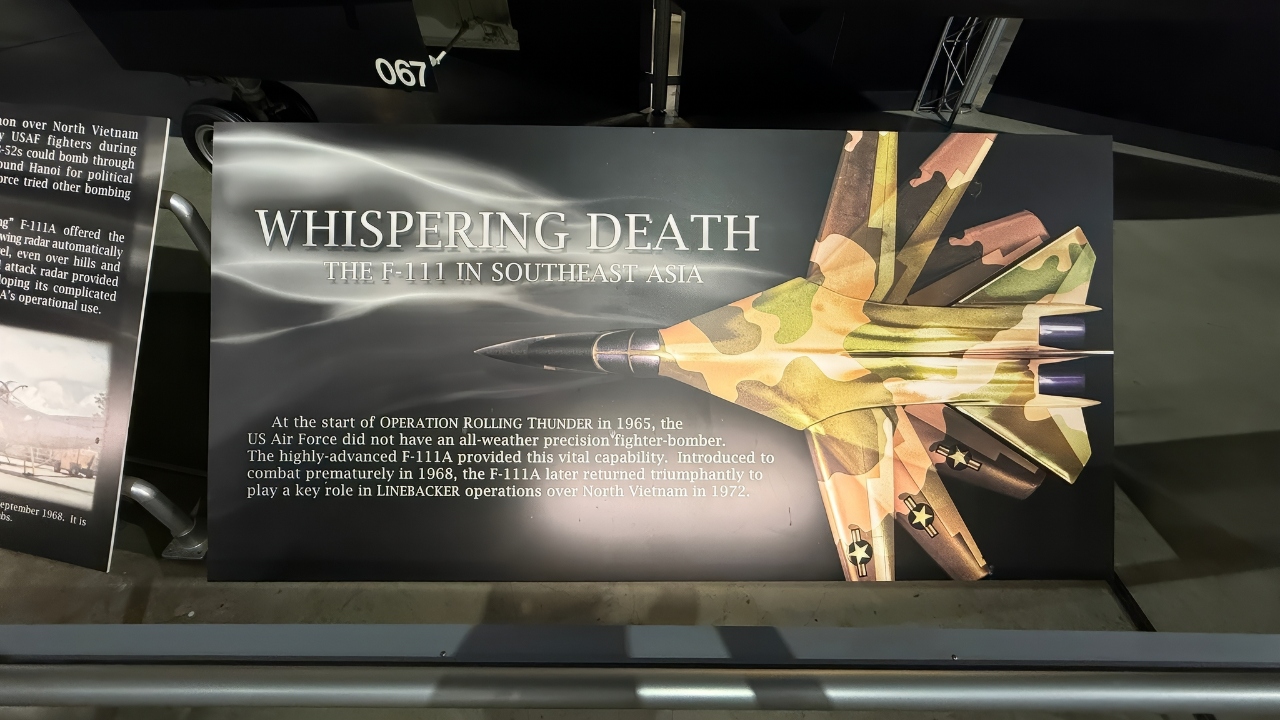
F-111 Photo from USAF Museum in Dayton. Image Credit: National Security Journal.
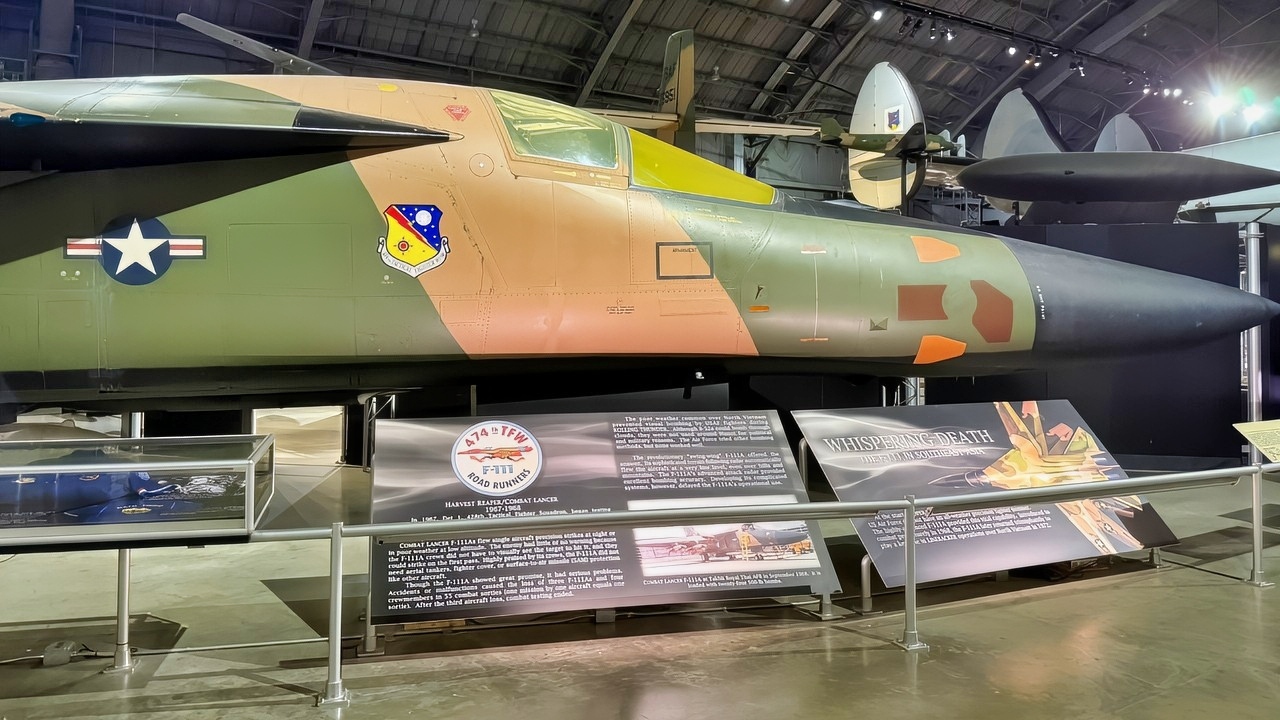
F-111 In USAF Museum July 2025 NSJ Image Taken by Harry J. Kazianis.
It taught the Navy about variable geometry at sea. The swing-wing wasn’t a gimmick; it was a serious attempt to balance two regimes (groove and dash) that are hard to make friends on a fixed wing. The learning—structural, aeroelastic, maintenance—would pay off in the next airplane.
It was built for the long intercept. The side-by-side crew station, the radar scope presentation, the cockpit workflow—these were optimized for a chess match at 100 nautical miles, not a phone-booth knife fight. That clarity of purpose was a feature, not a bug.
You can feel why some test pilots and tacticians were willing to wrestle the compromises into shape. On range, sensors, and weapons, the airplane’s basic instincts were right.
Where The Airframe Came Up Short At Sea
The ocean is a brutally honest reviewer, and the boat adds constraints that don’t care about raw potential.
Weight is a tyrant on a carrier. The F-111B kept gaining it. Even with a shortened nose and other navalization changes, test jets showed up heavier than planned, with approach speeds higher than the LSO community could bless with a clear conscience. High on-speed approach plus limited engine response (see below) equals thin margins when you’re staring at the ball in bad weather.
The engine/airframe combo wasn’t forgiving in the groove. Early TF30 engines were not celebrated for crisp throttle response at low speeds, and spool-up lag is exactly what you don’t want in a last-second wave-off. Add the big, low-mounted inlet geometry and the variable-sweep wing’s behavior at high lift, and you get a package that demanded a lot from the pilot exactly when the ship is demanding even more.
Deck handling and hangar life mattered. The jet’s size and stance were never ideal for carrier elevators, hangar spotting, and the daily ballet around tractors and tow bars. Every inch that sticks out, every foot of wheelbase, is a debt you pay in bruised knuckles and schedule friction. The F-111B wasn’t grotesquely oversize, but it made the choreography harder than it needed to be.
It didn’t promise the agility the fleet wanted in a multi-role future. Fleet air defense was the headline mission, but the Navy knew any fighter that comes to sea will end up doing more: escort, barrier CAP, quick intercepts against nimble targets, and, eventually, strike. The F-111B’s kinematics—especially at high AoA and in the transonic regime—did not persuade the fighter community that it would be a happy dogfighter if the outer battle collapsed into a merge.
None of these are minor quibbles. They’re the daily bread of a carrier air wing. When enough of them stack up and the ship still has alternatives, cancellation stops looking like a scandal and starts looking like seamanship.
The Pivot To A Different Answer
If you want to see how seriously the Navy took the F-111B’s mission—as opposed to the airframe—watch what it did next. It handed the same radar/missile centerpiece to a company that understood the boat in its bones and said: build me a fighter that does this job first but doesn’t punish me on deck or in a close-in fight.
Grumman’s answer was the F-14 Tomcat. It kept the variable-sweep wing but tailored the planform, lifting bodies, and glove geometry for carrier life—gentler approaches, better low-speed manners, and quick response. It retained the AWG-9/AIM-54 pairing but packaged it in an airframe that also had the kinematic margin to tangle with nimble threats and the structural growth to become a serious strike platform later. It gave the fleet a twin-engine safety net and crew concepts that matched Navy culture.
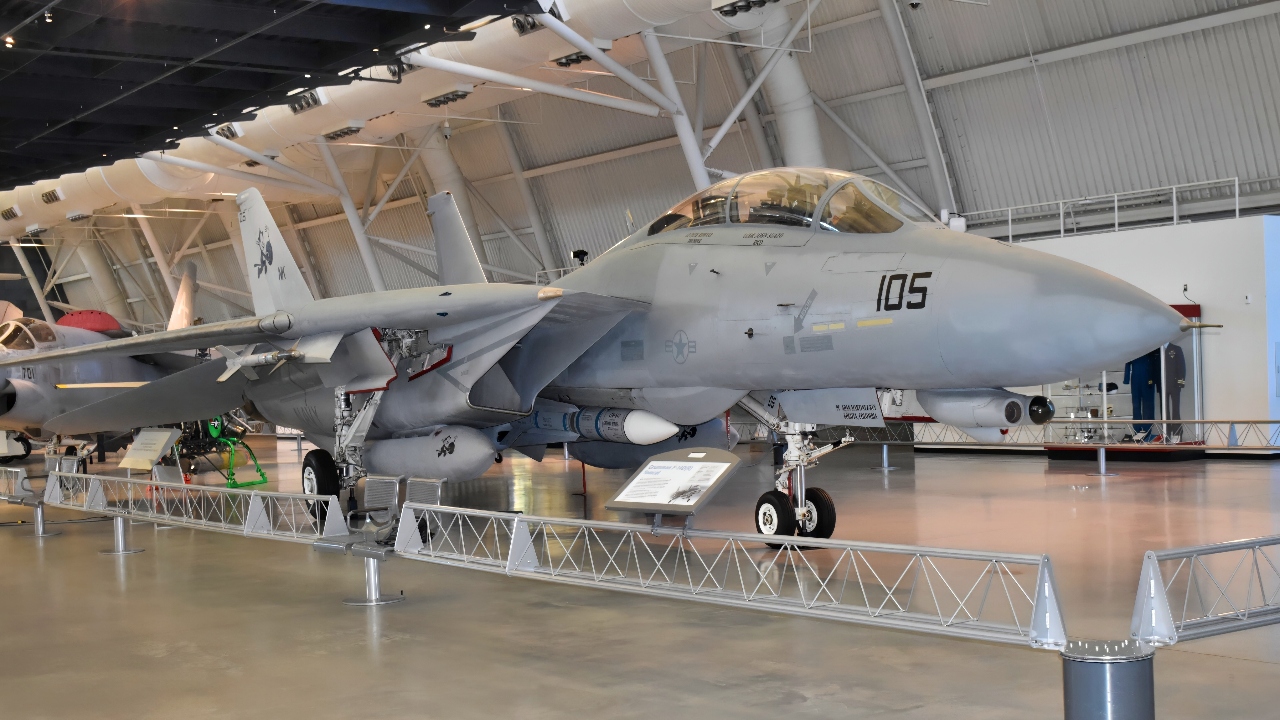
The Mighty F-14 Tomcat. Image Credit: National Security Journal. Image taken by Brent M. Eastwood.
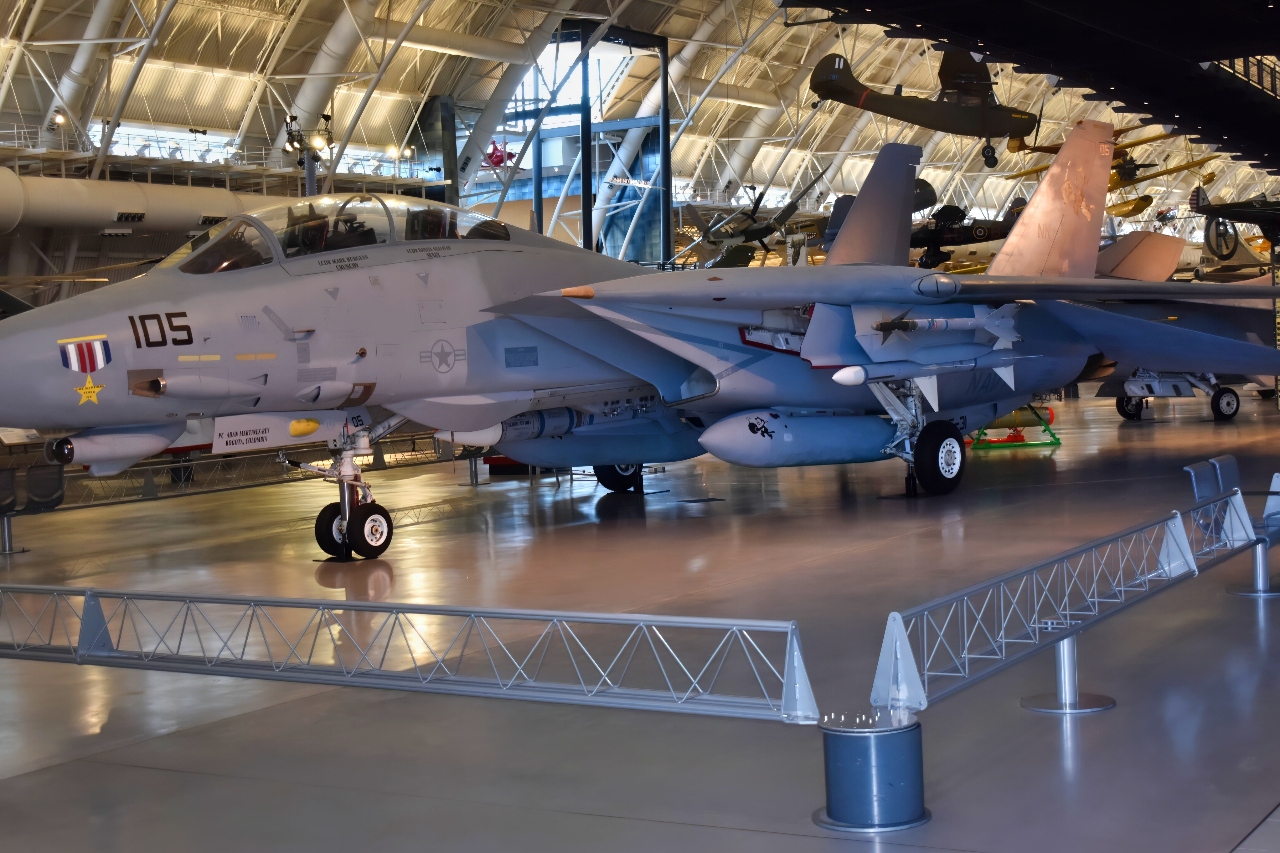
F-14D Tomcat. Image Taken By National Security Journal.
In short: same mission, same weapons brain, different body. The F-14 is the best possible apology for the F-111B’s sins: “We heard you. Here’s the airplane that does the thing you needed, without the things you hated.”
What The Navy Kept—And What It Threw Away
The Navy did not burn the F-111B to the ground and salt the earth. It kept the pieces that worked and were too good to waste.
It kept the radar/missile system—which matured into the Tomcat’s signature trick and a calling card for the outer air battle for decades. It kept the two-crew division of labor for long-range intercepts and the cockpit ergonomics that evolved from the F-111B’s layout. It kept the insight that range, loiter, and missile load are not optional accessories in a fleet-defense fighter—they’re the core. It also kept a lot of hard-earned engineering data on swing-wing behavior, structural loads, and carrier suitability that paid off in the Tomcat’s successful sea life.
What it threw away were the compromises forced by trying to be “common” with a land-based strike jet: the weight spiral that came with shared assumptions, the deck-unfriendly geometry choices, and any hope that a ship could be happy forever with a jet designed first for somewhere else.
Why The F-111B Failed—Without The Drama
There’s a melodramatic version of this story that reduces the program to interservice politics. Politics mattered. But the simplest way to say it is this:
The F-111B solved the right problem in the wrong package at the wrong time.
The right problem: long-range fleet air defense against missile-armed bombers. The wrong package: a heavy, evolving airframe whose approach speeds, throttle response, and deck manners were not going to make the ship happy without a degree of redesign that defeated the point of “commonality.” The wrong time: a moment when Congress and the Pentagon had little patience left for cost growth or for designs that did not match their glossy promises.
The truth that test pilots and air bosses recognized was more pragmatic than ideological. You can force a square peg through a round hole… or you can ask a shipwright to cut a round peg that fits the hole you already have. The Navy chose the latter.
What The Airplane Got Right (And Doesn’t Get Credit For)
It’s worth saying plainly: the F-111B wasn’t dumb. It was, in many respects, ahead of its time.
It validated the long-range, multi-target intercept concept that became central to carrier defense. It proved that a large, power-hungry radar and complex missile interface could live happily on a carrier fighter, with cooling and electrical margins to match. It demonstrated that variable geometry was not just “an Air Force thing,” and that the sea could live with moving wings if the rest of the airplane respected the deck. It even proved that side-by-side crew stations—while unpopular among purists—could work for the actual mission.
Those successes are often submerged beneath the memeable parts of the story. They shouldn’t be. The fleet inherited the good stuff and made it doctrine.
Lessons The Navy Still Teaches From F-111B
There are a half-dozen durable lessons the Navy carries forward every time someone proposes a “common” platform or shows up with a glamorous PowerPoint.
Design To The Boat From Day One. Carrier suitability is not a checklist you satisfy at the end. It is geometry, weight discipline, throttle response, and deck choreography designed-in at the sketch-on-a-napkin stage. If you don’t do that, the groove will bust you in front of your friends.
Beware Of Commonality That Ignores Divergence. Jointness is not a religion. It’s a logistics tool. If primary missions diverge—Air Force deep strike vs. Navy fleet defense—“one airframe to rule them all” quickly becomes “two sets of compromises glued together.” Sometimes the efficient choice is separate airframes with shared subsystems, not a shared airframe that makes both sides sad.
Keep What Works, Ditch What Doesn’t. The Navy’s pivot from F-111B to F-14 is an object lesson in salvage. Programs can fail and still succeed if you carry the right technology forward. The radar/missile system survived and defined a generation.

F-14D Tomcat Onboard USS Intrepid in NYC. Image Taken by National Security Journal on 9/19/2025.
Test Reveals Character. A program can win the PowerPoint and lose the groove. The approach speeds, spool-up behavior, and deck handling that doomed the F-111B were not secrets—they were traits exposed by disciplined testing and honest reporting, which is exactly how the system should work.
Mission Clarity Beats Mythology. The F-111B wasn’t killed by dogfighters who worshipped turn rate. It was killed by sailors who had to launch and recover the thing at night, in weather, for months on end, while still winning the outer air battle. The next airplane did those things better.
Acquisition Needs Humility. Bold mandates can sharpen pencils, but physics and seamanship get a vote. Good leadership recognizes when a concept’s strongest parts deserve a second life in a different body.
The Fair Verdict
If you judge the F-111B as a finished product, the Navy’s decision reads as straight-line logic: too heavy, too hot on approach, too compromised for the deck cycles a strike group lives on. If you judge it as a chapter in a longer story, it looks better: a serious attempt to industrialize the right weapons system and mission; a prototype that taught the sea service exactly what it could live with and what it couldn’t; a program whose failure gave birth to one of the most successful carrier fighters in history and locked in the outer-air-battle toolkit for a generation.
In that sense, the F-111B did not simply fail. It helped the Navy get to “yes”—just not to itself. The deck, as always, had the final word.
About the Author: Harry J. Kazianis
Harry J. Kazianis (@Grecianformula) is Editor-In-Chief and President of National Security Journal. He was the former Senior Director of National Security Affairs at the Center for the National Interest (CFTNI), a foreign policy think tank founded by Richard Nixon based in Washington, DC. Harry has over a decade of experience in think tanks and national security publishing. His ideas have been published in the NY Times, The Washington Post, The Wall Street Journal, CNN, and many other outlets worldwide. He has held positions at CSIS, the Heritage Foundation, the University of Nottingham, and several other institutions related to national security research and studies. He is the former Executive Editor of the National Interest and the Diplomat. He holds a Master’s degree focusing on international affairs from Harvard University.
More Miliary
The U.S. Navy’s Constellation-Class Crisis Boiled Down to 4 Words
The F-20 Tigershark Light Fighter Boiled Down to 4 Words
China Claims New J-35 Stealth Fighter Is ‘Invisible’
The 5 Greatest U.S. Navy Aircraft Carriers Of All Time
The Navy’s New Ford-Class Aircraft Carriers Can’t Hide All The Problems Anymore


Weaponhead
October 12, 2025 at 10:47 am
NAVAIR celebrated the cancelation by throwing the big model of the F-111B off of the Woodrow Wilson Bridge.
The lesson is you can easily rephrase a carrier aircraft for land base use you really can’t go the other way without a lot of regrets.
The F-14 was a great aircraft and history has shown how bad the F-111B path was. The only thing haunting the Navy about it was they stayed with it too long and should have never gone down that path.