

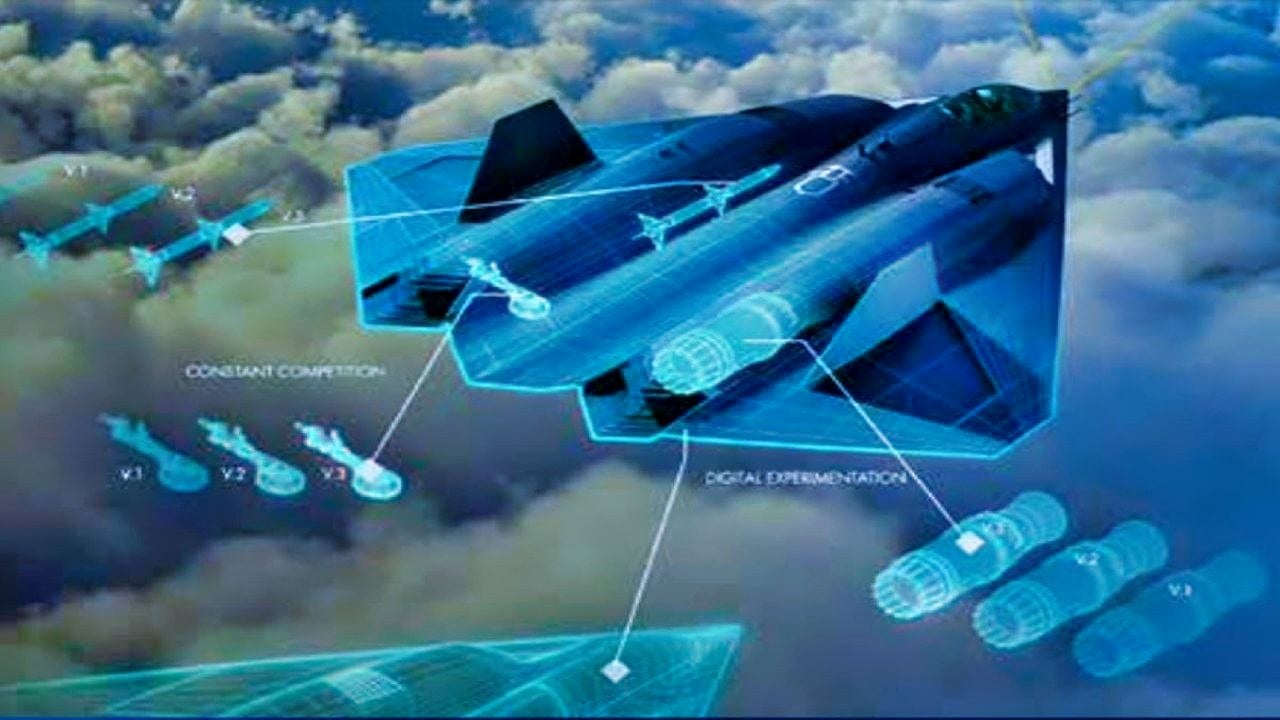
In 1999, Lockheed Martin’s Skunk Works designed the X-44 Manta — a “Multi-Axis, No Tail Aircraft” built on the F-22 Raptor fuselage with a large delta wing and advanced thrust-vectoring nozzles intended to replace the traditional tailplane for flight control. The program was canceled around 2000 before any aircraft was built, and the X-44 Manta never flew. But more than 25 years later, U.S. Air Force renderings of the new Boeing F-47 NGAD sixth-generation fighter — the eventual successor to the F-22 — show a tailless stealthy airframe that bears striking similarities to the X-44 Manta’s original concept art.
The X-44 Manta Could Have Been A Game-Changer for the U.S. Air Force

X-44 MANTA concept art.
The X-44 Manta was a concept for a military aircraft that ultimately never came into being. Developed in 1999, the Manta, or “Multi-Axis, No Tail Aircraft,” stayed on Lockheed Martin’s drawing board after being developed as a potential successor to the F-22 Raptor. If she had flown, she could have transformed the U.S. Air Force forever. And some now say the new F-47 NGAD looks just like it, at least, from what little art work we have to go by.
The Stealth Fighter That Never Flew
According to Military Factory, the idea for the Manta had its roots in the Air Force’s Advanced Tactical Fighter program, which the F-22 won in 2005, becoming the world’s first fifth-generation fighter. The design was described as “the base F-22 Raptor design, sans its tailplanes.”
According to Military Factory, the design was “a technology demonstrator to test the validity of controlling a combat fighter without traditional tailplanes being fitted.” It dated back to 1999 and was always seen as experimental. There was some interest from the Air Force and NASA, but not enough, according to Military Factory’s analysis—the project “seems to have died off” around the year 2000.
A July 1999 issue of Inside the Air Force looked at what was expected from the X-44 Manta. It “will be based on an F-22 fuselage and include a host of leap-ahead technologies that could one day be used to augment the Raptor or the Joint Strike Fighter as well as other future aircraft,” according to that analysis.
In 2003, Monographs in Aerospace History provided additional background on this experimental aircraft.
“The plan is to convert an early prototype Lockheed Martin F-22 Raptor with a large delta wing (similar to that proposed for the FB-22) and advanced thrust vectoring nozzles for flight control. Thrust vectoring—the ability to turn the jet exhaust—allows an aircraft to create forces with its engines similar to the forces created by aerodynamic surfaces such as flaps, rudders, and stabilators,” Monographs wrote. The entry, featuring a “speculative artist concept” of what it might have looked like, also offered a prediction about the future of the technology:
“The X-44 technology, combined with fluidic nozzles and supersonic-cruise aerodynamics, could lead to a generation of high-performance, very stealthy aircraft, with exceptionally high aerodynamic efficiency.”
Despite not moving forward, the X-44 Manta has had an enduring influence—and not only among military aircraft enthusiasts.
The X-44A Manta, Explained
Back in 2019, The War Zone reported on the X-44A, another proposed project from Lockheed Skunk Works that traced its origins to around 1999.
The X-44A was described by TWZ as a “relatively small, tailless, swept-wing drone.” Unlike the X-44 Manta, it was actually built—and even flew —in 2001.
TWZ noted that the naming convention was confusing. The two projects had similar names and were developed in a similar time period, yet they appeared unrelated.
“It is unclear at this time how Lockheed’s fat little flying-wing drone also ended up with the same X-44 designation, but there doesn’t seem to be any direct relation between the two programs,” the War Zone report said.
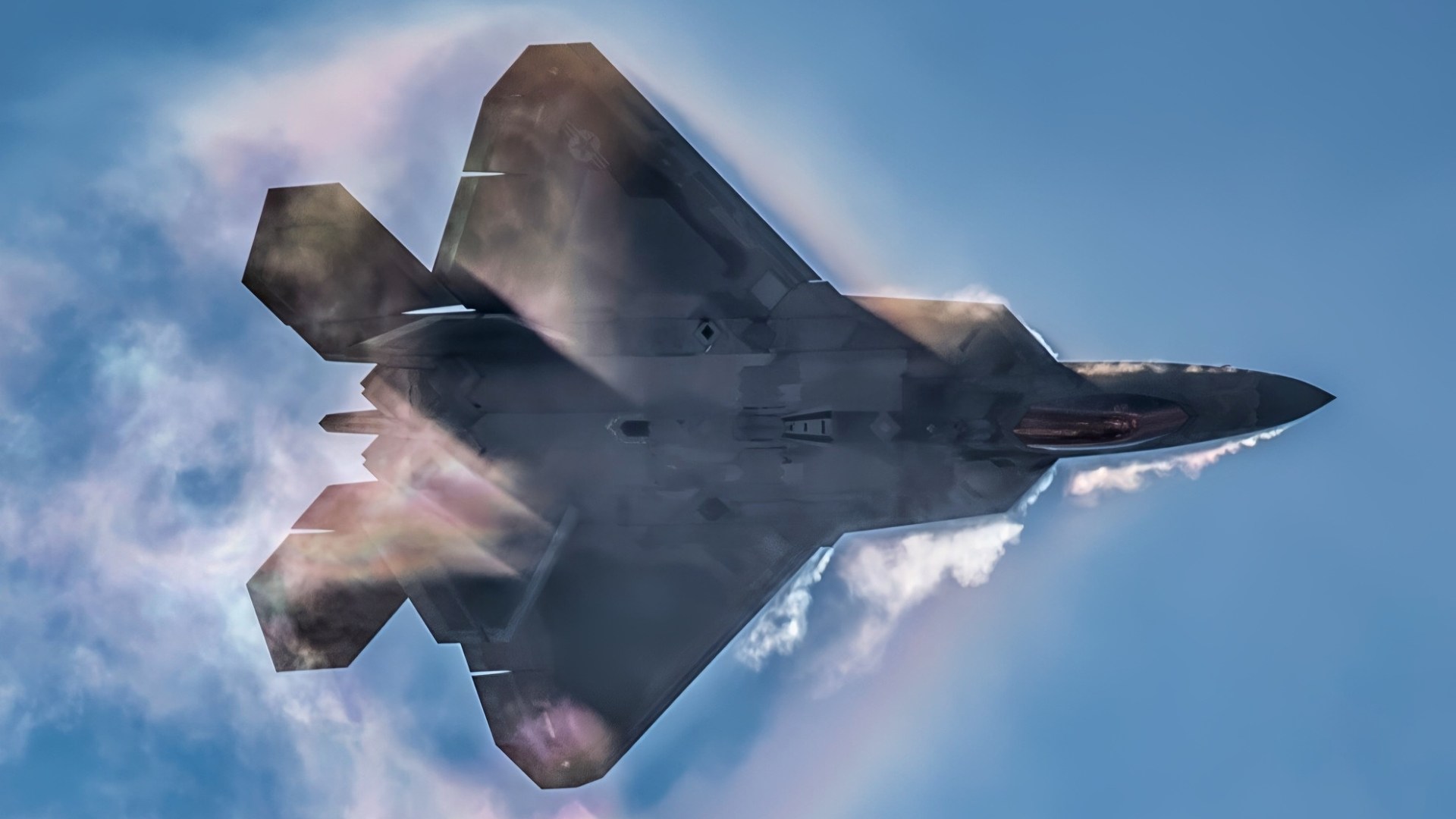
U.S. Air Force Maj. Josh ‘Cabo’ Gunderson, F-22 Raptor Demonstration Team commander, performs during an air show in Fort Worth, Texas, Oct. 17, 2020. The F-22’s raw power and thrust vectoring technology gives the aircraft super maneuverability in the air-to-air battlespace. (U.S. Air Force photo by 1st Lt. Sam Eckholm)

U.S. Air Force Maj. Joshua “Cabo” Gunderson, F-22 Raptor Demonstration Team commander and pilot, performs during the Orlando Air and Space Show at the Orlando Sanford International Airport, Florida, Oct. 30, 2022. The F-22A is a fifth-generation fighter incorporating fourth-generation technology, radical maneuvering capabilities, the ability to fly at supersonic speed without afterburners and unprecedented pilot situational awareness. (U.S. Air Force photo by Airman 1st Class Joshua Hastings)
That discovery is described as a “missing link,” and a reminder that “there is so much technology and history buried in the deeply classified ‘black’ world that we have yet to learn about.”
In 2020, the X-44A was put on display at the National Museum of the United States Air Force.
Did the MANTA Inspire the F-47 Design?
Some experts have noted that early designs and renderings of the F-47—the forthcoming Next-Generation Air Dominance jet—bear some similarities to the X-44 Manta, despite more than 25 years passing.
A Warrior Maven analysis published last October looked at those similarities.
“This kind of ultra stealth technology built into a high-speed maneuverable stealth fighter jet appears to be a major conceptual foundation of now emerging F-47 6th-gen aircraft,” Military Technology Editor Kris Osborn wrote for Warrior Maven.
“US Air Force’s renderings of the F-47 show tailless, full horizontal, stealthy airframes consistent with these initial conceptual visions of the X-44 MANTA,” Osborn added.
We don’t yet have a full picture of what the F-47 will look like, as it is still years away from taking off. Last month, in fact, one lawmaker said the F-47 likely won’t be available until the mid-2030s. The goal is for the jet’s first flight to take place in 2028.
The F-47 is seen as the successor to the F-22, although it’s being produced by Boeing, not by Lockheed.
“Although the project was canceled for budget reasons, its conceptual existence seems to have had a long-term impact,” Osborn wrote of the X-44 Manta.
That influence might have extended beyond the United States.

U.S. AIR FORCE ACADEMY, Colo. – Two F-22 Raptors perform a flyover and air demonstration during noon meal formation at the U.S. Air Force Academy in Colorado Springs, Colo., April 12, 2023. Events such as these aim to cultivate warrior ethos, a future-focused mindset, and supplement existing character, leadership, and officer development efforts with the cadets. (U.S Air Force Photo by Trevor Cokley)
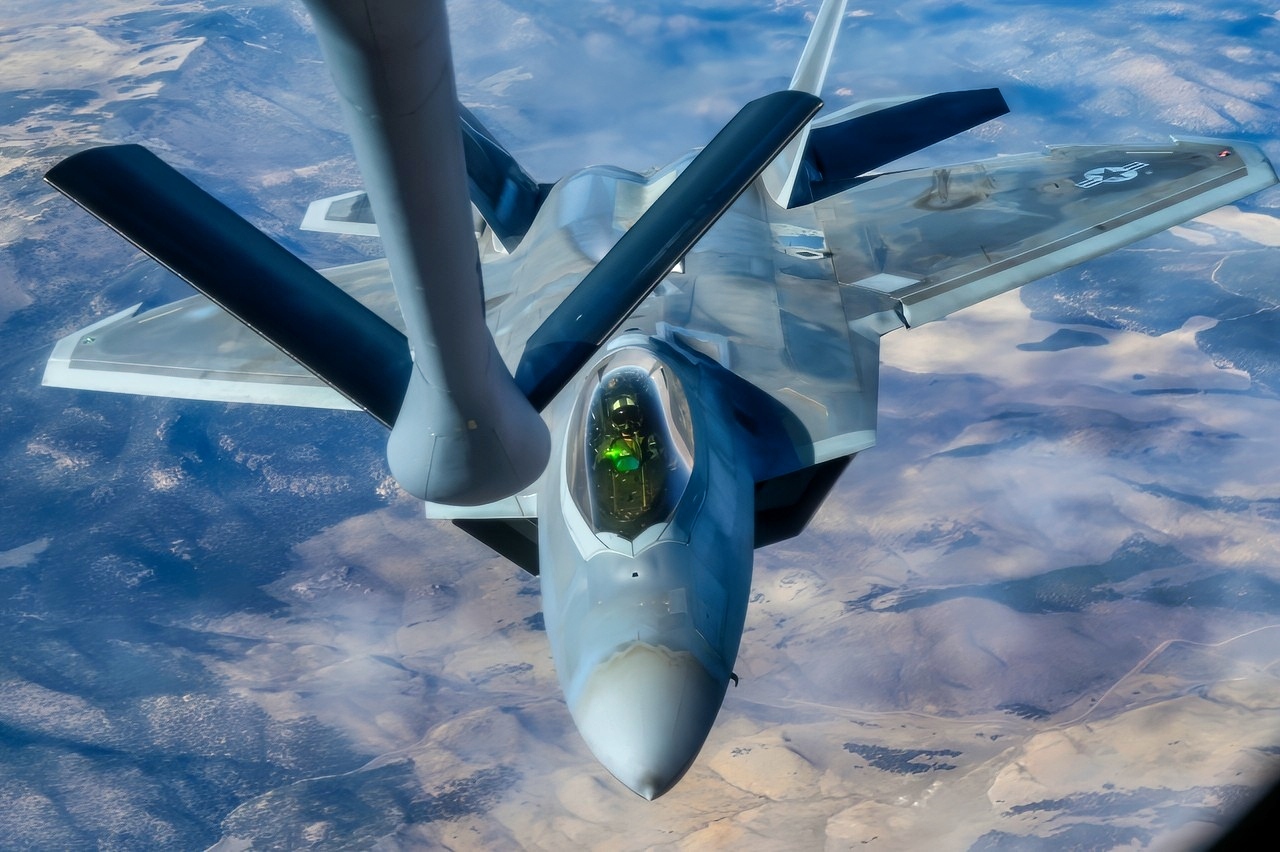
An F-22 Raptor approaches to receive fuel from a KC-135 Stratotanker assigned to the 92nd Air Refueling Wing during the Weapons Integration course over the Nevada Test and Training Range, Dec. 12, 2023. Air refueling crews assigned to the 92nd, 93rd and 97th Air Refueling Squadrons at Fairchild Air Force Base, Washington, participated in the WSINT course to enhance interoperability with a variety of aircraft and demonstrate how Air Mobility Command’s air refueling capabilities enhance global reach for all Department of Defense air operations. WSINT is a series of complex, large-force employment missions that serve as the capstone portion of Weapons School classes, which take place twice a year at Nellis Air Force Base, Nevada. WSINT students plan and execute every aspect of air, space and cyber combat operations, with joint force components converging over the Nevada Test and Training Range. (U.S. Air Force photo by Senior Airman Haiden Morris)
According to a 2021 TWZ report, photographs emerged of a Chinese drone at a jet manufacturer’s airfield that looked very similar to both the X-44 and the “early concepts” associated with the NGAD program.
“When I first spotted it, it immediately reminded me of the X-44 Manta concept art from years ago,” TWZ wrote at the time. “It turns out, at least to our knowledge, that the X-44 Manta program never came to be.”
It’s not clear what became of that Chinese aircraft.
About the Author: Stephen Silver
Stephen Silver is an award-winning journalist, essayist, and film critic, and contributor to the Philadelphia Inquirer, the Jewish Telegraphic Agency, Broad Street Review, and Splice Today. The co-founder of the Philadelphia Film Critics Circle, Stephen lives in suburban Philadelphia with his wife and two sons. For over a decade, Stephen has authored thousands of articles that focus on politics, national security, technology, and the economy. Follow him on X (formerly Twitter) at @StephenSilver, and subscribe to his Substack newsletter.


