


The U.S. Navy quietly revived its Mach 7 railgun at the White Sands Missile Range in 2026 — five years after the Pentagon killed the $500 million program that was supposed to revolutionize naval gunfire. The original weapon worked but was impractical. Each shot required 25 megawatts of electricity, eroded the rails after a few dozen rounds, and emitted an electromagnetic pulse that lit up the stealth Zumwalt-class destroyer it was designed for.
The U.S. Navy Railgun Comeback?
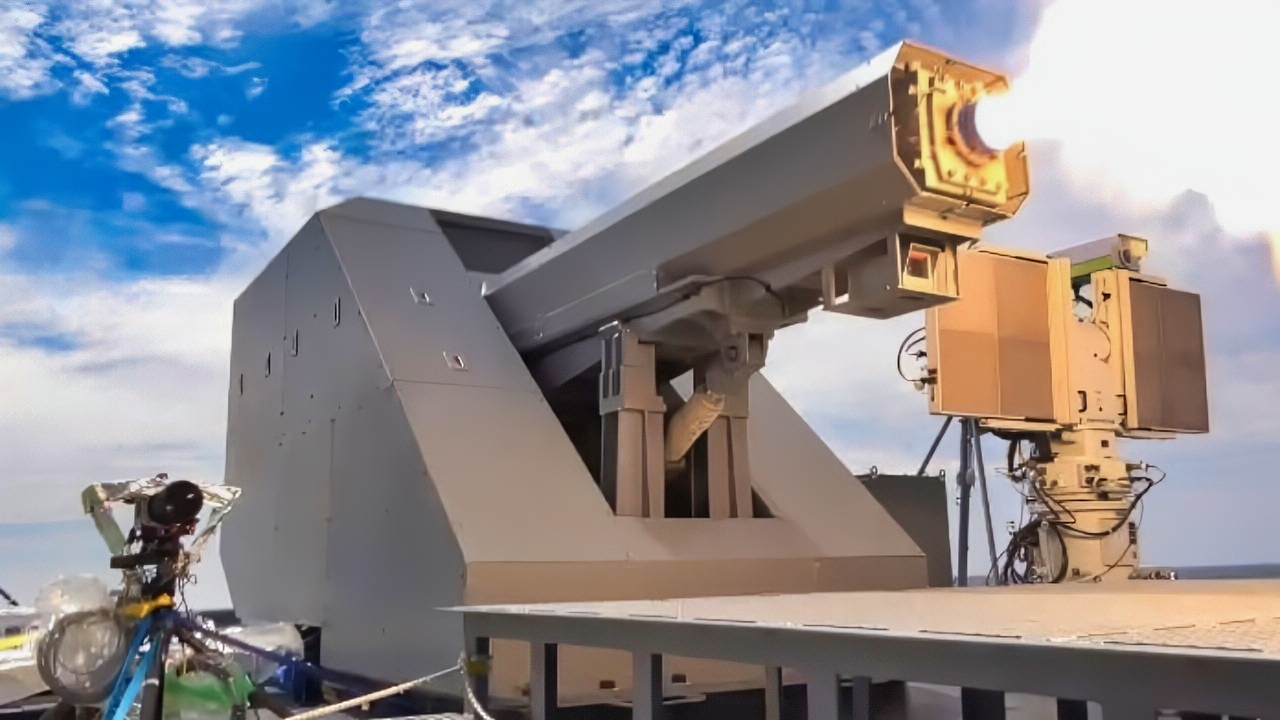
Japan Railgun X Screenshot. Image Credit: X.

U.S. Navy Railgun Test. Image Credit: Creative Commons.
The US Navy’s railgun program was officially shelved in 2021, despite a $500 million investment over 15 years.
Yet in 2026, the Navy quietly revived the program at the White Sands Missile Range, where the novel technology is being used as a hypersonic research tool rather than as originally envisioned—an operational naval weapon.
What Is a Railgun?
The core concept of the railgun is an electromagnetic launcher that replaces gunpowder as an explosive propellant. Instead, the railgun uses two conductive rails and an armature that connects the rails and carries a projectile.
A massive capacitor bank acts as a pulsed-power system, delivering millions of amps of current and generating a magnetic field. This produces a Lorentz force that can accelerate the projectile to speeds exceeding Mach 7, or 5,000 miles per hour. Basically, the railgun turns electricity into pure kinetic destruction.
Promise of the Concept
The original vision of the railgun looked promising. The weapons offered extreme velocity and long range—all without the need for an explosive warhead.
This reduced logistics, because no missiles were needed, and in theory was cheaper per shot. The kinetic impact distributed immense energy, capable of penetrating hardened targets. The Navy believed this format would be compatible with its vessels, which have large power supplies and are often tasked with firing on fixed, hardened targets from great distances. On paper, the railgun looked like a revolution in naval firepower.
Ahead of Its Time
But in practice, the program’s strategic ambition outpaced its technological capability.
The program was shelved. The fatal flaw was barrel degradation; each shot generated extreme heat and plasma. The effect was that the rails eroded, warped, and cracked. Durability lasted for only a few dozen shots. Conventional guns, meanwhile, last for hundreds and hundreds of rounds.
Also, the railgun’s energy requirements were gluttonous. Each shot required 25 megawatts—enough to power a home for 8 hours.
And the only platform compatible with the railgun was the Zumwalt-class destroyer, which required massive capacitor banks to power it.
But there was a fundamental flaw here: the Zumwalt was designed to be stealthy, and the railgun generated an electromagnetic pulse every time it was fired.
This revealed the ship’s location, compromising the entire stealth premise of the Zumwalt. Eventually, the Pentagon decided to cut its losses and pivot funding toward hypersonic missiles and directed-energy weapons. The railgun was left behind—not because it didn’t work, but because it wasn’t practical.
Now It’s Back
The railgun has been quietly resurrected—not as the originally envisioned naval weapon, but as a hypersonic research driver. Testing resumed in 2025 and early 2026, with the Naval Surface Warfare Center and the Joint Hypersonics Transition Office. The purpose is to study the thermal effects of the weapon and of materials under Mach 7 stress. The advantage is that the railgun replicates hypersonic conditions, offering the US a controlled hypersonic laboratory.
The original idea hasn’t fully died, however; the proposed Trump-class battleship is expected to displace 35,000 tons, arguably solving the power and space problems that made the railgun impractical for the Zumwalt. The railgun could potentially return as a primary weapon.
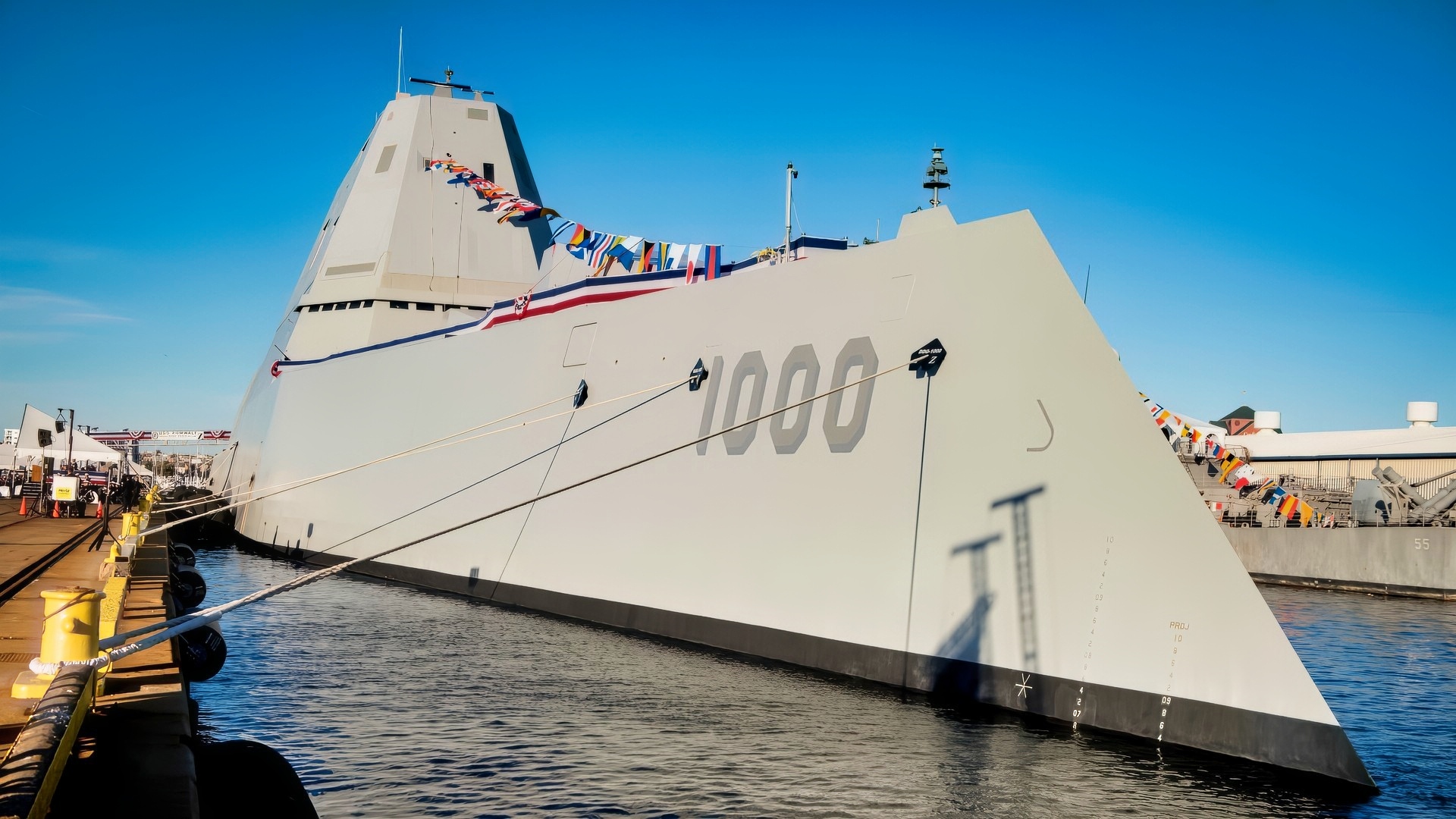
The Navy’s newest and most technologically advanced warship, USS Zumwalt (DDG 1000), is moored to the pier during a commissioning ceremony at North Locust Point in Baltimore. (U.S. Navy photo by Petty Officer 1st Class Nathan Laird/Released)
Or possibly, the railgun could be containerized as a land-based defense weapon, perhaps from somewhere like Guam, where the weapon could operate without ship constraints. Regardless, the railgun is being revived for new use cases rather than its original intentions.
Foreign Competition
Part of the US’s interest in reviving the railgun stems from foreign competition. Japan has successfully tested an at-sea railgun, seemingly reigniting US interest in the technology. This could create an arms race of sorts as nations race to develop viable electromagnetic launch technology. So the US railgun revival is partially about not falling behind technologically.
The railgun is not dead. But the same physics problems that plagued the program initially still exist. The US will need to solve engineering problems relating to extreme materials and structural reinforcements before the railgun can be an operationally legitimate weapon. In the meantime, the concept will add value as a research tool.
About the Author: Harrison Kass
Harrison Kass is a writer and attorney focused on national security, technology, and political culture. His work has appeared in City Journal, The Hill, Quillette, The Spectator, and The Cipher Brief. He holds a JD from the University of Oregon and a master’s in Global & Joint Program Studies from NYU. More at harrisonkass.com.


