


Key Points and Summary – In a stunning and coordinated show of force in June 2010, three U.S. Navy Ohio-class guided-missile submarines (SSGNs) surfaced simultaneously in key strategic locations across the Indo-Pacific.
-The USS Ohio, USS Michigan, and USS Florida—each armed with 154 Tomahawk cruise missiles—appeared off the Philippines, South Korea, and Diego Garcia.
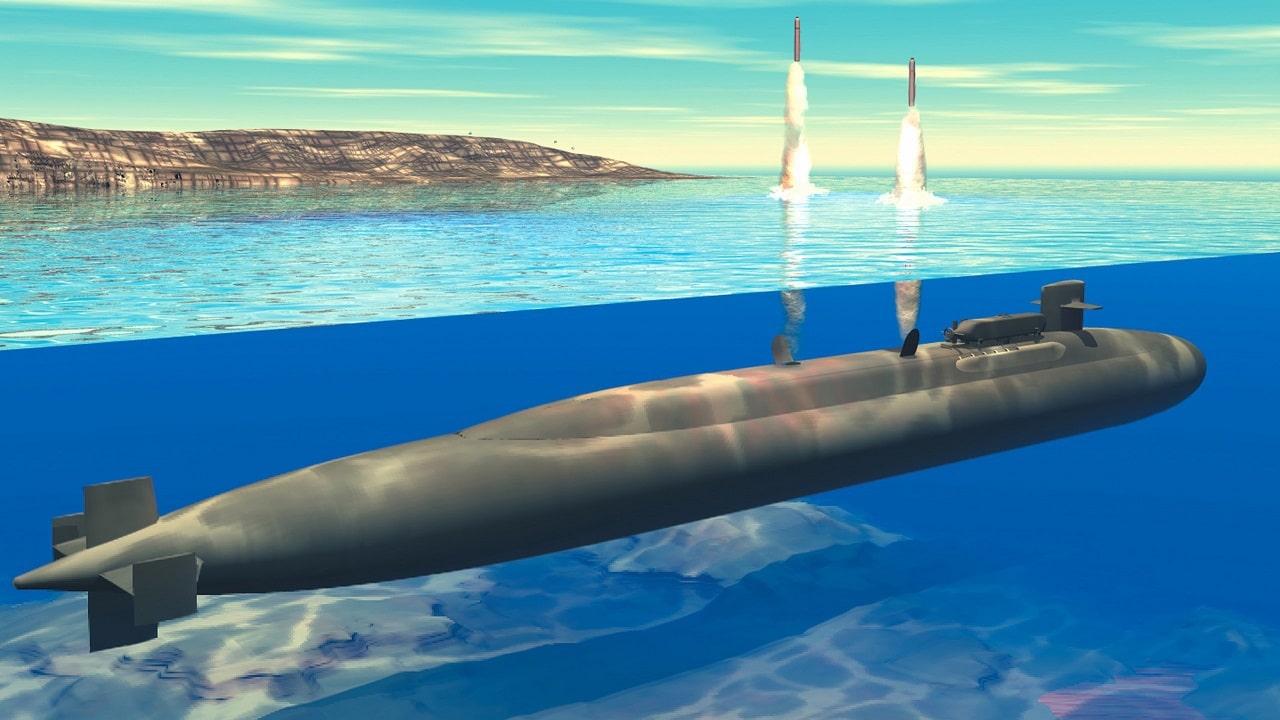
Ohio-class SSGN. Image Credit: Creative Commons.
-While the Navy officially called the event a “coincidence,” it was widely interpreted as a deliberate and powerful message to Beijing during a period of rising tensions, demonstrating America’s ability to project overwhelming and unseen power throughout the region at will.
The Ohio-Class is a Wonder Weapon Like No Other
The U.S. Navy’s Ohio-class guided missile submarines (SSGNs) and ballistic missile submarines (SSBNs) have been in service now for nearly five decades.
Both during and after the Cold War, these mighty undersea boats have been the most tangible projection of the Navy’s power, and the invisible enforcers of its nuclear deterrent.
Perhaps the most memorable manifestation of the Ohios’ power came 15 years ago, when three of these warships “coincidentally” surfaced all at once as a not-so-subtle warning to China.
Meet the Ohio-Class
A total of 18 Ohio-class subs have been built. It was the first three ships in the class that carried out the dramatic mission in question:
-The USS Ohio (SSGN-726), which was laid down in 1976 – appropriately, America’s bicentennial – launched in 1979, and commissioned on Veteran’s Day, Nov. 11, 1981;
-The USS Michigan (SSGN-727), which was laid down in 1977, launched in 1980, and commissioned on Sept. 11, 1982; and
-The USS Florida (SSGN-728), which was laid down on July 4, 1976, launched in 1981, and commissioned in 1983.
The submarines each pack 154 Tomahawk cruise missiles and a crew complement of 15 commissioned officers and 140 enlisted seamen. (That does not count the elite Navy SEALs that may also deploy on these big boats.)
The Sister Submersibles’ Simultaneous Surfacing
The three Ohio-class sister ships pulled off their audacious feat in June 2010. Notably, they emerged in the same chronological order as their entries into official service.
The Ohio surfaced first, doing so off of the Philippines’ Subic Bay. Next to appear was the Michigan, which emerged in the waters off South Korea, around Pusan.
Last but certainly not least came the Florida, which appeared amid the waves near Diego Garcia, in the Indian Ocean.

SOUDA BAY, Greece (Sept. 7, 2019) The Ohio-class cruise missile submarine USS Florida (SSGN 728) arrives in Souda Bay, Greece, for a scheduled port visit, Sept. 7, 2019. NSA Souda Bay is an operational ashore base that enables U.S., allied, and partner nation forces to be where they are needed and when they are needed to ensure security and stability in Europe, Africa, and Southwest Asia. (Photo by Joel Diller/Released)

Ohio-Class Submarine U.S. Navy.
Mere Coincidence“”…Or Was It?
The Navy’s public relations personnel officially chalked up the subs’ simultaneous surfacings to mere “coincidence.”
Surprisingly enough, China’s political propaganda machine actually played along, rather than launching the usual complaints and protestations about alleged American bullying and saber-rattling.
Indeed, Baodong Wang, then-spokesman for the Chinese Embassy, stated that, “At present, common aspirations of countries in the Asian and Pacific regions are seeking for peace, stability and regional security. … We hope the relevant U.S. military activities will serve for the regional peace, stability and security, and not the contrary.”
Scratch beneath the surface, however, and there was more to the submarines’ showings than met the eye. After all, the U.S. Navy’s submarine force is known as “The Silent Service” for a reason.
The Navy keeps the locations of its subs a closely guarded secret. The boats rarely surface anywhere other than a homeport or other port of call, and when they do surface, it’s done as a psychological ploy.
More from National Security Journal
Study This Photo: Boeing Just Dropped New F/A-XX Fighter Image
J-20 vs. F-35I Adir: Which Fighter Would Win?
The Boeing F-47 Fighter Has a Serious Problem
At the time of this three-sided submersible surfacing act, the U.S. government had been quite displeased with Chinese provocations in the Indo-Pacific region, including Beijing’s ballistic missile testing in the East China Sea.
The United States wanted to display just how easily its deadly submarines were able to move, ceaselessly and seemingly effortlessly, throughout the region.
Make no mistake, dear readers: Official flowery public announcements aside, this was clearly a show of force on the U.S. Navy’s part, sending a clear message to China that America was serious about discouraging an attack or blockade against Taiwan, and about sustaining freedom of navigation and open sea lines of communication.
Where Are They Now?
All three subs are still in service. The Ohio and Florida are homeported at Naval Base Kitsap, Washington, while the Michigan is homeported at Submarine Base Kings Bay, St. Mary’s, Georgia.
These submarines have been proposed for decommissioning sometime in 2026, to be replaced by the Columbia-class SSBNs.
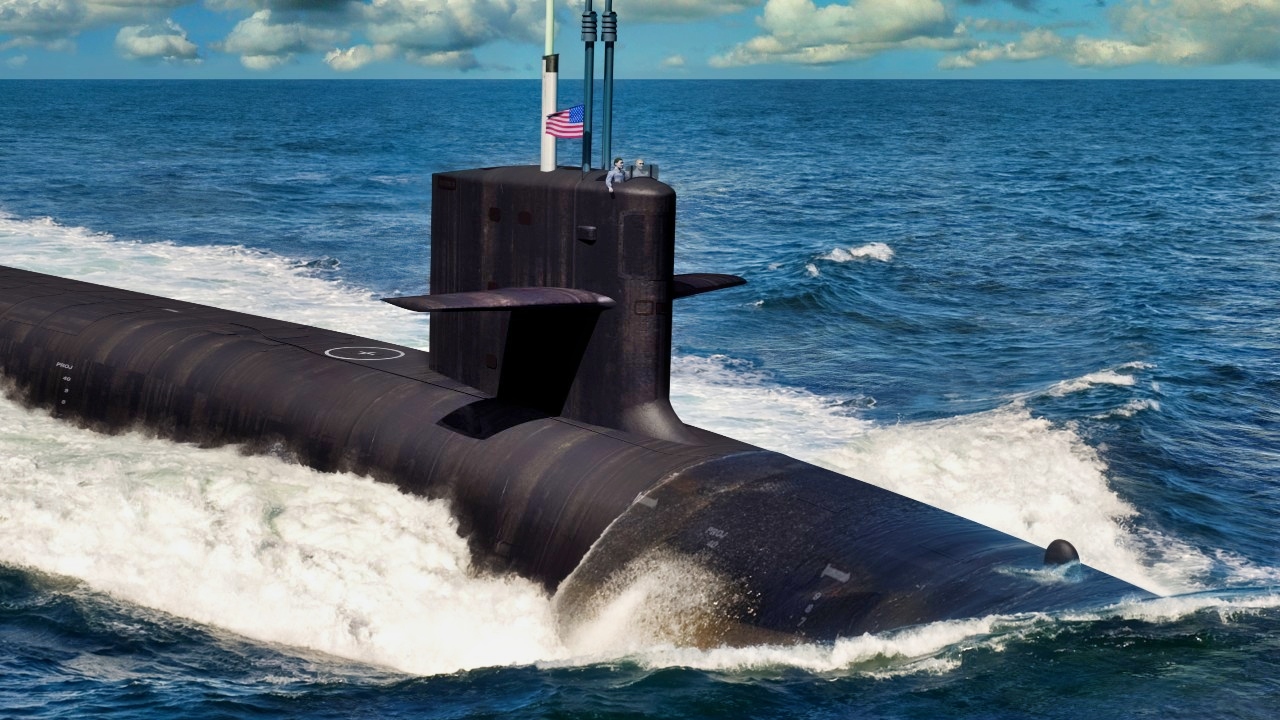
Columbia-Class Navy Handout Photo. Image Credit: U.S. Navy.
However, decommissioning may have to wait, as the Columbias have been beset by cost overruns and production delays. Until the venerable old Ohios finally are retired, they will continue to be the pride and joy of General Dynamics Electric Boat.
About the Author: Christian D. Orr, Defense Expert
Christian D. Orr is a Senior Defense Editor. He is a former Air Force Security Forces officer, Federal law enforcement officer, and private military contractor (with assignments worked in Iraq, the United Arab Emirates, Kosovo, Japan, Germany, and the Pentagon). Chris holds a B.A. in International Relations from the University of Southern California (USC) and an M.A. in Intelligence Studies (concentration in Terrorism Studies) from American Military University (AMU).
More Military
F-111 Aardvark ‘Fighter-Bomber’ Has a Message For the U.S. Air Force
A U.S. Navy Submarine ‘Sank’ A British Aircraft Carrier
Russia’s Su-33 Aircraft Carrier Fighter Has No Aircraft Carrier


Nate
September 3, 2025 at 3:16 am
2010? Ok.