

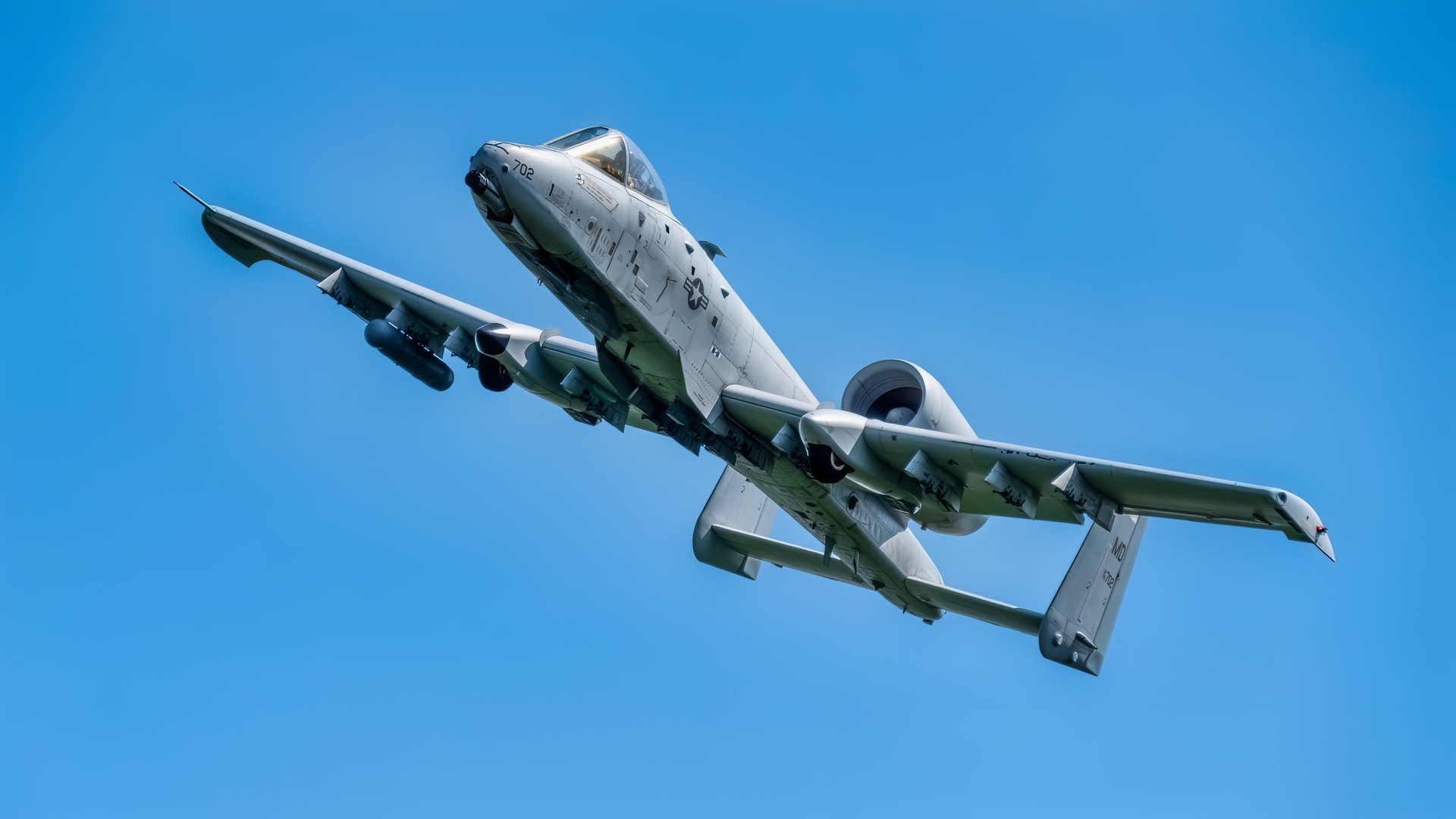
Key Points and Summary – Beloved for saving troops in Desert Storm and the war on terror, the A-10 Warthog is finally headed for retirement.
-The Air Force plans to divest all 162 jets by 2026, arguing modern air defenses, rising sustainment costs, and mission overlap with the F-35 and F-15EX make the A-10 untenable.
-Today’s contested skies favor stealth, range, networking, and precision weapons over low-and-slow gun runs.
-Drones now hunt armor; networked F-35s can cover the A-10’s CSAR niche.
-Fans will miss the GAU-8’s “BRRRT,” but budgets and survivability drive the shift.
-The Warthog’s legacy endures—in air shows and grateful Marines.
BONUS – National Security Journal back in July visited with the A-10 Warthog on display at the U.S. Air Force Museum. The bulk of the photos in this article are original and were taken at the museum outside of Dayton, Ohio.
5 Reasons We Need to Say Goodbye to the A-10 Warthog
I admire the A-10 Warthog. The aircraft was instrumental in winning Operation Desert Storm and shortening that conflict, keeping casualties to a minimum. During the war on terror, the A-10 conducted countless close-air-support missions to protect U.S. and coalition ground fighters in Iraq and Afghanistan.
But the A-10’s days are numbered. In the most recent Air Force budget request, the service called for retiring all 162 Warthogs in 2026, two years sooner than originally estimated. This is a disappointing outcome for a strike airplane that has enjoyed a strong record since it was first designed to destroy enemy armored vehicles during the Cold War.
The F-35 Can Do Its Job
One of the reasons for decommissioning the Warthog is redundancy. While the A-10 is great at its job, which consists of ground strike and close air support, these missions can be carried out by the F-35. Since the Air Force, Marine Corps, and Navy all fly F-35s, each service can call in Lightning IIs for danger-close missions. The F-35 does not have the Warthog’s GAU-8/A Avenger 30-mm rotary cannon, but it can drop numerous munitions when it is equipped in beast mode. F-35s can launch the StormBreaker smart weapon and the Paveway laser-guided bomb. The F-35 can also share targeting data in real time with other airplanes.
The A-10 Would Not Survive In Modern War
Another reason to retire the Warthog is its low survivability. Air defenses are constantly improving, with better radar and surface-to-air missile (SAM) systems such as the Russian S-400 and S-500 that are layered in depth.

A-10 Warthog NSJ Photos. Image taken on 7/20/2025.

A-10 Warthog National Security Journal Photo Essay Picture.
The A-10 would have little protection from being detected, tracked, and destroyed by newer SAMs. The A-10 is not known for speed and maneuverability, although its performance in air shows has left me impressed. A-10s are also not stealthy like the F-35, and they are much slower and less maneuverable.
The A-10 Is Costly to Keep in the Air
Further, the A-10 is an older airframe. It was introduced in the 1970s and requires significant maintenance. The airplane’s need for spare parts and tender loving care makes it expensive to keep in the air.
The money saved by no longer maintaining Warthogs can be spent on other airplanes, such as the new F-15EX, as well as the F-35. The cost per flight hour of the Warthog ranges between $19,000 and $22,000. This adds up quickly, and in a future war, the costs would multiply. The Air Force has requested $57 million to retire all A-10s.
Would It Even Have Any Tanks to Destroy?
Finally, warfare is changing. Combat in Ukraine has focused on first-person view drones that loiter and drop down to eliminate tanks and people. The A-10 is not the best tool to take out small drones.
Plus, the tank, which has historically been the main target of A-10s, is becoming an obsolete platform. The A-10 could still offer close air support for soldiers and Marines in tight spots on the ground, but there may not be as many tanks and armored personnel carriers on the battlefield compared to the days when the United States first fought in Iraq.
Not Needed for Combat Search and Rescue
The A-10 had a secondary use for combat search and rescue, but the F-35 can carry out this mission as well. Special operations forces have personnel called “combat controllers” who act as air traffic controllers on the ground. Intelligence, surveillance, and reconnaissance data collected by the F-35 can be shared with the combat controller, who then relays the findings to other special operators and helicopters that can rescue downed pilots or stranded personnel.
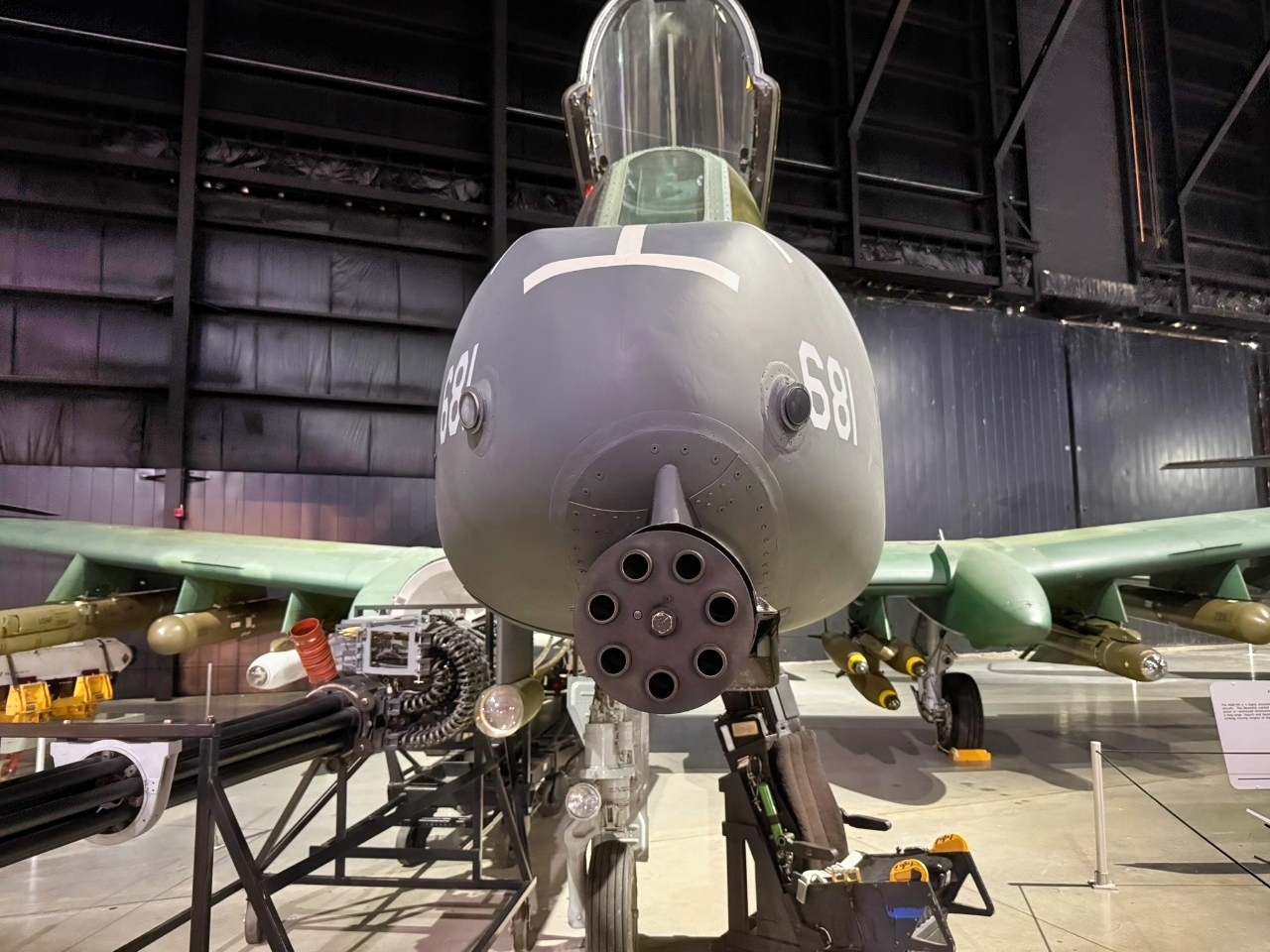
A-10 Warthog Cannon NSJ Photo. Taken at U.S. Air Force Museum on 7/19/2025.
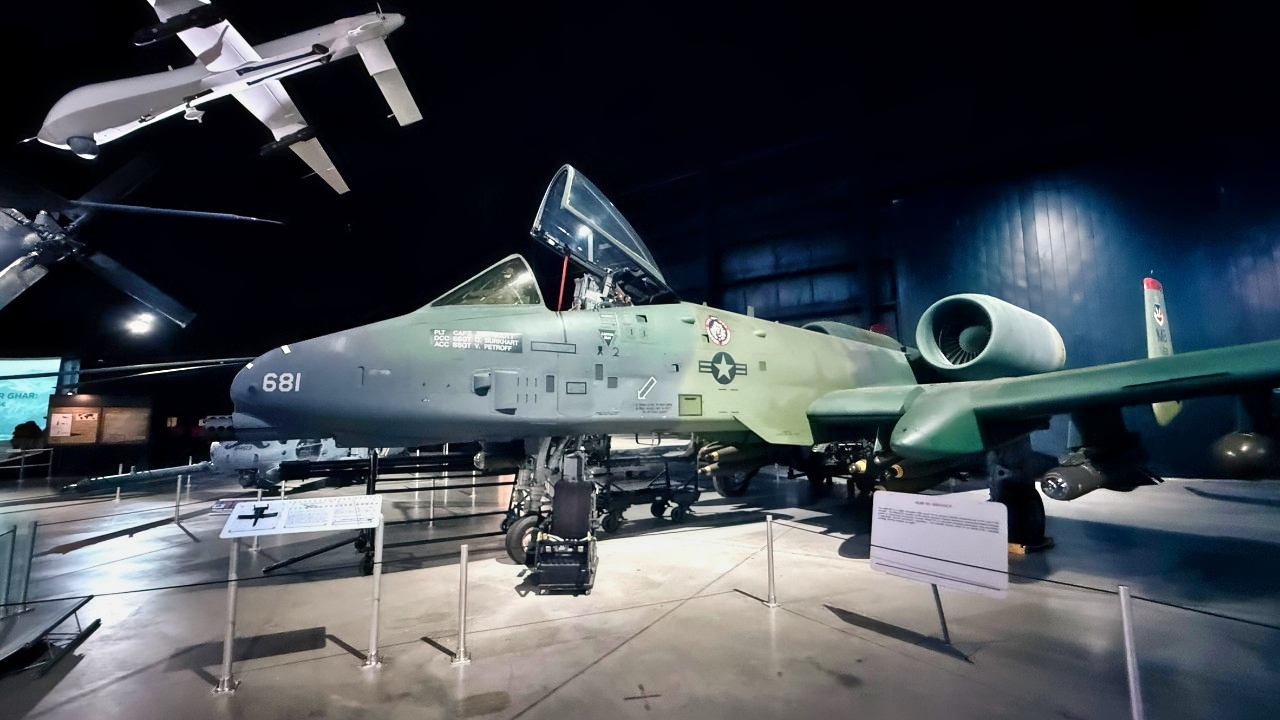
A-10 Warthog National Security Journal Photo.
A-10 pilots will be greatly missed. These aviators are specifically trained for the close-air-support role. Fighter pilots are more attuned to aerial combat in hunter-killer roles to eliminate enemy fighter jets.
For an F-35 pilot, close air support may not be a main talent. A-10s have made many friends with infantry soldiers, Marines, and their special-ops brethren. Time will tell if the F-35 or F-15EX can assume the air-support role as effectively as the Warthog did.
So, the A-10 has reached the end of its road. The distinctive “brrrtttt” sound from its rotary cannon was music to soldiers’ ears for decades. The A-10 has saved countless lives and eliminated numerous enemy tanks and armored vehicles.
Yes, the F-35 will take over its job, but the A-10 was distinctive; it excelled in the close-air-support mission. The airplane is indeed expensive to fly, and this money can be invested in other places.
The A-10 is obviously not stealthy. It was never meant to be. It might not be survivable in a contested environment. Its original tank-plinking mission is probably a thing of the past, and the A-10 would not be effective against small, loitering kamikaze drones.
The A-10 Warthog Must Retire
Hail to the A-10 and its sterling combat record. Soldiers and Marines counted on it to save their lives, and it fulfilled every expectation. I will miss the A-10 as a former Army infantry officer. It was an excellent instrument, and it could save my men’s lives.
That is what close air support is all about. The A-10 will still be seen at air shows, and attendees will still be impressed by its performance. The pilots of the Warthog will miss it greatly.
About the Author: Brent M. Eastwood
Brent M. Eastwood, PhD is the author of Don’t Turn Your Back On the World: a Conservative Foreign Policy and Humans, Machines, and Data: Future Trends in Warfare plus two other books. Brent was the founder and CEO of a tech firm that predicted world events using artificial intelligence. He served as a legislative fellow for US Senator Tim Scott and advised the senator on defense and foreign policy issues. He has taught at American University, George Washington University, and George Mason University. Brent is a former US Army Infantry officer. He can be followed on X @BMEastwood.
More Military
F/A-XX – Could NGAD Be the Captain Obvious Answer?
China’s New J-20A vs. F-35: Will the ‘Dragon’ Beat America’s Best Fighter?
Su-57 Felon vs. Navy F/A-18 Super Hornet: Who Wins That?
F-15EX Eagle II vs. Eurofighter Typhoon: Get the Popcorn Ready


JAIJAI
September 13, 2025 at 10:18 am
A 10 operating off small austere airfields in Pacific is and will be far more survivable and cheaper to operate than F35s from airfields, carriers and Amphibs. Only thing cheaper would be return to purpose built air cooled prop driven airframes..,
Scott Feil
September 13, 2025 at 10:26 am
As a retired Army officer who benefited greatly from the A-10, I disagree with a couple of points. The author made the point about cost per flying hour to maintain the A-10, but offered no comparative figures for the F-35 or F-15X (by the way, the F-15 was also a 1970s airframe although the X may be a completely new build — I don’t know.
Second, drawing lessons from Russia-Ukraine must be done very carefully. Neither side in that conflict have shown themselves adept at combined arms and joint maneuver warfare. Very little artillery to support maneuver, little to no obscuration, integrated engineer support, etc. While their strategic use of drone swarms is effective, their operational and tactical use amounts to plinking — killing individual soldiers or vehicles. Drones are not used effectively to either defend against penetrations or to facilitate penetrations. SEAD is not apparently a big deal.
Third, the F-35 is a multi-role aircraft. It is not being procured in originally planned numbers, it’s readiness rate is not meeting requirements, and as a multi-role aircraft, it will be employed as a Low Density/High Demand capability. I don’t think there will be enough F-35s flying to devote sufficient airframes to supporting ground maneuver.
George
September 19, 2025 at 8:46 am
“Neither side in that conflict have shown themselves adept at combined arms and joint maneuver warfare.”
I disagree. The Russians have demonstrated that Active Defense is superior to CA and JMW by virtue of the continuously advancing front line. The US jettisoned Active Defense in the 80’s. Go figure.
John Krill
September 13, 2025 at 12:59 pm
“For an F-35 pilot, close air support may not be a main talent. . . . Time will tell if the F-35 or F-15EX can assume the air-support role as effectively as the Warthog did.”
So the Air Force is going to retire the A-10s and then wait until “time will tell” if the F-35 or F-15EX can fill the role. I think the AF brass already know that their hot shot fighters cannot fill the close-air support role. They’ve been trying to get rid of the A-10 since forever.
John Krill
September 13, 2025 at 1:08 pm
Solution: give the A-10s to the Army and/or Marines. The AF has never been committed to close air ground support.
John Krill
September 13, 2025 at 1:10 pm
Since you rejected my previous comment, I’m saying bad luck and goodbye to your crappy web site.
CaBuckeye
September 13, 2025 at 2:34 pm
Once again, an over educated “scholar” is pushing a narrative that will weaken our armed forces again. The USAF has “zero” interest in providing “close air support” and wants to do away with any weapon system that provides this vital ground pounder support. Congress and the Pentagon needs to recognize this fact and give this function to the Army. I’m the USAF won’t object too loudly or long.
The Prof. makes the case that the A-10 is too slow and vulnerable and that the F-35 can handle the mission when aircraft are finally made “available” when other priority missions are accomplished. I’m pretty sure no F-35 is going to be delivering air to ground weapons going 700mph and any aircraft will be vulnerable coming in at 1000 agl.
Other items like the A-10 can carry far more weapons and bullets then the F-35 or the A-10 can stay in the air and fly farther then the F-35 or that the A-10 only cost $20 million vs $100 million if lost and the obvious, that we will never have enough F-35’s available for all the required air combat and long range strike missions in a peer to peer war. The Army grunt will be sucking hind tit on close air support. Reliability and mission availability is another issue with the very complex F-35. Losing a A-10 would be difficult, losing a F-35 would be very painful especially with a upgraded Lot 4 or higher. Frankly, I don’t see the USAF putting a high value aircraft in such a dangerous position by loading it down with a bunch of non-stealthy external weapons. Like hitching up a Ky. Derby winner to a plow. The A-10 was designed to fly low and slow in contested environments while the F-35 was to fly fast, high and invisible. In addition, A-10 would be perfect for counter-drone missions. Imagine a A-10 loaded with 1100 35mm cannon shells and hundreds of laser guided APKWS. My final thought is the services are too quick to retire 100’s of still relevant weapon systems by saving enough money to buy one or two modern systems. You can hear the sucking of common sense evaporating into thin air at that nonsensical logic.
DP
September 13, 2025 at 3:55 pm
Good point from Scott Feil on the cost per flying hour: The A-10 up to $25,000; the F-35 is up to $36,000.
I suspect much will change as drone CCA “loyal wingmen” are introduced in numbers. (Perhaps it might even be possible to see a dedicated close support version of the same.)
It should also be remembered that while the A-10 was great in Desert Storm, the F-111 — not something one thinks of for close support — was just about as great. The F-111 destroyed some 1,500 armored vehicles using its combo of laser-guided bombs and IR targeting pods, outpacing the record of the A-10. This, as much as anything, may have helped convince the service that the A-10 was somewhat redundant in the anti-armor/anti-vehicle CAS role when a supersonic fighter-bomber could AND DID do the job better (of course, they then went and cancelled the F-111, though the F-15 Strike Eagle has similar capabilities). (We don’t know what the F-111 would have done in the war on terror ops in Iraq etc. as it was retired at that point.)
For survivability alone the US needs more V/STOL F-35Bs and practice the sort of dispersed no-airfield deployment that was routine for the RAF Harrier force during the cold war era. The threat is even greater now. Of course, F-35B is very expensive, and has less utility in normal operations than the F-35A, so that mitigates against it.
Practicing rapid support, protection, and dispersal of F-35B forces in the face of large-scale missile attack on air fields might be a more useful employment of Marines than sniping from islands, though.
Marcus
September 14, 2025 at 1:37 am
The author makes some salient points, but is just wrong on others, e.g. the A-10 is cheaper to operate on a cost per hour basis than the F-35 or F-15.
The A-10 is an amazing aircraft, however its supporters need to take off their nostalgia goggles. Modern air defenses have advanced to the point where the A-10’s mission profile is no longer survivable. While the aircraft is cheaper to operate for now, the costs will skyrocket as parts become obsolete.
Su-25 (the Russian A-10 not exactly equivalent) pilots in Ukraine are virtually canon fodder at this point thanks to layered air defenses.
Sure, it would be great to keep some A-10’s around for asymmetric warfare in the Middle East, but the reality is America needs to prepare for a near peer conflict. A-10’s will be worthless in the Indo-Pacific and thanks to Ukraine, Russia doesn’t have quite as many tanks as they once did. Drones and glide bombs are probably the future of close support.
cbvand
September 14, 2025 at 9:32 am
Amazing what lengths and ridiculous arguments air force shills will pander in an effort to denigrate a plane that is too cost effective and not sexy enough. Transfer all A-10’s and spares to the USMC without charge.
SurfBird
September 14, 2025 at 10:05 am
It doesn’t matter if the F-35 CAN do the job. What matters is that there won’t be enough of them even to go around. They are too expensive to risk flying over the front lines low enough to be effective and the Air Force doesn’t want to do the job anyway which makes excuses easier to come by.
HKDriver
September 14, 2025 at 1:07 pm
A-10’s wouldn’t survive a near-peer AD environment. The F-35 would (enough).
The A-10 was a great weapon, and it performed its role magnificently in friendly skies. In coming conflicts, all airspace will be contested and engagements will take place 200+km BVR. The A-10 is totally incapable of completing its mission in that sort of war.
Advocating for the A-10 in the middle of the 21st century is like advocating for the Sopwith Camel post WWI.
Mark F
September 14, 2025 at 8:30 pm
While times and capabilities change my memory is that the A10 was designed to work in a contested air environment as would exist in the Air Land Battle concept of the 1980s, especially when upgraded with modern EW equipment. Low and slow flying nap of the earth provides ots own protections. I also belive with advances in electronic sensors and AI, stealth will not be so stealthy.
james chevigny
September 14, 2025 at 9:19 pm
Not every country has an S-330 or S-400 or like system.
The A-10 being retired seems to be due to any conflict with Russia or China.
With the other 190+ countries that do NOT have nukes, why retire the A-10?
When was the last time the US fought a nuclear armed country – yes,never.
So I do not understand why the A-10 is being retired.
Oh,and BTW – F-35’s are $100mm+ compared to A-10’s that were paid 30 years ago.
This decision is yet another DUMB one, but not as bad upgrading the B-52, which at last count is approacing $300 MILLION per plane! Meantime they are retirning the MUCH more capable in all ways B-1???
The upgrdes to the B-1 frames have been made to several already by the Air Force’s repair facility at a cost ranging from $10mm to $30mm.
Whi is running this show???
Pappy Pirate
September 15, 2025 at 2:10 pm
An article like this makes me angry and laugh at the same time. Like James Chevigny stated, the fact that we are still using B-52’s! No one is talking about that. And what about SOCOM’S latest purchase of the L3Harris OA-1k Skyraider ll? We are going BACK to piston aircraft now? But, it makes sense. I hated to see the original Skyraider go. The loitering capabilities alone.
And yes, there are many countries that don’t have the SAM capability that is written here. Not to be a buzzkill, but the middle east will continue to be a thorn in the side of the free world. Would we ever go back for some reason? Hmmmm. I remember when the f-15 and f-16 debuted and they were called the “teen generation” fighters because of all the “high tech” involved in them (unlike an F4 for example). The F35 is more of a “snowflake generation” that is so loaded with bells and whistles that it takes very little to disable it. That’s just my two cents. No close air support, just high flying.
A-10’s don’t need to be frontline then, just keep them in your back pocket just in case. All the tools in the toolbox.
Rant over
michael kennedy
September 16, 2025 at 4:08 am
Cbvand-Transfer all A-10’s and spares to the USMC without charge.
==============
The Marines don’t want them. They see that the faster, nimbler, better armored Russian analog to the A-10 – the SU-25 Gratch – is being slaughtered by far better Ukrainian and Russian integrated air defense systems and MANPADS than the stuff the SU-25 could handle. The formidable Gratch was designed back in the A-10 days. 350 have been lost.
The A-10 is surrounded by a cult. Like the Cult of the Colt .45 that worship the 120+ year old pistol as so perfect it should never be replaced. Or the “invulnerable aircraft carrier” cult.
Obsolete is obsolete!
David S. Adams
September 16, 2025 at 10:46 am
The A-10 can still do the job and is also perfect for going up against lower tech foes that still require putting a lot of hurt on them while not exposing a hundred million dollar fighter to a bunch of guys on the ground with AK’s. Getting rid of them is stupid in the extreme – also we have lots of shells for their cannon that can take care of tanks and armored vehicles and other targets a heck of a lot cheaper than using limited missiles that, as anyone who has watched the war in the Ukraine knows, run out very fast and take a long time to replace. And I dont see the F-35 mixing it up with their much less effective cannons on the ground when the missiles run out.
Dan Farrand
September 16, 2025 at 4:16 pm
“Neither side in that conflict have shown themselves adept at combined arms and joint maneuver warfare.”
The US view of lessons from Ukraine seem to want to deny what the eyes are seeing. Large numbers of cheap FPV drones with RPG warheads or blocks of C4 duct taped to the drone seem to have rendered many assumption about so-called “combined arms” invalid.
Drones have raised the amount of friction, from the LOC back 10 or even 20 KM, so high that combined arms can only occur as longs as the troops can do without vehicles.
It’s unknown how transferable the Ukraine lessons are because, it seems to me, that the war is most significantly characterized by an amazingly low density of forces along a 1000 mile front along with an unprecedented level of detailed surveillance.
Neither side has the kind of CAS that US fighting style takes for granted and it’s not clear that style of CAS will even be possible in the kind of AD nets that exist in Ukraine.
Instead, Glide bombs are dropped by the Russian in large numbers from 50KM behind the line of contact, while drones along the LOC force enemy AD back 20 or 30KM from the LOC.
A premium is placed on very small unit operations – 2 and 3 man teams which introduces a whole new demand on low level initiative and independent action to be coordinated and supported in some way at higher levels.
Who in the US wants to see lessons that say 100 million dollar aircraft and trillion dollar Military budgets may no longer be decisive ?
Douglas Proudfoot
September 17, 2025 at 2:46 pm
The problem is that the USAF doesn’t want the close air support mission. The 1947 agreement that gave only rotary wing aircraft to the US Army needs to be revised. It should be changed to mission, giving close air support to the Army, regardless of whether it’s rotary or fixed wing. Let the Army decide if it wants rotary or fixed wing assets in that role, and how much of each.
I don’t think the close air support mission receives enough consideration from the USAF. Whether the A-10 is the right aircraft for now, or we need a new one, isn’t the real issue. It’s whether the USAF is really considering the needs of ground forces when it makes a decision to get rid of 162 close air support jets and replace them with a hand wave towards F-35 and F-15EX jets that definitely are not the functional equivalent.
(I was a USAF Systems Analyst officer 1972-1976)
chrisford1
September 17, 2025 at 8:49 pm
There are Americans that worship old weapons, even if obsolete (Colt .45 seven shot pistol, A-10, landing ships to have Marines fight in from the beach against thousands of drones and precision weapons) or rapidly becoming obsolete (US aircraft carriers, short range subsonic 50 year old Harpoon missiles)
From the Ukraine War where 300 of the (compared to A-10s) faster, lighter, nimbler, and better armored SU-25s have been shot down- we know the A-10 despite it’s cult status, is dead meat on the modern battlefield. The US also has a mess with huge stocks of Abrams, MRAPS, Attack helicopters. Which no longer survivable in an era where cheap drones are now the ground attack weapons for enemy personnel and armor. Where drones are now the recon, forward artillery spotters in place of expensive well-trained troops.
The old Cold War stuff all needs to be scrapped if it no longer has a justifiable cost and purpose going forward. Some A-10s should be saved for museums and air shows.
Paul
September 20, 2025 at 9:27 pm
Why can’t the Pentagon change the rules or tradition or whatever and let the Army fly A-10s?
Johnny Galt
September 22, 2025 at 3:41 pm
Need more clicks on your website – ask ChatGPT to write an article criticizing the A-10 and post. I hope the next article is about the 6.8mmx51mm replacing both the 7.62mm and 5.56mm cartridges. That should stir up some traffic.
We’ll run out of ammunition and explosives long before we ever learn that the F35 can’t do close air support. The question behind the question is does anyone making these decisions care?
p.s. That last question is rhetorical… IYKYK