


Summary and Key Points: The USS Gerald R. Ford (CVN-78) has entered the Mediterranean Sea, redirecting from Caribbean operations to join the USS Abraham Lincoln carrier strike group in the Middle East.
-With U.S. officials estimating a 90 percent likelihood of military action against Iran, the deployment aims to apply maximum diplomatic and kinetic pressure as nuclear talks falter.
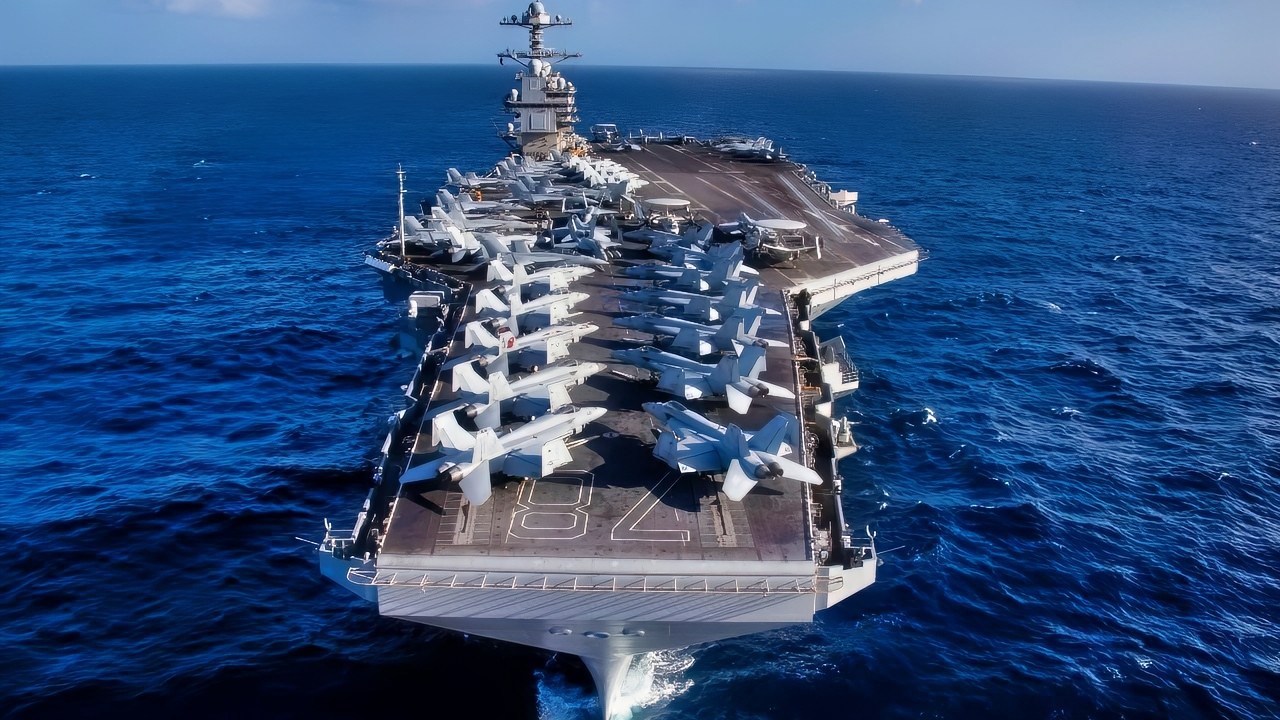
USS Gerald R. Ford Aircraft Carrier At Sea. Image Credit: U.S. Navy.
-The Ford’s mission, currently at 237 days, could break post-Cold War records if it extends into late spring.
-This dual-carrier presence is designed to counter Iran’s complex network of missiles, drones, and fast attack craft, providing the U.S. with necessary battlefield flexibility.
Why the USS Gerald R. Ford Is Surging Toward the Middle East: War with Iran?
Not for the first time, questions surround America’s plans in the Middle East. Fresh speculation has emerged as the U.S. Navy’s flagship supercarrier, the USS Gerald R. Ford, has passed into the Mediterranean Sea.
The 1,106 ft long carrier left its Caribbean operations earlier this month and is now aiming for the U.S. Central Command’s area of responsibility. One Navy official told USNI News that the strike group is specifically aiming for the Middle East, where it is set to join the USS Abraham Lincoln carrier strike group currently stationed south of Iran and the Arabian Peninsula.
The carrier departed Virginia last June and has now spent over eight months at sea.
The Ford had been operating in the Atlantic since the end of last year, backing up supporting U.S. security operations relating to activities in Venezuela.
The carrier’s quick redirection comes amid concerns over the Islamic Republic’s nuclear programme. Gulf News said civilian footage and official statements evidenced the strike group’s crossing of the Strait of Gibraltar on February 17. The report also noted Iranian theocrat Supreme Leader Ayatollah Ali Khamenei’s scathing public rebukes, warning the U.S. against entering Iranian waters.
The Times of Israel has warned that a major military confrontation could be on the horizon, following Israel and Iran’s 12-day war last June.
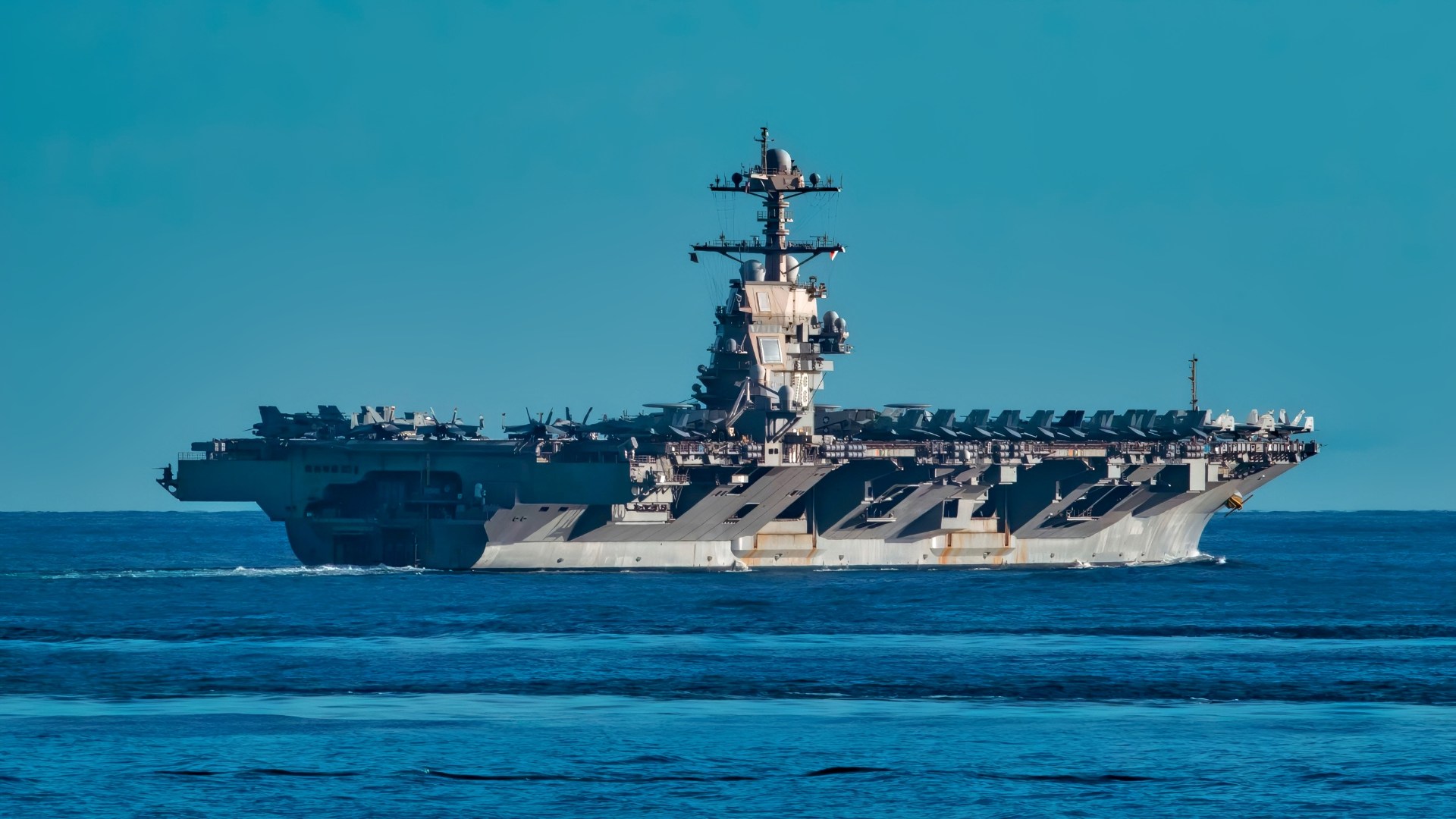
The Arleigh Burke-class guided-missile destroyer USS Winston S. Churchill (DDG 81) sails alongside the world’s largest aircraft carrier the USS Gerald R. Ford (CVN 78), Sep. 24, 2025. Winston S. Churchill, as part of Carrier Strike Group 12, is on a scheduled deployment in the U.S. 6th Fleet area of operation to support the warfighting effectiveness, lethality and readiness of U.S. Naval Forces, Europe-Africa, and defend U.S. Allied and partner interest in the region. (U.S. Navy photo by Mass Communication Specialist Seaman Hector Rodriguez)
Citing sources briefed on internal discussions, the paper explained that a new campaign could far exceed last year’s Israeli-led strikes.
Axios reports that sources close to the White House estimate about a 90 percent likelihood of U.S. military action in the region in the coming weeks.
Israeli officials reportedly believe conflict could erupt “within days” and have pressed for an operation aimed at severely weakening Iran’s leadership.
Ford’s movement can be seen as Washington’s intention of applying both military and diplomatic pressure, although there are some doubts about its capacity.
Despite the obvious military might of the U.S. Navy, former Royal Navy officer Tom Sharpe told The Telegraph that just one carrier “always feeling inadequate” amid such tensions.
Iran Is No Military Power To Take Lightly
Iran has complex “missiles, drones, fast attack craft”. Deploying at least two carriers, he claimed, would allow the U.S. to be more flexible and threatening if war should once again break out.
Forbes reported that the mission has reached roughly 237 days and could extend beyond 300 days if the ship remains in the region through late spring. If this ends up being the case, it could break the post–Cold War deployment record set by the USS Abraham Lincoln in 2020.
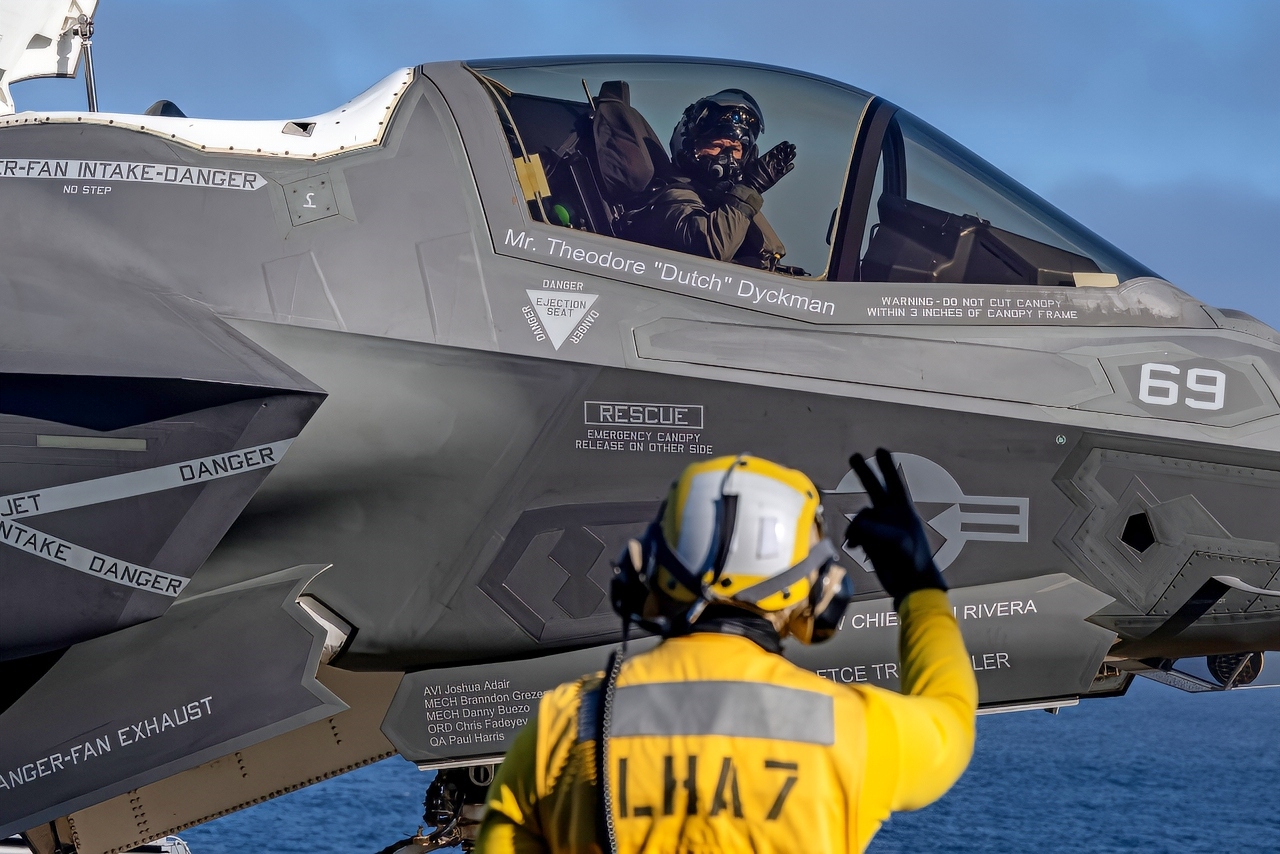
A joint team consisting of F-35 Patuxent River Integrated Test Force flight test members, U.S. Sailors and Marines, and the crew of the Japan Maritime Self-Defense Force Izumo-class multi-functional destroyer JS Kaga (DDH-184) are executing developmental sea trials in the eastern Pacific Ocean to gather the necessary data to certify F-35B Lightning II short takeoff and vertical landing aircraft operations. While aboard the MSDF’s largest ship, the Pax ITF flight test team has been gathering compatibility data for analysis in order to make recommendations for future F-35B operational envelopes, further enhancing the Japanese navy’s capabilities. The results of the testing will contribute to improved interoperability between Japan and the United States, strengthening the deterrence and response capabilities of the Japan-U.S. alliance and contributing to peace and stability in the Indo-Pacific region. Japan is an F-35 Joint Program Office foreign military sales customer planning to purchase 42 F-35Bs. The F-35 Joint Program Office continues to develop, produce, and sustain the F-35 Air System to fulfill its mandate to deliver a capable, available, and affordable air system with fifth-generation capabilities.
This is far from ideal, given that lengthy deployments over six months mean the crew often experiences fatigue and therefore a heightened risk of issues on the battlefield.
Naturally, U.S. officials remain coy about Ford’s specific role. But a pair of carrier strike groups potentially nearing Iran just as nuclear talks falter is unlikely to be a coincidence. Whether words or warfare will succeed remains to be seen.
About the Author: Georgia Gilholy
Georgia Gilholy is a journalist based in the United Kingdom who has been published in Newsweek, The Times of Israel, and the Spectator. Gilholy writes about international politics, culture, and education. You can follow her on X: @llggeorgia.


