


Key Points and Summary – Conceived in 1999, Lockheed Martin’s X-44 MANTA proposed a tailless, stretched-delta derivative of the F-22 that ditched vertical and horizontal stabilizers.
-NASA and the U.S. Air Force explored whether fully 3D thrust-vectoring from twin F119 engines could deliver pitch, yaw, and roll control—boosting agility, internal fuel, and broadband stealth while cutting drag and radar returns.
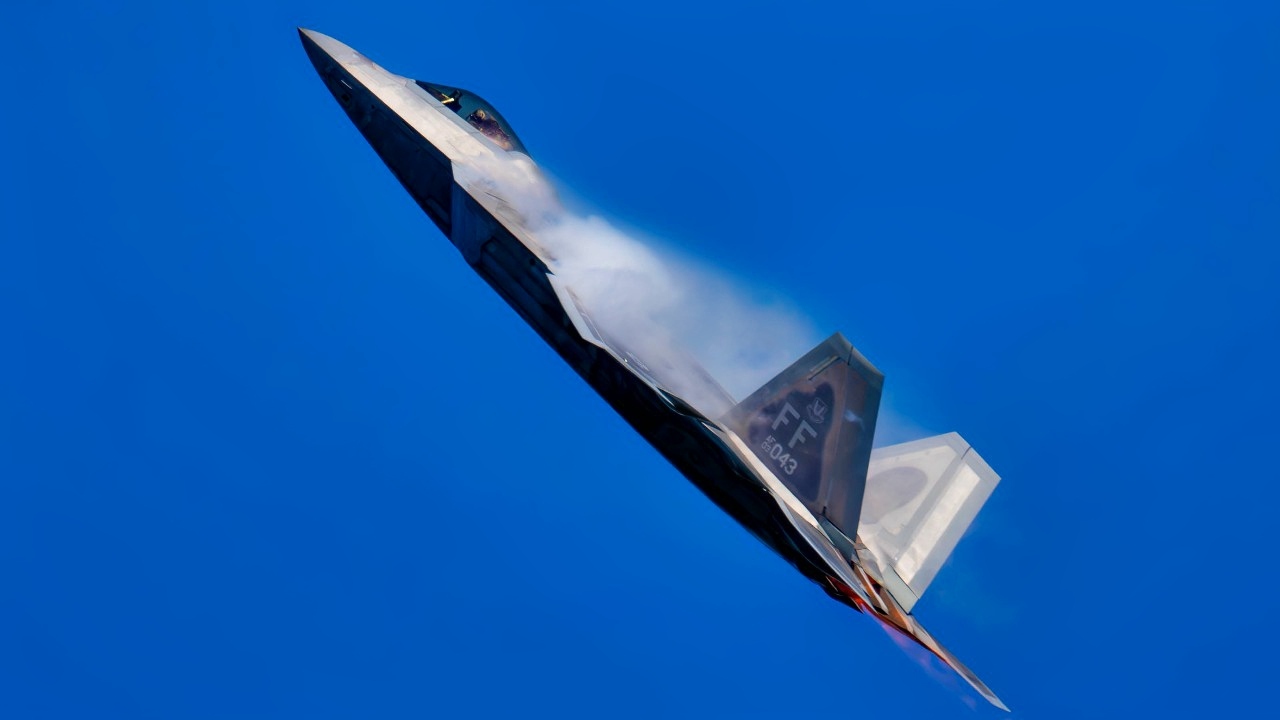
USAF Capt. Nick “Laz” Le Tourneau, F-22 Raptor Aerial Demonstration Team pilot and commander, performs a practice demonstration at Joint-Base Langley-Eustis, 17 March, 2025. Laz is the only F-22 Raptor pilot in the world certified to fly the demonstration. (U.S. Air Force photo by Staff Sgt. Michael Bowman)
-Projected for Mach 2 performance, with ~49,000-ft ceilings, a range of ~2,000 miles, and internal weapons, MANTA was ultimately canceled in the early 2000s due to stability concerns, technical risks, and budget priorities that favored the F-22 and F-35.
-Speculated links to NGAD are tenuous; the similarly named X-44A UAV only shares a tailless theme.
X-44 MANTA: Lockheed’s Tailless F-22 Spin-Off That Never Flew
Not long after the introduction of the F-22 Raptor, the engineers at Lockheed Martin sought to improve the F-22’s design and use it as a testbed for other technologies. One of the results of these efforts was the experimental X-44 Multi-Axis No-Tail Aircraft, or MANTA, as it was commonly referred to (not to be confused with Lockheed Martin’s X-44A UAV).
As the name suggests, this experiment aimed to create a high-speed, highly maneuverable aircraft without the use of tail stabilizers.
Unfortunately, the project was cancelled at the turn of the century before any working prototypes could be made.
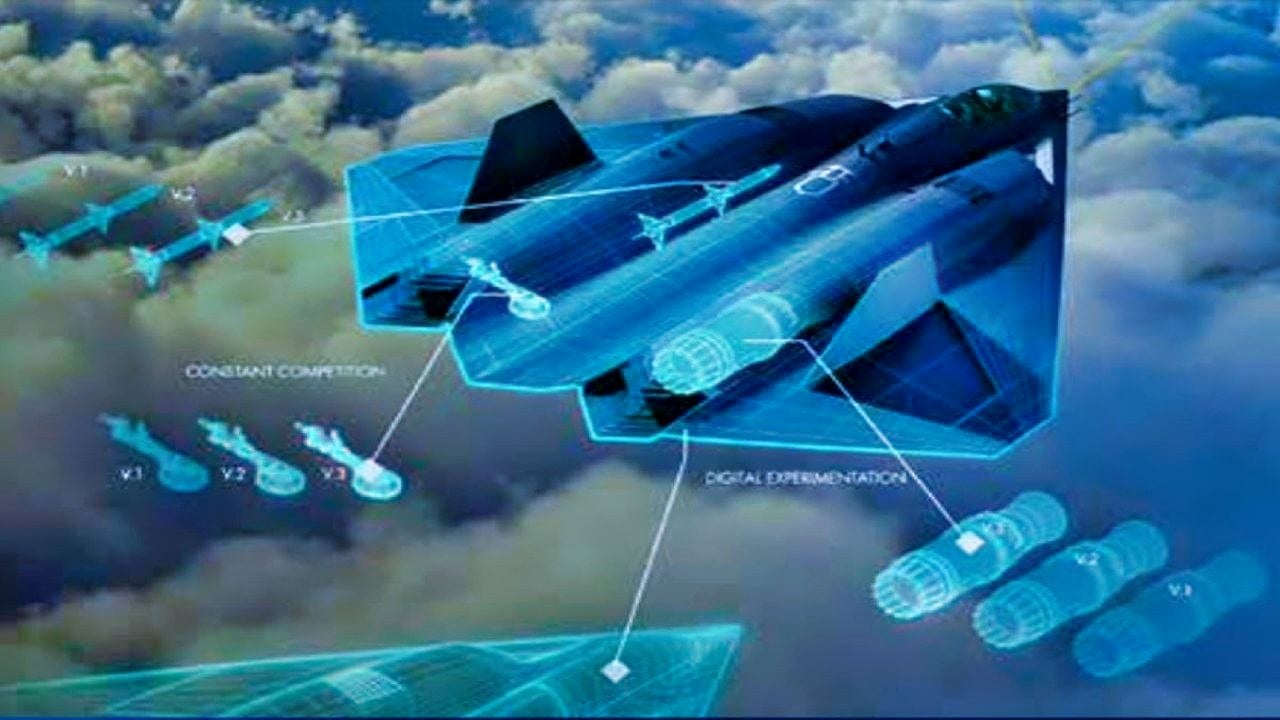
X-44 MANTA. Image Credit: Creative Commons.
Using the F-22 as a Testbed
The X-44 MANTA project began in 1999, several years after the Advanced Tactical Fighter (ATF) program, which ultimately led to the development of the F-22 Raptor.
While the F-22 was being developed, Lockheed Martin proposed a radical alternative: a fighter aircraft that would eliminate traditional tail surfaces and rely entirely on advanced propulsion systems for maneuverability.
This concept was designated the X-44 MANTA, and its primary goal was to demonstrate that full pitch, yaw, and roll control could be achieved without the use of vertical or horizontal stabilizers. In 1999, NASA and the U.S. Air Force began preliminary research into the concept, with plans to test its technologies on modified versions of existing aircraft such as the F-22 or F-15.
The X-44 MANTA features a distinct layout that sets it apart from other aircraft. Traditional aircraft designs rely on vertical stabilizers and rudders for yaw control and horizontal stabilizers for pitch control.
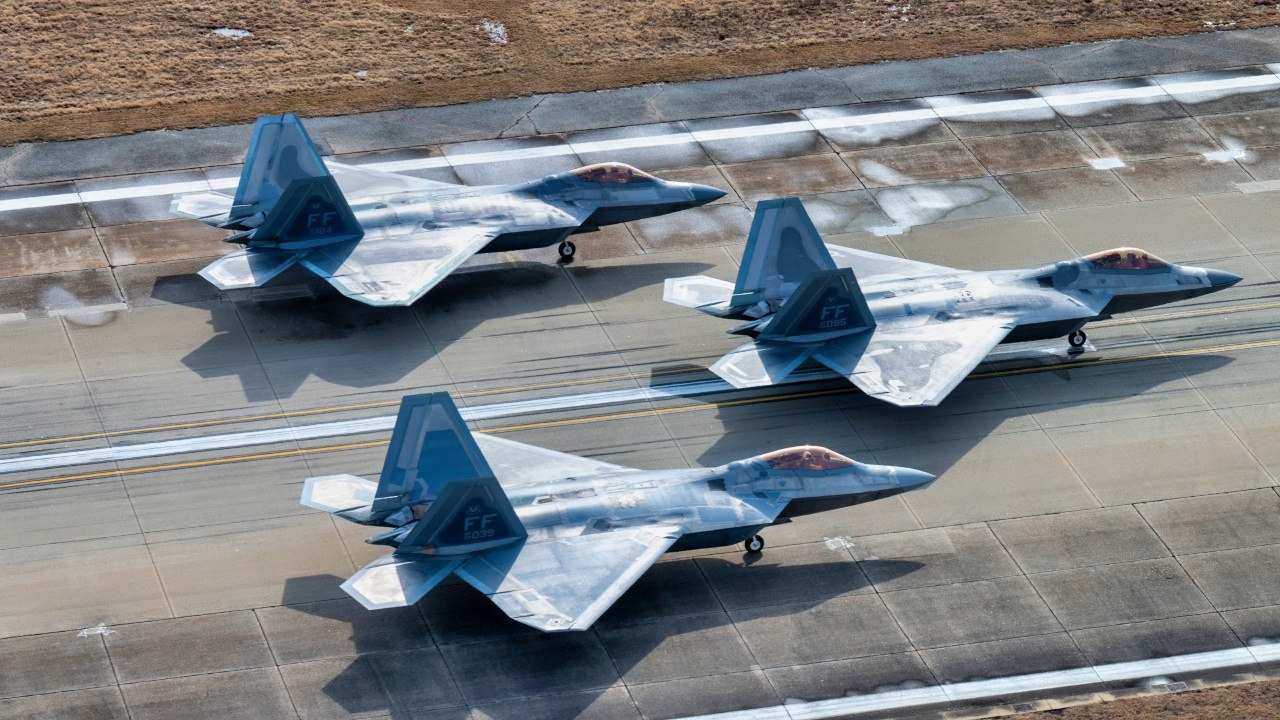
LANGLEY AIR FORCE BASE, Va. – F-22 Raptors from the 1st Fighter Wing sit in position on the runway fduring the Elephant Walk at Langley Air Force Base, Virginia, Jan. 31, 2025. The surge was designed to showcase the wing’s operational readiness and its ability to rapidly mobilize airpower. The 1st FW operates F-22 Raptors and T-38 Talons, maintaining combat capabilities that enable the U.S. Air Force to execute missions across the globe. With a focus on air superiority, the 1st FW plays a critical role in defending the nation’s interests. (U.S. Air Force photo by Tech Sgt. Matthew Coleman-Foster)

A U.S. Pennsylvania Air National Guard KC-135 Statotanker aircraft from the 171st Air Refueling Wing out of Pittsburgh provides fuel for a U.S. Air Force F-22 Raptor from Joint Base Langley–Eustis, April 2, 2025. The air refueling mission was part of routine proficiency training. (U.S. Air National Guard photo by Master Sgt. George Perkins)
The MANTA eliminated these, opting instead for a stretched delta wing design. This wing configuration provided a large surface area for lift and allowed for increased internal fuel storage, thereby extending the aircraft’s operational range.
The absence of tail surfaces also contributed significantly to a reduction in radar cross-section, thereby enhancing the aircraft’s stealth capabilities.
Flying Without Stabilizers
Control of the X-44 MANTA was to be achieved through three-dimensional thrust vectoring. The aircraft would have been powered by modified Pratt & Whitney F119-PW-100 engines, the same engines used in the F-22 Raptor.
These engines were capable of directing thrust in multiple directions, allowing the aircraft to maneuver without the need for conventional control surfaces. This approach promised not only enhanced agility but also reduced mechanical complexity and maintenance costs, as fewer moving parts would be required.
Stealth optimization was a central focus of the X-44 MANTA’s design. Vertical surfaces on aircraft are known to reflect radar waves, making them more detectable by radar. By eliminating these surfaces, the MANTA achieved a level of broadband stealth comparable to that of the B-2 Spirit bomber, while maintaining the agility and speed of a fighter.
The aircraft was also designed to carry weapons internally, preserving its stealth profile. It could be armed with a variety of munitions, including AIM-9 Sidewinder missiles, AIM-120 AMRAAMs, GBU-32 JDAMs, and GBU-39 Small Diameter Bombs.
The Upgraded F-22 That Never Was
In terms of performance, the X-44 MANTA was projected to be a high-speed, high-altitude aircraft with impressive capabilities. It was expected to reach a maximum speed of Mach 2, or approximately 1,553 miles per hour, and operate at altitudes up to 49,213 feet.
Its operational range was estimated to be nearly 2,000 miles, thanks to its large delta wing and increased fuel capacity. The combined thrust from its twin engines would have been around 70,000 pounds, providing the power necessary for advanced maneuvering and sustained supersonic flight.
Despite its promising design, the X-44 MANTA faced several challenges that ultimately led to its cancellation. One of the primary concerns was stability and maneuverability.
Removing tail surfaces introduced control difficulties that thrust vectoring alone could not fully address.
Additionally, the program was deemed too expensive and technically risky, especially given the ongoing development of the F-22 and F-35 programs.
There were also operational uncertainties regarding the aircraft’s survivability in combat, particularly in dogfight scenarios and against emerging hypersonic threats.
So Obscure it Didn’t Even Leave a Legacy
By the early 2000s, funding for the X-44 MANTA was discontinued, and the project was officially shelved.
However, the project likely inspired other works at Lockheed Martin, which have yet to be declassified.
Some have speculated that the project influenced work on the NGAD program; however, considering that the contract for the program was awarded to Boeing, it is unlikely that the F-47 and the X-44 will have many similarities.
Some have also speculated that the X-44 MANTA influenced Lockheed Martin’s X-44A UAV.
While both incorporate tailless designs, that is about where the similarities end.
Based on the limited information available on the MANTA, the two aircraft differ in wing configuration, tactical capabilities, engine layout, and other aspects.
The fact that the two share a similar designation is likely a coincidence, rather than a callback to an obscure project that never even produced a physical prototype.
About the Author: Isaac Seitz
Isaac Seitz, a Defense Columnist, graduated from Patrick Henry College’s Strategic Intelligence and National Security program. He has also studied Russian at Middlebury Language Schools and has worked as an intelligence Analyst in the private sector.
More Military
The X-44 Manta Has a Message for the U.S. Air Force
French-Built Super Étendard Fighter Sunk a British Destroyer
Russia Now Has a Death Star Battlecruiser
France’s Charles de Gaulle Aircraft Carrier Has a Message for Any Navy on Earth
Russia’s Last Aircraft Carrier Might Soon Be Headed to the Grave


