

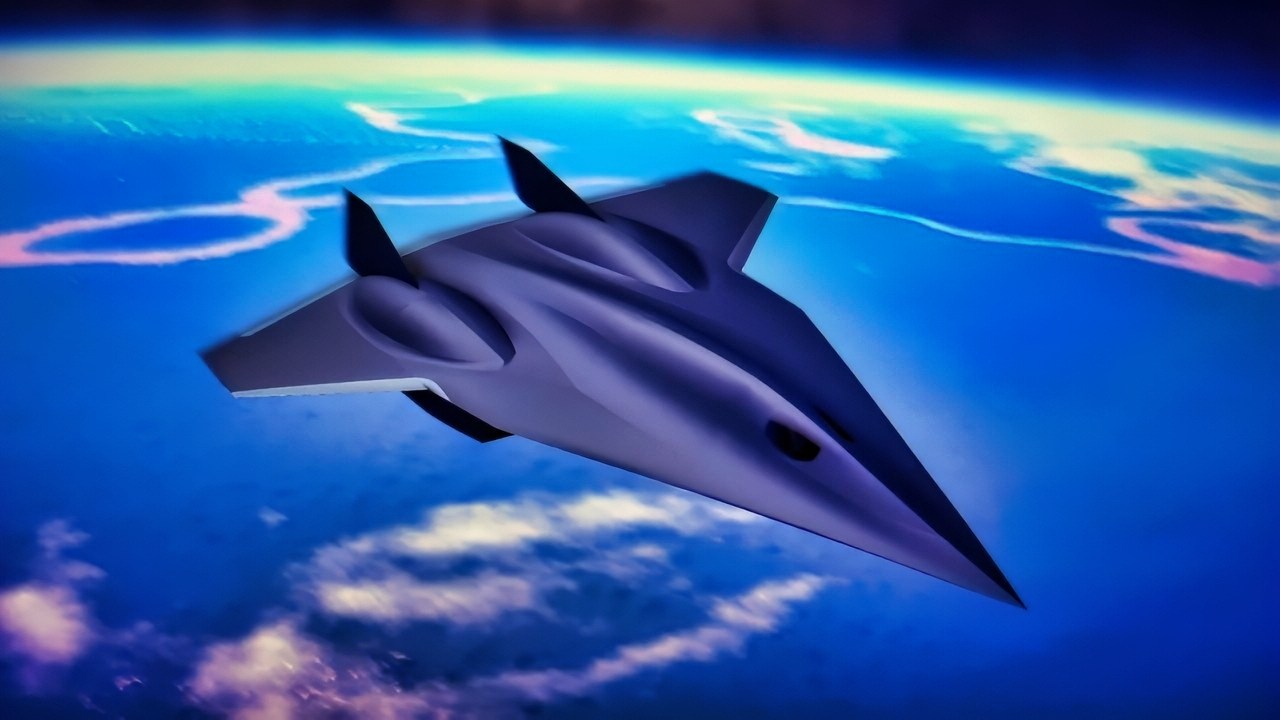
The $64,000.00 question: Will the goshdarn SR-72 Son of Blackbird “SOB” ever actually fly? Ever since its epic appearance in the opening scene of the 2022 box office blockbuster “Top Gun: Maverick,” the SR-72 “Darkstar” AKA “SOB” has captured the imaginations of moviegoers, even though, as far as we officially know, the plane’s existence is purely apocryphal.
The “SOB” acronym doesn’t signify a profane insult in this case, but rather stands for “Son Of Blackbird,” as it’s the presumptive direct successor to the Lockheed SR-71 Blackbird spy plane, which remains the fastest air-breathing airplane ever made (27 years after its retirement and 62 years after it made its maiden flight).
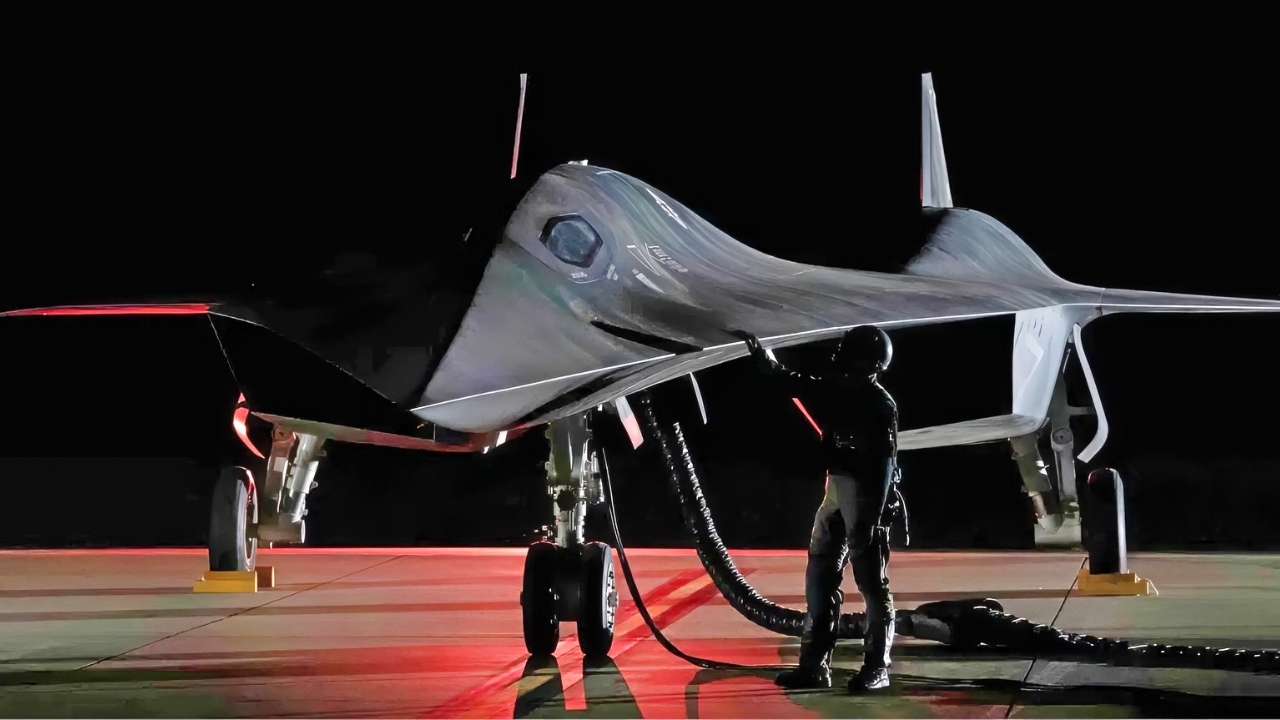
SR-72 Darkstar Lockheed Martin Image.
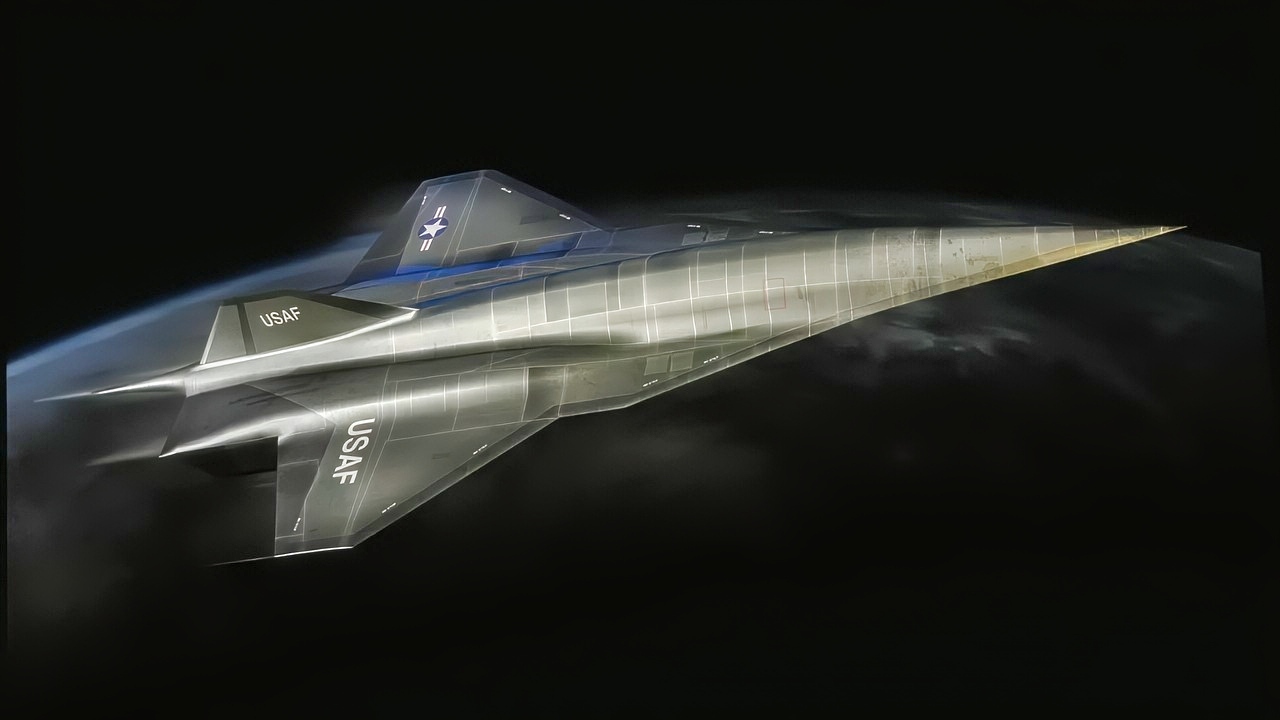
SR-72 from Lockheed Martin Image
A big part of the fascination with the would-be successor bird is its supposed ability to reach a max airspeed of Mach 6.0, nearly double the speed of its “daddy” (so to speak).
But again, will it ever actually fly? Will it ever become a reality at all, even as a mere static display prototype?
(NOTE: Mach 5 (3,386.35 mph; 6,174.0 km/h; 3,333.69 knots) or above is considered the “hypersonic” realm.)
SR-72 SOB = Maybe So(B)?
The narrator of the Found and Explained Official channel on MSN seems to think it’s possibly flying already; as noted in the text caption accompanying the video titled “The SR-72 – The hypersonic spy plane some think is already flying,” “Public timelines place it in the future, but the secrecy surrounding black aircraft programs has helped fuel the idea that some form of the project may already be further along than anyone admits.”
Okay, wonderful if true, but what solid facts, if any, does the narrator present in the video to back up this titillating theory?
Well, quite frankly, hardly any, just pure speculation.
That said, there is already a prior historical precedent upon which to build cautious optimism: the F-117 Nighthawk “stealth fighter” (yet another product of Lockheed’s/Lockheed Martin’s famed “Skunk Works” division) secretly made its maiden flight a good solid six years before it was officially unveiled to the general public.
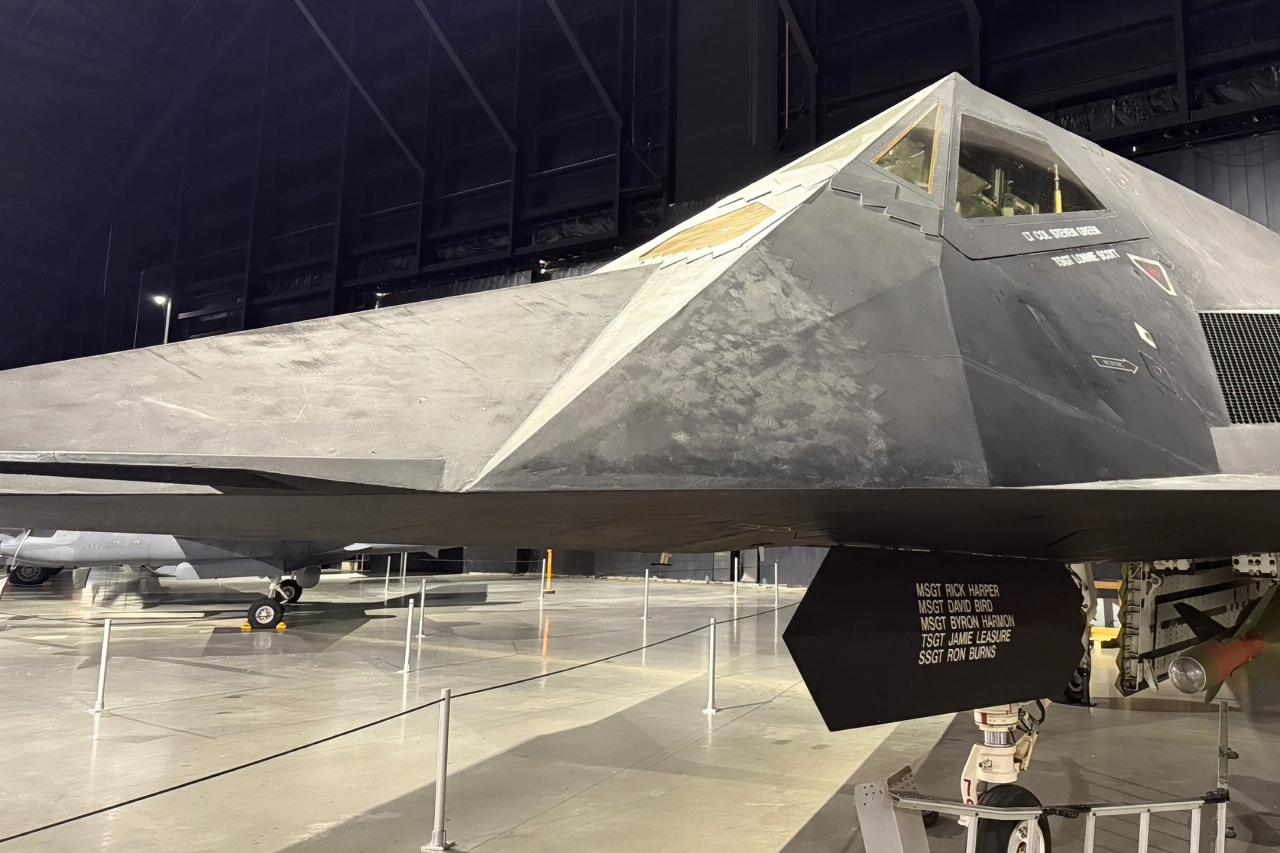
F-117 As Close As We Can Get. National Security Journal Original Photo.
SOB = Maybe Not So(B) Much? (At Least Not Yet Anyway.)
In a July 3, 2025, article for Aviation News, titled “SR-72 Darkstar: Facts, Truth, and the Fine Line Between Reality and Hollywood Fiction,” Marcel Van Leeuwen doesn’t exactly rain on the Darkstar’s parade, but he does provide a balanced and nuanced reality check: “So is the SR-72 Darkstar real? The answer lies somewhere between fact and fiction. The concept is real. The technology is being pursued. And the aircraft in Top Gun: Maverick has roots in genuine engineering work. But whether a working prototype is already flying remains officially unconfirmed.”

SR-72 artist image. Image Credit: Creative Commons.
Somewhat along those lines, fast-forward to March 21, 2026, and Victoria Agronsky of Simple Flying (in turn citing a report in Air And Space Forces Magazine) reports that, “Lockheed Martin has expanded facilities at its Skunk Works complex in Palmdale, California, including a production site designed for advanced digital engineering and hypersonic platform manufacturing. The company has also reported cost overruns in a classified aeronautics program widely believed to be related to the SR-72, indicating that significant research and development efforts are ongoing.”
So, even if the SR-72 isn’t flying yet, it looks like steps are being taken in the right direction at the very least.
Potentially, it could go operational sometime in the 2030s (perhaps alongside the NGAD 6th-generation fighter?).
Prior Mach 6 Precedents and Achievements
Of course, before anyone gets too despondent over the SR-72 not becoming a reality yet, one should take heart in the fact that mankind already has topped Mach 6 speed in a manned aircraft, and yes, I do mean actual aircraft and not spacecraft.
Moreover, amazingly enough, this mind-blowing, multi-Mach-busting achievement was accomplished nearly six decades ago.

X-15A from U.S. Air Force Museum. Image Credit: National Security Journal.
Though the SR-71 was the fastest air-breathing aircraft ever made, the North American X-15 was powered by a rocket engine. (As a side note, the now-defunct North American Aviation [NAA] also gained fame for building WWII warbirds, especially the game-changing P-51D Mustang prop-driven fighter of World War II, as well as the B-25 Mitchell medium bomber immortalized by the Doolittle Raid on Tokyo in 1942.)
And on October 3, 1967, that combination of the rocket engine and fearless flying forte enabled then-U.S. Air Force Major (eventual retired Colonel) William “Pete” Knight to make aviation history with a speed of Mach 6.7 (5,140.7 mph, 8.273.16 km/h, 4,467.15 knots), thus making them-Maj. Knight is the fastest flying human pilot ever.
A key difference between the X-15 and the SR-72 is that, if the SOB becomes a reality, it would use scramjets rather than rocket engines. A scramjet can be defined (courtesy of SKYbrary) as “a variant of an air breathing jet engine that does not include a rotary compressor; rather, it uses the engine’s forward motion and shock wave effect to compress the incoming air…scramjets do not slow the intake airflow to subsonic speeds for combustion, instead igniting the fuel air mixture at supersonic speeds. The supersonic combustion design allows the engine to operate at speeds above the mach [sic] 6 limiting speed of a ramjet engine.”
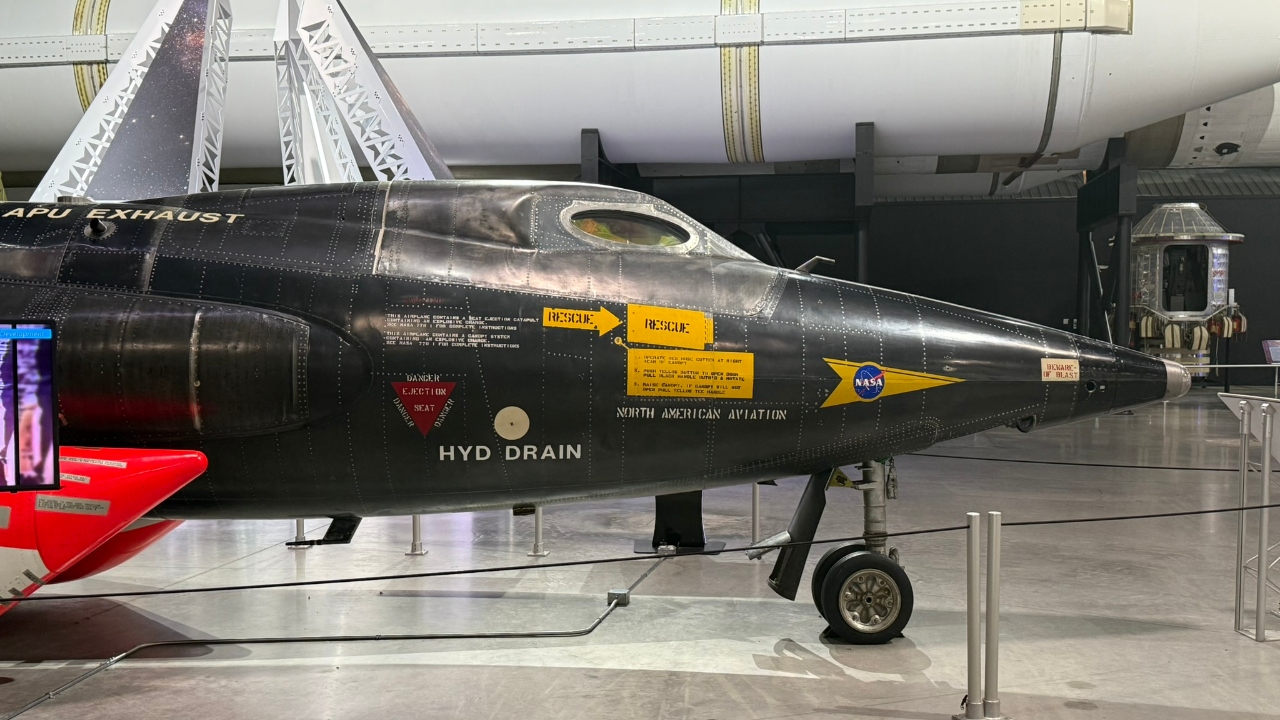
X-15 Harry J. Kazianis National Security Journal Photo.

X-15 Long Shot and Engine Photo. Image Credit: National Security Journal.
Time will tell. Stay tuned, dear readers, as we’ll be sure to report upon any new developments with this “Secret Squirrel” (so to speak) project as soon as they become publicly available.
About the Author: Christian D. Orr
Christian D. Orr is a Senior Defense Editor. He is a former Air Force Security Forces officer, Federal law enforcement officer, and private military contractor (with assignments worked in Iraq, the United Arab Emirates, Kosovo, Japan, Germany, and the Pentagon). Chris holds a B.A. in International Relations from the University of Southern California (USC) and an M.A. in Intelligence Studies (with a concentration in Terrorism Studies) from American Military University (AMU). He is also the author of the book “Five Decades of a Fabulous Firearm: Celebrating the 50th Anniversary of the Beretta 92 Pistol Series,” the second edition of which was recently published.


