


On May 1, 2013, Boeing’s X-51A Waverider was dropped from a B-52 Stratofortress over the Pacific Ocean, accelerated to Mach 4.8 by a rocket booster, and ignited its hydrogen-fueled scramjet engine to sustain hypersonic flight at Mach 5.1 for three-and-a-half minutes — the longest air-breathing hypersonic flight in history at the time. The aircraft flew more than 230 nautical miles in roughly six minutes, building on data from NASA’s X-43A program, which had sustained scramjet operation for only about 10 seconds. The X-51A proved that a practical, sustained hypersonic cruise was achievable — and 13 years later, the United States is still racing to field an operational hypersonic weapon while Russia, China, North Korea, and Iran have already deployed theirs.
X-51A: The Hypersonic Miracle

X-51A Waverider. Image Credit: Creative Commons.
The Boeing X-51A Waverider was one of the most important hypersonic flight programs in United States history. In fact, the X-51 was arguably the progenitor of today’s hypersonic weapons–weapons that the United States, despite having been the original player in that field decades ago, still lacks in its arsenal.
Could the United States build a practical air-breathing hypersonic engine that sustained flight above Mach 5 long enough to become militarily useful? That was the question that drove the impressive X-51A Waverider program. Despite years of failures and setbacks, the X-51’s answer to that question was a resounding “yes.”
The Scramject Revolution
The X-51A Waverider was an uncrewed experimental hypersonic cruise vehicle roughly the size of a missile. Waverider was carried on the wing of a Boeing B-52 Stratofortress and launched at altitude over the Pacific Ocean.
Once released, a rocket booster blasted the vehicle to Mach 4.8. After the booster separated, the X-51A’s scramjet engine ignited. It was that scramjet that was the centerpiece of the Waverider program.
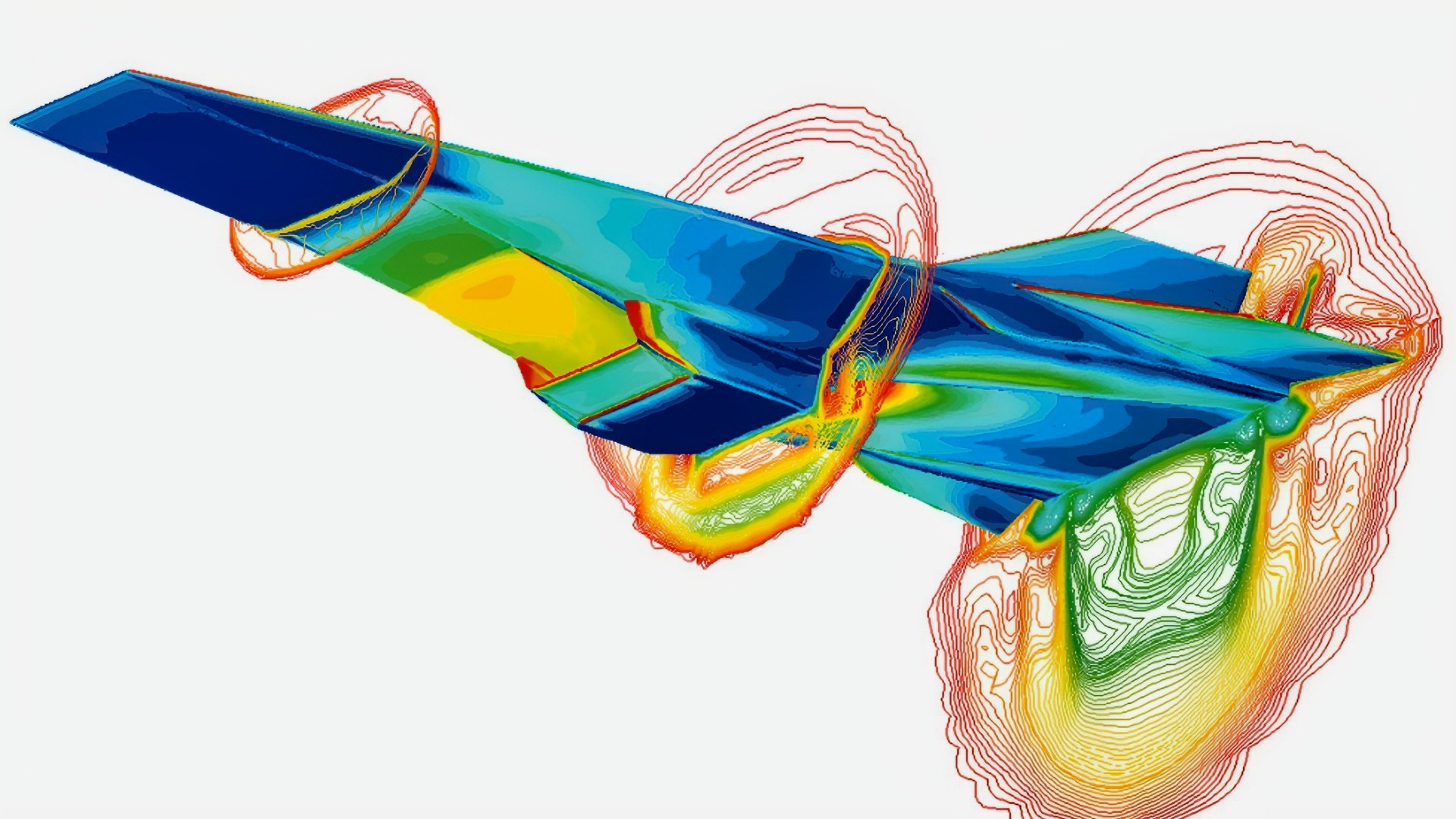
X-43A Test Image. Image Credit: Creative Commons.
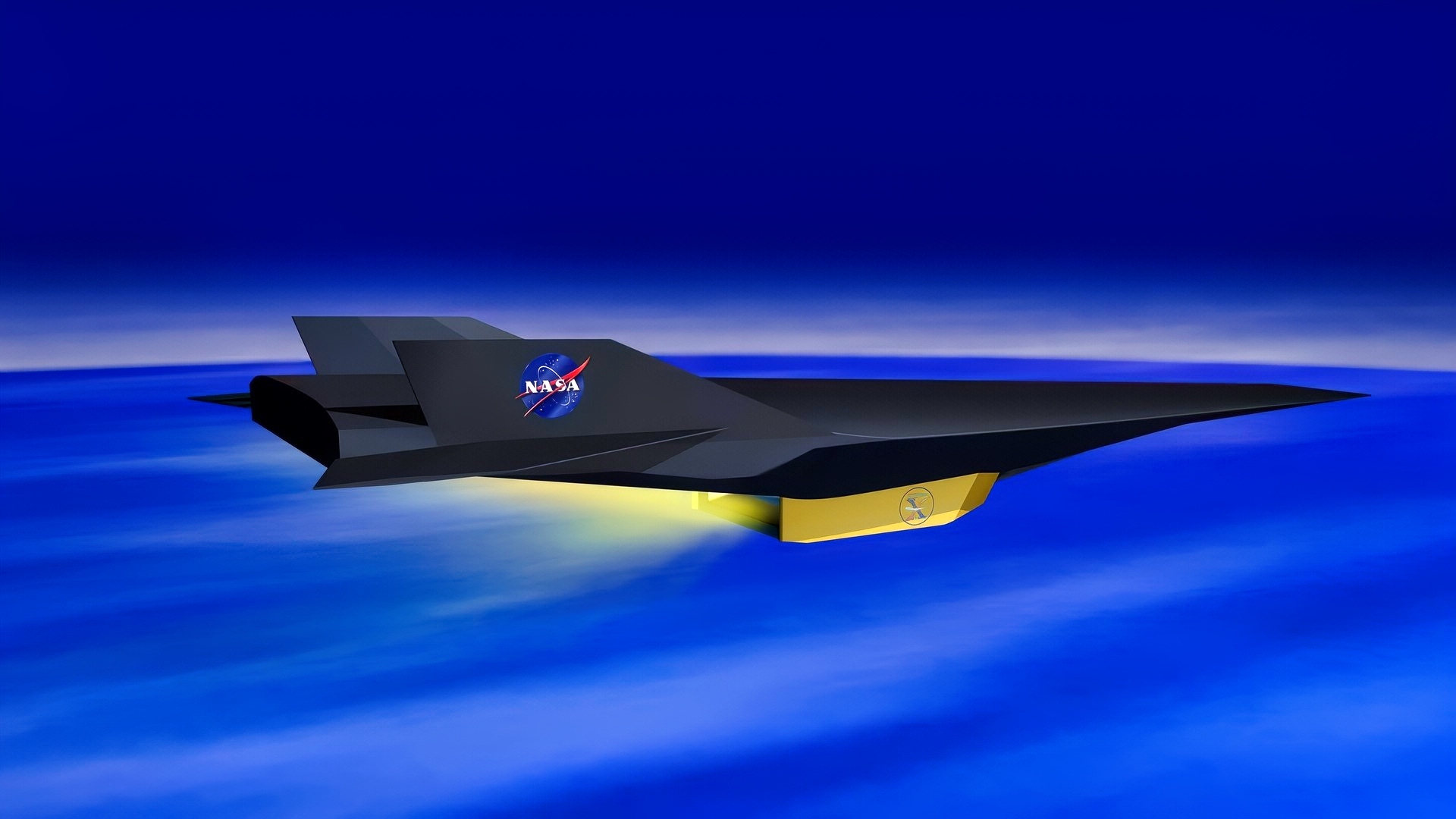
X-43A from NASA. Image Credit: Creative Commons.
Unlike a normal jet engine, which slows incoming air before combustion, a “supersonic combustion ramjet,” or “scramjet,” keeps airflow moving at supersonic speed through the engine itself. That enables efficient propulsion at extreme hypersonic speeds where conventional turbines cannot operate.
The Engineering Nightmare
Engineering challenges abounded.
Among them was the fact that, when operating at Mach 5 (or faster), shockwaves formed around the vehicle. A hard lesson learned from the SR-71 Blackbird program was that systems flying at supersonic speeds, as the X-51A did, endured extreme surface temperatures. Airflow instability was a constant risk to the vehicle’s combustion process. What’s more, the slightest disturbance could cause total engine failure.
In essence, the X-51A existed to prove that US engineers could solve these problems in real-world flight conditions.
Before the X-51A graced the cerulean skies over North America’s Pacific coastline, hypersonic demonstrations usually lasted mere seconds. Earlier systems, like NASA’s X-43, achieved incredible speeds approaching Mach 10–but only sustained scramjet operation for around ten seconds.
Enter the X-51A, which perfectly demonstrated sustained, controlled hypersonic cruise.
The Historic Flight That Changed Warfare
On May 1, 2013, the fourth and final X-51A flight became historic. The vehicle flew more than six minutes total and maintained scramjet-powered hypersonic flight for roughly three-and-a-half minutes, reaching Mach 5.1.
The flight covered more than 230 nautical miles, too.
At the time, that flight was the longest air-breathing hypersonic flight ever achieved. That fact mattered because it demonstrated how hypersonic systems were moving from lab experiments toward operational weapons.
X-51A’s name, “Waverider,” was not merely a marketing ploy. NASA named it that because a waverider, as its name suggests, uses its own shockwave as part of its aerodynamic design. Rather than merely surviving shockwaves, the vehicle effectively “rides” them to generate lift and improve efficiency at hypersonic speeds.
Why the Pentagon Saw a Strategic Revolution
That concept is critical because hypersonic flight creates massive drag and thermal stress. Traditional aircraft designs become increasingly inefficient as speed rises.
And the strategic implications of X-51A were immediately understood by the US military. An operational scramjet-powered weapon could theoretically travel thousands of miles extremely quickly. Such a system could maneuver unpredictably, all as part of a larger mission to strike distant targets with minimal warning.
What’s more, the speed and erratic maneuvering of the X-51A meant that any hypersonic weapon based on that system could avoid traditional missile-defense systems that protected enemy territory. Oh, and the X-51A used atmospheric oxygen instead of carrying oxidizer as a rocket does.
So, because scramjets are air-breathing, they can potentially achieve longer range and lower weight than pure rocket systems.
DARPA’s Big Vision for Hypersonic Warfare
The US Air Force and the Defense Advanced Research Projects Agency (DARPA) viewed the X-51A as a key stepping stone toward developing hypersonic cruise missiles, rapid global-strike systems, potentially reusable hypersonic aircraft, and more affordable access-to-space concepts.
Of the four test flights, the first was largely successful; the second failed due to control issues; the third failed due to inlet/unstart problems; and the fourth was the historic breakthrough flight, as detailed above. Those failures, though, were important because they demonstrated how difficult scramjet propulsion actually is.
Even today, “unstart” events–where airflow inside the engine becomes unstable and collapses combustion–remain one of the central problems in hypersonic propulsion. Yet, it’s a problem that continues to plague US projects. Russian, Chinese, even Iranian and North Korean hypersonic development programs appear to have surmounted this complication.
America Built the Future–Then Let Russia and China Catch Up
Ultimately, the X-51A did not become an operational weapon itself.
But it laid critical groundwork for modern American hypersonic programs.
Nearly every current American hypersonic effort–including air-breathing cruise missiles–builds on lessons learned from the X-51A’s propulsion, thermal management, materials science, and flight-control data.
The irony is that after the X-51A’s success in 2013, the US seemed to have slowed down its interest in–and commitment to–developing hypersonic vehicles. At the same time, the Chinese and Russians aggressively accelerated their own hypersonic weapons development.
Indeed, a year earlier, the Obama administration was accused, via then-Secretary of State Hillary Clinton’s office, of having wrongly shared US hypersonic vehicle development plans with the Russians as part of the Obama administration’s infamous (failed) diplomatic “reset” with Moscow.
That delay is one reason hypersonics became such a major Pentagon priority in the late 2010s and early 2020s.
In many ways, the X-51A proved the technology worked long before the United States defense establishment fully committed to mass-fielding hypersonic weapons. X-51A proved that the systems would work, but they were very complex and difficult to maintain.
The fact that almost all of America’s enemies on the world stage already had their own arsenals of hypersonic weapons long before the Americans fielded theirs means the Pentagon is desperately racing to build its own.
About the Author: Brandon J. Weichert
Brandon J. Weichert is the Senior National Security Editor at 19FortyFive.com. Recently, Weichert became the editor of the “NatSec Guy” section at Emerald. TV. He was previously the senior national security editor at The National Interest. Weichert hosts The National Security Hour on iHeartRadio, where he discusses national security policy every Wednesday at 8 p.m. Eastern. He hosts a companion show on Rumble entitled “National Security Talk.” Weichert consults regularly with various government institutions and private organizations on geopolitical issues. His writings have appeared in numerous publications, among them Popular Mechanics, National Review, MSN, and The American Spectator. And his books include Winning Space: How America Remains a Superpower, Biohacked: China’s Race to Control Life, and The Shadow War: Iran’s Quest for Supremacy. Weichert’s newest book, A Disaster of Our Own Making: How the West Lost Ukraine, is available for purchase at any bookstore. Follow him via Twitter/X @WeTheBrandon.


