


Before the Lockheed Martin F-35 Lightning II became the most-produced stealth fighter in history, it had to beat Boeing’s X-32 in the Joint Strike Fighter competition — the most consequential fighter contract of the post-Cold War era. Boeing’s X-32 used a direct-lift STOVL system but never demonstrated supersonic flight and vertical landing in the same configuration, while Lockheed’s X-35 cleanly executed short takeoff, supersonic cruise, and vertical landing in one continuous flight profile. Boeing lost the contract in 2001, and the X-32 — widely mocked at the time as “ugly” — never flew again.
The Boeing X-32 Stealth Fighter Failure
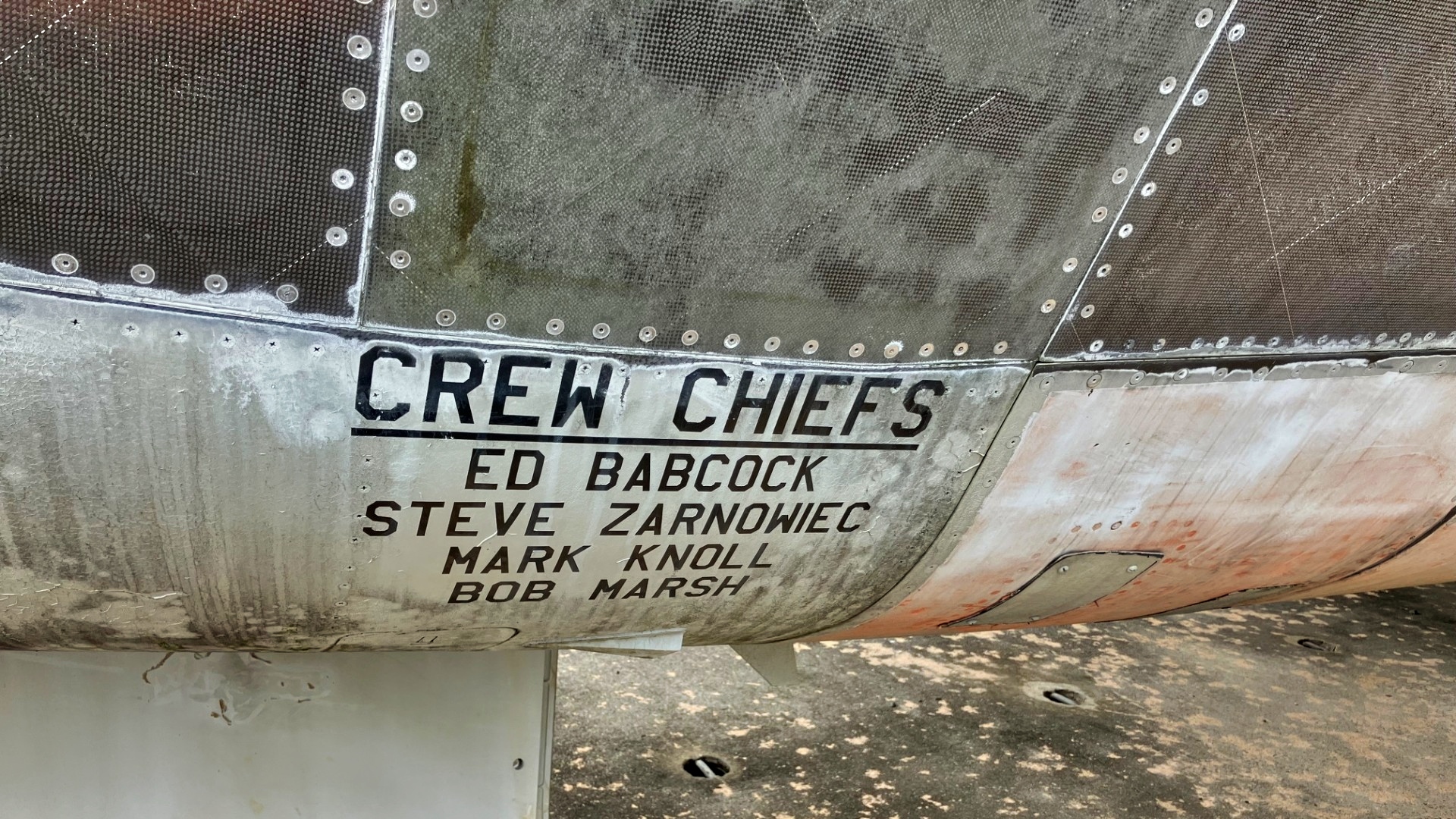
Boeing X-32 NSJ Original Image. Credit: Christian D. Orr.
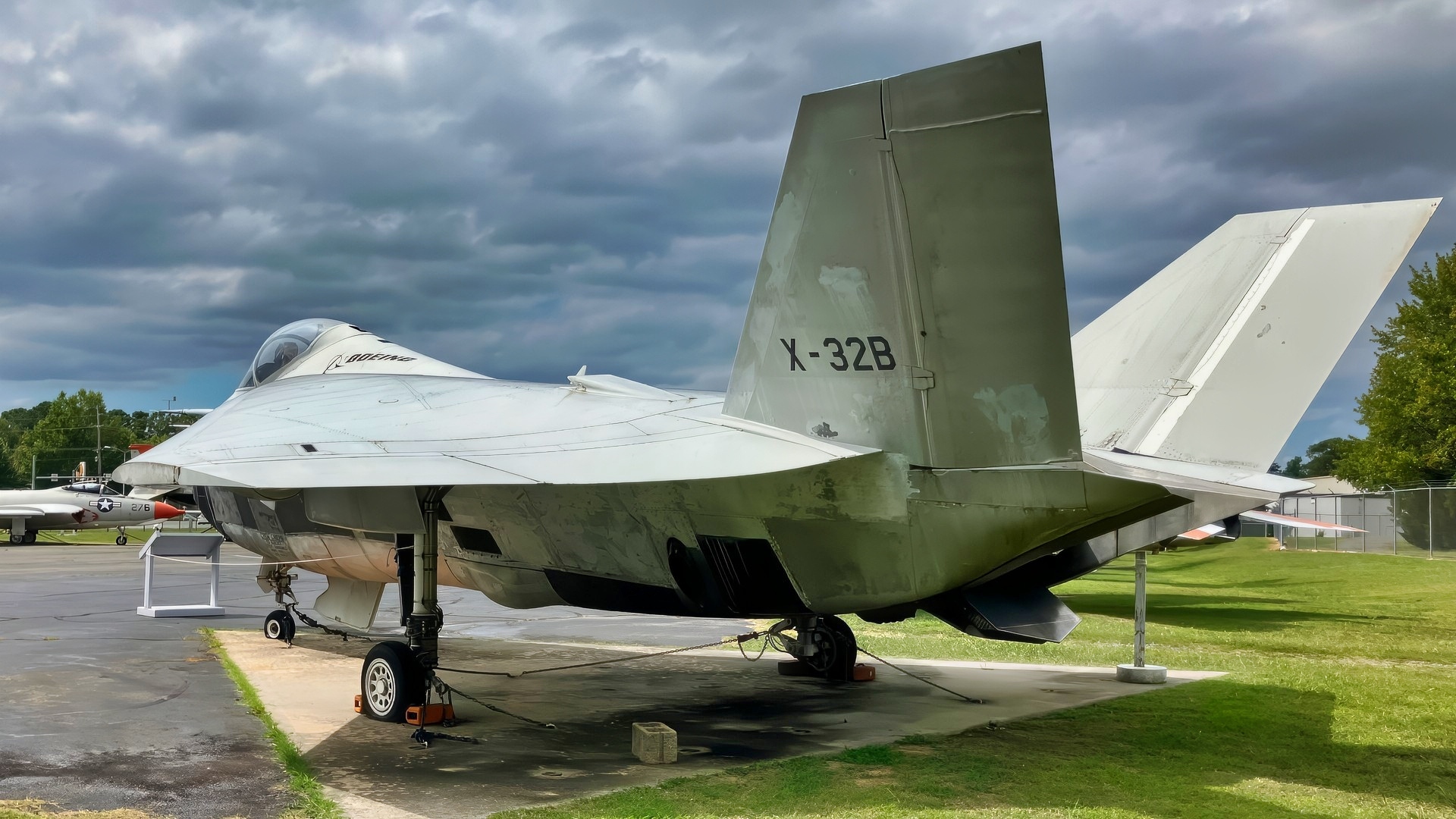
Boeing X-32 Stealth Fighter in Maryland. Image Credit: National Security Journal.
Before the F-35 Lightning II, there was the Joint Strike Fighter (JSF) program, featuring the Lockheed Martin X-35, which became the F-35, and the Boeing X-32, which lost, of course. The common narrative holds that the X-32 lost because it was ugly. And that’s true; the X-32 was ugly. But the JSF loss had more to do with aesthetics. In reality, the loss was a mixture of engineering tradeoffs, performance gaps, and program execution. And perhaps, to an extent, looks, too.
The Ugly Airplane Theory
The X-32 was visually distinct, with a large chin intake and a bulky forward fuselage. The common perception was that the aircraft was awkward and ugly, with a face only a mother could love.
That’s a fair assessment; the X-32 was ugly.
And this did matter, if subtly. Fighter programs are political and cultural and inherently oriented around optics and perception. So an ugly aircraft is a harder sell because it compromises the political and cultural narratives that are always lurking beneath the surface of aircraft procurement programs.
Ultimately, looks didn’t decide the program—but they certainly didn’t help Boeing either.

Boeing X-32 Fighter Artist Drawing U.S. Air Force.
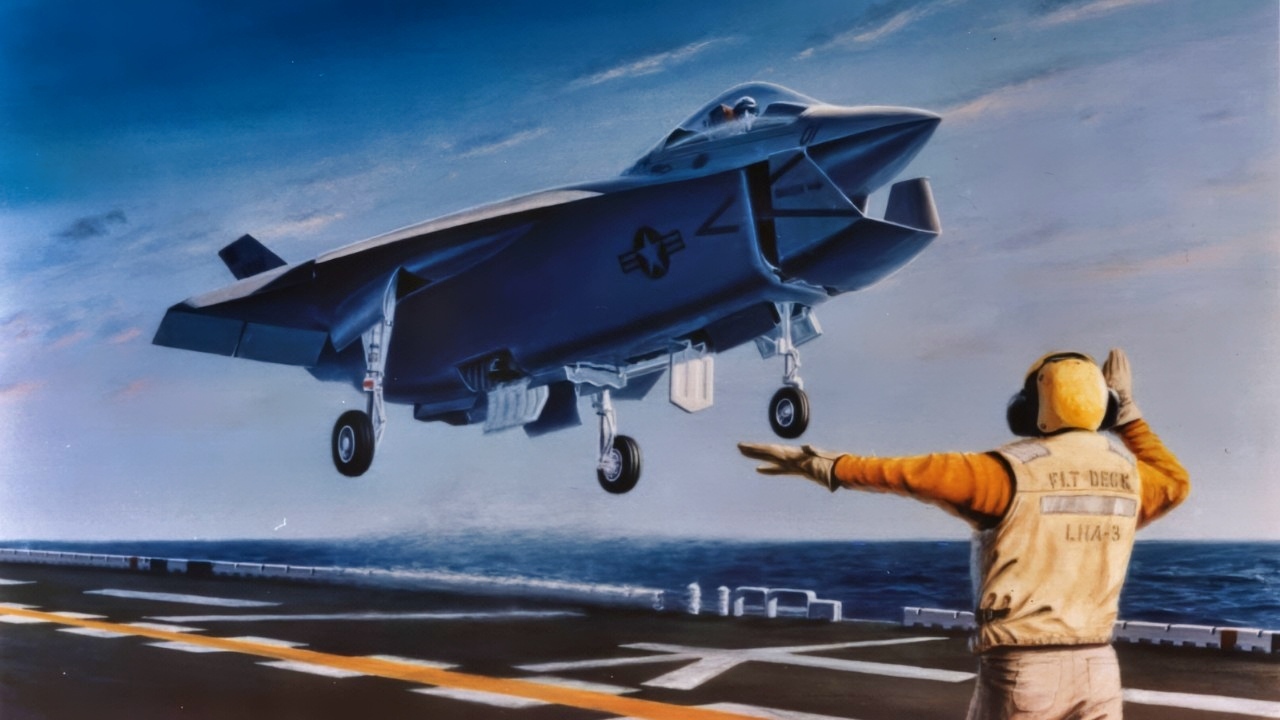
Original Caption in 1996: This artist’s conception is the U.S. Marine Corps version of the Joint Strike Fighter to be built by Boeing. Secretary of Defense William J. Perry announced the selection of the Boeing Company, Seattle, Wash., as one of two contractors to be awarded a cost-plus-fixed-fee contract for the Joint Strike Fighter Concept Demonstration Program during a briefing at the Pentagon on Nov. 16, 1996. The Joint Strike Fighter is the military’s next generation, multi-role, strike aircraft designed to complement the Navy F/A-18 and the Air Force F-22 aircraft. The Concept Demonstration Program will feature flying aircraft demonstrators, ground and flight technology demonstrations, and continued refinement of the contractor’s weapons system concept for the next generation strike fighter for the Navy, Marine Corps, Air Force, and Royal Navy. With the first operational aircraft delivery slated for 2008, the development program is a joint U.S.-United Kingdom effort that seeks to affordably replace aging strike assets while maintaining the national and allied combat technological edge. The Lockheed Martin of Fort Worth, Texas, will also develop their concept of the Joint Strike Fighter under a similar contract.
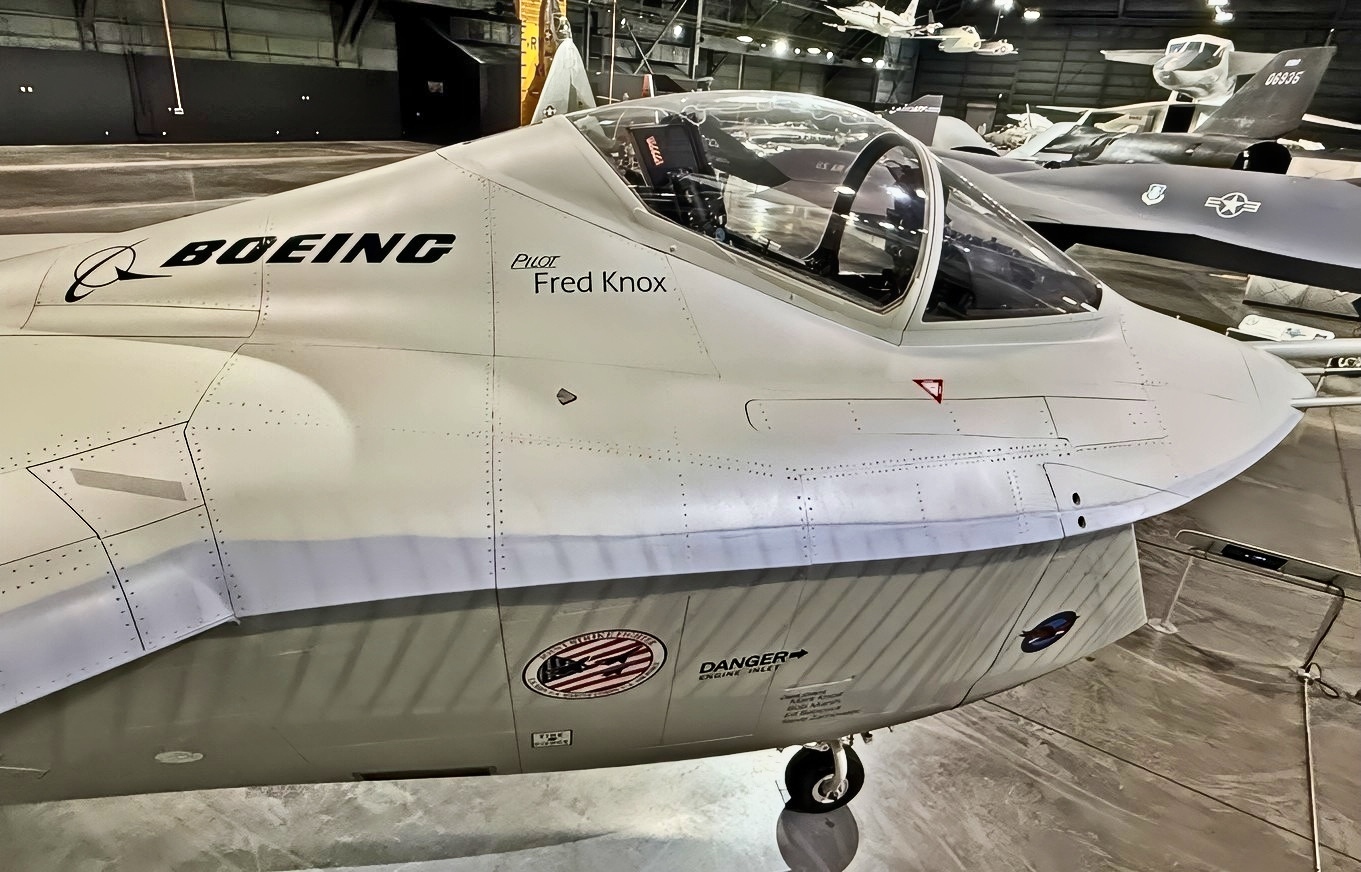
Boeing X-32 JSF. Original Photo Taken By National Security Journal Editor Harry J. Kazianis.
Design Differences
The X-32 used a single engine and a direct-lift STOVL system that vectored thrust downward. The X-35, meanwhile, used a shaft-driven lift fan and a separate vertical lift system. The X-32 was simpler, but the more complex X-35 was more effective. Boeing optimized for simplicity, an approach with merits, but Lockheed optimized for performance, which earned higher marks.
In terms of STOVL performance, which was a Marine Corps priority to replace the aging Harrier jump jet, the X-32 struggled with weight and lift efficiency.
As a result, Boeing had to redesign the wing and further enlarge the intake. The X-32 failed to fully demonstrate supersonic speed and STOVL capability in the same configuration —a major disappointment —while the X-35 performed superlatively: it successfully demonstrated short takeoff, supersonic flight, and vertical landing—all in one flight profile. The X-35 proved it could meet JSF program requirements without compromising, while the X-32 did not.
Aerodynamic and Performance Gaps
The X-32’s most visually distinct feature was the large intake, which also created a drag penalty. And overall, the X-32 had less refined aerodynamics. The X-35 was more effective in this respect, with better lift distribution and a more conventional fighter layout without the massive chin intake.
The X-35 was more efficient in terms of supersonic performance, too, whereas the X-32 was more compromised. Indeed, the X-32’s design sacrifices are most evident in flight efficiency and flexibility.
The X-32 raised serious questions about one Pentagon priority: long-term adaptability. The X-35 was seen as the better growth platform, with more upgrade potential. The fighter was more constrained, with fewer pathways for improvement. And because JSF was not about the prototype, or the next five to ten years, but about the next generation of air combat, the X-35 was seen as the smarter, more enduring choice.
Marketing and Presentation
Lockheed, perhaps internalizing the marketing success of their ATF performance, where their YF-22 out-marketed Northrop’s YF-23, entered the JSF competition with a stronger narrative and a more clearly marketed demonstration of success.
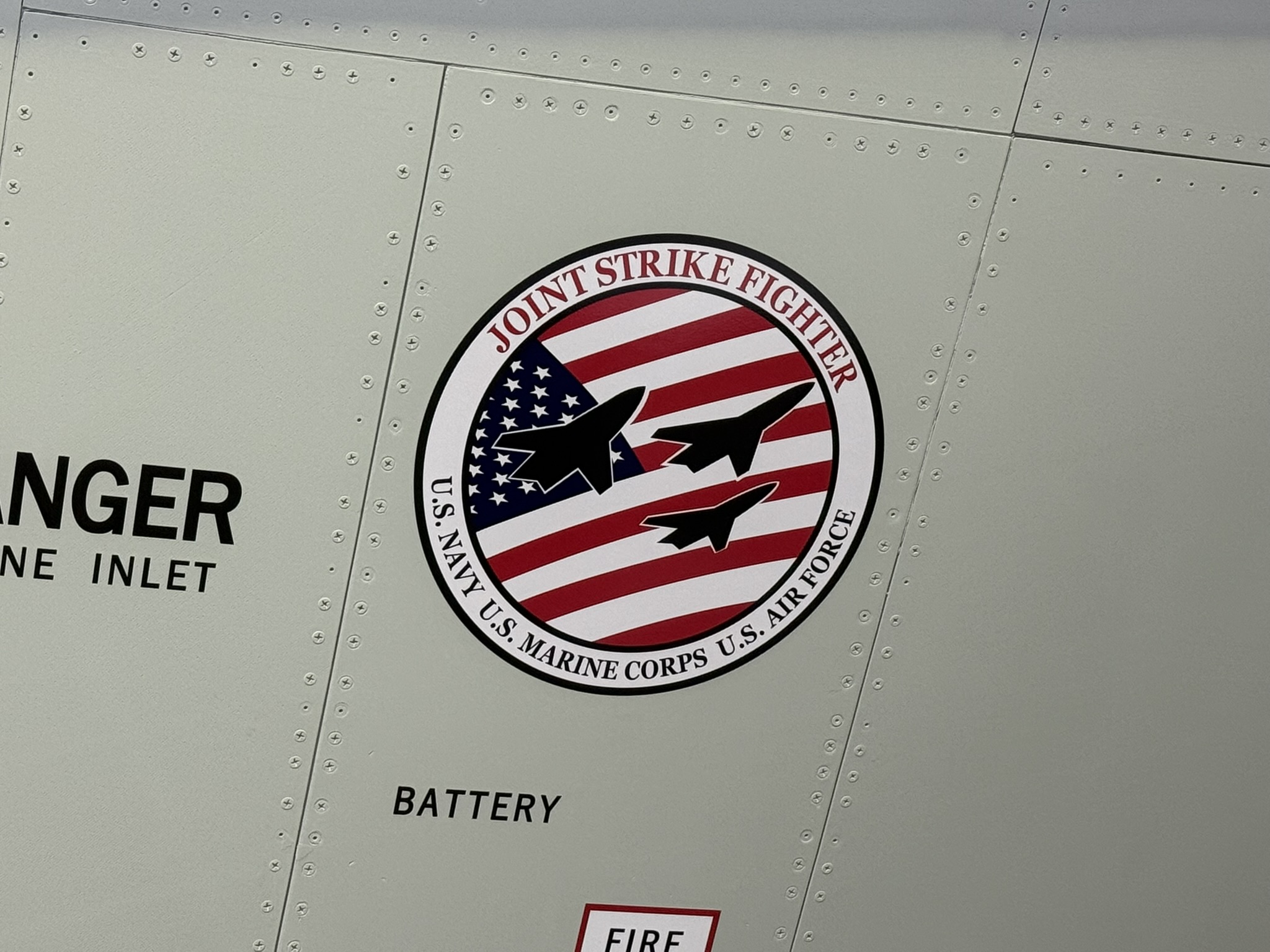
Boeing X-32 National Security Journal Photo. Taken on 7/19/2025.
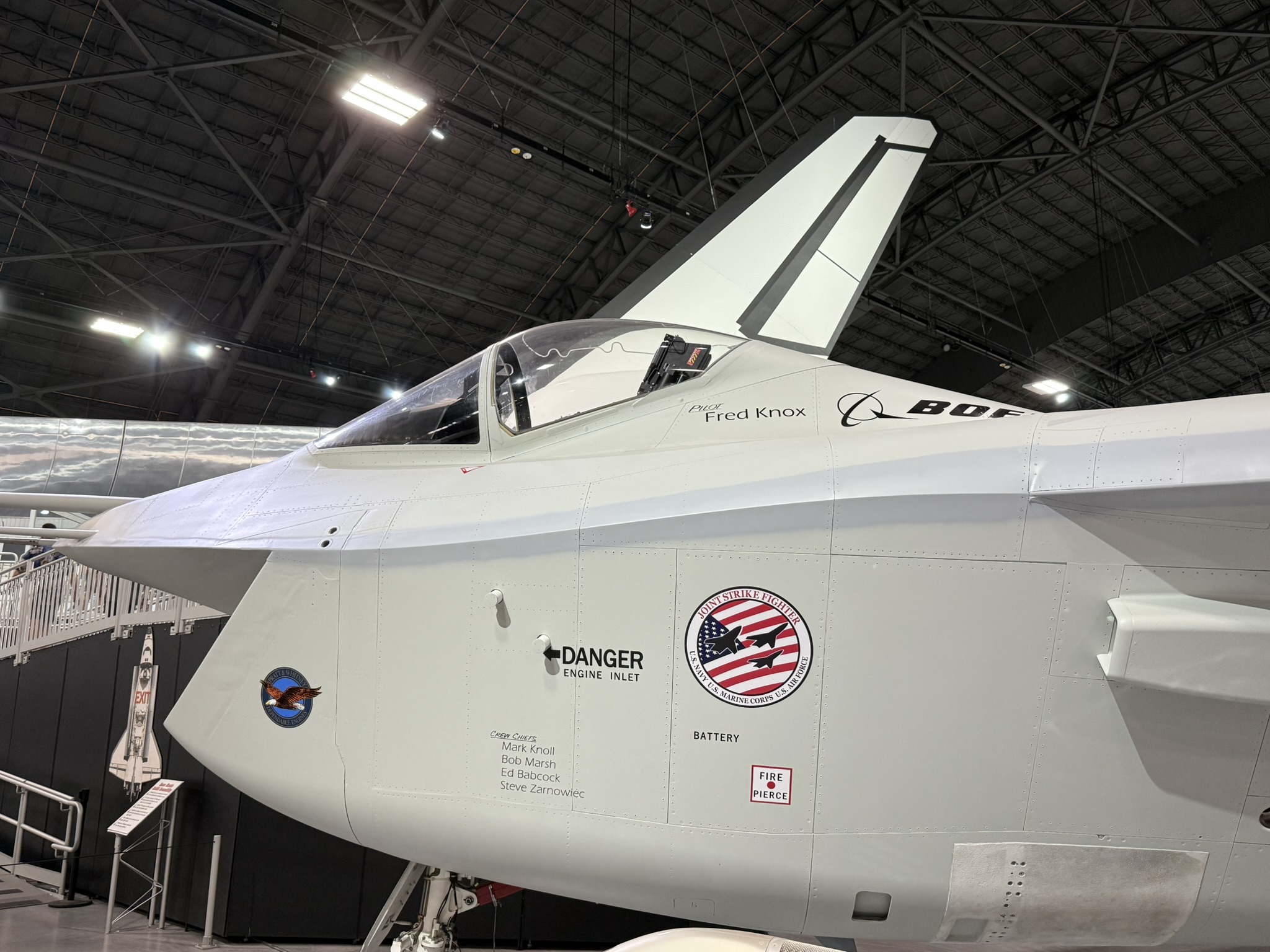
Boeing X-32 National Security Journal Photo. Taken on 7/19/2025.

Boeing X-32 National Security Journal Photo. Taken on 7/19/2025.
Boeing, on the other hand, struggled to frame advantages and executed a redesign that signaled weakness. The X-35 was marketed as the future of the fighter jet; the X-32 looked and felt like an experiment. The marketing between the two aircraft reinforced the performance differences. But what Boeing needed was some clever marketing to mask the performance differences.
Was It Really About Looks?
The JSF decision was not really about looks. But aesthetics did reflect underlying design compromises. The X-32 looked funny because it was a little bit funny. The X-35 looked cleaner, and it was cleaner. Sometimes, when something looks off, it is off.
In this case, the ugly plane argument may have been shorthand for deeper engineering shortcomings. Ultimately, the X-32 JSF loss was not about one lone factor; it was a combination of STOVL performance gaps, aerodynamic compromises, lower growth potential, and weaker marketing.
Boeing built a workable, odd aircraft. Lockheed beat Boeing with a system better suited to the next generation of warfare.
About the Author: Harrison Kass
Harrison Kass is a writer and attorney focused on national security, technology, and political culture. His work has appeared in City Journal, The Hill, Quillette, The Spectator, and The Cipher Brief. He holds a JD from the University of Oregon and a master’s in Global & Joint Program Studies from NYU. More at harrisonkass.com.


JC Hall
May 10, 2026 at 1:57 pm
A friend on the X-32 program at Boeing resigned and went to Northrop Grumman after he heard USAF personnel calling it “The Monica.” This was shortly after the Bill Clinton/Monica Lewinsky scandal. Performance aside, he knew that no self-respecting fighter pilot would fly a “Monica.”
MJC
May 10, 2026 at 10:44 pm
And we should have looked into the logistics trail back then. Wonder if things would have turned out the same?
Nathan Fugate
May 12, 2026 at 5:21 pm
The short, squat fuselage with that huge gaping mouth up front was necessary because they chose a direct lift system for S/VTOL.
This requires the engine to be mounted in the center/forward part of the plane. The lift fan on the X-35/F-35 lets the engine be in the rear.