
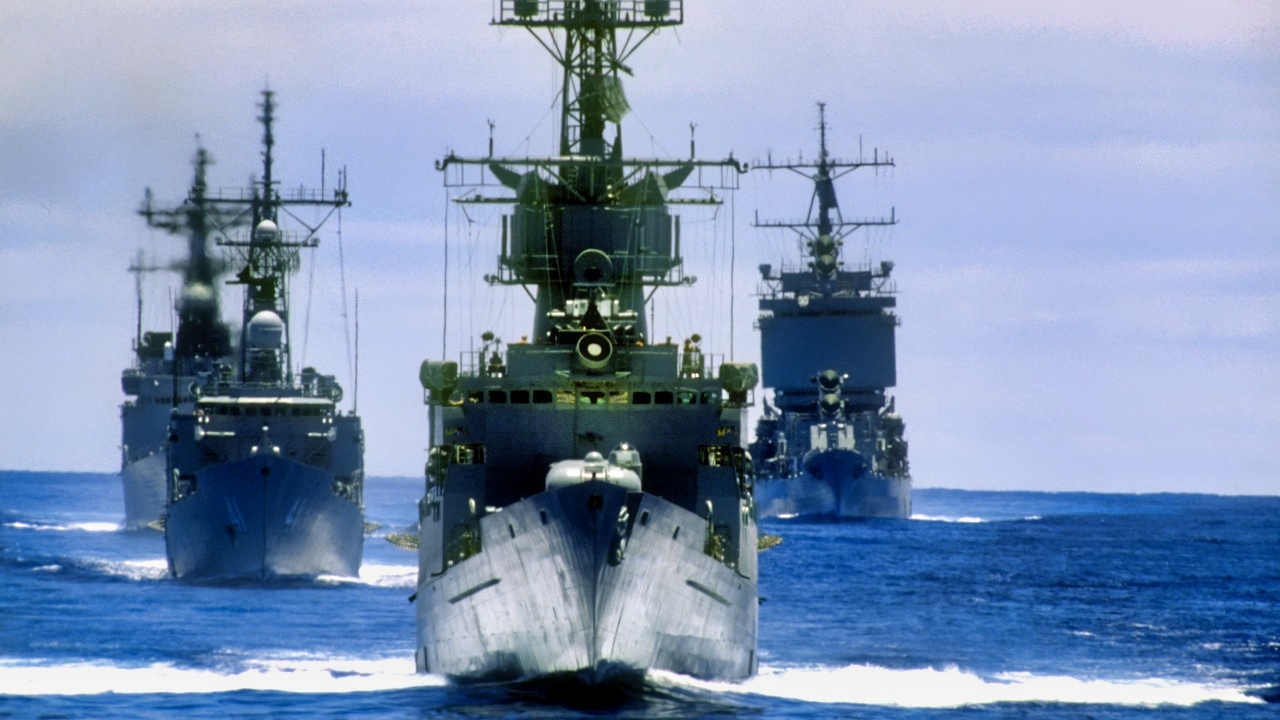
The U.S. Navy is reviving the concept of a nuclear-powered surface combatant outside aircraft carriers for the future Trump-class battleship program — the first time since the Cold War the service has moved toward it. The U.S. Navy operated the USS Long Beach (CGN-9) — the world’s first nuclear-powered guided missile cruiser and the first nuclear-powered surface warship ever built — more than 60 years ago to fight Russia.
Meet the USS Long Beach: The Original ‘Trump-Class’
The U.S. Navy confirmed this week that its future Trump-class battleship program will use nuclear propulsion, marking the first time since the Cold War that the service has moved toward building a new nuclear-powered surface combatant outside of aircraft carriers

Trump-Class Battleship. Image Credit: White House.

Trump-Class Battleship. Image Credit: White House.
The plan, disclosed in the Navy’s newly released 30-year shipbuilding strategy, might well revive long-running debates inside naval circles about whether nuclear reactors actually make sense on large surface warships, given the enormous costs, maintenance demands, logistical complexity, and survivability concerns involved.
But these discussions are not new. More than sixty years ago, the Navy attempted to answer many of the same questions with the construction of USS Long Beach, the world’s first nuclear-powered guided missile cruiser and the first nuclear-powered surface warship ever built.
This new attention on nuclear-powered surface combatants also comes only weeks after the Naval Sea Systems Command opened a public comment period regarding the final disposition of the ex-Long Beach (CGN-9), which has remained moored at Puget Sound Naval Shipyard awaiting disposal for decades after leaving active service.
Long Beach was a Cold War cruiser, but it was far from a regular naval asset.
It was, in fact, one of the most ambitious naval experiments ever attempted by the United States, combining nuclear propulsion, advanced radar systems, guided missile warfare, and long-range fleet air defense into a single vessel designed to escort carrier groups worldwide without conventional refueling.
At the height of the Cold War, the ship represented the Navy’s vision of the future: a fast, heavily armed, nuclear-powered warship capable of operating almost indefinitely far from American shores.
In many ways, the current debate surrounding the ambitious Trump-class battleships mirrors the arguments made over Long Beach in the late 1950s and early 1960s.
The Navy wanted greater endurance, more electrical power for advanced systems, and a surface fleet less dependent on vulnerable fuel supply chains.
But the service eventually discovered the enormous financial, logistical, and maintenance burdens of placing nuclear reactors aboard large surface combatants.
Built To Test the Future of Naval Warfare
USS Long Beach was originally ordered in 1956 during a period when the Navy was aggressively experimenting with nuclear propulsion following the success of USS Nautilus, the world’s first nuclear-powered submarine.
The ship was initially designated CLG(N)-160 before eventually becoming CGN-9.
Construction began at Bethlehem Steel’s Fore River Shipyard in Quincy, Massachusetts, with the keel laid in December 1957.
The cruiser was launched in July 1959 and officially commissioned on September 9, 1961.
The ship was enormous for the time. Long Beach displaced roughly 15,540 tons when fully loaded, stretched more than 721 feet long, and was powered by two C1W nuclear reactors producing roughly 80,000 shaft horsepower.
The reactors enabled the ship to sustain speeds exceeding 30 knots while effectively eliminating the range limitations of oil-fueled warships.
The cruiser was also designed during a period when the U.S. military feared massive Soviet bomber attacks against carrier groups. As a result, Long Beach was built primarily as a fleet air-defense platform capable of detecting and engaging aircraft at extreme ranges.
It carried Talos long-range surface-to-air missiles, Terrier missiles, ASROC anti-submarine weapons, torpedo systems, and later received Harpoon anti-ship missiles and Tomahawk cruise missiles as the Cold War evolved.
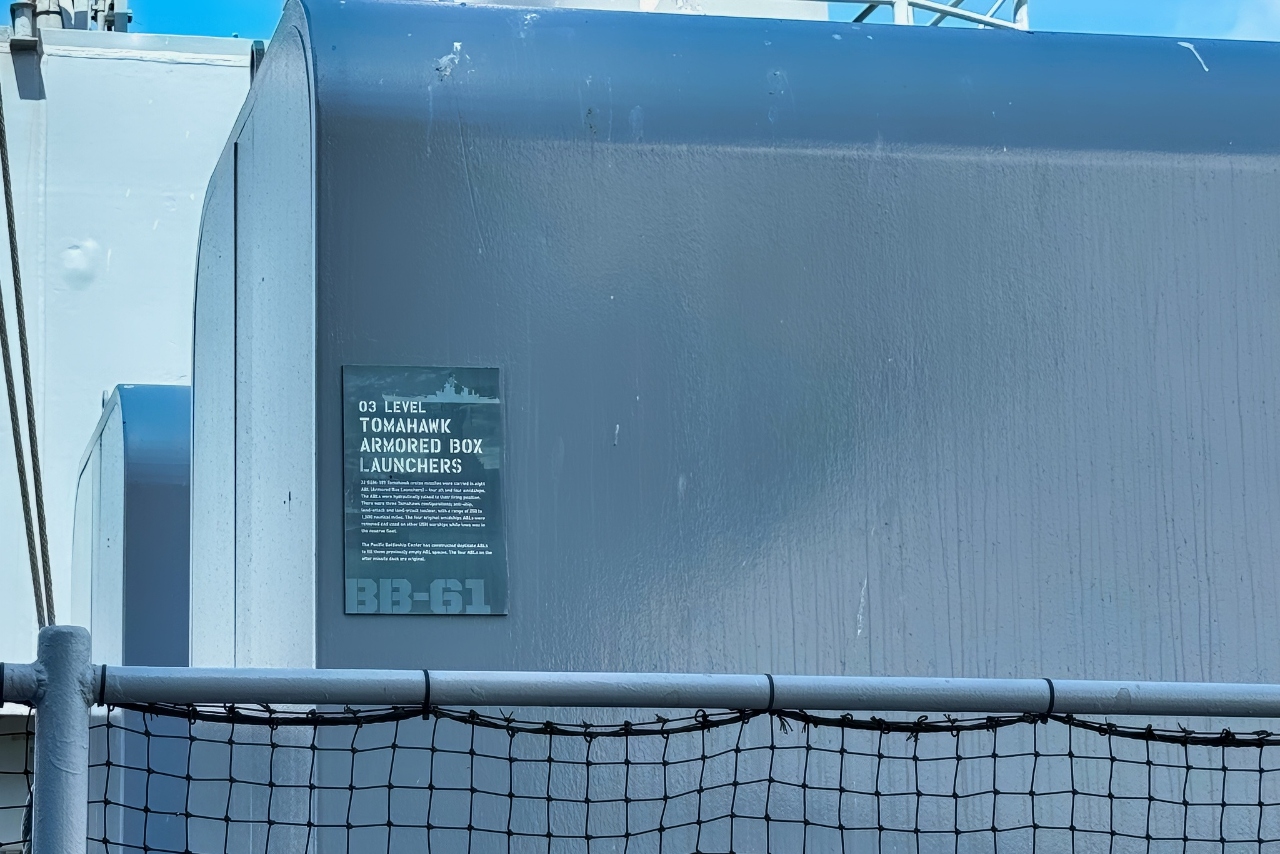
USS Iowa Tomahawk Box. National Security Journal Photo.

Tomahawk Launch. Image Credit: Creative Commons.
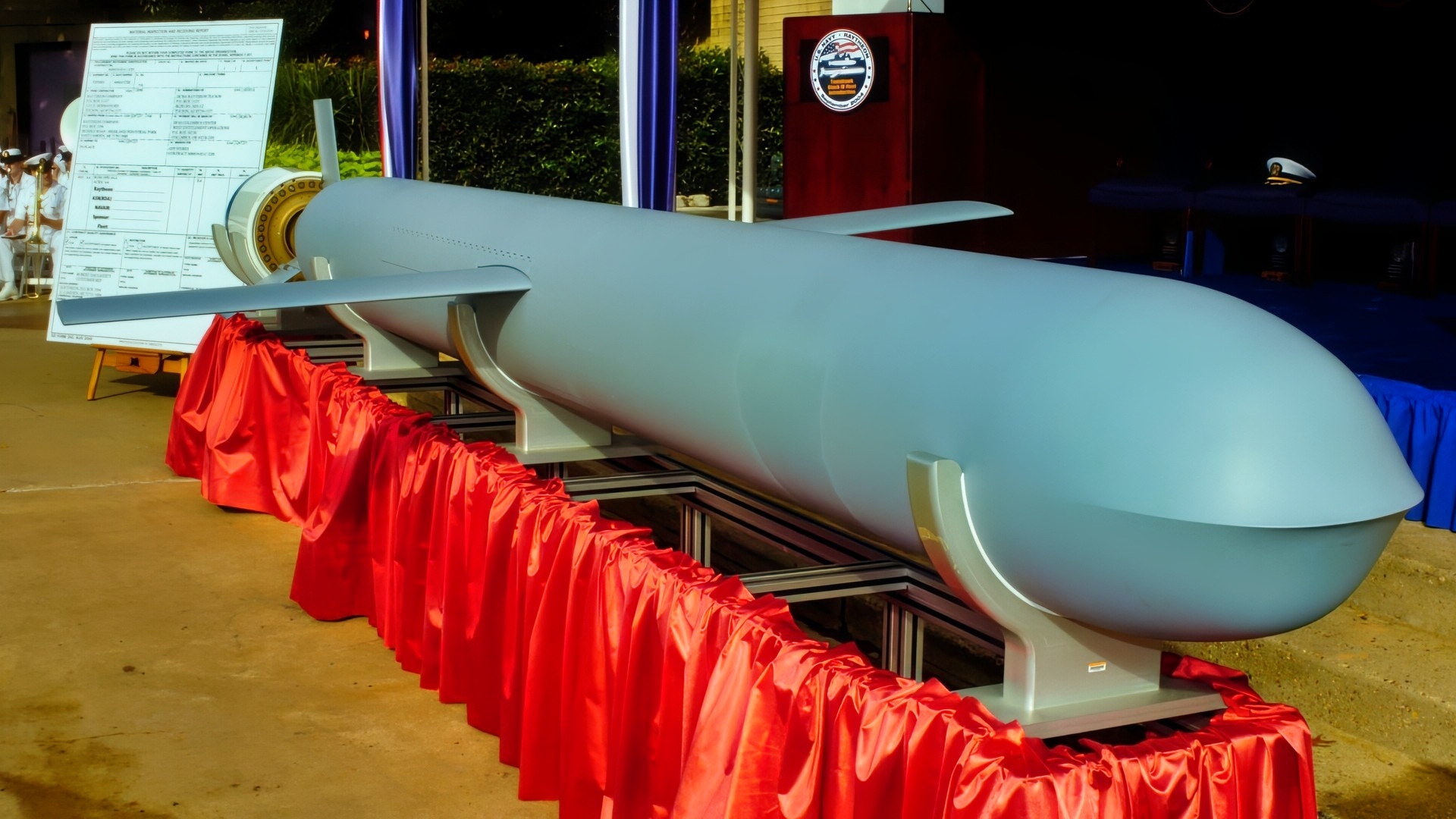
Tomahawk Block IV Missile. Image Credit: Creative Commons.
Long Beach also became one of the Navy’s most technologically experimental ships. It carried extremely advanced radar systems for the time. It was effectively designed as a floating missile and sensor platform intended to defend nuclear-powered carrier groups operating far from American shores.
Its Most Famous Mission
Long Beach’s most famous deployment came in 1964 during Operation Sea Orbit, one of the most ambitious demonstrations of naval power attempted during the Cold War.
The cruiser joined the nuclear-powered aircraft carrier USS Enterprise and the nuclear-powered frigate USS Bainbridge to form the world’s first all-nuclear task force.
The deployment was designed to demonstrate the strategic advantages of nuclear propulsion at a time when Washington wanted to show both allies and the Soviet Union that the U.S. Navy could sustain global operations without relying on conventional fuel logistics.
During the operation, the task force circumnavigated the globe without refueling, covering more than 30,000 nautical miles in roughly 65 days while visiting ports in Pakistan, Australia, New Zealand, and Brazil.
USS Long Beach reportedly steamed approximately 31,000 miles over 58 days at an average speed of about 25 knots without logistical replenishment. The mission became a major propaganda and strategic victory for the United States during the height of Cold War competition with Moscow, proving that nuclear-powered naval groups could remain deployed almost indefinitely far from American shores.
But despite the operational advantages demonstrated by USS Long Beach and later nuclear cruisers, the Navy eventually concluded that the immense maintenance costs, reactor refueling requirements, and overall operating expenses made nuclear propulsion far more practical for submarines and aircraft carriers than for cruisers or destroyers.
About the Author: Jack Buckby
Jack Buckby is a British researcher and analyst specializing in defense and national security, based in New York. His work focuses on military capability, procurement, and strategic competition, producing and editing analysis for policy and defense audiences. He brings extensive editorial experience, with a career output spanning over 1,000 articles at 19FortyFive and National Security Journal, and has previously authored books and papers on extremism and deradicalization.


