

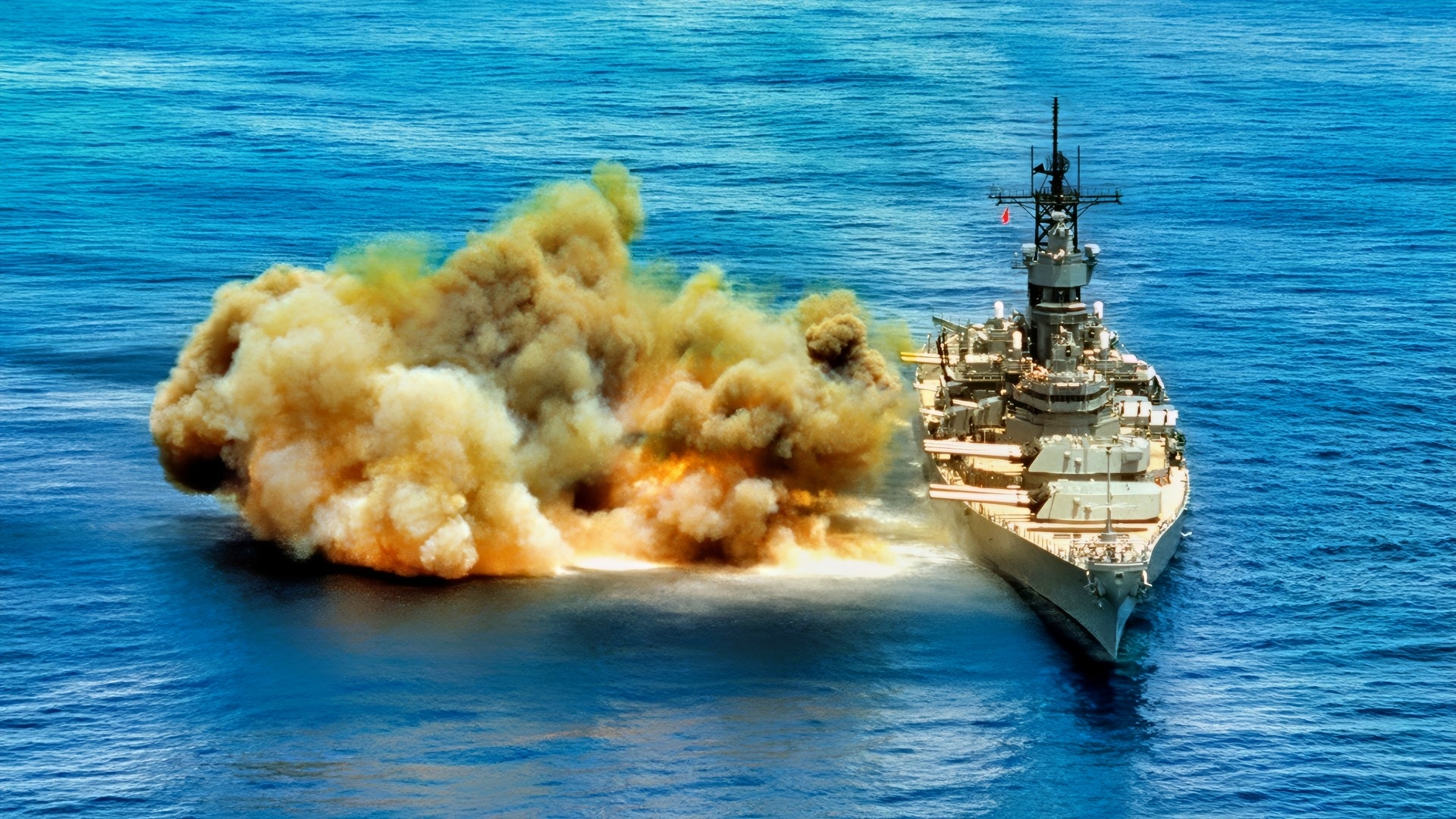
The U.S. Navy released its 30-year shipbuilding plan on Monday. The plan confirmed President Trump’s planned new battleships will be nuclear-powered. The Navy intends to spend $43.5 billion to build 3 of these battleships. That’s $14.5 billion per ship. Each will weigh between 30,000 and 40,000 tons — up to 4 times the size of current U.S. Navy destroyers. The Navy has awarded 6-year design contracts to Huntington Ingalls Industries and General Dynamics Bath Iron Works. Trump first announced the battleship plan in December 2025 at Mar-a-Lago. He claims the ships will carry nuclear-tipped cruise missiles, rail guns, and laser defensive systems. The Hudson Institute’s wargames found that a 15,000-20,000-ton ship — not a 40,000-ton battleship — would meet the Navy’s actual operational requirements. The U.S. Navy has not built a nuclear-powered surface warship since the 1990s.
What Is the Cost of the New Trump-Class Battleships Being Nuclear-Powered?

Trump-Class Battleship. Image Credit: White House.

Trump-Class Battleship. Image Credit: White House.
The US Navy (USN) still has not selected a design for the new series of battleships to be named after President Donald Trump, nor has the service decided which shipbuilder will receive the contract award to build them. Nonetheless, on Monday, 11 May, it was announced that the ships will now be nuclear-powered.
“The nuclear-powered battleship is designed to provide the fleet with a significant increase in combat power by longer endurance, higher speed, and accommodating advanced weapon systems required for modern warfare,” reads the USN’s 30-year shipbuilding plan that was published Monday.
“Adding capability at the highest end of the high-low mix, the battleship’s primary role is to deliver high-volume, long-range offensive fires and serve as a robust, survivable forward command and control platform, it is not a destroyer replacement,” the document details.
At present, the USN has awarded six-year contracts to both Huntington Ingalls Industries and General Dynamics Bath Iron Works to develop designs for the new ships. These two companies currently build the USN’s Arleigh Burke-class destroyers and had also previously been developing designs for a new generation of destroyers.
Now the companies are designing the new Trump-class battleship. But the decision to make the ships nuclear-powered now throws the plans to date into question. The Navy had been planning to spend $43.5 billion on the first three battleships, according to USN budget planning documents provided to the US Congress last month.
What the Experts Told Us on the Trump-Class Battleship: Might Not Happen
“We are still not sure that these ships will ever actually be built – part of the indecision being due to the cost,” said a US shipbuilding contractor with decades of experience who spoke to National Security Journal.

Iowa-Class 16-Inch Shell Menu. Image Credit: National Security Journal.

USS New Jersey Iowa-Class Battleship. Image Taken on 8/2/2025 by National Security Journal/Stephen Silver.
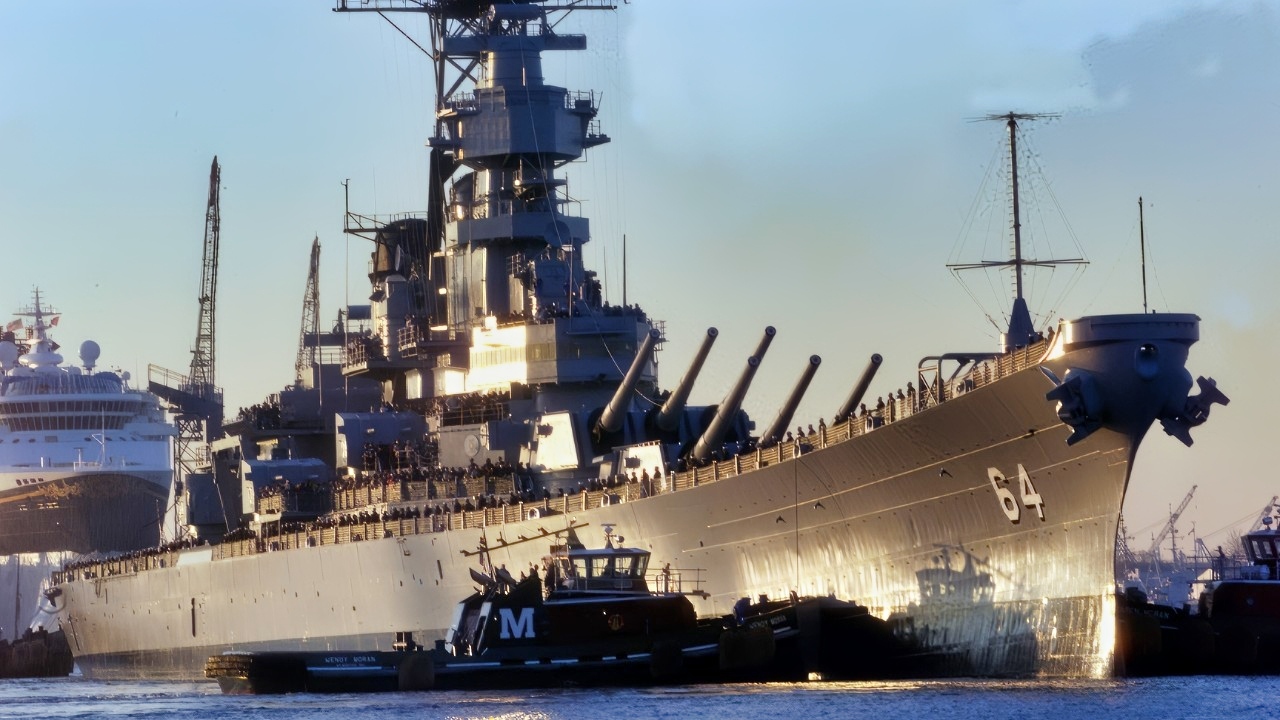
Iowa-Class Battleship Coming Home. Image Credit: Creative Commons.
Driving that high cost is the size of these ships, which some naval warfare experts have already questioned the justified need for.
Sizing Up the Navy Requirement
Trump announced the plan for the new ships in December 2025 at his Mar-a-Lago residence and club located in Palm Beach, Florida.
The planning for the battleships is for a combat vessel weighing between 30,000 and 40,000 tons.
A ship of this tonnage would be up to four times the size of the destroyers currently in operation with the US Navy’s fleet.
The Navy hired the Hudson Institute, a Washington, DC-based think tank, to conduct a series of wargames led by senior fellow Bryan Clark to recommend the optimal types of warships to meet the USN’s requirements. The Hudson exercise reportedly found that a 40,000-ton battleship was not what the service really needed.
What the Hudson wargames and analysis did conclude was that a 15,000-ton to 20,000-ton ship, which is still larger than a destroyer, would be the optimal size for the service’s requirements. The Hudson study is still in process and is expected to be published in the coming months.
A parallel assessment by Hudson also finds that achieving parity with the People’s Liberation Army Navy (PLAN), one of the objectives of building these warships, cannot be achieved unless the parlous state of US and allied shipbuilding yards is addressed.
“America’s defense industrial base, and shipbuilding in particular, has become structurally brittle after the collapse of commercial shipbuilding, decades of consolidation and specialization, workforce attrition, and highly inconsistent demand signals. Today, a remarkable degree of US Navy major combatants are constructed at a handful of specialized yards run by two defense juggernauts: Huntington Ingalls Industries and General Dynamics.”
Likely not by coincidence, the same two yards are engaged in the design study for the Trump-class warships.
The Nuclear Dimension for Trump-Class Battelships
The decision to use nuclear-powered propulsion instead of the gas turbine or marine diesel engines normally used in destroyers, cruisers, and frigates was a small detail that was included in this Monday’s 30-year shipbuilding plan.
The Navy’s justification was that using nuclear power for these ships’ propulsion would permit the ship to travel longer distances and at higher speeds than those provided by conventional propulsion systems.
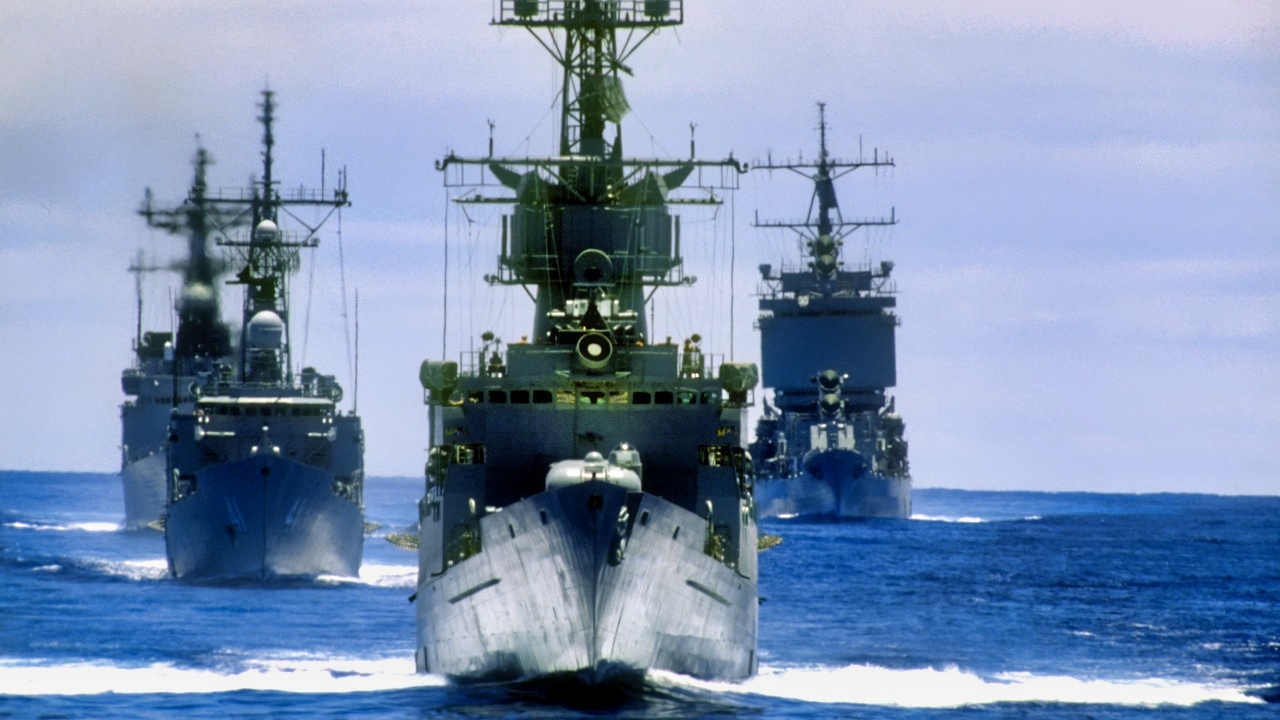
USS Long Beach. Image Credit: Creative Commons.
While theoretically offering performance improvements, the USN is well beyond out of practice in this area.
It has not used nuclear propulsion in surface warships since the 1990s. Those ships also proved to be expensive to operate, and the reactors that powered them ended up requiring refueling more often than reactors used in today’s aircraft carriers and submarines.
USN officials have said the new battleship would feature next-generation weapons, such as directed-energy rail guns and laser-based defensive systems. Trump has also stated that these ships would carry nuclear-tipped cruise missiles.
Powering these battleships with a nuclear reactor would only add to the cost of already expensive ships, said Hudson’s Clark. “There’s no cost savings really to be gained by going nuclear—if anything, it’s going to cost a little bit more,” he said. “The bigger impact is this operational impact.”
About the Author: Reuben F. Johnson
Reuben F. Johnson has thirty-six years of experience analyzing and reporting on foreign weapons systems, defense technologies, and international arms export policy. Johnson is the Director of Research at the Casimir Pulaski Foundation. He is also a survivor of the Russian invasion of Ukraine in February 2022. He worked for years in the American defense industry as a foreign technology analyst and later as a consultant for the U.S. Department of Defense, the Departments of the Navy and Air Force, and the governments of the United Kingdom and Australia. In 2022-2023, he won two consecutive awards for his defense reporting. He holds a bachelor’s degree from DePauw University and a master’s degree from Miami University in Ohio, specializing in Soviet and Russian studies. He lives in Warsaw.


