


“You must never confuse faith that you will prevail in the end—which you can never afford to lose—with the discipline to confront the most brutal facts of your current reality, whatever they might be.” — Admiral James Stockdale, who was awarded the Medal of Honor for his leadership after spending seven years as a POW in Vietnam.
The Stockdale Paradox is a mental pattern used by POW survivors, famously coined by Vice Admiral James Stockdale, that involves holding two contradictory beliefs simultaneously: accepting the brutal facts of one’s current, dire reality while maintaining unwavering, absolute faith that one will prevail in the end.
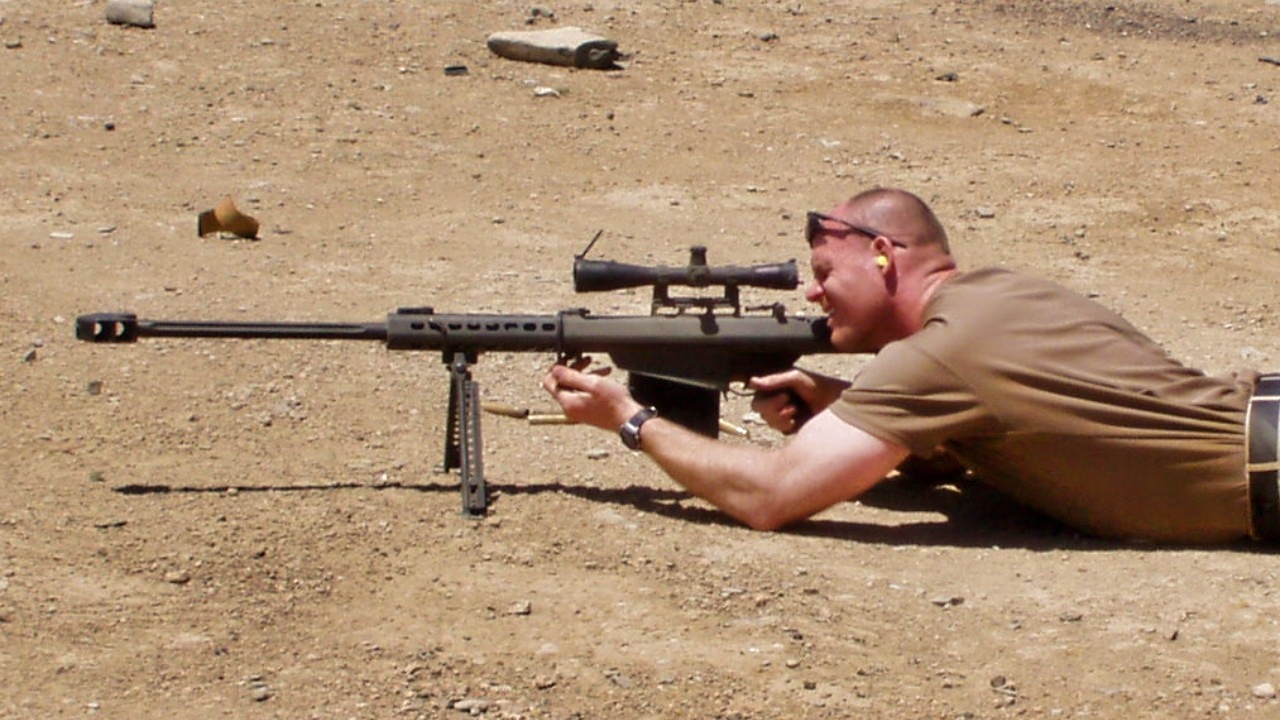
M821A1 Rifle. Image Credit: U.S. Army.
Stockdale observed that fellow POWs who were pure “optimists” often died of broken hearts when the POW’s expectations (of quick repatriation) weren’t met. Instead, survival required accepting the harsh, indefinite reality while never losing faith that one would eventually prevail.
Stockdale Lived Day-to-Day In Captivity
During his seven+ years as a POW, Stockdale said that “You must never confuse faith that you will prevail in the end—which you can never afford to lose—with the discipline to confront the most brutal facts of your current reality, whatever they might be.”
Stockdale wasn’t optimistic about his short-term chances of being released, having learned about the politics of Asia before he was shot down over North Vietnam. So, he adopted a long-term outlook on his situation.
“I lived on a day-to-day basis. … Most guys thought it was really better for everybody to be an optimist. I wasn’t naturally that way,” he said later.
“I think there was a lot of damage done by optimists; other writers from other wars share that opinion. The problem is, some people believe what professional optimists are passing out and come unglued when their predictions didn’t work out.”

U.S. Army Pvt. 1st Class Ian Wojick, assigned to 552nd Military Police Company, 25th Infantry, aims a DroneBuster, an anti-drone weapon, toward the sky during the Joint Pacific Multinational Readiness Center Exportable (JPMRC-X) exercise at Fort Magsaysay, Philippines, June 1, 2025.
This iteration of the JPMRC-X marks the second Combat Training Center (CTC) rotation conducted in the Philippines. As part of the Army’s premier regional CTC, JPMRC-X enables the U.S. Army, joint force, allies, and partners to develop skills in realistic environments and conditions. Through exportable capabilities, JPMRC-X strengthens war-fighting readiness, enhances multilateral relationships, and contributes to regional security and stability in the Indo-Pacific. (U.S. Army photo by Staff Sgt. Keith Thornburgh)
During his captivity, Stockdale learned that it was the persistent practitioner of endurance who carried the day in courage. The game of physical intimidation was not won or lost in one grand showdown. The hero of us all was the plucky little guy who made them start all over every day.
Surviving Captivity With The POW Mindset
A “POW mindset”—often derived from the experiences of Prisoners of War (specifically Vietnam-era) and the “Stockdale Paradox”—is a framework for survival and thriving under extreme adversity.
It emphasizes maintaining unwavering faith that you will prevail in the end, while simultaneously having the discipline to confront the most brutal facts of your current reality.
Stockdale wrote that fear and guilt are the real pincers that break men’s wills. And focusing entirely on what you can control—your actions, thoughts, and attitudes—rather than waiting to be rescued or blaming circumstances —is one of the keys to ultimate success.
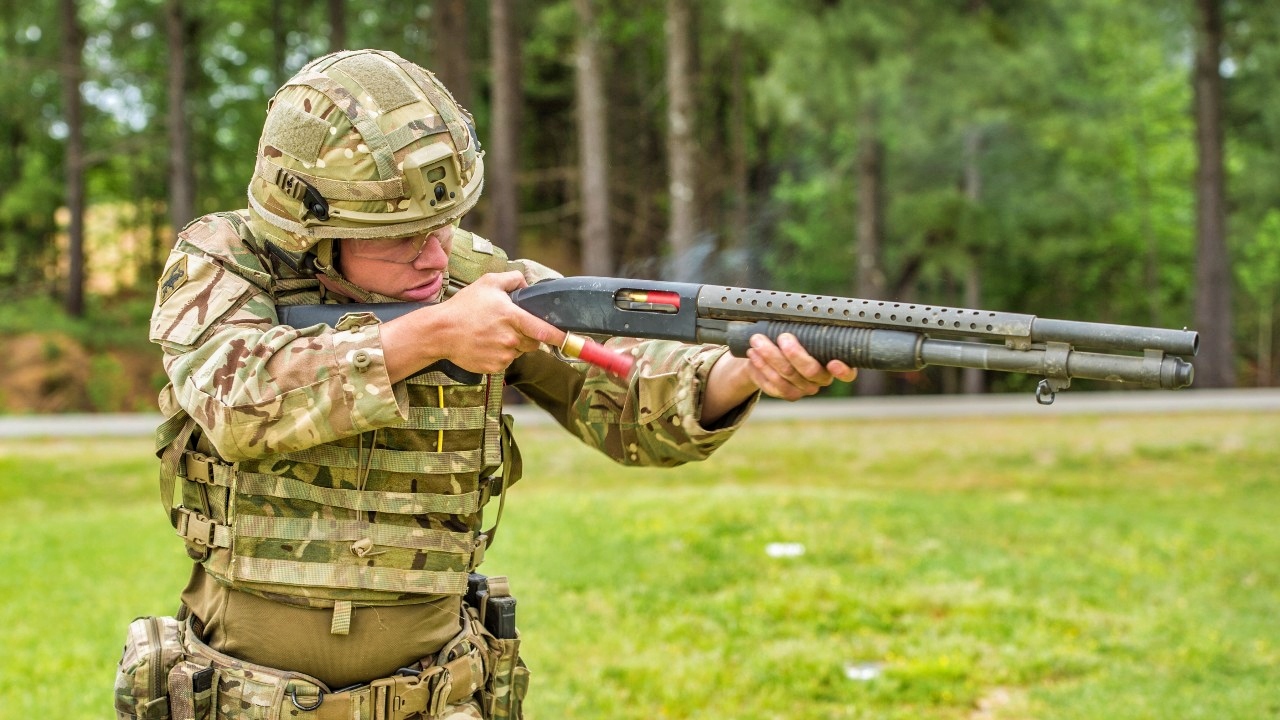
British Royal Air Force Regiment troop cycles M500 Shotgun at the Winston P. Wilson (WPW) and 27th Armed Forces Skill at Arms Meet (AFSAM) at Robinson Maneuver Training Center, Ark, 2018. The annual events, hosted by the National Guard Marksmanship Training Center (NGMTC), offer Servicemembers from the National Guard and international community an opportunity to test marksmanship skills in a battle-focused environment.
The POW mindset also included resilience and adaptability as tactics. The ability to adapt to a lower or drastically changed plane of existence without losing one’s core identity.
POWs who survived also had to have mental toughness. Mental toughness involved keeping the mind occupied, maintaining structure, and engaging in intellectual or physical activity to combat apathy and hopelessness.
James “Nick” Rowe, Special Forces POW Escaped After Five Years
Rowe was a 1LT in the 5th Special Forces Group when the Viet Cong captured him during an ambush.
Rowe knew if the Viet Cong learned he was a member of Special Forces, they would execute him. He, too, survived by relying on intense mental discipline, faith, and a refusal to break.
He held onto his cover story about being a draftee engineer for five years. However, Tom Hayden, Jane Fonda’s ex-husband, furnished the Viet Cong profiles of POWs and Rowe’s identity as an intelligence officer and Green Beret came to light.
He was being taken into the forest for execution when he escaped and was picked up by American helicopters conducting an assault nearby.
His beliefs centered on strict resistance, maintaining military identity, and proactive, psychologically driven survival tactics, which he later organized into creating the modern SERE training program.

M551 Sheridan Light Tank From U.S. Army. Image Credit: Creative Commons.
He came to believe that while a prisoner cannot always control their circumstances, they always have a choice in how they react. He believed that the will to survive, combined with faith, could overcome extreme brutality and isolation.
Rowe’s central philosophy for POWs was to “return with honor”, which inspired him to develop the SERE doctrine (Survival, Evasion, Resistance, and Escape) to ensure future soldiers could withstand captivity, creating the motto “Let no man’s soul cry out had I the proper training”.
Many POWs came to believe that it didn’t matter where they were. A POW’s happiness or sadness, their life or death, success or failure, depends not on what was around them but on your attitude and choices about what’s around you.
About the Author: Steve Balestrieri
Steve Balestrieri is a National Security Columnist. He served as a US Army Special Forces NCO and Warrant Officer. In addition to writing on defense, he covers the NFL for PatsFans.com and is a member of the Pro Football Writers of America (PFWA). His work was regularly featured in many military publications.


yeye
May 19, 2026 at 7:11 pm
Nam was a great disaster, far greater than afghanistan or iraq or libya.
It (the disaster) all began in the late fifties, after the french were kicked out of indochina.
Eisenhower was massively. overcome by the totally bogus domino theory, thus he decided to get involved in indochina.
Eisenhower began sending advisers and military trainers and CIA operatives to Laos, to fight namese infiltration and to forestall the falling of dominoes.
One thing soon led to another, and so by 1965, US troops were in south vietnam. Fighting the namese, both NVA and vietcong.
But only a few years later, people began to see it was a failed war, or doomed war, especially after media articles critical of the war surfaced.
By early 1973, the last US soldiers had left south vietnam, and by 1975, NVA troops were inside the presidential palace in south vietnam.
It was all for Nothing.