


GE Aerospace and Kratos Defense & Security Solutions won a U.S. Air Force contract on May 19 to design the GE426 expendable drone engine — a compact propulsion system intended for attritable, next-generation unmanned combat aircraft built for one-way missions or limited operational lifespans. The program now enters the preliminary design review phase. The GE426 is part of the Air Force’s collaborative combat aircraft strategy that pairs manned fighters like Boeing’s new F-47 with autonomous wingmen capable of reconnaissance, electronic warfare, strike or decoy missions. GE Aerospace and Kratos previously developed the GEK800 and GEK1500 engines together, with a separate $12.4 million GEK1500 contract awarded in February 2026.
GE Aerospace Is Building The Engine for America’s Next Disposable Combat Drone
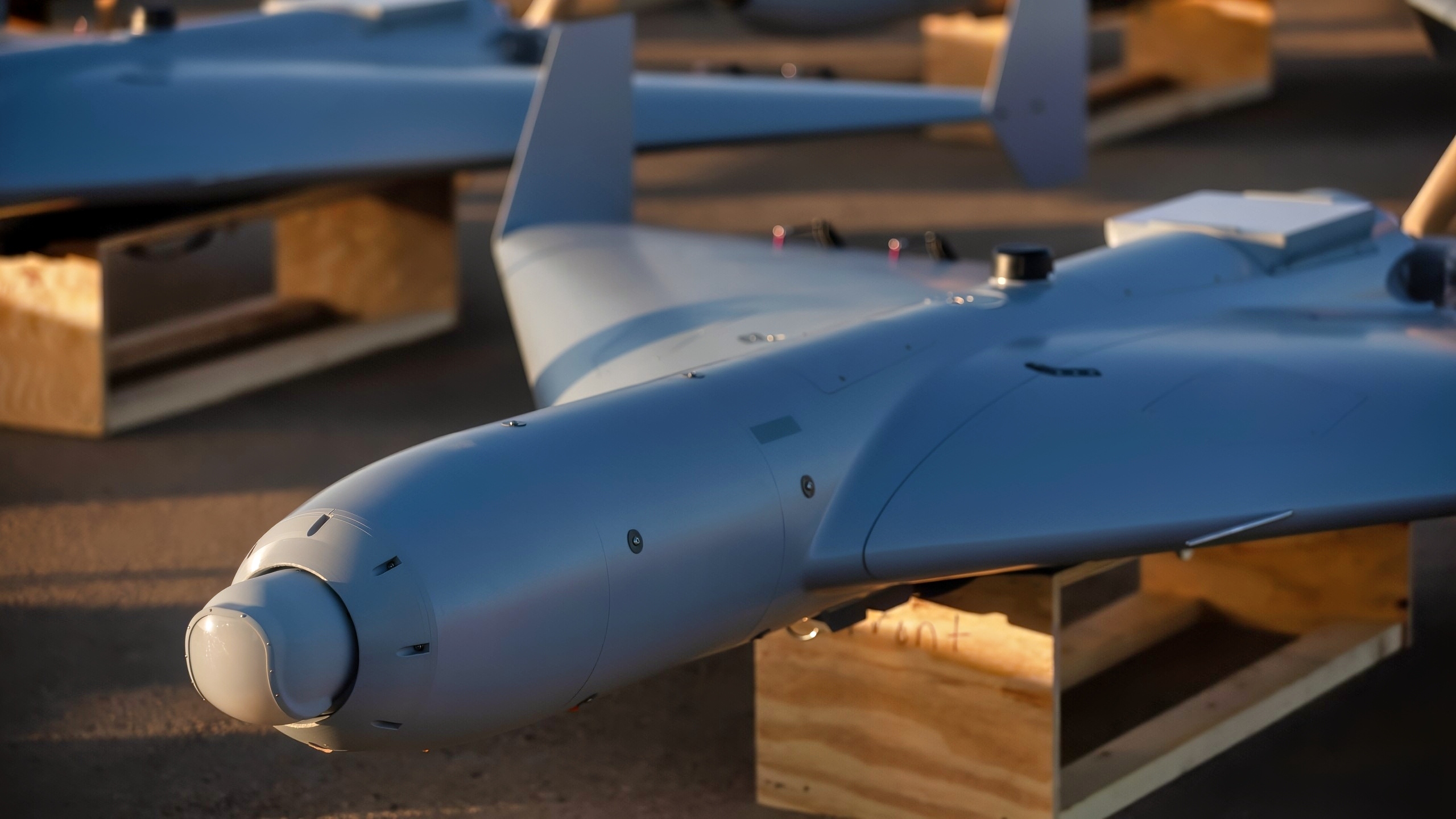
U.S. CENTRAL COMMAND AREA OF RESPONSIBILITY (Nov. 23, 2025) Low-cost Unmanned Combat Attack System (LUCAS) drones are positioned on the tarmac at a base in the U.S. Central Command operating area, Nov. 23. Costing approximately $35,000 per platform, LUCAS drones are providing U.S. forces in the Middle East low-cost, scalable capabilities to strengthen regional security and deterrence. (Courtesy Photo)
It has been announced that the US firms GE Aerospace and Kratos have secured a US Air Force contract award to design an expendable drone engine intended for affordable, next-generation unmanned combat aircraft.
GE Aerospace has been actively developing new, advanced engines tailored specifically for next-generation unmanned aerial vehicles (UAVs) and combat drones. Partnering with Kratos Defense & Security Solutions and funded by the USAF, GE will now develop a set of highly efficient, compact, and affordable propulsion systems.
These engine designs will be focused on low-cost, high-performance propulsion technology for attritable platforms.
The aircraft they will be flown in will be designed for either one-way missions or platforms with limited operational lifespans.
The goal is for these designs to reduce the cost per flight hour while maintaining sufficient performance for contested environments.
The expendable drone engine program aligns with the Air Force’s collaborative combat aircraft strategy.
That effort aims to pair manned fighters like the new F-47 from Boeing with autonomous unmanned aircraft capable of reconnaissance, electronic warfare, strike, or decoy missions.

Switchblade Drone. Image Credit: Industry Handout.
As of this date, the USAF has not identified which specific airframe will be powered with this propulsion system.
However, it has been firmly established that attritable or expendable systems are now central to the USAF’s future force structure.
This engine was originally developed as part of the USAF’s medium-thrust-class Autonomous Collaborative Platform initiative.
The theory is that if these systems can be built at a lower unit cost, the USAF can deploy larger numbers of aircraft without incurring the budgetary burden associated with acquiring manned fighter programs with a service life exceeding 10,000 hours.
Contract Award
The program’s contract award was announced on 19 May, moving the GE426 program into its next step: the preliminary design review stage.
GE press statements are that the company is developing the engine in compliance with military performance standards for performance, cost, and – most importantly for the demands to surge numbers manufactured – scalable production.
This USAF contract was awarded only to GE Aerospace after the company successfully completed the engine’s concept design in August 2025.
The validation of that concept was an important milestone, as it confirmed that the engine’s design met the performance and other program parameters, allowing the project to move forward to the next phase.
GE Aerospace has described the GE426 as a next-generation propulsion system made for medium-thrust autonomous missions.
The engine is designed for uncrewed aircraft that will work alongside other airborne systems.
The combination of the two aerospace firms is considered ideal, as Kratos has extensive experience in this segment of the industry.
The company produces several different unmanned systems designed for target drones, tactical missions, and high-risk special operations.
The other half of the effort, GE Aerospace, has decades of propulsion development knowledge and expertise across military and commercial platforms.
Two Other Engines
At present, neither the USAF nor the companies has revealed the contract’s value or the exact thrust rating of the GE426 engine.
GE Aerospace has said this new contract will build on and highly depend on the company’s experience in the rapid design and testing of small military engines for the USAF.
Additionally, the company has already worked with Kratos Defense & Security Solutions, a California defense contractor specializing in autonomous military technology, to develop two other engines: the GEK800 and GEK1500 propulsion systems.
“We’ve proven we can rapidly move from concept to engine demonstration with the GEK800, and our focus now is on applying that process to the GE426 to ensure it provides the performance, affordability, and readiness the warfighter needs,” said Steve “Doogie” Russell, Vice President and General Manager of Edison Works at GE Aerospace.
GE said the GE426 is part of a larger effort to develop more affordable propulsion systems and designs that can be produced in large numbers for future autonomous aircraft fleets.
The company also pointed out that it has been developing and expanding a range of compact engines. These designs have been created to support collaborative combat aircraft and other defense projects now in development
GE Aerospace and Kratos also received a separate $12.4 million Air Force contract in February 2026 for the GEK1500 engine program.
This project covers the early design phase of a 1,500-pound-thrust engine for a smaller Collaborative Combat Aircraft.
The GEK1500 program is seen as another key part of the Air Force’s plan to develop various types of autonomous aircraft for a range of missions.
The firm said it is using advanced manufacturing, digital engineering tools, and over 100 years of propulsion experience to speed up the development of these new military engines. GE believes that producing engines at scale will become increasingly important as the Pentagon invests more in autonomous – and sometimes almost “throwaway” – combat systems for future battlefields.
MORE – The Dodge Durango of Submarine: The Virginia-Class Is Best on Planet Earth
About the Author: Reuben F. Johnson
Reuben F. Johnson has thirty-six years of experience analyzing and reporting on foreign weapons systems, defense technologies, and international arms export policy. Johnson is the Director of Research at the Casimir Pulaski Foundation. He is also a survivor of the Russian invasion of Ukraine in February 2022. He worked for years in the American defense industry as a foreign technology analyst and later as a consultant for the U.S. Department of Defense, the Departments of the Navy and Air Force, and the governments of the United Kingdom and Australia. In 2022-2023, he won two awards in a row for his defense reporting. He holds a bachelor’s degree from DePauw University and a master’s degree from Miami University in Ohio, with a specialization in Soviet and Russian studies. He lives in Warsaw.


