
Summary and Key Points: One of Russia’s largest oil refineries has gone quiet. A Ukrainian drone strike on May 29 forced the Volgograd plant to halt processing — only the latest hit in a campaign reaching deeper into Russian territory than almost anyone thought possible. Kyiv has stopped going after symbolic targets near the border. It’s now methodically working through the refineries that turn Russia’s crude into the fuel and cash that Putin’s war runs on.
The Ukraine War Is Coming for Russia’s Oil
Putin in 2025 Looking Stern. Image Credit: Creative Commons.
On June 1, reports suggested that Russia’s Volgograd oil refinery had halted processing operations following a Ukrainian drone strike on May 29 – and it is just the latest indication that Ukraine’s intense drone campaigns against Russian energy infrastructure are starting to pile real pressure on Moscow. The facility, owned by Russian energy giant Lukoil, processes approximately 13.5 million metric tons of crude oil annually, accounting for roughly 5% of Russia’s total refining capacity.
Volgograd is one of Russia’s largest and most important refining facilities. If Ukraine can repeatedly disrupt facilities on this scale, the impact could well go beyond individual fires and damaged equipment, and begin to directly impact the revenues Russia uses to fund the war – and keep the lights on at home.
Why Volgograd Matters
Volgograd is one of the largest refineries in southern Russia and a critical part of the country’s energy infrastructure. In 2024, it processed 13.5 million metric tons of oil and produced around 6 million tons of diesel fuel, 1.9 million tons of gasoline, and approximately 700,000 tons of fuel oil.
The most recent attack reportedly forced the shutdown of multiple processing units, including the CDU-1 crude distillation unit. That unit alone is said to account for roughly 40% of the refinery’s overall processing capacity. And beyond that, the refinery’s location is also significant; it is situated on a major logistical corridor in southern Russia, helping supply fuel to civilian consumers and industry, and likely military operations supporting the war in Ukraine.
Volgograd has been targeted by Ukrainian forces before, but the recent strike appears to have caused one of the biggest disruptions yet.
Putin in 2025, Russian State Media Image
Ukraine Is Targeting Russian Capacity
The attack on Volgograd is part of a much larger and ongoing campaign. Over the past year, Ukraine has moved its focus toward Russia’s largest and most productive energy facilities. And, rather than simply striking fuel depots near the border, Ukrainian drones are now regularly targeting major refineries and export terminals, pumping stations, and storage facilities deep inside Russian territory.
The Ryazan refinery, one of Russia’s largest refining complexes, was also reportedly impacted by Ukrainian strikes in May. The NORSI refinery, Russia’s fourth-largest refinery and a major gasoline producer, has also been affected.
The Perm refinery, capable of processing roughly 250,000 barrels of oil per day, was reportedly forced to halt operations after a fire triggered by a drone attack earlier this year. The attacks appear to be part of a deliberate strategy, with Ukrainian forces less interested in symbolic attacks that prove they could cause damage if they want to, and more interested in repeatedly reducing Russian refining capacity.
While each facility may eventually resume operations, every shutdown creates additional repair costs and operational disruptions, and also means lost production.
Russia Cannot Defend Everything
One of the most remarkable aspects of these Ukrainian strikes is the distance involved. Many of the facilities targeted in recent months are located hundreds of miles from Ukrainian territory. The Yaroslavl refinery, which was struck earlier this year, lies roughly 700 kilometers from the border. The Ufa refinery complex, another target of Ukrainian drones, sits more than 1,400 kilometers from the front lines.
Volgograd itself is also located deep inside Russia. The attacks represent a growing challenge for Moscow. Russia possesses extensive air-defense networks, but defending every refinery, storage depot, pumping station, export terminal, and pipeline across the world’s largest country is an entirely different task.
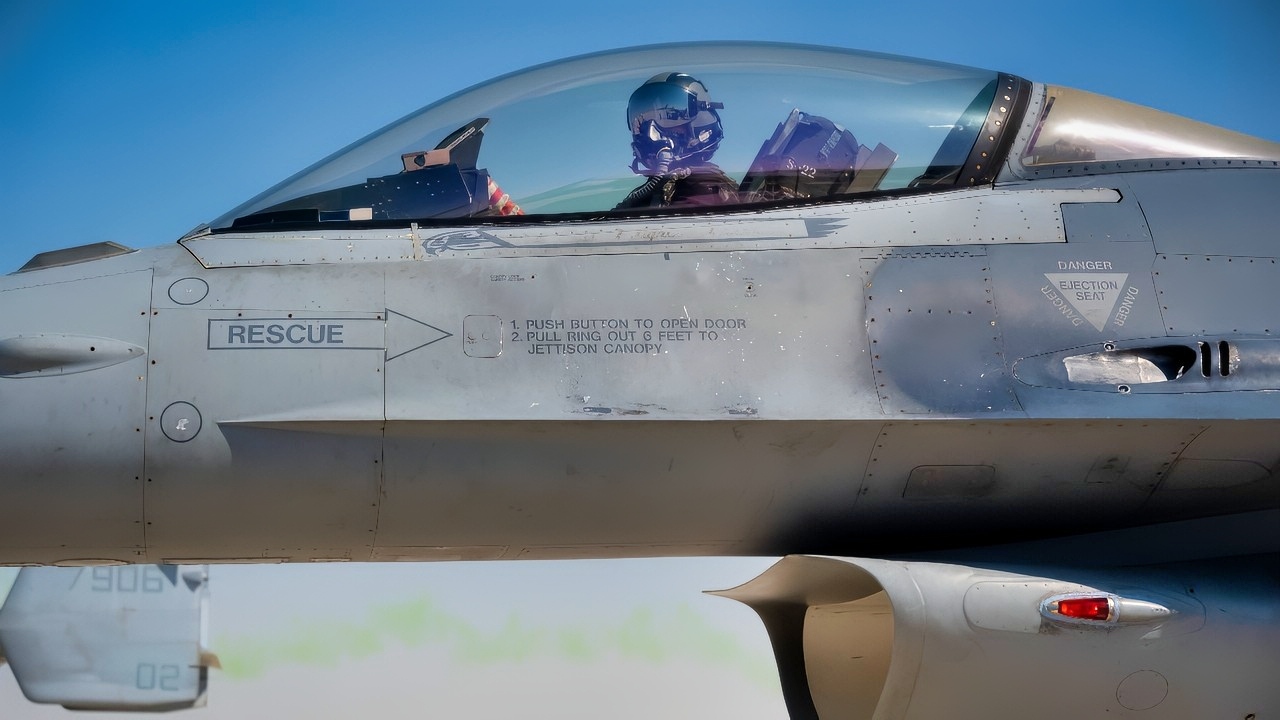
U.S. Air Force Maj. Josiah “Sirius” Gaffney, Pacific Air Forces Demonstration Team commander, prepares to fly a practice sortie before the Dubai Airshow in Dubai, United Arab Emirates, Nov. 11, 2021. In addition to the PACAF F-16 Demonstration Team routine, the air show will highlight a variety of U.S. Air Force, Navy and Marine Corps aircraft showcasing the range of U.S. military airpower capabilities. (U.S. Air Force photo by Staff Sgt. Matthew Kakaris)
Even when drones are successfully intercepted, Russia must devote additional air-defense systems and security personnel to protecting infrastructure spread across thousands of miles. It’s becoming such a big problem that Moscow is granting private institutions authority to engage in air defense operations. The result is a growing burden on Russian resources at a time when the military is already heavily committed to operations inside Ukraine.
Russia’s Economy – and War Machine – Runs On Oil
Russia is hugely dependent on energy revenue. Oil and gas exports are the Kremlin’s most important sources of income. Energy taxes and export revenues help fund government spending and industrial production, and are essential to maintain wartime operations.
Refineries like Volgograd do more than just process crude oil; they transform it into diesel, gasoline, aviation fuel, and other petroleum products that modern economies and militaries require.
Diesel is particularly important. Trucks, rail networks, generators, construction equipment, and military systems all depend on it.
Ukraine isn’t necessarily attempting to destroy Russia’s entire energy sector. That would be an enormous task – so enormous, in fact, that it almost certainly couldn’t be done.
But instead, Kyiv appears to be pursuing a more realistic goal of steadily increasing the economic cost of the war by forcing constant disruptions across Russia’s energy infrastructure.
If that continues or intensifies, it makes Russian advances even more difficult at a time when they are already slowing.
About the Author: Jack Buckby
Jack Buckby is a British researcher and analyst specializing in defense and national security, based in New York. His work focuses on military capability, procurement, and strategic competition, producing and editing analysis for policy and defense audiences. He brings extensive editorial experience, with a career output spanning over 1,000 articles at 19FortyFive and National Security Journal, and has previously authored books and papers on extremism and deradicalization.


