

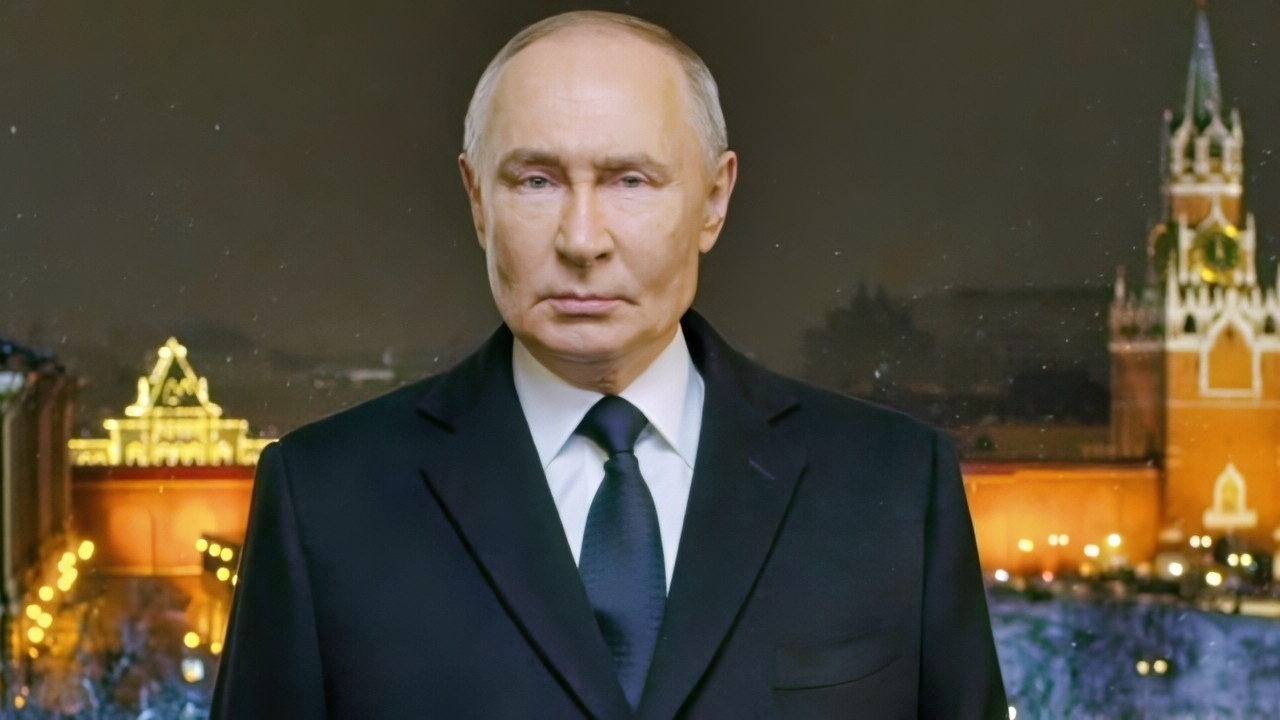
Summary and Key Points: Russia planned a three-day war. More than four years later, the way it actually fights tells a very different story — one the parades and the propaganda are built to hide. Look past the rhetoric at how Russia now puts men and machines into the field, and a single, damning pattern emerges. This is no longer a great power on the march. It’s an army scraping the bottom of every barrel it owns — and hoping Ukraine runs empty first.
Putin Is a Desperate Leader Thanks to the Ukraine War
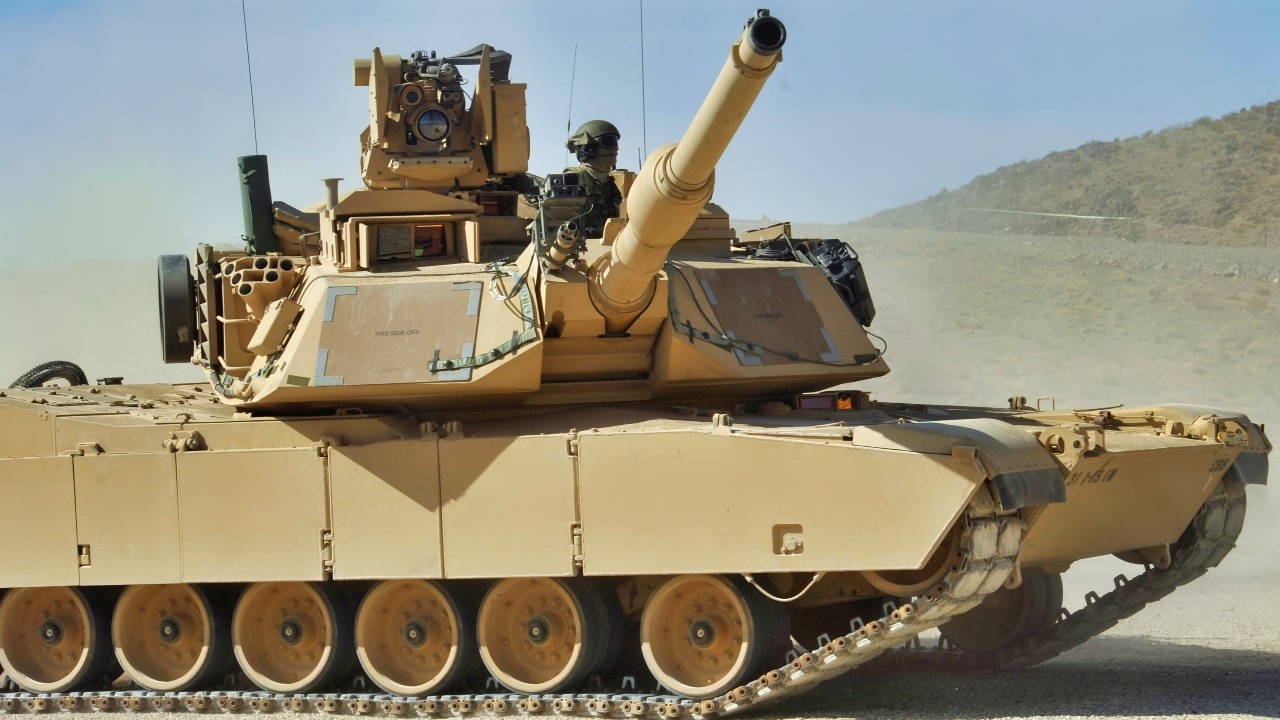
Australia is sending 49 of its retired M1A1 Abrams tanks to Ukraine, a move that bolsters Kyiv’s armored firepower but raises significant questions about survivability on the modern battlefield. While the donation is a welcome gesture, US officials have reportedly expressed private frustration, warning that Ukraine struggles to sustain the complex tanks and highlighting their vulnerability to cheap, top-attack FPV drones. The war in Ukraine has become a “drone war,” where even advanced main battle tanks are at constant risk. The effectiveness of these donated Abrams will ultimately depend on Ukraine’s ability to counter this pervasive threat.
Strip away the parades and the state-television bravado, and the Russian war machine grinding through its fourth year in Ukraine looks less like a great power on the march than an army scraping the bottom of every barrel it owns.
The evidence is not in the official rhetoric.
It is in the specifics of how Russia now fights that each one tells the same story. A military that planned to roll into Kyiv behind columns of modern armor is now feeding foreign conscripts into frontal assaults, pulling tanks built before the moon landing out of long-term storage, mounting attacks on dirt bikes, and quietly handing the job of shooting down drones to private corporations because the state can no longer cover the sky. This is what a war effort looks like when it is running out of the things wars require.
The Borrowed Army from North Korea
The most striking sign of how thin Russia’s own manpower has worn is that it has imported an entire foreign contingent to do its fighting.
Roughly 11,000 to 12,000 North Korean troops were deployed to Russia’s Kursk region, and as of early 2026, about 11,000 North Korean troops remained stationed in Kursk Oblast, according to South Korean intelligence, with around 10,000 combat soldiers and 1,000 engineers helping Moscow push Ukrainian forces out of the territory they had seized.
The price those soldiers have paid is staggering, underscoring how they are being used. South Korean intelligence assessed North Korean losses in Kursk at around 6,000 troops killed or injured, a casualty rate that reflects their deployment as frontline assault infantry rather than rear-area support. Pyongyang has continued feeding men into the war regardless, with reporting indicating that roughly 2,000 North Korean soldiers have been killed and that Kim Jong Un’s government planned additional waves of deployment.
The arrangement is a transaction. North Korea gets cash, food, technology, and combat experience for its army, and Russia gets bodies it does not have to mobilize from its own cities. When a nuclear-armed great power has to rent infantry from the most isolated regime on earth, the manpower math has already broken.
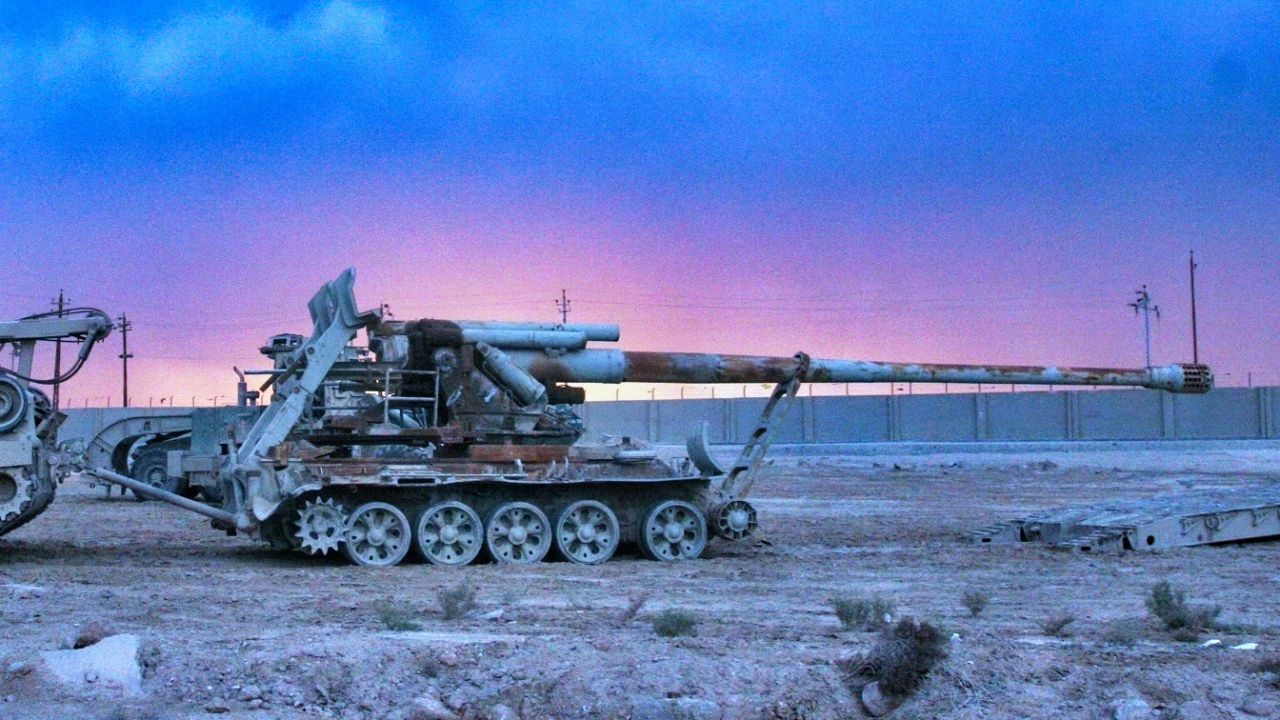
North Korea Artillery. Image Credit: Creative Commons.
Tanks Older Than The Soldiers Driving Them
Russia entered the war with one of the largest tank fleets on the planet, and it has burned through that inheritance at a rate no production line can match. By early 2026, after consuming more than half of its enormous Soviet-era reserve, Russia had roughly 2,000 tanks left, with domestic production stuck at around 250 tanks a year against battlefield losses running into the thousands. That is the insurmountable arithmetic at the heart of Russia’s predicament.
It cannot build tanks anywhere near as fast as Ukraine destroys them.
To fill the gap, Moscow has reached progressively deeper into its storage depots and progressively further back in time. Satellite-imagery analysis of Russia’s storage facilities found that Russia had pulled 4,799 of its 7,342 stored tanks into the war, leaving just 19 percent of its pre-war tank stock remaining in storage. The vehicles coming out of those depots are not modern machines.
Russia has deployed T-62 tanks designed in the early 1960s and pulled T-54 and T-55 models dating to the years right after the Second World War, vehicles older than the grandfathers of some of the men crewing them.
The annual output of genuinely new T-90M tanks, around 250 units, amounts to less than half the losses sustained in a single major operational push like the fighting around Pokrovsk. A military that has to send museum-era armor into a drone-saturated battlefield is a military that has run out of the real thing.
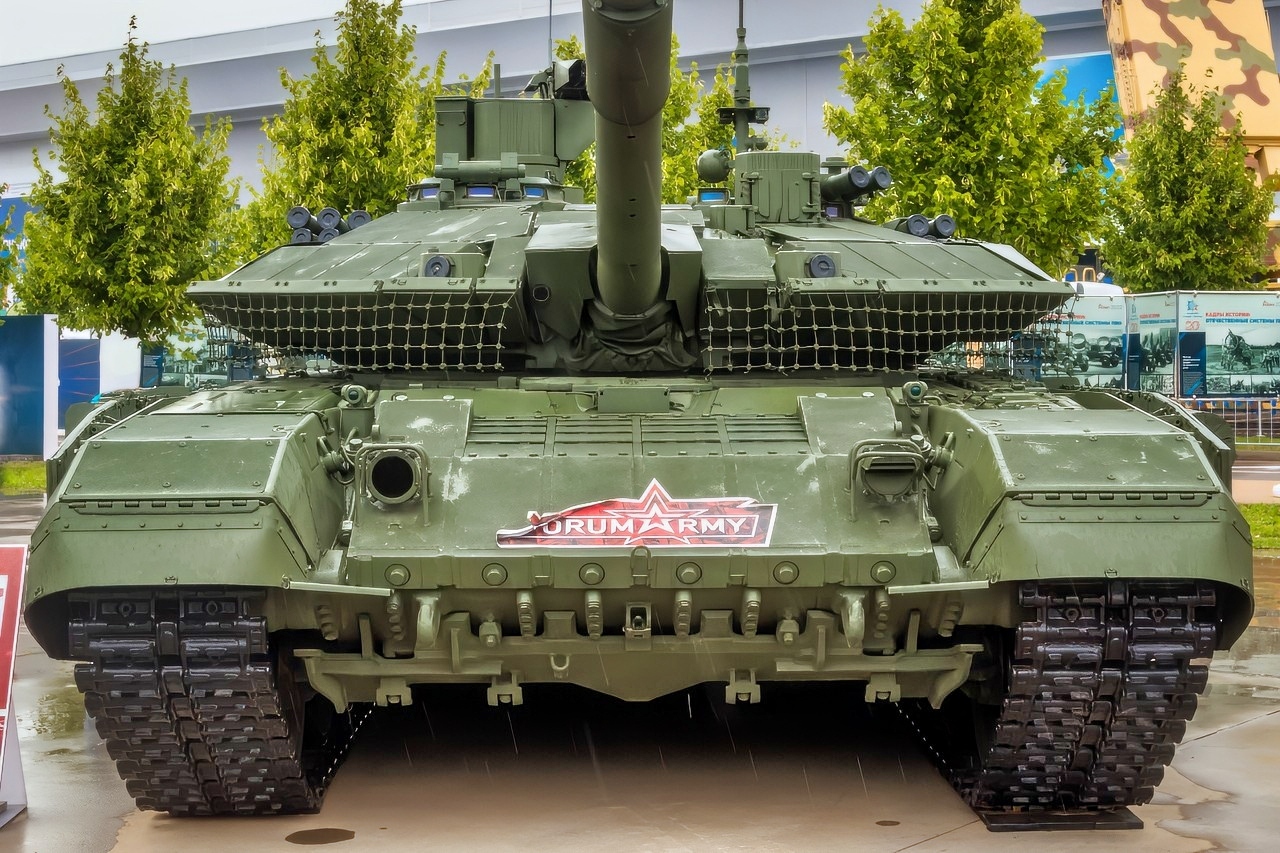
T-90M Russian Army. Image Credit: Creative Commons.
Storming Trenches On Dirt Bikes
The depletion of armor has forced a tactical regression unthinkable in 2022.
With armored personnel carriers and infantry fighting vehicles destroyed faster than they can be replaced, Russian commanders have turned to whatever can move a soldier toward a Ukrainian trench. Russian forces have resorted to deploying unorthodox transportation, including motorcycles, ATVs, and civilian vehicles to carry out assaults, and have converted rear-area MT-LB utility vehicles into improvised combat platforms because the purpose-built ones are gone.
The human cost of this improvisation is captured in the term that has come to define Russian tactics. The so-called meat-grinder assault refers to the practice of sending infantry to storm enemy positions without proper preparation or support from artillery, drones, or armored vehicles, a method that produces catastrophic casualties among the attacking troops. Some vehicles have been turned into explosive-laden “Shahed-mobiles,” driven at Ukrainian positions as crude mobile bombs. An army that has traded its armored breakthrough doctrine for motorcycle charges and suicide vehicles is not fighting from a position of strength. It is fighting with what it has left after the proper tools ran out.
Problems in the Air
Perhaps the clearest sign that the war machine is overextended is what has happened to Russia’s air defense.
Protecting industrial sites from air attack has always been a core function of the state, a responsibility no government willingly delegates. Russia has begun delegating it anyway, because it can no longer cover everything that needs covering. As Ukrainian deep strikes have hammered refineries and infrastructure far inside Russian territory, the Kremlin has started a war and then left businesses to pay for air defense out of their own pockets.

Su-35. Image Credit: Creative Commons.
The scale of the Ukrainian campaign driving this shift is significant. Strikes brought operations at major oil-refining facilities to a halt across April and May 2026, with repeated attacks on Rosneft’s Tuapse refinery resulting in a fuel oil spill into the Black Sea and the declaration of a regional state of emergency.
Faced with that pressure, responsibility for defense spending is being shifted onto the same major businesses and key taxpayers that fund the federal government in the first place. A state that forces private companies to arrange their own protection from enemy air attack has admitted, in the most concrete way possible, that its military is stretched past the point of being able to defend its own territory.
That is not the behavior of a confident war machine. It is triage.
The Pattern Behind The Pieces
Taken individually, any one of these adaptations might be explained away as battlefield improvisation. Taken together, they form a coherent and damning picture, and Western officials have read it the same way. The deployment of North Korean troops was described by the US defense secretary as a clear sign of Putin’s desperation, a judgment delivered alongside the estimate that Russia had by then lost well over 700,000 men killed and wounded and was burning through nearly 1,500 casualties a day in the worst stretches. Each symptom points back to the same underlying condition. The men, the machines, and the munitions are being consumed faster than Russia can generate them.

Russian President Vladimir Putin (R) meets with North Korea’s leader Kim Jong Un in Vladivostok, Russia April 25, 2019.
The deeper problem for Moscow is that none of these stopgaps actually solves anything. Borrowed North Korean soldiers die in Kursk and have to be replaced by the next wave. Museum-era tanks brew up under drone strikes as readily as modern ones, faster in fact, because their armor is obsolete. Motorcycle assaults trade men for ground at a ruinous exchange rate.
Outsourced air defense leaves the gaps that the state cannot fill. Every one of these measures is a way of postponing a reckoning rather than avoiding it, and each one consumes a resource Russia is steadily running short of, whether that resource is foreign goodwill, Soviet stockpiles, manpower, or the patience of the businessmen now being asked to fund their own protection.
Russia is still a dangerous adversary, still capable of grinding forward on parts of the front, and still able to inflict severe damage on Ukraine. None of that is in dispute. But the way it is fighting now reveals the true state of the machine beneath the propaganda.
About the Author: Harry J. Kazianis
Harry J. Kazianis (@Grecianformula) was the former Senior Director of National Security Affairs at the Center for the National Interest (CFTNI), a foreign policy think tank founded by Richard Nixon based in Washington, DC. Harry has over a decade of experience in think tanks and national security publishing. His ideas have been published in the NY Times, The Washington Post, The Wall Street Journal, CNN, and many other outlets worldwide. He has held positions at CSIS, the Heritage Foundation, the University of Nottingham, and several other institutions related to national security research and studies. He is the former Executive Editor of the National Interest and the Diplomat. He holds a Master’s degree focusing on international affairs from Harvard University.


