


Summary and Key Points: On paper, it shouldn’t have stood a chance. France’s Rubis-class is among the smallest nuclear attack submarines ever built — barely 240 feet long, 70 sailors, dwarfed by the American and Soviet boats of its day. Yet in a 2015 exercise off Florida, one of them slipped through the defenses of an entire U.S. carrier strike group and scored a simulated kill on the supercarrier USS Theodore Roosevelt. How a sub that small got past the world’s most powerful navy comes down to one upgrade that changed everything.
France Has a Submarine That Sank a Nuclear Aircraft Carrier

A U.S. Navy MH-60S Seahawk helicopter with Helicopter Sea Combat Squadron (HSC) 9 transfers ammunition between aircraft carriers USS George H.W. Bush (CVN 77), foreground, and USS Harry S. Truman (CVN 75) in the Atlantic Ocean Feb. 17, 2011. (U.S. Navy photo by Mass Communication Specialist 3rd Class Leonard Adams/Released)
France’s Rubis-class submarines are a class of nuclear attack submarines built and operated by the French Navy. The ships gained international recognition when a ship of the class managed to bypass an American carrier strike group and simulate a successful hit on the USS Theodore Roosevelt (CVN-71) during the COMPTUEX 2015 exercise. These submarines are small and agile and formed a critical component of France’s naval strategy until their eventual replacement. In the 1980s, the ships received the AMÉTHYSTE upgrade, which significantly enhanced their stealth profile.
Design and Development
The Rubis-class was the first nuclear submarine built by the French. Efforts were made in the 1960s to field a nuclear attack submarine, but the program was ultimately canceled. In the 1970s, France sought to modernize its naval forces and again tried to build a nuclear submarine, this time with much greater success. The submarines were required to be small, stealthy, and agile in order to serve as escorts for larger surface vessels.
After a series of hurdles, the lead boat, Rubis (S601), was finally commissioned in 1983
For a nuclear submarine, the Rubis-class is exceptionally small, especially when compared to other nuclear-powered attack submarines used by major naval powers such as the United States and the Soviet Union. Measuring approximately 73.6 meters in length and displacing around 2,400 to 2,600 tons when submerged, these submarines are among the smallest nuclear attack submarines ever built.
Despite their compact dimensions, they are powered by a CAS-84 pressurized water reactor that drives a steam turbine, enabling speeds exceeding 25 knots underwater. The ship can house a crew of 70 officers and enlisted personnel (for comparison, a Los Angeles-class attack sub houses around 129 personnel).
Specs and Characteristics
In terms of armament, Rubis-class submarines are equipped with four 533 mm torpedo tubes capable of launching a variety of weapons. These include F17 heavyweight torpedoes, Exocet SM39 anti-ship missiles, and naval mines. The total onboard payload can reach up to 14 weapons, providing flexibility for different mission profiles. This combination of torpedoes, missiles, and mines allows the submarines to engage in both anti-submarine and anti-surface warfare while also supporting broader naval strategies

NAVAL BASE GUAM (Dec. 11, 2024) – The Los Angeles-class fast-attack submarine USS Annapolis (SSN 760) transits Apra Harbor, Naval Base Guam, Dec. 11, 2024. Assigned to Commander, Submarine Squadron 15, based at Polaris Point, Naval Base Guam, Annapolis is one of five forward-deployed fast-attack submarines. Renowned for their unparalleled speed, endurance, stealth, and mobility, fast-attack submarines are the backbone of the Navy’s submarine force. Regarded as apex predators of the sea, Guam’s fast-attack submarines serve at the tip of the spear, helping to reaffirm the submarine force’s forward-deployed presence in support of a free and open Indo-Pacific. (U.S. Navy photo by Lt. James Caliva)
The sensor suite of the Rubis class includes advanced sonar systems designed for detecting, tracking, and classifying underwater and surface targets.
Over time, these systems were improved to include hull-mounted sonar arrays, flank arrays, and towed sonar systems, enhancing long-range detection capabilities.
The effectiveness of a submarine often depends on its ability to remain undetected while gathering information about its surroundings, and the sonar upgrades played a crucial role in improving overall operational performance.
The AMÉTHYSTE Upgrades
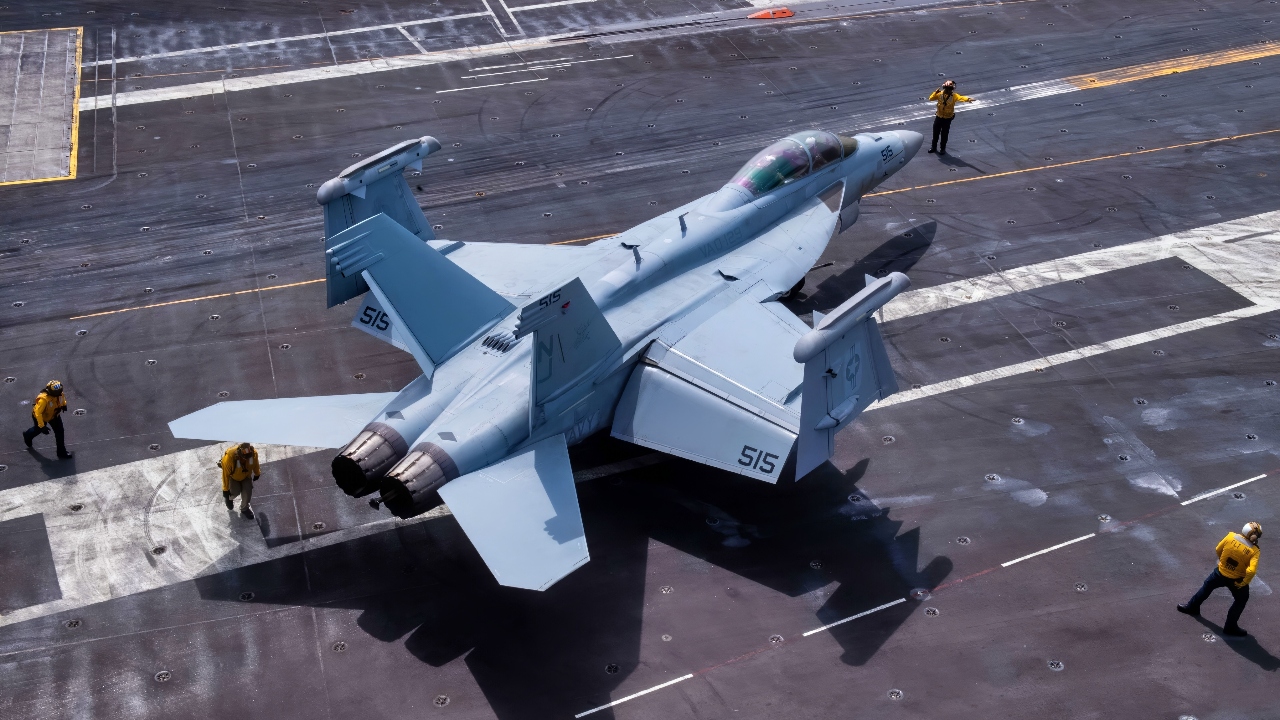
PACIFIC OCEAN (Aug. 11, 2025) – U.S. Navy Sailors direct an E/A-18G Growler, assigned to the “Vikings” of Electronic Attack Squadron (VAQ) 129, on the flight deck of the Nimitz-class aircraft carrier USS Theodore Roosevelt (CVN 71), Aug. 11, 2025. Theodore Roosevelt, flagship of Carrier Strike Group (CSG) 9, is underway conducting exercises to bolster strike group readiness and capability in the U.S. 3rd Fleet area of operations. (U.S. Navy photo by Mass Communication Specialist Seaman Apprentice Cesar Nungaray)
There was, however, a problem with the original design: the ships were much louder than originally anticipated.
To address this issue, the French Navy undertook a major modernization effort known as the Améthyste program. These upgrades involved reshaping the hull to improve water flow and reduce noise, installing better soundproofing materials, redesigning propellers, and enhancing onboard electronics and sonar systems.
The fifth submarine of the class, Améthyste (S605), was the first to incorporate these upgrades, while the earlier boats were retrofitted during maintenance cycles. These submarines are often referred to as the Améthyste-class submarines to distinguish them from their earlier counterparts.
One of the primary missions of the Rubis-class is to protect France’s strategic ballistic missile submarines by escorting them and ensuring they can operate undetected. This role is vital to maintaining the credibility of France’s nuclear deterrent.
In addition, Rubis submarines conduct intelligence-gathering missions, quietly monitoring naval movements, intercepting communications, and collecting valuable data in contested regions.
Their stealth and endurance make them ideally suited for such tasks, which often require prolonged deployments without detection.
The Rubis class consisted of six submarines: Rubis (S601), Saphir (S602), Casabianca (S603), Émeraude (S604), Améthyste (S605), and Perle (S606). Each vessel has served extensively, participating in a range of missions across the globe.
During the Cold War, they were primarily tasked with monitoring Soviet naval activity in the Atlantic and Mediterranean. After the Cold War ended, they continued to operate as usual, but now with no clear adversary.
The French Navy began decommissioning the Rubis-class in 2019, starting with Saphir, the ship that “sank” Roosevelt.
Replacement and Retirement
As technology has advanced, France has begun transitioning to a new generation of nuclear attack submarines known as the Barracuda-class, or Suffren-class.
These newer vessels are significantly larger than their Rubi-class brethren, measuring around 99.5 meters in length and displacing 4,690 tons when surfaced; they are comparable to other subs of their type.
The Barracuda-class offers significant improvements in stealth, sensor equipment, and weaponry. The new submarines can be armed with MdCN cruise missiles, which significantly enhance their offensive capabilities.
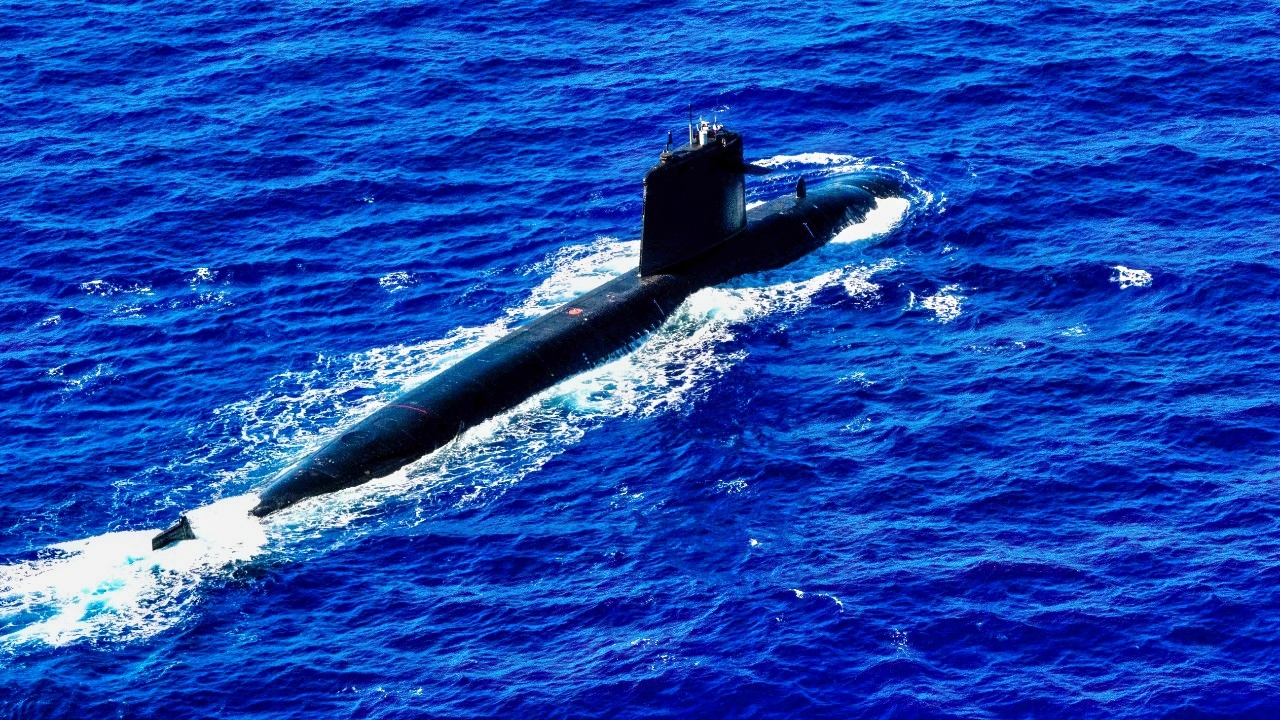
Rubis-Class Submarine from France. Image Credit: Creative Commons.
The introduction of the Barracuda class marks the gradual retirement of the Rubis submarines.
The commissioning of Suffren (S635) in 2020 signaled the start of this transition. Currently, Améthyste and Perle are the only remaining Rubis-class ships still in active service (although they are technically Améthyste-class ships) and are expected to remain in service for another decade at most. When they retire, it will mark the end of France’s small nuclear submarines, which have been a part of the French Navy for more than 50 years.
About the Author: Isaac Seitz
Isaac Seitz, a Defense Columnist, graduated from Patrick Henry College’s Strategic Intelligence and National Security program. He has also studied Russian at Middlebury Language Schools and has worked as an intelligence Analyst in the private sector.


