

The world continues to live in mass delusion when it comes to the fallout from the Iran War. But even the most delusional are now coming to the stark realization that the world economy is about to go off a cliff because of the Middle East war. The stock market has been rallying despite spikes in inflation, fuel prices, and other costs resulting from the closure of the Strait of Hormuz.
Even though fuel prices have spiked because of the war, here in the United States, they’ve not yet reached catastrophic levels because reserves remain, buffering most Americans from the brutal realities of the global energy market.

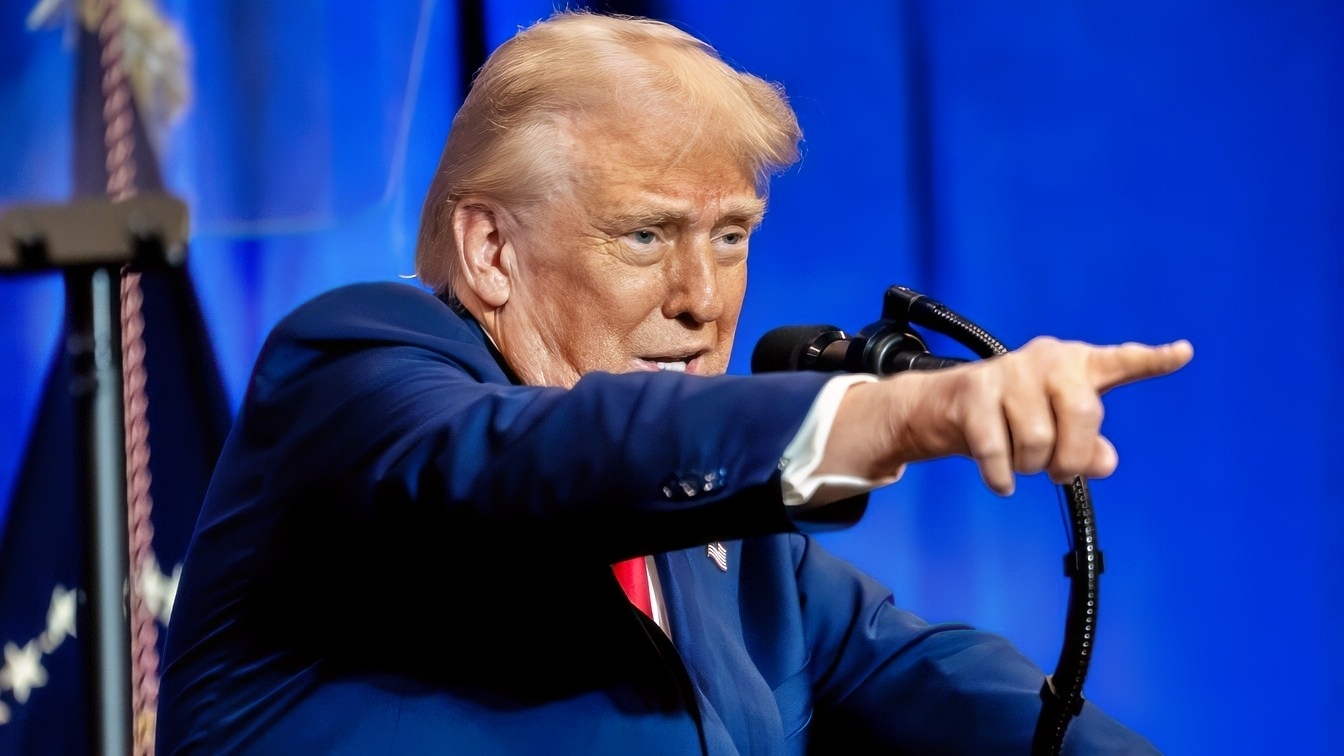
President Donald Trump delivers the Commencement address at the graduation ceremony for the University of Alabama, Thursday, May 1, 2025, at Coleman Coliseum in Tuscaloosa, Alabama. (Official White House Photo by Daniel Torok)
The Iran War and the Energy Crisis Coming Soon
But those supplies are finite. And those buffers are now depleting. At least that’s what America’s top oil executives recently told the White House. These executives are unconcerned about today’s oil price. They’re worried about what happens when the market reaches what industry insiders call “tank bottom.” That’s the point at which the US can no longer safely drain its inventories. At that point, prices will move upward violently because the buffers are gone.
Some oil experts are warning that the “tank bottom” might be reached as early as next month.
In fact, global inventories are approaching “unusually low” levels, as the reporting on the matter says. “Unusually low” is quite clinical compared to the reality awaiting us if things continue to deteriorate in the Middle East. The market has been surviving by consuming stockpiles accumulated before the war began on February 28. If the Strait of Hormuz remains effectively closed, Brent crude could potentially reach between $ 150 and $ 160 per barrel.
Once inventories hit minimum operating levels, prices may rise non-linearly rather than gradually.
Many people assume oil prices move smoothly. But they don’t. They move in a stair-step-like fashion. When inventories are plentiful, supply shocks are manageable. When those inventories deplete, buyers start bidding against each other for the remaining barrels.
At that point, the markets panic, and the economy begins to go downhill fast. This scenario is precisely what those oil executives who met recently with President Donald Trump at the White House were trying to convey to the forty-seventh president.
What the White House Thinks
Most troubling of all, though, is what the Trump administration appears to think about all this. Trump himself continues floating on a sea of delusional thinking. At one point, he told reporters that he didn’t care about how the war in Iran was impacting the finances of ordinary Americans.
That’s a far cry from the way that Trump used to speak on the campaign trail and in his first term. And it’s likely Trump said that because he truly doesn’t think the worst-case scenario is even possible.
Indeed, Trump has publicly posted on his Truth Social account that, no matter what happens, “It’ll all work out.” This outlook is Pollyanna on steroids about some very real problems. It’s also a form of what psychologists call “toxic positivity.” Which, again, is linked to delusional thinking.
Meanwhile, some of Trump’s top officials, like Secretary of the Treasury Scott Bessent (who should know better), have insisted that high energy prices and even the high inflation resulting from those high energy prices are “transitory.”
These leaders claim that the administration always anticipated the disruptions from a potential Iranian blockade of the Strait of Hormuz. The administration has undercut those claims, such as when Secretary of State and Acting White House National Security Adviser Marco Rubio told Congress they did not anticipate Iran closing the Strait.
Washington has gambled with our economic prosperity from the start of this ill-advised Iran War.
Why This Matters Politically
If you look at the political coalition behind Trump’s rise in politics, energy prices are arguably more important than the battlefield situation itself. Voters can tolerate a distant war. They cannot tolerate $5-$6 gasoline, rising food prices, rising utility bills, and renewed inflation, not after the pandemic.
Thankfully, it does seem like having a phalanx of the nation’s leading oil executives–all of whom are benefiting from the higher prices of oil–marching into the Oval Office and explaining to Trump and his team how bad things are going to get very soon has started bringing the Trump team back to reality.
But it has only just started.
Until recently, the Trump team asserted it wasn’t an American concern to reopen the Strait. Now, the Trump White House is debating whether it can resolve the crisis before Americans begin to feel real economic pain from the energy shock and other disruptions caused by the closure of the Strait of Hormuz.
The Strategic Reality
The problem the world faces today has nothing to do with oil production. It’s all about inventories (or lack thereof). America can produce enormous amounts of oil (especially light, sweet crude). But production takes time. The global economy operates on continuous flows, not theoretical future output.
If 20 percent of global oil transit remains closed, inventories become the shock absorber. Once those inventories disappear, price becomes the rationing mechanism. That’s not good for the average American, who is already living paycheck to paycheck. So, the oil executives trundled up to the White House to make this point painfully clear.
Meanwhile, the stock market is pricing in eventual normalization. The oil markets, however, are looking at physical levels. A massive shortage and price spike are coming, possibly within the next few weeks.
The Trump administration is no longer fighting over control of the Strait of Hormuz. It is racing against the clock to avoid inventory depletion.
About the Author: Brandon J. Weichert
Brandon J. Weichert is the Senior National Security Editor at 19FortyFive.com. He also manages The Weichert Brief on Substack. Weichert hosts “National Security Talk” on Rumble, too. He is the author of four bestselling national security books, the most recent of which is A Disaster of Our Own Making: How the West Lost Ukraine (Encounter Books). Follow him via Twitter/X @WeTheBrandon.


