

Oil prices fell again on Tuesday in response to comments by U.S. President Donald Trump indicating that a deal with Iran was close. Speaking late Monday, the president said that an agreement could come within “two or three days,” and that the Strait of Hormuz would reopen “immediately” once Tehran accepts the terms. This is, however, not the first time the president has promised a deal was only days away.
For now, though, traders seem to be willing to believe him. U.S. crude fell below $90 per barrel on Tuesday morning, while Brent crude slipped to around $92 per barrel. The news comes just a day after prices jumped when Iran and Israel returned to direct missile exchanges – a brief escalation that risked bringing the fragile ceasefire to an end.
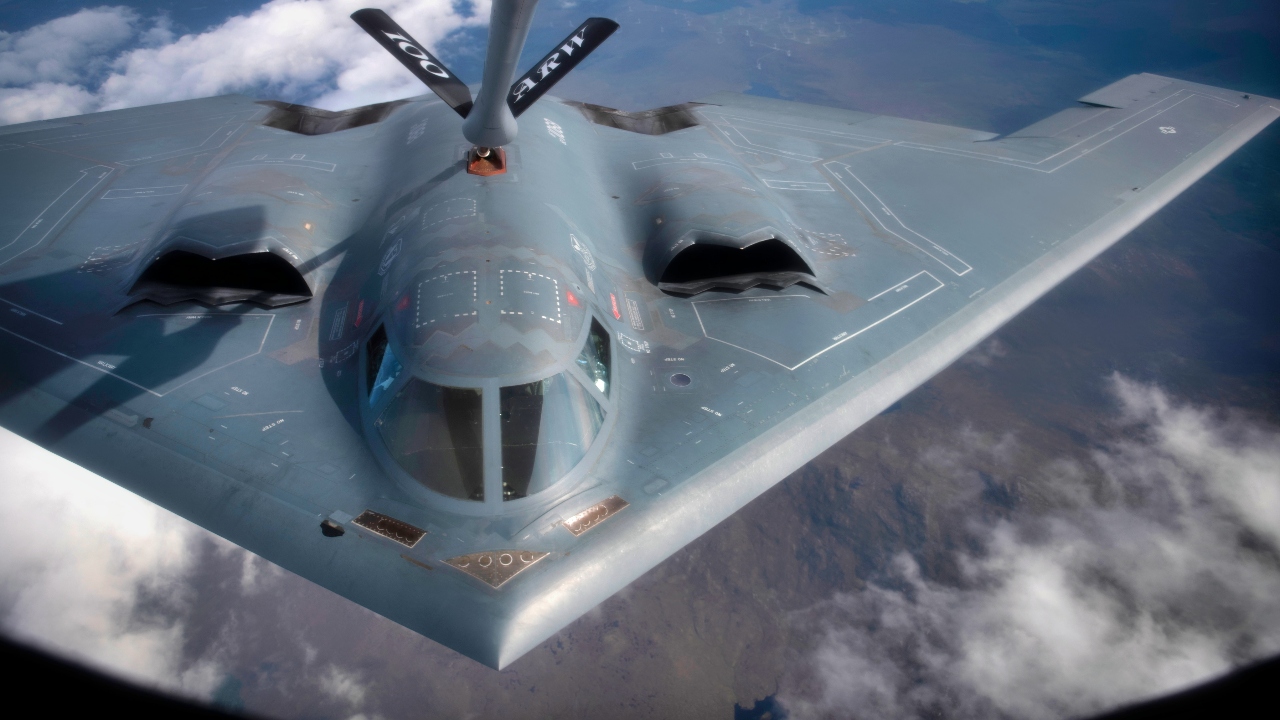
A U.S. Air Force B-2 Spirit assigned to the 509th Bomb Wing, Whiteman Air Force Base, Missouri, is refueled by a KC-135 Stratotanker assigned to the 351st Aerial Refueling Squadron, RAF Mildenhall, during the Bomber Task Force training exercise over England, Aug. 29, 2019. Training with partners, allied nations and other U.S. Air Force units contributes to global readiness and enables the strengthening of enduring and strategic relationships throughout the theater. (U.S. Air Force photo by Tech. Sgt. Emerson Nuñez)
The biggest question now, though, is whether the prices remain low – or if the price drop is a temporary decrease based on optimism. Trump also says the negotiations with Iran are in their “final throes,” but so far, we only have his word.
Trump Says A Deal Is Close in Iran War
Trump’s latest comments are arguably his most specific yet, but that’s not saying much. The president has been promising a deal is around the corner for weeks, and Secretary of State Marco Rubio has said much the same. However, the president has now specifically stated that the Strait of Hormuz is expected to open immediately after the negotiations end – an indication that something may have changed behind the scenes.
It’s a big claim, too. The Strait of Hormuz is the world’s most important energy chokepoint, and disruptions there are damaging the global economy and risk triggering an oil crisis that could cause recessions worldwide.
The disruption has transformed the global oil market, forcing major economies to begin massive drawdowns of their own crude oil reserves. Before the war began, some 20 million barrels of oil and refined products moved through the strait every single day, with crude alone accounting for about 15 million barrels per day.
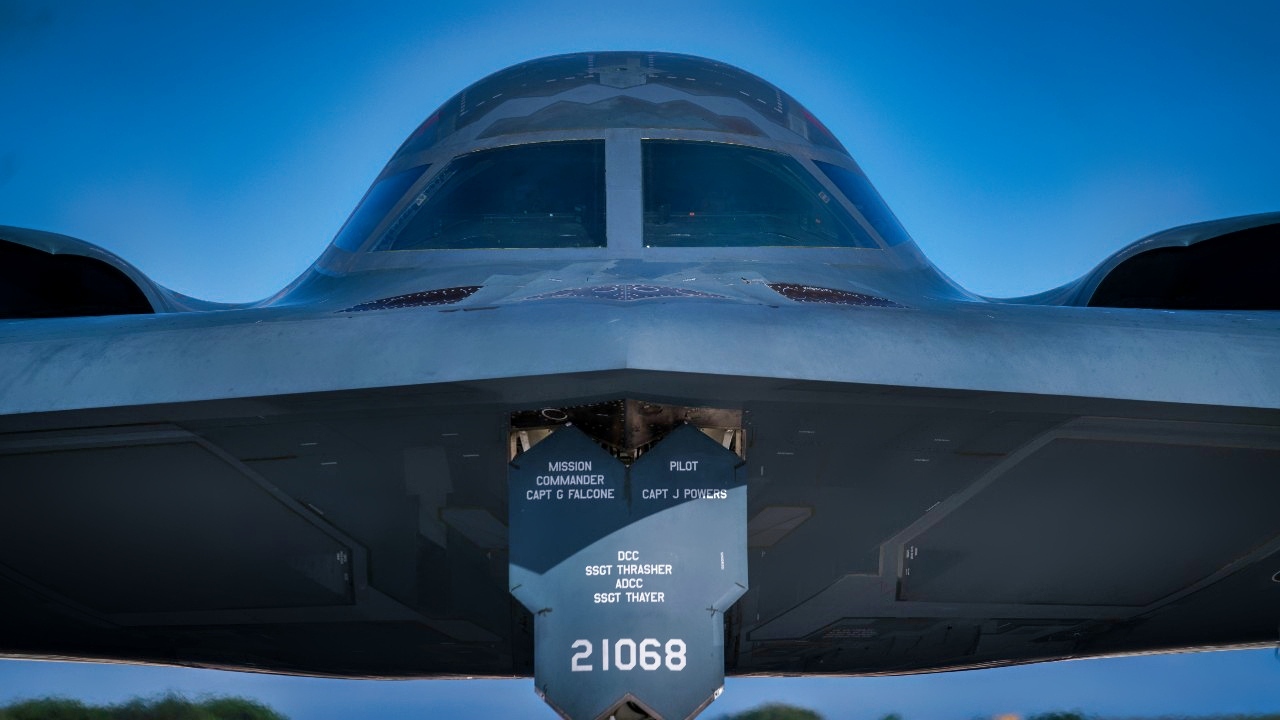
A B-2 Spirit, assigned to the 509th Bomb Wing, Whiteman Air Force Base, taxis on the flightline Jan. 8, 2018, at Andersen Air Force Base, Guam. Approximately 200 Airmen and three B-2 Spirits from Whiteman Air Force Base (AFB), Missouri, deployed to Andersen AFB in support of U.S. Pacific Command’s (PACOM) Bomber Assurance and Deterrence mission. U.S. Strategic Command bombers regularly rotate through the Indo-Pacific region to conduct U.S. PACOM-led air operations, providing leaders with deterrent options to maintain regional stability. During this short-term deployment, the B-2s will conduct local and regional training sorties and will integrate capabilities with key regional partners, ensuring bomber crews maintain a high state of readiness and crew proficiency (Air Force photo by Staff Sgt. Joshua Smoot) .
Trump may be telling the truth, and indeed, he may have been telling the truth every other time he has made this claim. Oil prices have dropped, and the market has rallied every time there has been hope of a diplomatic breakthrough, but each time, prices have increased again once a deal failed to materialize.
The Negotiations Are Still Fragile
Washington still hopes that its campaign of pressure will work on Iran. And while the severe pressure placed on the country may have worked much more quickly on countries less ideologically committed to challenging Western global dominance, it has so far failed to work on Iran – even after killing its leader and crippling its economy. The United States has so far imposed a naval blockade on Iranian ports and vessels and continues to threaten to return to severe bombing of its infrastructure. But Iran refuses to appear weak, despite also losing the vast majority of its air and naval assets.
Tehran has used the closure of Hormuz as its strongest leverage point, knowing very well that the longer the disruption continues, the greater the pressure on the U.S., Asia, and Europe.
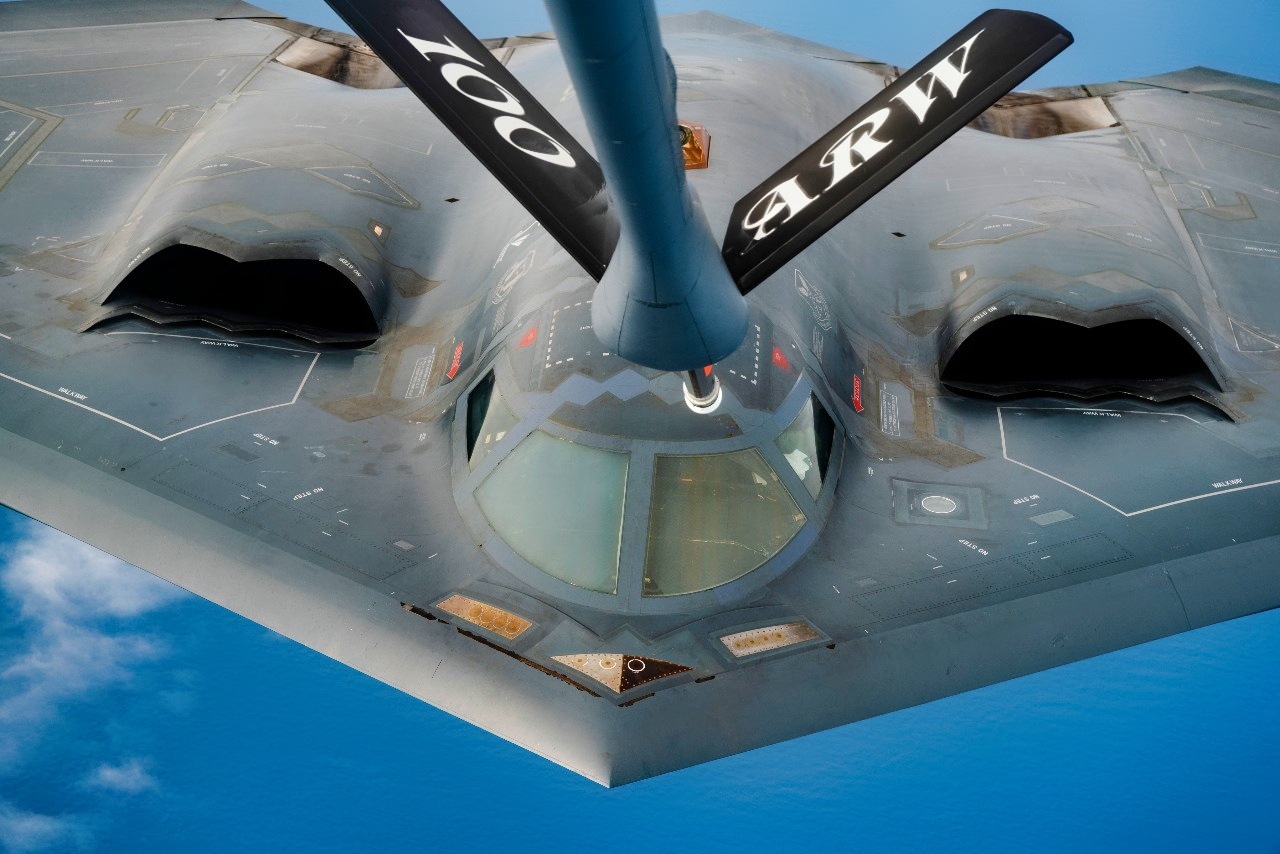
A U.S. Air Force B-2 Spirit assigned to the 509th Bomb Wing, conducts aerial refueling operations during a Bomber Task Force mission over the Atlantic Ocean, Sept. 6, 2021. Strategic bomber missions enhance the readiness and training necessary to respond to any potential crisis or challenge across the globe. (U.S. Air Force photo by Staff Sgt. Rachel Maxwell)
And the latest exchange of fire between Iran and Israel only makes diplomacy harder, with Iran insisting that Israel cease operations against its proxies in Lebanon.
The direct exchange appears to have stopped for now, though Israel continues strikes on Lebanon as of Tuesday morning. That leaves Trump trying to negotiate a peace deal while the military situation remains unstable.
Why Oil Is Falling Anyway
It’s worth noting that oil prices have not entered true crisis territory because the market believes that the Strait of Hormuz is not likely to be disrupted indefinitely – even if Iran believes it can be. Traders believe the disruption is temporary, largely because an indefinite disruption would be an extreme scenario that Western governments are unlikely to allow.
Since March, the International Energy Agency (IEA) has coordinated the largest emergency release of oil in its history, with around 400 million barrels made available to global markets.
The releases began immediately after the Hormuz disruption began, and have since helped offset supply losses. Without those releases, prices would have skyrocketed.
According to Robin Brooks and Ben Harris at the Brookings Institution, however, that buffer is expected to be exhausted by mid-July – and by then, roughly 2.5 million barrels per day of support will be removed from the market. That is when the true test will come.
“Thus, by the middle of July, the full extent of temporary buffers will have been exhausted, with an overall market adjustment of 7.1 mb/d, roughly 16% of global crude oil trade, needing to be absorbed,” the analysts write.
Trump, then, needs to make a deal soon – and has roughly one month to go before the crisis worsens.
About the Author: Jack Buckby
Jack Buckby is a British researcher and analyst specializing in defense and national security, based in New York. His work focuses on military capability, procurement, and strategic competition, producing and editing analysis for policy and defense audiences. He brings extensive editorial experience, with a career output spanning over 1,000 articles at 19FortyFive and National Security Journal, and has previously authored books and papers on extremism and deradicalization.


