


Most Western fighters are designed around the assumption that air superiority comes first and logistics follow. The Gripen was designed around the assumption that Sweden would be fighting for survival against a larger adversary while its air bases were under constant attack.
That distinction matters.
The Saab JAS 39 Gripen was built from the outset to operate from austere environments in a dispersed manner. Highways and improvised airstrips are just some of the places from which this fourth-generation warplane can operate.
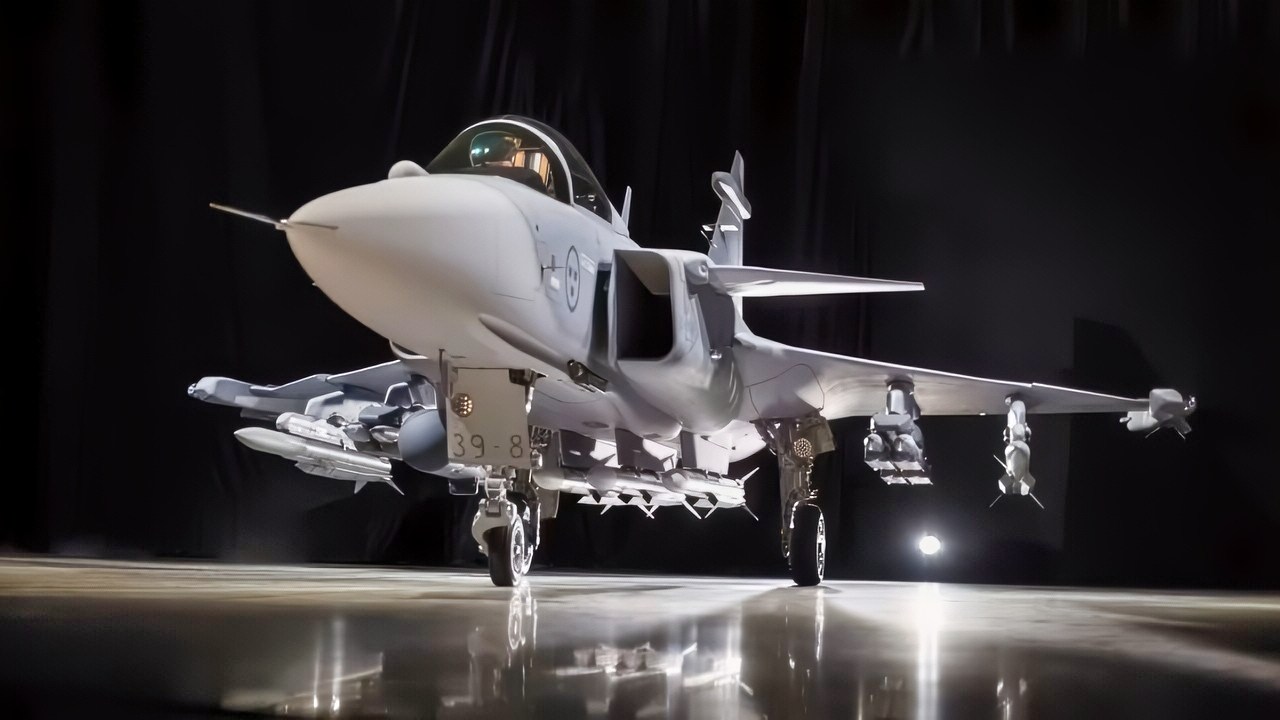
SAAB JAS 39 Gripen Fighter. Image Credit: SAAB.

JAS 39 Gripen Saab. Image Credit: Creative Commons.
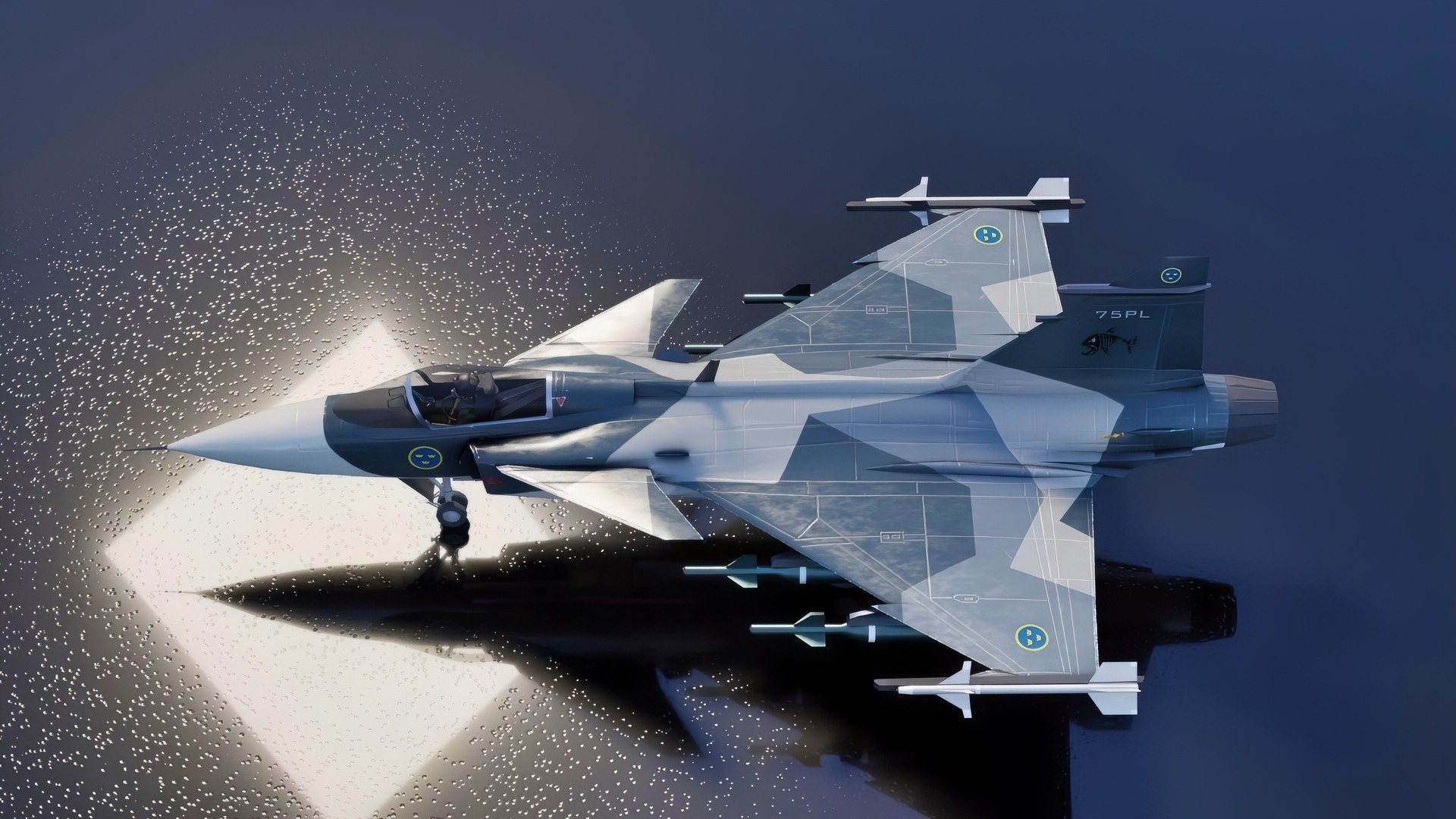
JAS 39 Gripen Artist Photo Creative Commons
According to aviation analyst Gareth Jennings, operating from these dispersed locations is “in the DNA of the jet.” Indeed. While jet aircraft such as the F-16 can conduct similar operations, they generally require more support, more infrastructure, and more specialized maintenance.
Reuters notes that Ukraine views this as one of the aircraft’s most attractive features.
The Gripen was designed so that small crews can rapidly refuel, rearm, and relaunch the aircraft with minimal support infrastructure. In an age of long-range precision missiles, that may be one of the most important fighter characteristics a nation can possess.
Why Ukraine Is So Interested in the JAS 39 Gripen
The recent Swedish letter of intent to potentially provide up to 150 Gripens to Ukraine highlights how seriously Kyiv views the platform.
Ukraine already operates a mixed fleet of Western aircraft, including the American F-16 Fighting Falcon and the French Dassault Mirage 2000. Yet Ukrainian officials want the Gripens. The reason is straightforward.
Ukraine’s biggest challenge is not simply winning dogfights. It is keeping aircraft alive under constant Russian missile attack.
The Gripen’s highway-operating capability is well-suited to the conditions under which Ukraine is fighting. And the number of 150 is much better than the smattering of old F-16s and Mirages that the Ukrainians have been gifted. What’s more, Ukraine’s biggest challenge is not simply winning dogfights. Kyiv’s biggest headache when it comes to airpower is sustaining the combat capabilities of its birds under constant Russian missile attack.
The Gripens’ highway launch capability means the plane would be perfect for the collapsing Ukrainian Armed Forces. Ukraine has vast open terrain, numerous road networks, and a constant threat to fixed airbases. Dispersing aircraft throughout the country dramatically complicates Russian targeting.
Even more significant is the electronic warfare (EW) issue.
According to both Reuters and previous RUSI analysis, some Gripen variants possess electronic warfare systems specifically optimized against Russian radar systems and Russian fighters. This is not surprising. Sweden spent decades preparing to fight Soviet–and later Russian–airpower. Many of the Gripen’s design choices were shaped by that reality.
If Ukraine eventually receives a substantial Gripen fleet, Russia would face a fighter specifically designed to defeat many of the systems Moscow relies on.
Can Sweden provide such a number of their Gripen in a timely, reliable manner? Can Ukraine’s Air Force properly maintain these birds for the duration of this long war? Or will these birds be as useless in the hands of Ukraine as were the blessed tanks of 2023 and the tranche of warplanes from the West that Ukraine has already received?
Why Some Analysts Believe the Gripen Fits Ukraine Better Than the F-16
Sweden’s Gripen is not superior to the American F-16 in every category. Rather, the Saab plane is better suited to Ukraine’s degraded operational environment. The F-16 emerged from American expeditionary doctrine.
The Gripen emerged from Sweden’s territorial defense doctrine. Ukraine’s war increasingly resembles the Swedish doctrine on which the Gripen was designed.
For instance, Ukraine must utilize dispersed operations to conduct its war; it has limited infrastructure and is under constant missile attacks. Thus, Ukrainian logistics are under immense pressure, and Ukraine’s Armed Forces, such as they are, survive through mobility. These conditions, therefore, are ripe for the Gripen’s strengths.
Why Canada Keeps Looking at the Gripen
The Canadian debate is different but related. Officially, Canada selected the American Lockheed Martin-built F-35 Lightning II fifth-generation stealth fighter for air superiority. Yet Ottawa, for political reasons, keeps bringing up the Gripen as a possible alternative to the F-35.
While the Canadian government continues to raise the prospect of purchasing the Gripen over the F-35 because of the ongoing political fallout from the Trump administration’s trade war with Canada, there are serious logistical reasons why Ottawa might be having second thoughts about the F-35.
Canada is not simply defending southern population centers. Ottawa must secure the vast expanses of Canada’s wild, northern frontier. What’s more, Canada’s population centers are mostly located far south, along the US border. But Ottawa must defend its Arctic expanse. They must support distant military facilities there. Thus, the Canadians must contend with long supply chains.
Several analysts have taken the recent spat between Ottawa and Washington over trade and Prime Minister Mark Carney’s threat to purchase the Gripen as a secret blessing. Under the right conditions, a mixed fleet of the F-35 and the JAS 39 Gripen might be good for Canada.
You see, the F-35 is better at penetrating advanced air defenses and conducting high-end combat operations. The Gripen, meanwhile, excels in routine sovereignty patrols, Arctic operations, dispersed basing, and lower-cost readiness missions. In effect, Canada could use the F-35 as its spear and the Gripen as its Arctic shield.
What’s more, the Gripens offer greater operational flexibility and reduced lifecycle costs for the cash-strapped Canadian Air Force than does the American F-35. A nation doesn’t need every aircraft performing every mission. Some missions reward stealth. Others reward affordability and persistence.
What Makes the Gripen E/F Special
The most important thing about the Gripen is that it was designed for the kind of war many nations now fear they may actually be required to fight. The wars coming up and those currently being waged are not the kind of wars America and its allies are used to. They aren’t against weak adversaries. Or in permissive counterinsurgency environments. They’re not wars in which the support infrastructure for the military is relatively untouched by the enemy.
It’s another kind of war. A war among equals. A war of attrition, in which even the home front may be impacted.
The Gripen was designed for missile-saturated battlespaces where airfields are attacked, logistics are strained, and survival depends on dispersion and rapid generation.
That’s why Ukraine wants it. That’s why Canada keeps revisiting it. And that is why the Gripen has become one of the most strategically relevant fighter aircraft in the world.
Essentially, Sweden anticipated many of the characteristics of modern warfare decades before the rest of the West ever did. As precision strike systems proliferate and fixed infrastructure becomes increasingly vulnerable, the Gripen’s philosophy of dispersed, resilient airpower looks less like an outlier and more like a preview of the future.
About the Author: Brandon J. Weichert
Brandon J. Weichert is Senior National Security Editor. He also manages The Weichert Brief on Substack. Weichert hosts “National Security Talk” on Rumble, too. He is the author of four bestselling national security books, the most recent of which is A Disaster of Our Own Making: How the West Lost Ukraine (Encounter Books). Follow him via Twitter/X @WeTheBrandon.


