

Today, the war in Ukraine has been raging for 1,569 days, meaning it has continued longer than WWI. The war has been raging for four years and has become the most devastating war in Europe since the Second World War.
Despite all the devastation, the war continues and shows little sign of stopping. Given the current state of the battlefield, neither side can bring the war to a quick military close, so it is up to diplomacy to end the conflict.
However, considering the current state of negotiations, it is unlikely that either side will reach an agreement anytime soon. Consequently, the war will likely continue for many more years, resulting in more devastation and needless loss of life.
Why Neither Side Can Beat the Other
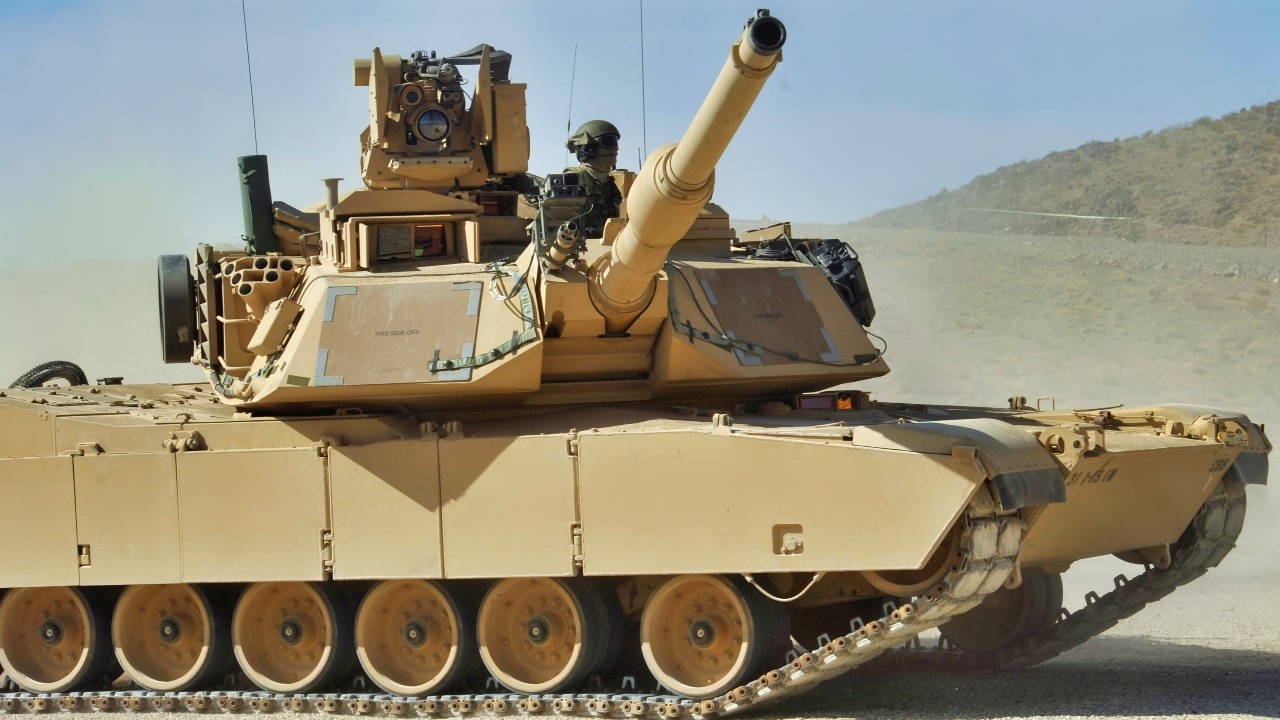
Australia is sending 49 of its retired M1A1 Abrams tanks to Ukraine, a move that bolsters Kyiv’s armored firepower but raises significant questions about survivability on the modern battlefield. While the donation is a welcome gesture, US officials have reportedly expressed private frustration, warning that Ukraine struggles to sustain the complex tanks and highlighting their vulnerability to cheap, top-attack FPV drones. The war in Ukraine has become a “drone war,” where even advanced main battle tanks are at constant risk. The effectiveness of these donated Abrams will ultimately depend on Ukraine’s ability to counter this pervasive threat.
Militarily
On the ground, the war has devolved into a slog. Although it isn’t technically a standstill, Russian advances are too slow to end the war in a timely manner. The big problem is that drone warfare has prevented both sides from engaging in any large-scale maneuvers.
Both sides have now opted to sit back and strike the other side with artillery and drones. This contributes to the WWI-esque image cultivated in the minds of many observers.
Currently, the Russians are on the cusp of seizing three major cities in Ukraine: Kupyansk, Lyman, and Kostyantynivka. However, even if they manage to capture these cities, the nature of the conflict means it will take several months, if not years, to consolidate their positions and advance to the next towns.
If the war is concluded by military means, it will most likely last several more years; exactly how many years is impossible to say, but it will most probably end in Russia’s favor.

T-84 Tank Ukraine. Image Credit: Creative Commons.
Russia, unfortunately, still possesses the advantage in manpower, with a much larger pool of recruits to draw upon. Russia also possesses a better military-industrial complex and produces more weapons, ammunition, and drones than Ukraine does.
Despite claims of thousands of Russian casualties per week, the actual number of confirmed casualties does not reflect this. According to open-source analyses, the number of verified Russian casualties in 2026 has dropped significantly compared to previous years.
Granted, these figures do not represent the full picture of casualties, but based on visual evidence, Russian casualties have been much lighter than Ukrainian casualties as of late.
What About Diplomacy?
If left to military means, the war will drag on for many more years, so what about diplomacy?
Unfortunately, the diplomatic route has yet to produce any hints of a comprehensive agreement between the two parties. One of the main issues stalling diplomatic efforts is the disputed territory between Russia and Ukraine.
Russia seeks to annex multiple regions of Ukraine, even those where full military control has not been established, while Ukraine wants to return to its 2013 borders, with control over Crimea firmly reestablished.
Both of these positions are unacceptable to the other party.

President Putin of Russia in 2018.
Although Ukraine has suggested a ceasefire along the current line of contact, Russia’s insistence on recognizing its annexed territories has stalled these efforts.
As a result, territorial issues remain the central obstacle preventing meaningful progress toward a comprehensive agreement.
The central issue, however, is arguably the dispute over Ukraine’s long-term security alignment.
Ukraine seeks binding and enforceable guarantees to protect against future aggression, ideally through NATO membership or equivalent commitments from Western powers.
Russia, by contrast, views NATO expansion as a fundamental threat and demands Ukrainian neutrality as a precondition for any settlement. The gap between these positions is extremely difficult to bridge because each side considers its stance essential to national security.
Ukraine’s insistence on strong guarantees is based on its history and the constant aggression that it has suffered from Russia. Russia, meanwhile, also suffered from traumatic invasions throughout its history and seeks a neutral buffer zone for its own national security.
Accepting the Unacceptable: Why Diplomacy has Failed So Far
Furthermore, there exists a fundamental lack of trust on both sides. After suffering from Russian aggression for sizable portions of its history, Ukraine does not view Russia as a state that is willing to keep to any agreements.
Moscow, meanwhile, views the current administration in Kyiv as illegitimate and views Ukraine as a terrorist state that is also unwilling to keep to any agreements.
The Kremlin is also operating from the memory of the Minsk II agreements, which were supposed to formalize relations between Russia and Ukraine but instead served as a thinly veiled cover for Ukraine to build up its defenses.
Consequently, Moscow wants a comprehensive agreement that will settle the Ukrainian question once and for all.
The broader goals of both sides remain fundamentally incompatible. Russia seeks to reshape Ukraine’s geopolitical orientation, secure territorial gains, and limit Western influence in the region.
Ukraine, in contrast, seeks to preserve its sovereignty, regain lost territory, and deepen its integration with Western political and security institutions.
Because these strategic objectives cannot be fully reconciled, any agreement would require one or both sides to make compromises that would carry high political costs. At present, there is little indication that either side is prepared to make such concessions.
As a result, diplomacy has stalled on both sides. Despite efforts by the Trump Administration to bring the war to a peaceful end, the aforementioned issues are nigh unresolvable by diplomacy.
Until one side is willing to concede, the war will continue at its slow, grinding, painful pace.
Despite mounting economic pressures, the Kremlin shows no sign of wanting to bring the war to a quick close and is more or less content to let it drag on at its current pace.
Kyiv is also unwilling to accept any territorial losses and is happy to continue fighting as long as the West continues to provide support.
About the Author: Isaac Seitz
Isaac Seitz, a Defense Columnist, graduated from Patrick Henry College’s Strategic Intelligence and National Security program. He has also studied Russian at Middlebury Language Schools and has worked as an intelligence Analyst in the private sector.


