

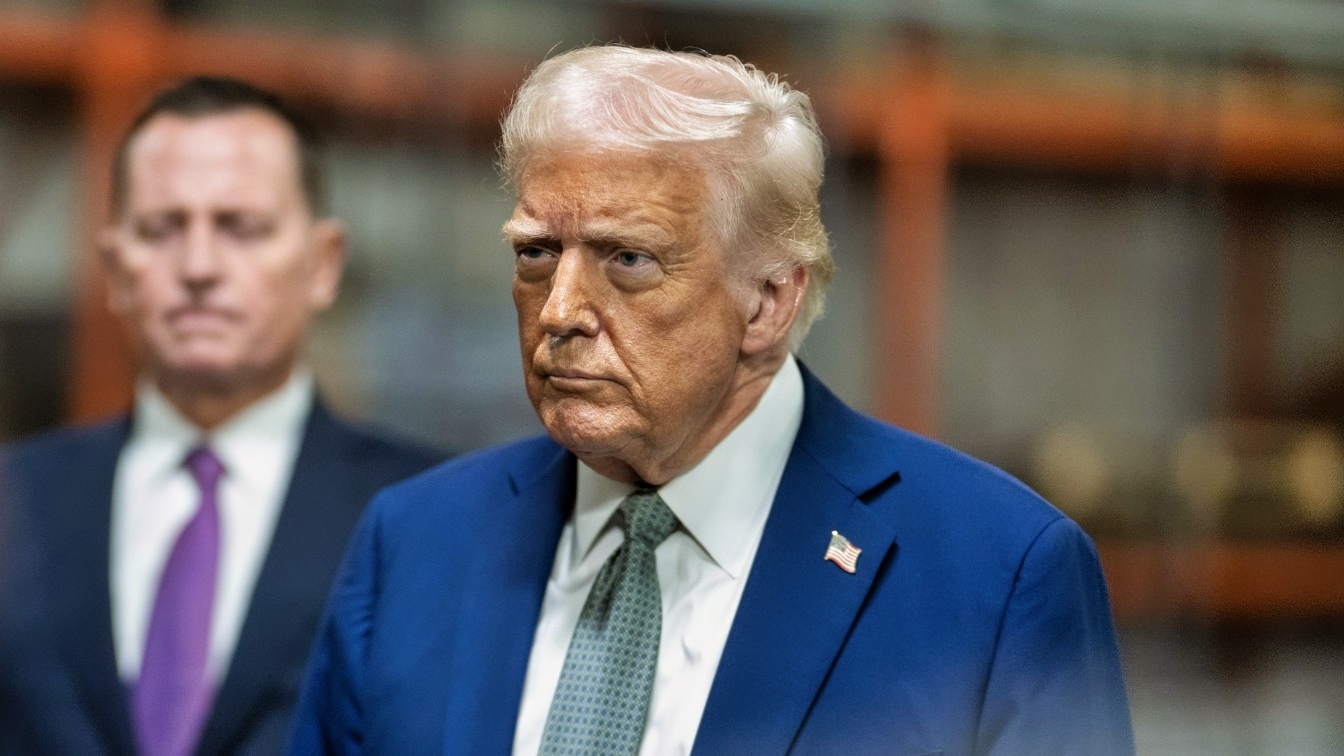
President Donald J. Trump announced earlier today that the war with Iran ends tomorrow. In a Truth Social post, he said the agreement is scheduled to get signed Sunday, with the Strait of Hormuz “OPEN TO ALL” the moment the ink dries. Within hours, Iran’s Islamic Revolutionary Guard Corps said the opposite, calling Sunday a date on which signing is “definitely not happening” and describing the announcement as a test aimed at its own negotiators. One hundred and five days into a war that has closed the world’s most important oil chokepoint, the two governments cannot agree on whether the war is about to be over, and the gap between Trump’s certainty and Tehran’s denial is the most important fact in the conflict tonight.
Signed Tomorrow Versus Definitely Not Happening: The Two Versions Of June 14
Trump’s account is unequivocal. He has said for two days that a memorandum of understanding has been approved at the highest level of Iranian leadership, that he canceled a third round of strikes on Thursday because the deal’s final points were agreed upon, and that Vice President Vance would represent the United States at a signing ceremony in Europe over the weekend.
Today, he fixed the date: Sunday, June 14, with Hormuz reopening immediately afterward.
Iran’s account contradicts nearly every operational detail. The Revolutionary Guard, through its affiliated outlets, said the memorandum has not been finalized, and that signing on Sunday will not occur, framing Trump’s timeline as pressure on Iran’s negotiating team rather than a reflection of where the talks actually stand.
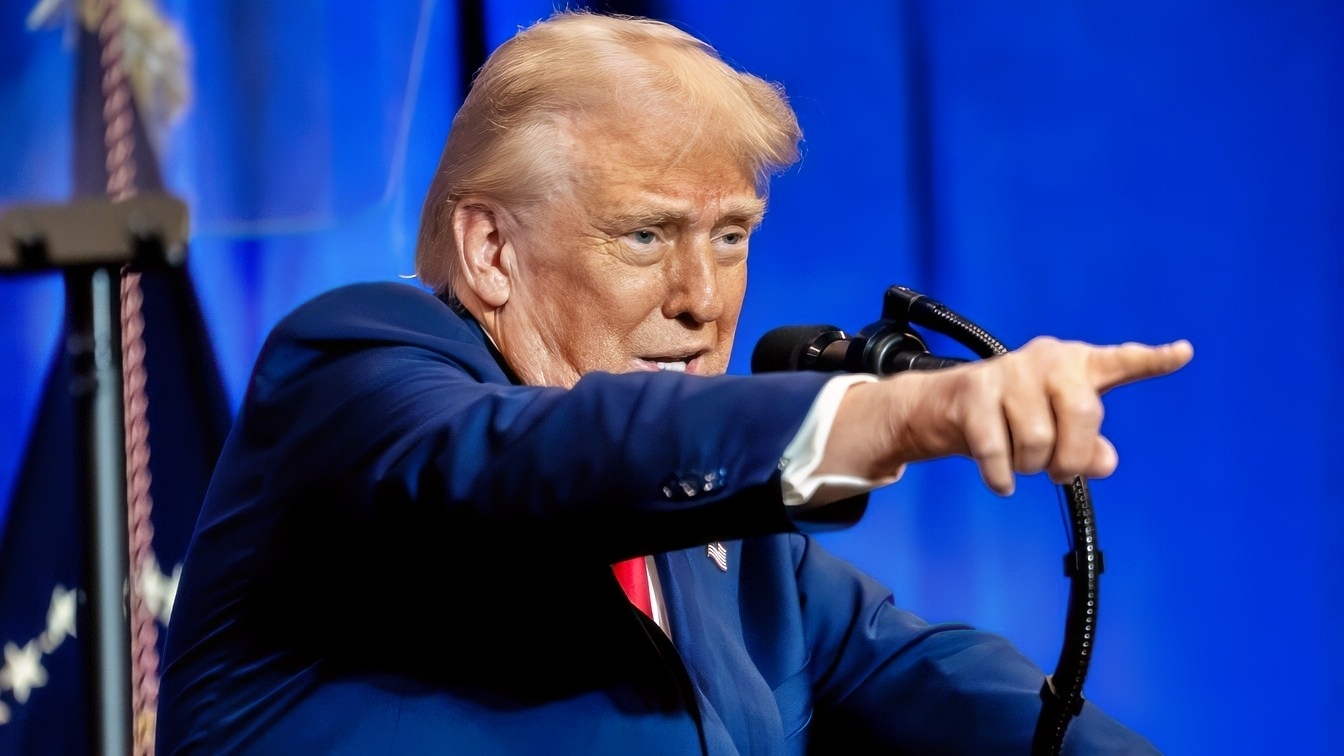
President Donald Trump delivers remarks at the Department of Justice in Washington, D.C., Friday, March 14, 2025. (Official White House Photo by Joyce N. Boghosian)
The Guard noted pointedly on Telegram that June 14 is Trump’s birthday and suggested he wants the signing to serve as a personal publicity event.
Iran’s Foreign Ministry struck a more measured note without resolving the contradiction: spokesman Esmaeil Baghaei said there are no plans to travel to Geneva or anywhere else in the coming days and that the exact timing should be awaited, while allowing that the two sides have never been this close to an understanding.
The logistics remain unsettled enough that officials on both sides have floated a remote signing rather than a ceremony, which is an unusual way to conclude a war.
The disagreement is not a matter of interpretation. Either a document gets signed tomorrow, or it does not, and the United States and Iran are telling the world different answers on the eve of the date.
The “Ultimate Alternative”: A President Alludes To Nuclear Use
The most alarming line in Trump’s announcement was not about the signing.
He closed the post with a warning about what follows if the process does not go smoothly: the United States, he wrote, has the “ultimate alternative, hopefully never to be used again.”
The White House did not respond to a request to clarify what the phrase meant. The clarification is not really necessary. The only weapon that has been used and then, by deliberate restraint, never used again is the atomic bomb, and “never to be used again” is an allusion no other construction fits.
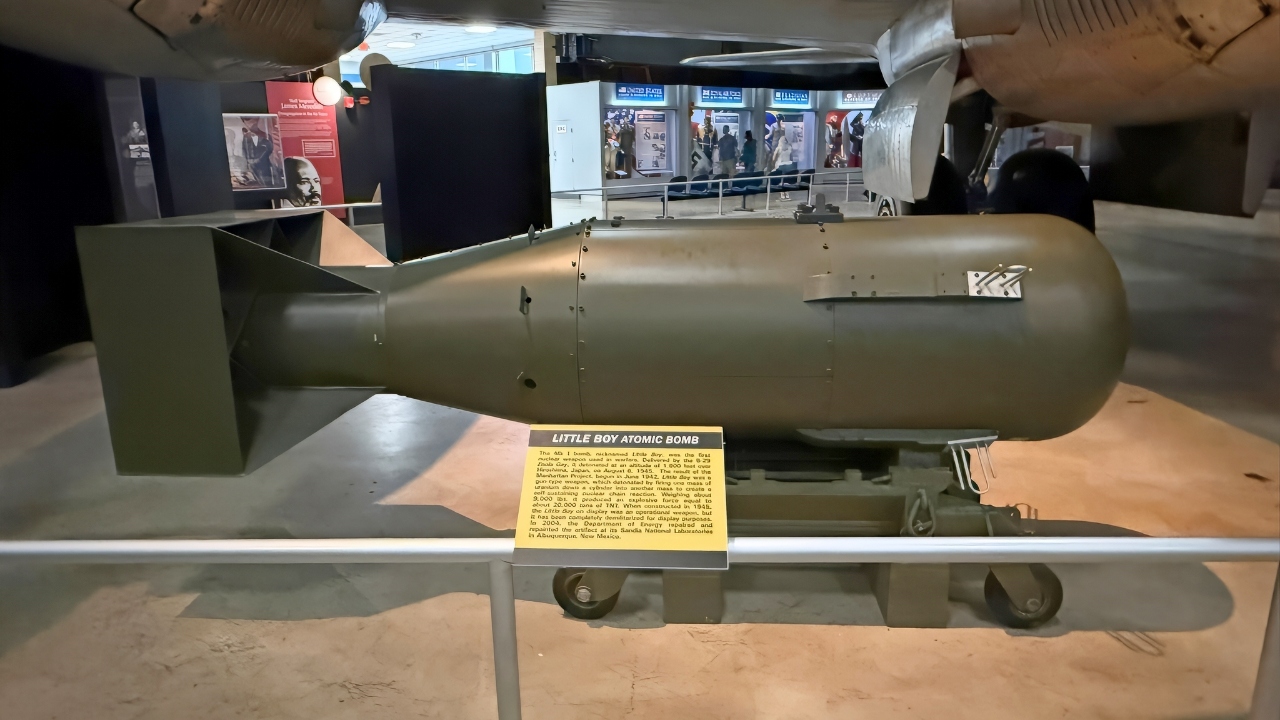
Little Boy Atomic Bomb. Image Credit: Harry J. Kazianis/National Security Journal.
A sitting president, in writing, on a social media feed, in the middle of a negotiation, gesturing at nuclear use against a non-nuclear adversary, is a break from how American presidents have handled the subject for 80 years, and this is the second time in recent memory he has done this with Iran.
Nuclear signaling has happened before — privately, through ambiguity, through the movement of forces — and even the Trump “fire and fury” warning aimed at North Korea in 2017 stopped short of invoking a weapon “never to be used again.” Doing it openly, against a country with no nuclear weapons of its own, as leverage to close a deal, abandons the restraint that every administration since 1945 has treated as a floor. The recklessness is in the allusion itself, regardless of intent.
And the intent almost certainly does not extend to actual use. Nothing about the strategic situation suggests Trump is preparing a nuclear strike on Iran, and reading the line as a genuine operational threat misunderstands what it is for. The line is part of a long line of pressure instruments, the rhetorical equivalent of carrier deployments, more sanctions, and conventional strikes — an attempt to make Iran believe the cost of not signing is unbounded. That it is a theater rather than a plan does not make it responsible.
A president who treats the most catastrophic weapon ever built as a negotiating prop normalizes its invocation for every leader and every crisis that follows, and the damage to the norm is done whether or not a single warhead ever moves.
Maximum Pressure By Press Release: Why Trump Keeps Announcing A Deal
The announcement fits a pattern that has defined Trump’s entire approach to this war, and understanding the pattern explains why tomorrow’s signing may not happen on schedule.
Trump has repeatedly declared a deal imminent — final points approved, the supreme leader on board, a ceremony days away — and the declarations function as a tool of pressure in their own right, sitting alongside the sanctions, the naval blockade, the diplomatic isolation, and the military strikes.
Announcing that a deal is essentially done creates a fact on the ground that Iran must then either accept or be seen to reject. It puts Tehran in the position of either signing close to American terms or publicly walking away from a settlement the world has been told already exists, absorbing the blame for prolonging the war.
President Donald Trump departs the White House Easter Egg Roll on the South Lawn, Monday, April 21, 2025. (Official White House Photo by Daniel Torok)
The timing of the birthday is the tell that this is stagecraft as much as diplomacy. Setting the signing for June 14 turns the end of a war into a personal milestone, and the choice of date reveals an announcement built for effect rather than dictated by the state of the talks. The “fake news” episode earlier this week points the same way: when Iranian media published purported terms — frozen assets released, sanctions suspended, the blockade lifted — Trump dismissed them as bearing no relation to what was agreed “in writing,” and Vance insisted no cash was being released for a signature. The administration is managing the narrative of the deal as aggressively as its substance, because the narrative is itself a lever.
Maximum pressure has always been the strategy. Announcing a finished deal that is not finished is simply the latest form of it.
Iran’s Bet: Outlast The President
Tehran’s denials are not only about the calendar. They reflect a calculation that time favors Iran, and that the longer it holds out, the better the terms it can extract or the more likely the pressure dissipates. The Revolutionary Guard’s framing of the Sunday date as a “test” for Iran’s negotiators signals a regime that believes it can absorb the announcement, deny the timeline, and wait.
The maximalist terms that surfaced in Iranian media this week — reported demands including the release of roughly $24 billion in frozen assets, suspension of sanctions on oil sales, a complete lifting of the naval blockade in place since April 13, a 60-day window for nuclear negotiations rather than immediate concessions, and reconstruction commitments on the order of $300 billion — describe what Iran wants the final deal to contain, not what it has conceded. A government preparing to capitulate tomorrow does not float a $300 billion reconstruction bill today.
The bet rests on Trump’s own constraints. Iran is watching the same American clock everyone else is: a president with an approval rating battered by inflation, a war that has driven energy prices and grown unpopular, and a midterm election approaching in which the governing party is already trailing. Tehran appears to believe that Trump needs the deal more than Iran does — that he wants the war ended, and Hormuz reopened badly enough to keep improving his offer, and that waiting costs Iran less than it costs him.
President Donald J. Trump tours the Hall of Prayer of Good Harvest with President Xi Jinping of the People’s Republic of China, Thursday, May 14, 2026, at the Temple of Heaven in Beijing. (Official White House Photo by Daniel Torok)
Whether that bet is sound is a separate question, because the blockade is genuinely strangling Iran’s economy and the strikes have genuinely wrecked its military. The point is that Iran is playing for time, and a regime playing for time does not sign on the other side’s birthday because the other side announced it would.
What Is Actually In Dispute
The substance behind the dueling announcements remains genuinely unresolved, which is the strongest evidence that Sunday is optimistic. Israel, whose war against Iran runs alongside the American one, stated through Prime Minister Netanyahu’s office that it is not a party to the memorandum of understanding — a direct dissonance with Trump’s framing of a comprehensive settlement — and Netanyahu listed what a more durable agreement would still require: removal of enriched material, dismantling of enrichment infrastructure, limits on missile production, and an end to Iran’s support for its regional proxies. That those elements are described as belonging to a future deal means they are not in the current one. Asked directly whether he had secured agreement on Iran’s nuclear material, Trump said only that he had, “conceptually,” which is the language of a framework, not a signed accord.
The gap is wide and concrete. The two sides have leaked incompatible versions of the terms. The United States insists the Iranian version is fabricated, Iran insists its negotiators have agreed to nothing final, Israel says the hardest nuclear provisions remain unwritten, and no venue or signing logistics have been confirmed with a day to go.
A memorandum of understanding, even if one exists, is not the end of the war; it is an agreement to keep talking under agreed-upon principles, and those principles are still contested in public.

B-2 Bomber at USAF Museum National Security Journal Image. All Rights Reserved.
No Deal, And An Oil Shock Waiting
The most likely outcome over the next twenty-four hours is that no agreement will be signed on schedule, because the gap between what Trump has announced and what Iran has confirmed is too wide to bridge on a date chosen for symbolism.
A framework may exist, the two sides may indeed be closer than they have ever been, and a signing may eventually come. Tomorrow is a different claim, and the Revolutionary Guard’s flat denial, the unsettled logistics, and the unresolved nuclear terms all point against it. Trump has announced finished deals before in this war. The war has continued after each one.
The stakes of the impasse extend far past Tehran and Washington. The Strait of Hormuz, which Trump has promised will reopen the instant a deal is signed, carries roughly a fifth of the world’s oil supply, and it has been effectively closed for much of the war, with the American naval blockade compounding the disruption since April. Every week without a deal is a week the chokepoint stays shut, and the longer the closure runs, the closer the global economy moves to a genuine oil supply shock — the kind that drives fuel prices into territory that reorders economies and topples governments.
That pressure is precisely why Trump wants the deal and why he keeps announcing it, and it is also why Iran believes it has leverage, because Tehran knows the closed strait hurts the world that is leaning on it. The announced signing and the denied signing meet at the same chokepoint, and until one version proves true, the war grinds on, with the world’s oil supply held hostage to a strait that opens only when a document neither side can yet produce is signed.
About the Author: Harry J. Kazianis
Harry J. Kazianis (@Grecianformula) was the former Senior Director of National Security Affairs at the Center for the National Interest (CFTNI), a foreign policy think tank founded by Richard Nixon based in Washington, DC. Harry has over a decade of experience in think tanks and national security publishing. His ideas have been published in the NY Times, The Washington Post, The Wall Street Journal, CNN, and many other outlets worldwide. He has held positions at CSIS, the Heritage Foundation, the University of Nottingham, and several other institutions related to national security research and studies. He is the former Executive Editor of the National Interest and the Diplomat. He holds a Master’s degree focusing on international affairs from Harvard University.


yeye
June 13, 2026 at 9:06 pm
President chuanpu is more and more acting like someone who’s truly off his rocker and likely to do something very foolish.
He has been telling the US media, a deal is coming, numerous times, yet What actually happened, was merely more US bombing against iran and more bombing by Israel in lebanon.
History has recorded that the world slowly unraveled under genocide joe’s running of the globe, but under trump, the world is reaching or racing to achieve cataclysmic milestones.
President chuanpu needs the US congress or some secret white house staff to invoke the 25th amendment.
Perhaps time for JD Vance to take over.
William Baggs
June 13, 2026 at 10:48 pm
If I was president Is Lame would not exist on this planet! Period!
Hujjathullah M.H. Babu Sahib
June 14, 2026 at 8:59 am
Wow, this is a revelation in insanity. Trump is sleepwalking towards pulling the nuke trigger while the anxious world is retiring to mull the MOU ? From the look of it, Trump is all set to graduate from the usual unfinished business to a more novel business unfinished posture despite the alleged 300 million reconstruction deal !Meanwhile, for the rest of the world, the U.S. blockade smells not just oily but also fishy !